
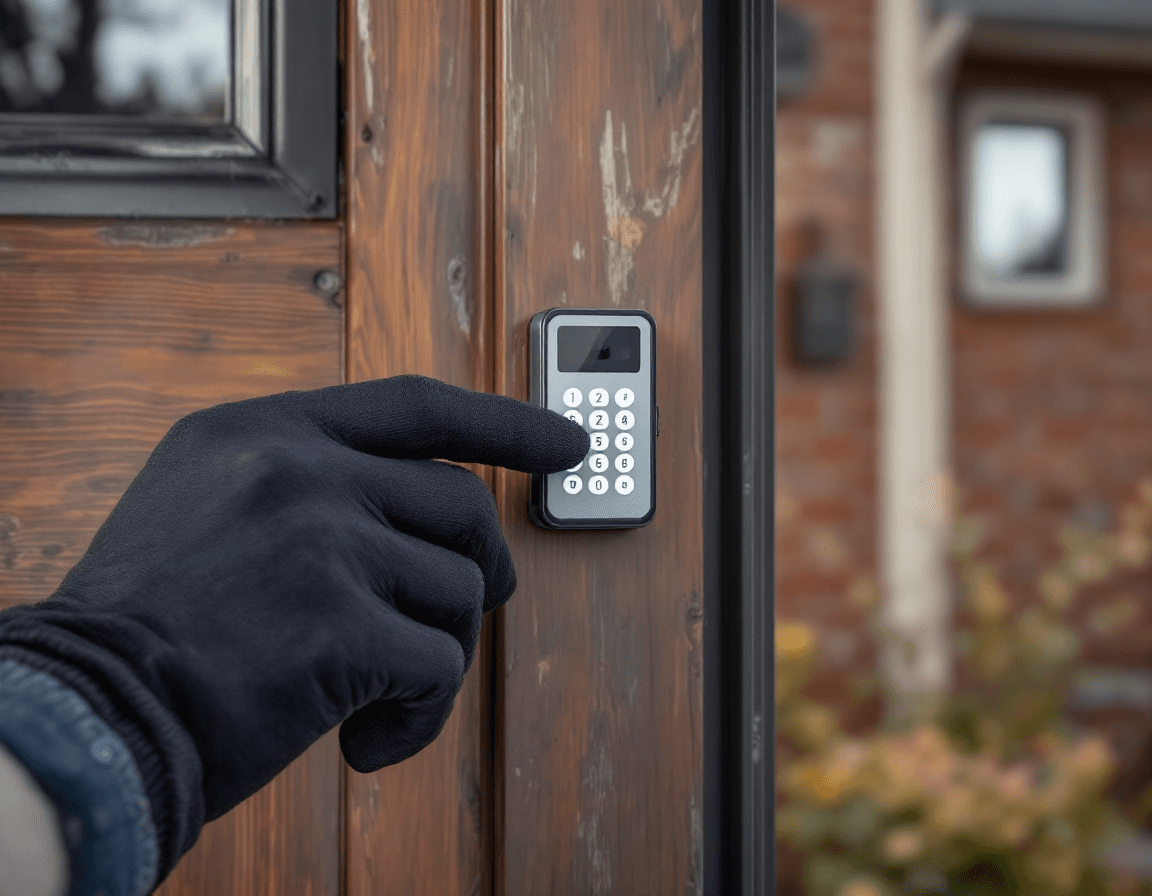
Garage door remote and keypad service in Edgewood, WA is one of the most common calls we take, and it is often the easiest fix in the whole system. A remote that stops working or a keypad that rejects a code you know is correct usually points to a battery, a sync problem, or a setting that drifted out of alignment, not a failed opener. Our technicians serve Edgewood homes from the Pierce County side of the greater Seattle area, and we bring the programming tools, replacement remotes and keypads, and the experience to get your door responding again on the first visit. Pricing for remote programming, keypad installation and troubleshooting, and in-car opener pairing generally runs $65 to $185, with the cost of any new remote or keypad added on.
Edgewood's mix of single-family homes, newer driveways, and longer runs from the street to the garage means a lot of families depend on their remotes every day, sometimes from the car in the rain. That daily reliance makes a fading remote or a stubborn keypad more than an inconvenience. It can leave you sitting in the driveway with groceries while the door refuses to move. This page walks through the most common problems we see, how we approach each one, what you can check yourself before calling, and where the work stops being a DIY job and becomes a job for a licensed professional.
Why Remotes Wear Out Faster in the Puget Sound Damp
Western Washington's wet, mild winters are hard on small electronics, and garage door remotes are no exception. Humidity works its way into battery compartments, causing corrosion on the contacts that can interrupt the signal long before the battery is fully drained. Many remotes are carried on keychains that spend the day in jacket pockets, cup holders, and gym bags, so they take knocks and get exposed to rain on the way in from the car. The result is a remote that works fine in the kitchen and fails at the end of the driveway.
Temperature swings matter too. Our cool, damp mornings and occasional cold snaps can slow down a weak battery, so a remote that seems fine in July may start behaving erratically in January. Wet pavement and heavy cloud cover can also make a marginal signal less reliable, especially when a remote is already near the end of its life. None of this means the remote is defective. It means the margin for error is smaller here than in drier climates, and a little preventive attention goes a long way.
When we arrive at an Edgewood home for a remote complaint, we start by checking the simplest factors: battery condition, contact corrosion, and whether the remote case has cracked or let moisture in. We then test the remote at the door and at a few distances, because range problems often show up as a remote that works in the driveway but not from the sidewalk. This step-by-step approach usually separates a cheap, quick repair from a larger problem that needs a deeper look at the opener itself.
Diagnosing a Remote That Works Only Some of the Time
Intermittent operation is the most frustrating symptom because it makes the problem seem random. Often it is not random at all. A remote that works on the second or third press is frequently signaling a battery that is nearly spent, a button pad with a worn contact, or a case that has allowed moisture to reach the circuit board. Before you call, you can run a few quick checks that will help our technician diagnose the issue faster.
- Replace the battery with a fresh one of the same type, and wipe the battery contacts with a dry cloth or a pencil eraser if you see any dullness or residue.
- Stand at the same spot you usually use, then try the remote from the driveway, the sidewalk, and the car door to see whether the signal weakens with distance.
- Check whether the failure is limited to one button. If only one button fails, the pad or internal contact is more likely the culprit than the opener.
- Look for obstructions nearby, such as a new metal shelf, a large vehicle parked at an angle, or a neighbor's new electronics that may be interfering with the signal.
- Note whether the problem happens only in wet weather or after the remote has been in a pocket all day, since that pattern points toward moisture or heat exposure.
If these checks do not fix the issue, we will inspect the opener's receiver and antenna wire, since a loose or damaged antenna can cut range sharply. We also verify that the remote matches the opener's frequency and code type, because a remote from a different system may appear to work for a while and then fail. Diagnosing the problem correctly means we replace only what is necessary, which keeps your costs predictable.
Keypads That Reject a Code You Know Is Right
A keypad that refuses your code is another common call, and it is often caused by something simple like a stuck button, a code that was changed without your knowledge, or a keypad that has lost its connection to the opener. Exterior keypads in Edgewood sit exposed to rain, wind-blown debris, and the constant cycle of wet and dry, and the membrane under the buttons can degrade over time. When a number pad starts ignoring certain digits, the cause is usually the keypad itself rather than the door.
We approach keypad problems in a clear order. First, we confirm the keypad is receiving power and that the connection to the opener is intact. Next, we test each button and check whether the code you are entering matches what the keypad was last programmed to accept. If a code was reset by a previous owner, a family member, or a service visit years ago, we can reprogram the keypad so that you control the access code going forward. We also check the wiring run for moisture intrusion, since water getting into a junction box is a frequent cause of erratic keypad behavior after a wet winter.
Sometimes a keypad that works for a few weeks and then fails is actually a sign of a weak power supply or a loose wire at the opener terminal. Replacing a keypad without checking these points can waste money and leave the real problem in place. Our goal is to get you a reliable entry point that responds to the right code every time, with the wiring and weather protection checked as part of the job.
Adding an Exterior Keypad Beside a Side Gate or Driveway Entry
Many Edgewood homeowners want an exterior keypad so that family members, dog walkers, or contractors can enter the garage without carrying a remote. A keypad mounted near a side door or a second entry point can be a real convenience, but placement matters. It should be installed where you can see it clearly, where it is protected from direct spray, and where the wiring can be routed without crossing unprotected or exposed runs. Mounting height and a stable wall surface also make a difference in how long the keypad lasts.
Installing a keypad involves more than screwing a plate to the siding. The unit must be wired to the opener's control terminals correctly, the wiring should be protected from moisture, and the programming must be set up so that the code works reliably and can be changed later. We often recommend a weather-rated keypad for exterior use, since standard indoor-rated models can fail after a few seasons of rain and temperature change. Whenever we add a keypad, we also confirm that the lock and door function as intended, because a keypad that opens the door without any confirmation can create a safety concern if the door is not clearly visible.
If you are considering a keypad for a gate or side entry, tell us where you want it before we visit. We can look at sight lines, the path of the wiring, and the best spot to keep it dry and easy to use. A little planning at the start usually prevents a second visit later.
Pairing Your Car's HomeLink Buttons Without the Guesswork
Built-in garage door buttons in many vehicles, often branded as HomeLink or similar systems, can be a real convenience, but they are notoriously fussy to set up. The programming sequence changes by make, model, and year, and the instructions in the owner's manual are not always easy to follow. Many drivers try the process several times, get partway through, and end up frustrated. Our technicians handle in-car opener pairing as a routine part of remote service, so you do not have to sit in the driver's seat trying to decode a diagram.
The pairing process generally involves putting the opener into learn mode, then pressing and holding the vehicle button while the opener signal is registered. Some systems use a rolling code, which means the car and opener must stay synchronized, and that synchronization can drift if the button is pressed many times while out of range. Some vehicles also require you to press the button a few times to finish the sync, and not every opener is compatible with every vehicle system. We confirm compatibility before we start, then complete the pairing and test it from the driveway and from the street.
When pairing does not take on the first attempt, we check the opener's learn button, the battery in the vehicle's transmitter if it has a separate one, and whether the car's built-in system is set to a frequency the opener supports. We would rather tell you honestly that a particular combination will not work than leave you with a button that does nothing. If a vehicle or opener is incompatible, we can recommend a practical alternative such as a visor-mounted remote.
Lost or Stolen Remotes and Securing the Door Again
A lost remote can feel like a minor problem until you realize that anyone who finds it may be able to open your garage. Security matters here, especially in neighborhoods where people park in driveways and leave garage doors on a remote-controlled schedule. The good news is that most openers allow you to erase every existing remote and keypad code at once, so the old remote stops working even if you do not know where it went. This is one of the most valuable things we can do during a service call, because it puts control back in your hands.
Our process for a lost remote starts with a quick review of which remotes and keypads are currently programmed to the opener. We then clear the old codes using the opener's learn or erase function, which typically requires pressing a button on the opener's motor unit and holding it for several seconds. After that, we program your replacement remotes, keypad codes, and any vehicle buttons you want to keep. Once the system is reset, the lost remote will no longer open the door, and you can confirm that by testing the new equipment.
Many homeowners ask whether a lost remote should be replaced immediately. The answer is usually yes, because the cost of a new remote is modest compared with the risk of an unknown device having access to your garage. If you have also lost a keypad code or shared a code with someone who no longer needs access, changing it at the same visit is a smart move. We will walk you through the options so you can decide what makes sense for your household.
Replacement Remotes, Keypads, and What Shapes the Final Price
Our standard service price for remote programming, keypad installation and troubleshooting, and in-car opener pairing generally falls between $65 and $185, depending on what the visit involves. Simple remote programming on a working opener is usually at the lower end, while a multi-device sync, a keypad installation with new wiring, or a vehicle pairing that takes extra time may land higher. Any new remote or keypad you choose is charged separately, since those parts vary in features, weather rating, and compatibility with your opener. We will confirm the price with you before work begins.
Parts selection depends on what your opener needs. Some openers accept a wide range of universal remotes, while others require a specific frequency or code type. Keypads come in basic and weather-rated versions, and some offer features such as a backlit display, multiple user codes, or a timer for temporary access. We help you choose a part that matches your opener and your household's needs, rather than selling a more expensive model that you do not need. If your opener is old enough that compatible parts are hard to find, we will say so plainly and discuss your options.
Because prices depend on the exact job, we encourage you to describe the issue when you call. Tell us whether the remote is failing, whether you need a keypad, or whether you want your car paired, and mention how many devices you have. That information lets us give you a clearer estimate and prepare the right parts before we arrive. It also helps us avoid unexpected charges at the door.
What a Remote or Keypad Visit Looks Like From Start to Finish
Many homeowners feel uncertain about what happens during a service call, so it helps to know the sequence. Our technician will introduce themselves, review the symptoms you describe, and ask a few questions about your opener brand, the age of the system, and any recent changes. We then inspect the opener, the remotes and keypads you have, and the wiring, paying attention to moisture and wear. Once we understand the problem, we explain the options and the price before we start any work.
- Initial review of the symptoms, the opener make if known, and any recent changes or repairs.
- Testing of the existing remotes, keypads, and vehicle buttons at the door and from several distances.
- Inspection of batteries, contacts, wiring, and the antenna, with attention to moisture and corrosion.
- Clearing or reprogramming codes as needed, including any lost-remote security reset.
- Installing or programming replacement parts, then testing each device from inside and outside the garage.
- Walking you through the final setup so you know how to program additional codes later.
When the visit is complete, we test the door multiple times to confirm reliable operation. We also show you how to change keypad codes and how to erase a lost remote in the future, so you are not dependent on a service call for simple tasks. If anything remains unclear, we invite questions before we leave the property.
Safety Limits: Where Remote Work Ends and Licensed Spring Work Begins
Remote and keypad service is one of the safer categories of garage door work, but it is not the whole picture. Garage doors are heavy, and the springs and cables that counterbalance them store a great deal of energy. Even when a remote problem seems minor, the underlying cause could involve a door that is out of balance, a worn cable, or a spring that has begun to fail. For that reason, we always recommend a licensed professional for any spring or cable work, and we will tell you clearly when a problem falls into that category.
If your door opens unevenly, makes grinding or popping noises, hangs crooked, or fails to hold its position when partly open, we will stop and explain what we see. Attempting to adjust tension or replace a spring without the right tools and training can cause serious injury, and it can also damage the door. We do not recommend that homeowners try to repair springs or cables themselves. Our licensed, bonded, and insured team can assess the door and recommend the right course of action.
It is also wise to keep the door's manual release in mind during any remote troubleshooting. Test the manual release only when the door is closed and never while it is moving, and keep children and pets clear of the door during testing. If you notice anything unusual during a remote or keypad problem, unplug or disconnect power to the opener if it is safe to do so and call us before continuing.
Serving Edgewood Homes and Nearby ZIP 98372 Neighborhoods
Edgewood's residential areas, including the streets around Edgewood Meadows, have a suburban character that many families value for its quiet pace and room for driveways. Our technicians understand the typical layouts, from older homes with a single opener to newer builds with multiple garage doors or detached structures. We bring a practical approach to each property, working around parked vehicles, pets, and busy family schedules so that the visit causes as little disruption as possible. When we arrive, we will ask where your remotes are usually kept and how you normally enter the garage, since those details help us solve the problem faster.
Homes in ZIP 98372 vary widely, and so do the openers and remote systems inside them. We service many brands and generations of equipment, and we keep a range of replacement parts on hand for common needs. If your opener is unusual or the parts are hard to find, we will be honest about timing and options. Our aim is to restore reliable, secure access to your garage with clear pricing and straightforward communication.
Whether your remote is failing in the rain, your keypad will not accept your code, or you have lost a remote and want the door secured again, we can help. Call Seattle Garage Door Fix at (888) 799-3819 to schedule remote and keypad service in Edgewood, and we will confirm the details, the price range, and the earliest visit we can offer.