
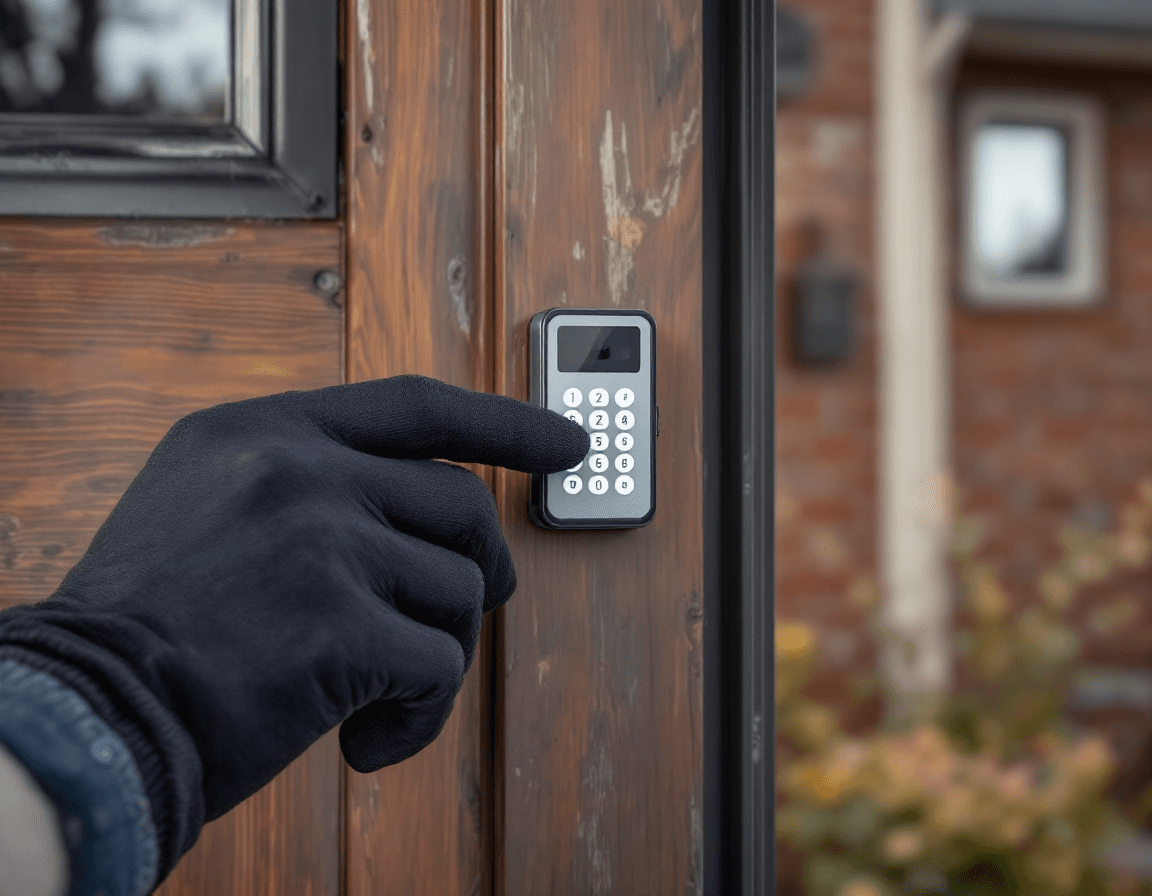
Garage Door Remote & Keypad Service in Poulsbo, WA is one of the most common calls we get from homeowners around Liberty Bay, and it is often the easiest fix on the list. A remote that stops working at the end of a rainy week, a keypad that rejects a code you have used for years, or a car that no longer opens the garage can all make a routine morning feel like a crisis. Most of the time the opener itself is fine, and the problem lives in the handheld remote, the keypad, the battery, or the way the system was paired. Seattle Garage Door Fix handles these problems across Poulsbo and the surrounding Kitsap County neighborhoods, and this page explains what we check, what we fix, and what you can expect.
Poulsbo's mix of older craftsman homes near downtown, newer subdivisions on the hillsides, and waterfront properties with detached shops means that no two garages are set up the same way. Some households have one opener with two remotes and a keypad by the side door, while others have a three-car garage with separate openers and a vehicle that has built-in buttons. The common thread is that remote and keypad issues rarely announce themselves clearly. Instead, they show up as hesitation, skipped presses, or a door that responds only when you stand in one particular spot. Understanding those patterns is the first step toward a quick repair.
This page walks through the situations we see most often in and around Poulsbo, the signs that point to a specific cause, what a typical visit involves, and how our pricing works. Our service range for remote programming, keypad installation, keypad troubleshooting, and in-car pairing is $65 to $185, with any new remote or keypad billed in addition. If you would rather talk through your setup before booking, the number at the end of this page reaches our team directly.
Why Remotes Along the Bay Fail Sooner Than You Expect
Homes close to Liberty Bay live with a level of humidity and salt-tinged air that inland garages rarely face. Moisture finds its way into the plastic housing of a handheld remote, and it can corrode the battery contacts or the small circuit board inside. Many remotes that fail in our area are not actually broken in the sense of a dead transmitter. The contacts have oxidized, so the battery sends power only when the case is pressed at a certain angle, which is why the remote seems to work on some days and not others.
Pacific Northwest winters add another layer of trouble. Cold mornings slow down button-cell batteries, and a remote that worked perfectly in October can feel sluggish in January. Garages in Poulsbo also tend to be attached to houses that sit on slopes, which means the door may be farther from the opener's receiver than the manufacturer's sample layout assumed. Thick walls, metal siding, and a nearby storage unit can all weaken the signal just enough to make a marginal remote unreliable.
When we arrive for an intermittent remote call, we start by replacing the battery with a fresh one of the correct type, cleaning the contacts, and testing from the driveway, the sidewalk, and the spot where you normally park. We also check whether the opener's antenna wire is hanging free or is tangled near metal components, since a loose antenna can cut range noticeably. In many cases, a clean battery and a fresh set of contacts resolve the problem without reprogramming anything at all.
Telling a Remote Problem Apart from an Opener Problem
Homeowners often blame the remote when the real issue is the opener or the door itself. Before you buy anything, it helps to notice exactly how the system behaves. A remote that works from one side of the driveway but not the other points to range or signal interference. A remote that fails across the board, including from inside the garage, suggests a battery problem or a receiver issue. A door that starts closing and then reverses may be a safety sensor problem, not a remote problem at all.
- The remote light does not come on at all: the battery is almost certainly depleted or installed backward.
- The light comes on but the door does not move: check the opener's power and the wall control first, then test the remote near the motor.
- The door moves only when you hold the button down: the remote is weak, the contacts are dirty, or the battery is aging.
- The door opens but then immediately reverses: the photo-eye sensors near the floor may be blocked, misaligned, or dirty.
- The keypad lights up but nothing happens: the keypad code may be wrong, or the keypad may not be linked to the current opener.
These distinctions matter because the fix for one problem can make another worse. Reprogramming a remote when the battery is the real culprit wastes time and can leave you thinking the new remote is also defective. Our technicians work through the list in a logical order so you are not paying for steps that do not address the cause.
Choosing a Replacement Remote That Actually Matches Your Opener
Replacing a remote is not as simple as grabbing one off a shelf. Garage door openers use specific radio frequencies and encryption methods, and a remote that looks identical can be incompatible with your motor. Many openers operate on 315 MHz or 390 MHz, and newer systems use rolling code technology, which changes the transmitted code every time you press the button so that intercepted signals cannot be reused. A replacement remote must be designed for your opener brand and generation, and it must be programmed into the motor's memory before it will work.
When you call us about a replacement, it helps to know the brand name printed on the opener's motor unit or the label on the old remote. If you can read the model number, write that down too. If you cannot find either, our technician can identify the system on site by looking at the motor, the wall control, and any existing keypad. We carry common replacement options and can tell you whether a universal remote will work with your setup or whether a brand-specific unit is the safer choice.
Universal remotes are sometimes a reasonable option, but they come with tradeoffs. Some support only a subset of opener brands, and certain features, such as light control or multiple door support, may not function as expected. We will always explain the tradeoffs before we recommend a particular remote, and we will not push a higher-priced unit if your system does not need it. The final cost depends on the hardware you choose, which is why the remote itself is billed separately from our service range.
Keypads That Refuse Your Code
A keypad that will not accept your code is one of the more frustrating problems we see, especially for families who rely on it when they come home with groceries or when a teenager needs to get in after school. The most common reason is simple: the code was changed at some point, or someone entered it incorrectly several times and the keypad locked out for a period. Some keypads also require a battery replacement or a reset before they respond correctly, and wireless keypads can lose their connection to the opener if the battery drops below a usable level.
Wired keypads add another set of possibilities. Wiring can loosen over time, particularly where a cable runs through a garage wall that expands and contracts with temperature changes common to western Washington. Moisture can work its way into a connector and cause intermittent contact, so the keypad responds to some presses but not others. When we troubleshoot a wired keypad, we check the wire connections at both ends, test the keypad's signal at the opener terminal, and confirm the keypad is compatible with the opener's control board.
Resetting a keypad is usually more involved than people expect, because the steps differ from one manufacturer to another. We do not guess. We read the model, confirm the reset sequence, and walk you through the new code setup so you know exactly how to change it later. If the keypad is damaged beyond repair, we will explain the replacement options and quote the hardware separately from our service charge.
Adding an Exterior Keypad by the Front Door or Side Entry
Many Poulsbo households want a keypad mounted outside the garage, either near the front walkway or beside a side door, so that family members, a house sitter, or a contractor can enter without carrying a remote. An exterior keypad is a convenient addition, but it must be installed with weather in mind. Our area sees steady rain, wind-driven spray, and temperature swings, so the unit needs a sealed housing and a mounting location that keeps water from pooling behind it.
Installation begins with choosing a spot that is protected from direct downpours but still visible and easy to reach. We avoid locations where the keypad would sit in the path of a sprinkler line or collect runoff from a sloped driveway, both of which are common issues in neighborhoods with hillside lots. Mounting height matters too; a keypad that is too high can be awkward for children and older adults, and one that is too low can be exposed to splashback and road grime.
If your opener supports a wireless keypad, installation is often straightforward and avoids drilling through exterior siding. Wired keypads require running low-voltage wire through the wall, and we take care to seal every penetration so that moisture cannot enter the garage. Whichever type you choose, we test the keypad from outside, confirm the door responds reliably, and set up the code with you before we leave. Keypad hardware is billed separately, and we will walk you through the options before anything is ordered.
Pairing Your Car's Built-In Opener Buttons
Many vehicles sold in recent years include built-in garage door buttons, often branded as HomeLink, that can replace a separate remote on the visor or rearview mirror. Getting those buttons to work with your opener is a common request in Poulsbo, especially for households that have recently bought a new vehicle or moved into a home where the previous owner left an opener with unfamiliar hardware. The process varies by car make and model, and it can be surprisingly fussy, particularly with rolling code systems.
Pairing usually involves putting the opener's motor into learning mode, pressing the car's button while the opener responds, and sometimes repeating the sequence with a second press to confirm the signal. Some openers require a specific button on the motor unit to be pressed within a short window, while others need the original remote nearby to complete the handshake. We have the tools and procedures to handle these variations, and we will explain what to expect before we begin.
It is worth knowing that a car's built-in opener may not work with every garage system. Certain older openers or non-standard brands cannot be paired with vehicle systems, and in those cases we will suggest a remote or a keypad as a reliable alternative. We will never promise compatibility we cannot verify on your specific equipment, because a failed attempt wastes your time and can leave your car's system in an unexpected state that requires additional work to clear.
Lost Remote, Lost Peace of Mind: Re-Securing the Door
Losing a garage remote is more than an inconvenience. Anyone who finds that remote can potentially open your garage, and if the remote was stored in a car that was broken into or left with a key fob, the risk becomes more concrete. Many homeowners in Poulsbo do not realize that a lost remote stays programmed to the opener until the memory is cleared, which means the old device could still work indefinitely. Re-securing the door is one of the most important reasons to call a technician quickly.
The usual approach is to erase the opener's stored codes and then program only the remotes and keypads you still control. Most systems have a learn or program button on the motor unit, and holding it for several seconds clears every remote that was previously programmed. After that, each trusted device must be paired again, which means you will need to gather every remote your household uses and bring them to the appointment. This step can feel tedious, but it is the only reliable way to ensure a lost device cannot open the door later.
We recommend re-securing the door whenever a remote is lost, even if you think it will turn up. Once the memory is cleared, you can add replacements at your convenience, and you can also review whether the keypad code should be changed at the same time. Our technicians will walk you through each step so you understand what was cleared, what was reprogrammed, and what still needs your attention, such as updating a car's built-in buttons or a neighbor's access.
What a Remote and Keypad Visit Usually Includes
Every visit starts with a conversation about what is happening at your door. We ask when the problem began, whether it affects all remotes or only one, whether the keypad responds at all, and whether the door has been reversing or sticking. That information helps us decide where to look first and keeps the appointment focused. We also ask about any recent changes, such as a new vehicle, a storm that knocked out power, or a family member who recently moved out.
Once we are on site, the typical workflow includes a few core checks. We inspect the opener's power and wall control, test each remote at several points around the property, examine the keypad wiring or wireless link, and confirm the safety sensors are aligned and clean. When programming is needed, we perform it while you watch so you can see how each step works. We also leave you with a short summary of what was done and any maintenance you can handle yourself.
- Battery and contact check for every remote in the household
- Range test from the driveway, sidewalk, and parking location
- Keypad wiring or wireless link inspection and code verification
- Photo-eye sensor alignment and cleaning
- Programming or reprogramming of remotes, keypads, or vehicle buttons
- Memory clearing when a remote has been lost or sold
- A walk-through of the final setup so you can use the system confidently
Some problems uncover issues outside the scope of a remote call. If we find worn rollers, a stressed cable, or a spring that is failing, we will stop and explain the safety risk. Springs and cables store significant tension, and adjusting or replacing them should always be done by a licensed professional. We will never attempt spring or cable work as part of a simple remote visit, and we will recommend the appropriate next step if your door needs that level of repair.
Our Pricing for Remote and Keypad Service
Our service range for remote programming, keypad installation and troubleshooting, and in-car opener pairing is $65 to $185. That range covers the technician's time, the diagnostic work, the programming process, and the final testing. The exact amount within the range depends on what your system requires, such as how many devices need pairing, whether the keypad is wired or wireless, and whether the job includes clearing lost-remote memory or working through a more involved vehicle pairing.
Hardware is billed separately. If you need a new remote, a replacement keypad, or additional sensors, we will tell you the cost before anything is installed. You are never obligated to purchase a part we recommend, and if you prefer to source a remote yourself, we will confirm that it is compatible with your opener before programming it. We believe homeowners should understand the full cost before the work begins, so we walk through the total at the start of the appointment.
Because every garage is different, we cannot promise a specific total over the phone without seeing the setup. What we can do is explain the range clearly and tell you which factors are likely to affect your final price. For many Poulsbo homeowners, a straightforward battery replacement and a single remote programming falls at the lower end, while a lost-remote reset with multiple devices and a vehicle pairing may land higher. Our goal is to give you a clear picture, not a surprise.
Keeping Remotes and Keypads Reliable Through Wet Kitsap Winters
Prevention is one of the most effective ways to avoid remote and keypad headaches. A few simple habits can extend the life of your devices and reduce the chance of being stranded in the rain. Start by checking the batteries in every remote at the same time each year, perhaps when you change smoke detector batteries or adjust clocks. Replacing batteries before they fail completely prevents the frustrating half-working stage that often sends people to the phone.
Keep remotes out of the rain and away from damp cupholders or door pockets where condensation builds up. If a remote gets wet, remove the battery, dry the housing and contacts thoroughly, and allow it to sit for a day before reinstalling the battery. For exterior keypads, a periodic wipe-down removes salt residue and road grime, and a quick look at the seal can catch cracks before water gets inside. These small steps matter more in Poulsbo than many homeowners expect because the bay air is persistently damp.
- Replace remote batteries once a year, even if they still seem to work
- Store spare remotes indoors in a dry location, not in the car or on a damp shelf
- Wipe exterior keypads and check the gasket or seal each season
- Keep the opener's antenna wire straight and away from metal framing
- Test the remote from the driveway after any battery change or storm
- Write down your keypad code and store it safely, rather than relying on memory
When a Remote Problem Points to a Bigger Issue
Sometimes a remote call reveals a problem that needs more than a quick programming session. A door that reverses unexpectedly, a motor that hums without moving the door, or a keypad that clicks but never triggers the opener may be signs of a failing safety system, a worn drive component, or an electrical issue. These problems can affect the safe operation of the door, so we treat them seriously and explain exactly what we found and why it matters.
If we identify a problem that affects the door's balance, springs, cables, or track, we will stop and recommend a licensed professional for that work. Spring and cable repairs involve high tension and can cause serious injury if handled improperly, which is why we always direct that work to licensed technicians. We will never attempt it as part of a remote or keypad visit, and we will be clear about what the next step is so you can decide how to proceed.
Our aim is to solve the problem in front of you and to give you honest information about the rest of the system. Many Poulsbo homeowners appreciate knowing that their opener is in good shape, that their safety sensors are working, and that their remotes are secure. When a repair goes beyond remote service, we explain the options, provide the information you need, and let you choose what works best for your home and budget.
Get Your Poulsbo Garage Remotes and Keypads Working Again
If your remote is acting up, your keypad will not accept your code, your car's buttons will not pair, or you have lost a remote and want your door secured again, we are ready to help. Seattle Garage Door Fix serves Poulsbo and Kitsap County with licensed, bonded, and insured technicians who understand the bay air, the wet winters, and the garage setups common to local homes. Call (888) 799-3819 to describe what is happening at your door, and we will walk you through the next steps and the expected cost range before we arrive.