
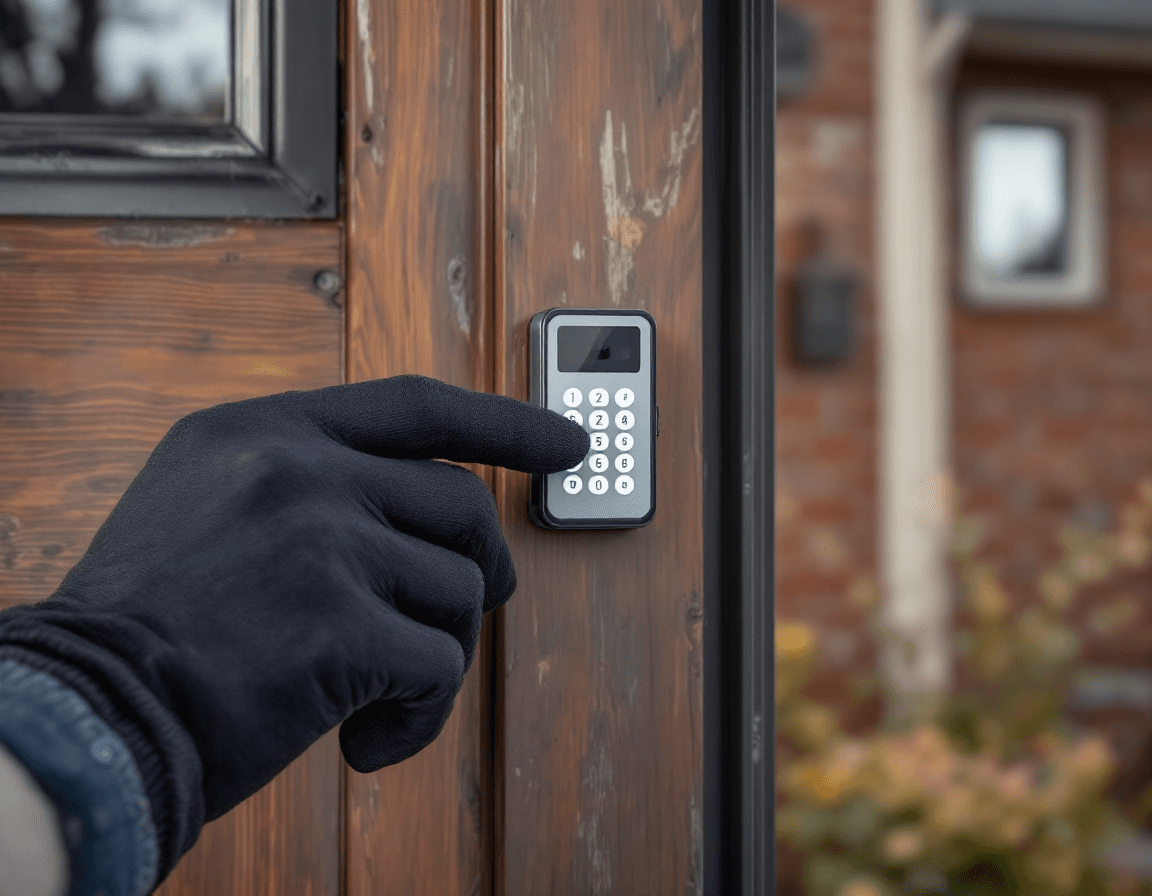
Garage Door Remote & Keypad Service in Maple Valley, WA covers one of the most common calls we take: a household that has quietly lost its easy way into the garage. Maybe the clicker stopped responding on a wet December morning, or the keypad by the side gate rejects a code that worked all summer. Either way, the problem is rarely serious, but it is frustrating, and it can leave you sitting in the driveway with groceries. Our technicians handle remote programming, keypad installation and troubleshooting, and in-car opener pairing for homes across Maple Valley and the surrounding King County foothills.
Most of these visits are short. A technician arrives with a range of compatible remotes and keypad hardware, identifies the opener system, and works through the faulty component until the door responds reliably again. Because the work is mostly electronic and involves no tension on springs or cables, it is one of the more approachable repairs for a homeowner to understand, even if you choose to have a pro do it. Knowing what is happening inside the opener makes it easier to describe the symptoms accurately when you call, and it helps you decide whether a battery swap is enough or whether the whole remote needs replacing.
Pricing for this service falls in the range of $65 to $185 for the labor and visit, and any new remote or keypad hardware is billed separately. The final number depends on how many devices need programming, whether a keypad needs to be mounted and wired, and how much diagnosis is involved before the real fault is found. We would rather explain those variables up front than surprise you at the door, so the sections below walk through what to expect, what can be done on your own, and when it makes sense to call.
Why Remotes Give Up Faster in Our Damp Western Washington Winters
Maple Valley sits in a part of King County where autumn and winter bring long stretches of drizzle, low cloud cover, and humidity that rarely drops far below the saturation point. That moisture gets into places it should not, especially in remotes that live clipped to a visor or sitting in a cup holder, exposed to cold air every time the car door opens. Battery contacts corrode faster in this climate, and a thin film of residue can interrupt the connection enough to make a remote work only when you hold it at a certain angle. Many homeowners describe the symptom as the remote working on Tuesday and failing on Thursday, and humidity swings are a common reason why.
Temperature changes add another layer. A remote that has been sitting in an unheated car overnight during a cold snap may respond sluggishly until the battery warms, and a remote kept in a damp jacket pocket may short intermittently as moisture bridges the button contacts. Keypads mounted on exterior walls face the same conditions year-round, and their seals and wiring connectors can gradually admit water if the caulking or gasket has aged. We see this most often on keypads that were installed with a standard outdoor-rated box but have been exposed to several seasons of heavy rain without maintenance.
Because the region receives significant rainfall, it is worth checking the weather seal on exterior keypads and the placement of any outdoor sensors at least once a year. Simple habits help: keep spare remote batteries on hand, store extra remotes indoors rather than in the car, and wipe the keypad face after storms so grit and water spots do not build up on the buttons. None of this replaces a proper inspection, but it does reduce the number of mysterious failures that show up after the first real atmospheric river of the season.
Diagnosing a Remote That Only Works Some of the Time
An intermittent remote is one of the most confusing problems a homeowner can face, because the same button sometimes works and sometimes does nothing at all. The first step is to separate the remote from the opener itself. Stand a few feet from the door, press the button, and watch the indicator light on the remote. If the light flashes but the door does not move, the remote is transmitting and the fault may be in the opener's receiver, the wall control, or the safety sensors. If the light does not flash at all, the battery, contacts, or internal circuit is the more likely culprit.
Technicians usually work through a short checklist before deciding whether the remote is failing. The most common issues we find are simple to describe, and many can be ruled out in a few minutes:
- Battery voltage has dropped below the level needed for a reliable signal, even though the light still flashes faintly.
- Corrosion or moisture is sitting on the battery terminals or the button contact pad inside the case.
- The remote has been dropped or flexed, cracking a solder joint on the circuit board.
- The opener's antenna wire has been damaged, pinched, or disconnected, which weakens reception for every transmitter in the house.
- Nearby wireless devices, including some doorbells and smart-home hubs, are interfering with the signal at the same frequency.
Maple Valley homes built in different decades often have different opener generations, and the antenna situation can vary a great deal. A wire antenna dangling from the power head should hang straight down, not coiled or stapled to a joist, and an antenna that has been replaced with a loose piece of wire may be far less effective than the original. We check this during every service visit because it is inexpensive to correct and often transforms a flaky remote into a dependable one.
Choosing a Replacement Remote Without Guessing at the Frequency
When a remote is lost, damaged beyond repair, or simply too old to be worth saving, a replacement is the logical fix. The critical detail is compatibility. Most residential openers use rolling-code technology, and the remote must match the receiver's frequency and encoding scheme. Many openers in the United States operate on either 315 MHz or 390 MHz, and some newer units use other standards or proprietary encoding. Buying the wrong remote is one of the easiest ways to waste money, so it is worth identifying your opener before you order anything.
The opener brand and model number are usually printed on the motor housing or the label on the back of the power head, and that information narrows the choice considerably. Some systems can accept universal remotes that cover several frequencies, while others require a specific manufacturer's transmitter. Keypads follow similar rules, and a wireless keypad must be paired to the same receiver that controls the remote. When we replace a remote, we confirm the frequency, program the new device, and test every button on the unit so you do not discover a dead function six months later.
If you already own a working remote that you simply want to duplicate, programming a second unit is usually faster than starting from scratch. The existing remote is used to put the receiver into learning mode, and then the new transmitter is taught the same code. Keep in mind that adding a remote does not erase older ones unless the opener is cleared first, which becomes important when a device has been lost, as discussed later in this page.
When Your Keypad Rejects a Code You Know Is Correct
A keypad that refuses a code it used to accept can be unsettling, especially if the door is the only entrance you use daily. Before assuming the keypad has failed, try the basics: confirm that you are entering the code correctly and that the keypad is not locked out after several incorrect attempts. Many keypads temporarily disable input for a set period after repeated errors, and the light pattern on the unit will usually indicate that condition. Waiting a few minutes and trying again sometimes resolves the problem without any repair at all.
Persistent rejection usually points to one of several causes. The keypad may have been reset during a power interruption, a battery backup may have failed, or the code may have been overwritten when a new device was added to the system. Wired keypads can also develop problems at the connection point where the wire meets the terminals, especially if the exterior run has been exposed to moisture or rodent damage. Wireless keypads are subject to the same battery and interference issues as remotes, and in our climate they are particularly prone to corrosion inside the battery compartment.
Re-entering a code involves a learning sequence specific to each manufacturer, and the steps are not always intuitive. A technician can reset the keypad, re-enter the code, and confirm that the receiver recognizes it. We also check for signs that the keypad has been tampered with or has begun to fail electronically, because a keypad that accepts codes intermittently may be near the end of its life even if it is working today.
Adding an Exterior Keypad Near the Side Gate or Entry
Many Maple Valley households want a keypad mounted on the outside of the garage or near a side gate, so family members, cleaners, or dog walkers can enter without carrying a remote. Exterior keypads are convenient, but they require careful placement. The unit should sit where it is protected from direct spray off the driveway, away from downspouts, and at a height that is comfortable without being exposed to casual tampering. A keypad mounted under a sheltered eave will last considerably longer than one hanging in an open exposed spot.
Installation can be wireless or wired. Wireless models are easier to add to an existing setup and avoid running new cable through siding, but they depend on battery life and reliable signal strength. Wired keypads offer more consistent performance and can be more secure in some configurations, but they require careful routing and sealing at every penetration. Either way, the keypad must be paired with the opener, and a test cycle should confirm that the door responds correctly every time the code is entered.
We also talk through code management with customers before installation. A keypad code should be unique, memorable to the people who need it, and not based on an address or birthday that could be guessed easily. If a household member moves out or a service provider no longer needs access, the code should be changed. Keeping a written record of who knows the code, stored somewhere secure inside the house, prevents confusion later.
Pairing Your Car's Built-In Opener Buttons
Many vehicles sold in recent years include a built-in universal opener system that can be programmed to operate a garage door, and in the industry the best-known version is HomeLink. Owners often assume that this feature is automatically connected to their home, but pairing does not happen by magic. The process generally requires the car to be parked in the garage or within range of the opener, the vehicle's buttons to be placed into learning mode, and the existing garage remote or wall unit to be used to transmit the signal during setup. Some systems require a rolling-code verification step, which means pressing the button a second time after the door has cycled.
Pairing can fail for predictable reasons. The vehicle may be in the wrong mode, the opener may be too old to support the newer rolling-code protocol, or the vehicle's transmitter may be using a frequency that does not match the receiver. Some cars also require the battery to be fully charged, and an aging vehicle battery can cause the process to time out before the code is saved. In Maple Valley, where many households have more than one vehicle, it is common to pair the car and the garage door only to discover that the second vehicle is using a different set of buttons entirely.
If your car's buttons still do not work after several attempts, do not keep pressing them repeatedly, because some systems will lock out the process after too many failed tries. A technician can determine whether the opener is compatible, confirm that the vehicle has been correctly placed in learning mode, and walk through the sequence with you. Some pairings are difficult or impossible with certain openers, and an honest assessment is more useful than a promise that everything will work.
Lost or Stolen Remote: Locking Out the Old Code
A missing remote is more than an inconvenience. Anyone who finds it could potentially open the garage if the code has not been changed, and in a neighborhood where many homes have attached garages and yards, that risk deserves attention. The right response is to clear the opener's memory of the lost transmitter's code rather than simply buying a new remote and hoping the old one is forgotten. Most openers can erase all stored codes through a learn button sequence on the power head, after which every remote and keypad must be reprogrammed.
That process takes some time, but it is the only reliable way to confirm that the lost unit no longer works. We recommend clearing the codes, reprogramming the remotes you still have, and testing each keypad and vehicle button individually. If a family member lost a remote at a trailhead near Lake Wilderness or left one in a rental car, a full code reset is worth doing even if the remote has not turned up, because the risk is not limited to the immediate area where it went missing.
Once the codes are cleared, it is also a good moment to review the rest of the system. Check the safety sensors near the floor, confirm the auto-reverse function responds correctly when the door meets resistance, and make sure the wall control is working as expected. Those checks are part of a responsible security review, and they cost little compared with the peace of mind they provide.
What a Service Visit Covers and What It Costs
Our remote and keypad visits typically begin with a conversation about the symptoms, the make and model of the opener if known, and the devices you want to use. The technician then tests the opener's response to each remote, checks the keypad, verifies the antenna and safety sensors, and programs any new devices. Parts such as replacement remotes or keypads are priced separately, and we will tell you the cost before anything is installed. The labor range for the visit is $65 to $185, depending on how much programming, diagnosis, or mounting is required.
Here is what most visits include, so you can plan accordingly:
- An inspection of the opener's receiver, antenna, and wall control for signs of damage or interference.
- Testing of every existing remote, keypad, and paired vehicle button, with notes on what works and what does not.
- Programming or reprogramming of remotes, keypad codes, and in-car buttons as needed.
- Clearing of stored codes when a remote has been lost or a household member no longer needs access.
- A safety check of the auto-reverse system and photo-eye sensors near the floor.
Some jobs are simple enough to finish in one visit, while others, such as a wired exterior keypad run through a damp wall, may need a second appointment. We will always explain the difference before the work begins, so you can decide what makes sense for your household and budget.
When to Call a Licensed Professional Instead of Doing It Yourself
Remote programming and keypad troubleshooting are often straightforward enough for a careful homeowner to attempt, and many people successfully replace a battery, clear codes, or re-pair a remote using the manufacturer's instructions. However, the moment a task involves the door's springs, cables, drums, or tension, it should be handled by a licensed professional. Garage door springs store enormous energy, and a single mistake during adjustment or removal can cause serious injury. Even a seemingly minor issue, such as a cable that looks frayed, should never be approached with makeshift tools or without training.
If your remote problem turns out to be accompanied by an unusual noise, a door that sits crooked, or a spring that appears to have broken, stop there and call us. Our technicians are licensed, bonded, and insured, and they can address the electronic side of the problem while also identifying any mechanical hazards that need immediate attention. Please do not attempt spring or cable work yourself, regardless of how simple the instructions appear online.
Whether your garage needs a new remote, a freshly paired car, or a keypad that works in the November rain, the Seattle Garage Door Fix team is ready to help Maple Valley homeowners get back in without the guesswork. Call (888) 799-3819 to schedule a visit, describe what your remote or keypad is doing, and we will let you know what to expect before we arrive.