
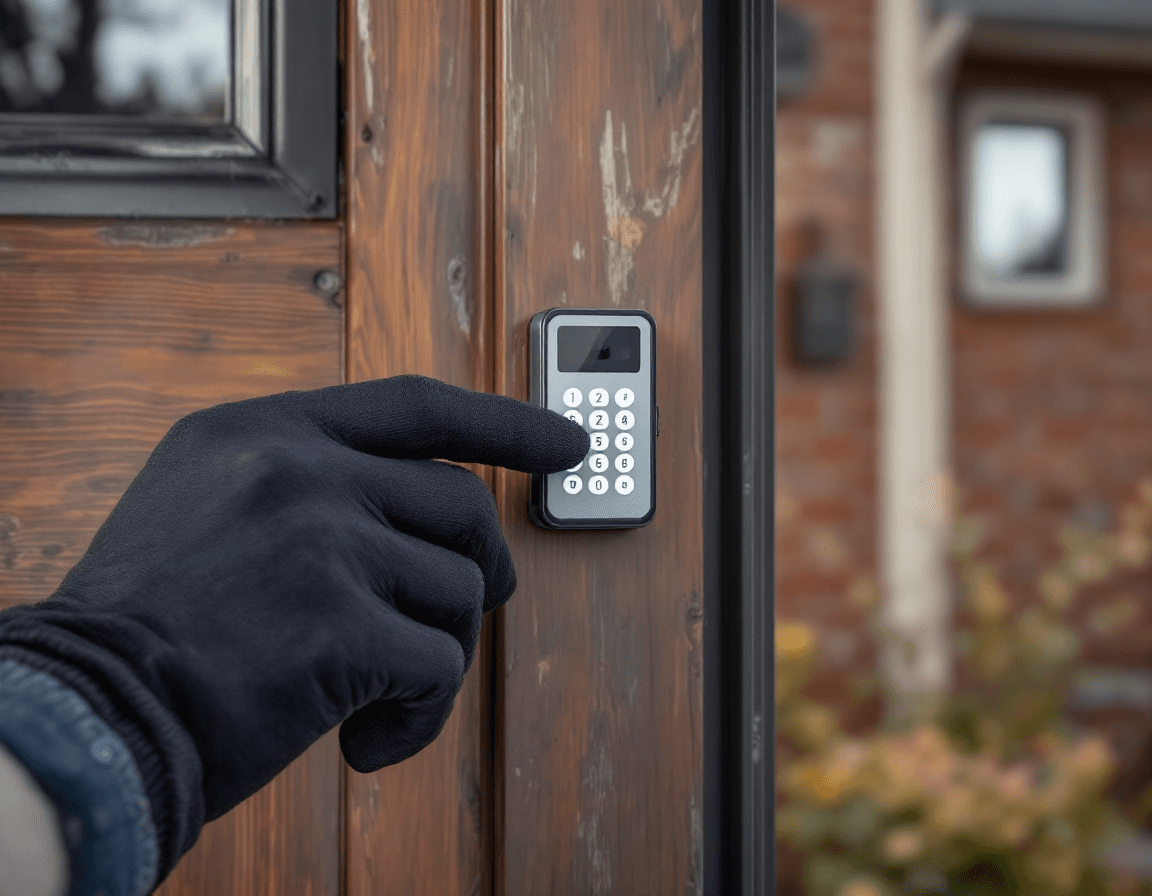
Garage Door Remote & Keypad Service in Black Diamond, WA keeps homeowners on the Plateau and around the lake from getting stuck outside their own garages. Black Diamond sits on the rural edge of King County, where many driveways are long, garages are often detached or set back from the street, and a dead remote can mean a wet walk back to the house with groceries in tow. Seattle Garage Door Fix handles remote programming, keypad installation and troubleshooting, and in-car opener pairing for homes across the 98010 area, including neighborhoods near Ten Trails and the shoreline around Lake Sawyer.
Most remote and keypad problems look dramatic but have simple causes. A remote that works in the driveway and fails at the end of the block, a keypad that rejects a code you have used for years, or a car that suddenly refuses to open the door can each point to a different fault. Some are as minor as a weak battery or a button that has worn through its contact. Others come from a receiver that has lost its memory, a keypad that has taken on moisture, or a vehicle that was never fully paired after a battery change or dealer service. Knowing which category you are in saves time and keeps you from buying parts you do not need.
This page explains how our technicians approach these calls, what you can safely check yourself, when a visit makes sense, and what the service typically covers. Our pricing for remote programming, keypad work, and in-car pairing runs $65 to $185, with the final figure depending on the job and the equipment involved. A replacement remote or keypad is priced separately. We are licensed, bonded, and insured, and any work involving springs, cables, or door hardware should always be handled by a trained professional, which we will discuss where it matters.
Why Remote Trouble Seems to Cluster in Black Diamond Homes
Remote problems in Black Diamond often have more to do with environment and property layout than with the equipment itself. Many homes here sit on larger lots with detached garages, shop buildings, or outbuildings that sit between the house and the door. Signal from a remote has to travel through those obstacles, and in some cases through a thick band of cedars or fir, before it reaches the opener. A remote that worked fine when the garage was new can begin to act up after landscaping, a new fence, or a metal shed goes up nearby.
The Pacific Northwest climate adds its own pressure. Long stretches of wet, cool weather mean moisture gets into keypad housings, battery compartments, and the small switches inside handheld remotes. Winter cold snaps, which come often enough to notice on the Plateau, can drain a coin cell battery faster than expected, and that battery may test fine on a bench but fail when the remote is pressed in a cold driveway. Summer brings its own issues, including dust and pollen working into button seals and heat that can warp a plastic housing left on a dashboard.
Lake Sawyer and the surrounding wooded areas also mean many homes have outdoor lighting, backyard equipment, and neighbors with their own remote systems running on similar frequencies. Most of the time this causes no trouble at all. Occasionally, though, a crowded signal environment or a weak receiver antenna results in a remote that works most days and fails on others. When we see intermittent behavior, we look at the whole picture rather than assuming the remote is at fault.
Telling a Failing Remote Apart From a Receiver Problem
The first diagnostic question is simple: is the problem with the transmitter in your hand, or with the receiver mounted on the ceiling of the garage? A failing remote typically works at close range and drops off as you move away, or it responds only when you hold a button down for several seconds. A receiver problem usually affects every transmitter at once, including wall-mounted keypads and any in-car buttons that are paired to the system. If nothing you own will open the door, the receiver, its power supply, or the wiring to the safety sensors is the more likely culprit.
Intermittent operation deserves careful attention because it can mean several things at once. A remote that works sometimes may have a worn button contact, a cracked solder joint on its circuit board, or a battery that is almost depleted. Each of those problems looks similar from the driveway, but they have very different fixes. Our technicians test the remote's output, check the battery contacts for corrosion, and compare its signal against the receiver to determine whether replacement is the right call.
Some homeowners assume their opener has failed when the real issue is a safety reversal fault. If the door starts to close and then reverses, or if the light blinks and the door refuses to move, the safety sensors near the floor may be misaligned or blocked. That is not a remote problem, but it can look like one, so it is worth ruling out before you spend money on new transmitters. Dirty sensor lenses, a bent bracket after a bump from a vehicle, or a sensor wire chewed by a rodent are common causes in rural garages.
Quick Checks You Can Do Before Calling a Technician
Before scheduling a visit, a few basic checks can save you time and sometimes solve the problem outright. Start with the remote itself, since a weak or dying battery accounts for a large share of calls we handle. Replacing the battery with a fresh one of the correct type, usually a 3-volt coin cell such as a CR2032 or CR2025 for many modern remotes, is inexpensive and takes less than a minute. Check that the battery is seated with the correct polarity and that the contacts are clean and not bent.
If the new battery does not help, try the remote from a few different positions in the driveway and at the door. Note whether the opener light flashes when you press the button, since that tells you the signal is reaching the receiver. Also check the wall-mounted control panel inside the garage to confirm it still operates the door, because a dead wall button points toward the opener rather than the remote. If the light on the opener does not respond at all, check the breaker and the outlet the opener is plugged into before going further.
- Replace the remote battery with a fresh one of the correct type and check the contacts for corrosion.
- Test the remote from the driveway, the sidewalk, and the garage door, noting any change in range.
- Confirm the wall control works, since that helps separate remote faults from receiver faults.
- Inspect the safety sensors for debris, misalignment, and damaged wiring, and make sure the sensor lights are steady.
- Check the breaker and outlet serving the opener, and look for any recent power interruptions.
If these steps leave you with a door that will not respond to any transmitter, or if you notice any cracked wiring, burned smell, or loose hardware, stop troubleshooting and call a licensed technician. Electrical faults and torsion spring issues carry real risk, and they should never be treated as weekend projects. A door that is heavy, hung unevenly, or making loud snapping sounds needs a professional inspection before anyone attempts to operate it manually.
Reprogramming Remotes and Teaching a Receiver New Codes
Programming a remote is one of the most common services we provide in Black Diamond, and the process depends on the opener brand and its age. Older openers often have a "learn" button on the motor unit that must be pressed, followed by a button on the remote within a short window. Newer rolling code systems use the same basic idea but require careful sequencing, and some models only accept a limited number of paired transmitters. Our technicians know how to work through these differences without wiping codes you still need.
One thing homeowners often overlook is how many remotes the receiver can hold. Many systems store a set number of codes, and once that memory fills, adding another remote may require clearing the old ones. That is a decision worth making deliberately, since clearing all codes will also disconnect your keypads, car pairings, and any shared remotes until each one is taught again. We recommend writing down how many transmitters you use before any programming session so nothing is lost by accident.
Adding a remote for a new family member, a house sitter, or a contractor is straightforward once you know the sequence. A properly programmed remote should work at the same distance as your original transmitters, and the opener should respond on the first press. If it does not, we check the signal strength, the battery, and whether the code was saved correctly. Programming is the right place to pair your attention with the technician's, because a wrong step can leave the receiver in a state that is harder to recover from than the original fault.
When a Keypad Refuses Your Code
A keypad that rejects a code you have used for years can be frustrating, especially when the door is closed and you are standing in the rain. The most common causes are a worn or sticky key, a code that was changed without your knowledge, moisture trapped behind the keypad face, or a backlight that is failing and making the digits hard to read. Some keypads also lock out after several incorrect attempts, which can make the problem feel worse than it really is. Waiting for the lockout period to pass before trying again is often the first step.
Keypads exposed to Pacific Northwest weather develop problems that indoor units never see. Water can wick into the seam between the keypad and the mounting plate, leaving corrosion on the contacts that causes some buttons to register while others do not. Freezing temperatures can make the keys sluggish, and summer sun can fade the labels. When we inspect a keypad, we look at the seal, the wiring behind it, and the condition of the contacts, then decide whether cleaning, resealing, or replacement is the most reliable option.
Reprogramming the keypad code is usually a quick process once the hardware checks out. We confirm the keypad is communicating with the opener, then set or reset the access code according to your preferences. If you share a code with family members or service providers, we can talk through good practices, such as using a code that is not your birthdate or house number and changing it when someone no longer needs access. A keypad code is only as secure as the way it is kept, so treat it like a house key.
Adding an Exterior Keypad Where Rain and Mud Are Constant
Many Black Diamond homeowners want an exterior keypad so family members, teenagers, or regular visitors can enter the garage without a remote. The decision is practical, especially on properties where a remote may be left in a car or misplaced in a truck. A well-placed keypad also gives you a reliable backup when a remote battery dies on a Sunday afternoon. Installing one, though, requires attention to placement, wiring, and weather protection, since the unit will spend its life outdoors.
Placement matters more than most people expect. The keypad should be mounted at a comfortable height, out of direct water runoff from the roof, and away from spots where mud splashes or snow piles. We typically look for a sheltered wall near the entry door, a location that is easy to reach from the driveway, and a spot where the wiring can be routed cleanly to the opener's control terminals. On properties with long gravel driveways or detached garages, we also check whether the keypad will be used in conjunction with a remote, since the two need to work together without interference.
Installation is generally a one-visit job, though the total time depends on wiring distance and whether the existing opener has the right terminals. We use outdoor-rated housings, weatherproof connectors, and sealant designed for exterior electrical work. The keypad should be tested with the door in motion, and the homeowner should be shown how to operate it, change the code, and recognize signs that the seal has been compromised. A keypad installed without proper sealing may work for a season and then start failing once the first wet winter arrives.
Getting Your Car's Built-In Opener to Pair
In-car opener pairing, often called HomeLink or a similar universal system, is a service that catches many homeowners by surprise. A vehicle that once opened the garage door may stop working after a battery replacement, a software update, a change of ownership, or a dealer service visit. Some owners also purchase a used car that has the buttons programmed for a previous home, which means the buttons appear to work but control nothing. Pairing requires matching the vehicle's frequency and learning code with the receiver, and the process differs by make and model.
The first step is to determine which system your vehicle uses. Some cars have built-in buttons on the rearview mirror or overhead console, while others rely on a separate universal transmitter that plugs into the vehicle. Newer rolling code receivers can be more particular about timing, and in certain cases the opener must be placed into learn mode with a dedicated button before the car can program. We check the vehicle's manual and the receiver's labeling before starting, since guessing at the sequence wastes time and can lock out other transmitters.
Several issues can prevent a successful pairing, even when the process is followed correctly. The vehicle's battery may be low, the garage receiver may be too far from the car's button, or the opener may be an older unit that does not support the vehicle's signal type. In some cases the car's system must be reset or the opener must be upgraded before pairing is possible. Our technicians explain the options clearly, so you know whether pairing will work with your current equipment or whether a receiver upgrade would give you a more reliable result.
Lost Remote: Locking Out Strangers Without Replacing Everything
A lost remote creates a security question as much as a convenience problem. Anyone who finds it, or who obtained it from a former tenant, contractor, or family member, could open the door if the system is still using the same codes. Our technicians can clear the receiver's memory so the lost transmitter no longer works, then reprogram your remaining transmitters, keypads, and car pairings. This process is often more practical than replacing the entire opener, though it does require re-teaching each device that you still use.
Before clearing codes, make a short list of everything that needs to be restored. This includes every remote you own, any keypads, in-car buttons, and any transmitters held by family members. It is also worth thinking about who has keys to the house and garage and whether any of those people should lose access. Once the receiver is cleared, the lost remote is permanently removed from the system, while the devices you bring to the appointment can be paired again in a few minutes each.
Some homeowners ask whether they can simply leave a lost remote alone and hope nobody finds it. We do not recommend that approach, because a remote in the wrong hands can open the door at any hour without any sign of forced entry. If you are concerned, we can also check whether the opener supports features like a vacation lock, which disables remote control while leaving the wall button active. That setting is a practical option for people who travel and want an additional layer of protection while the house is unoccupied.
What a Service Visit Covers and What It Costs
Our remote, keypad, and in-car pairing visits are priced between $65 and $185, depending on the scope of work. A basic remote programming call with an existing transmitter usually falls at the lower end of that range. Jobs that involve diagnosing an intermittent fault, reprogramming several devices, clearing a lost remote from memory, or installing an exterior keypad typically fall toward the middle or higher end. Replacement remotes and keypads are charged separately, so the final cost depends on the equipment you need and whether it is compatible with your existing opener.
The visit generally begins with a conversation about what is happening, including when the problem started, what you have already tried, and which devices are involved. We then test the remote, keypad, or vehicle transmitter, inspect the receiver and safety sensors, and confirm the opener is operating correctly. If the fault is in the receiver or the wiring, we explain what we found before doing additional work. You should always know what is being done and why before any part is replaced or any system is changed.
We are not able to promise that every opener can support every feature, because older systems and certain vehicle brands have limits that no technician can override. What we can do is tell you honestly whether pairing or programming is possible with your current setup, what it will cost, and what alternatives exist. If we find a problem that needs a spring, cable, or track repair, we will say so and recommend a licensed professional for that portion of the work, since those components store significant energy and must be handled with care.
Keeping Remotes Reliable Through Wet Winters and Dry Summers
A little routine maintenance goes a long way in a climate like ours. Replacing remote batteries once a year, ideally before the winter rains and cold weather arrive, prevents many calls. Keeping remotes in a dry location, such as a key hook inside the house rather than a damp jacket pocket or an open car console in the rain, helps the internal electronics last longer. Remotes that have been dropped or stepped on should be checked, since a cracked housing can let moisture reach the circuit board.
Keypads deserve a seasonal look as well. Wipe the face, check for water spots or fogging under the keys, and confirm the seal is intact. If buttons feel stiff or respond inconsistently, note the problem early rather than waiting until the keypad stops working. A small amount of corrosion caught early is usually much cheaper to address than a full replacement after the contacts have failed. Summer is also a good time to trim vegetation away from the keypad and the safety sensors so nothing is blocked or scraped.
Finally, consider how your system will be used over the next several years. If you are adding family members, planning a renovation, or thinking about a new car, it makes sense to review your remote count and keypad setup before those changes arrive. A single visit to organize codes, clear unused transmitters, and confirm each device works can prevent confusion later. Taking that step now keeps the door reliable and the codes accounted for, which is exactly what a garage door should do.
Whether your remote has quit in the driveway, your keypad keeps rejecting a code you know is right, or your car will not open the door from the seat, the Seattle Garage Door Fix team is ready to help homeowners in Black Diamond and the 98010 area. Call (888) 799-3819 to schedule a licensed, bonded, and insured technician, and we will work through the problem with you, explain the options, and get your garage working the way it should.