
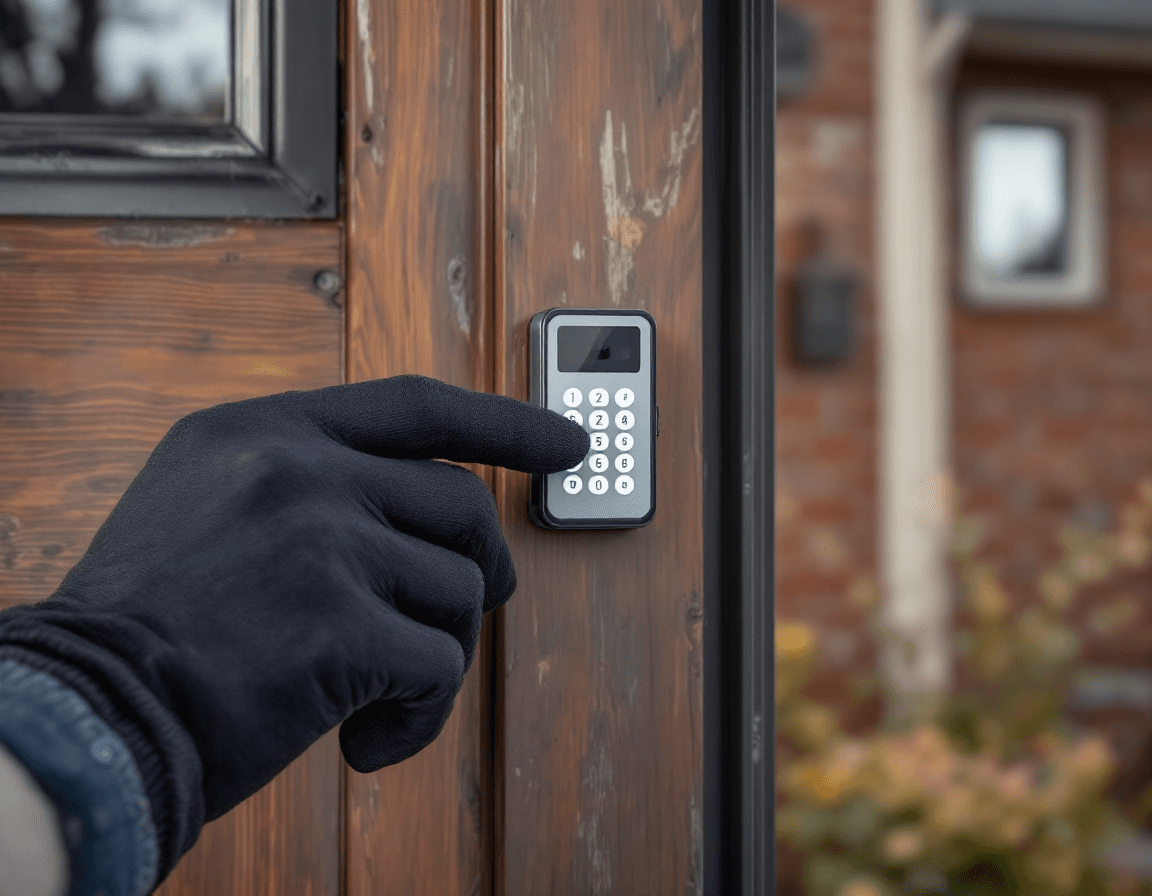
Garage door remotes and keypads look like the simplest parts of the system, but in Kent they fail more often than most homeowners expect. A remote that worked fine in July can start stuttering by November, and a keypad that accepted your code all summer may suddenly reject it after a week of rain. Seattle Garage Door Fix handles Garage Door Remote & Keypad Service in Kent, WA, from programming a new transmitter to diagnosing a keypad that has stopped responding. Our technicians work across Kent and the surrounding King County communities, including the 98030, 98031, 98032, and 98042 ZIP codes.
Most calls we take about remotes and keypads start with a simple complaint: the door didn't open when it should have. The cause is usually something small, such as a dying battery, a shifted antenna wire, moisture inside a keypad housing, or a receiver that has forgotten the code it was taught. Those problems are often fixable in a single visit without replacing the opener itself. This page explains the common causes, what to expect from a service call, and when a different kind of repair is the better choice.
If you are reading this because you lost a remote, bought a used car with built-in door controls, or simply want a second way to get into the garage, you are in the right place. We cover the practical differences between replacement remotes, universal transmitters, and exterior keypads, along with the steps for pairing your vehicle's built-in opener. We also explain where remote and keypad work ends and where a licensed professional needs to take over for spring and cable repairs.
Why Remotes Quit First in a Kent Winter
Western Washington winters are long, wet, and damp for months at a stretch, and that moisture finds its way into places homeowners never think about. A handheld remote lives in a jacket pocket, a cup holder, or a glovebox, where it gets exposed to condensation, cold car interiors, and the occasional rain-soaked coat sleeve. Battery contacts corrode slowly in that environment, and the first symptom is usually a weak or intermittent signal rather than a total failure. Many people replace the battery, see the door respond, and assume the problem is solved, only to find it returns a few weeks later.
Keypads mounted on the outside of a garage fare worse. A keypad near a driveway on a slope or beside a downspout can collect water behind its faceplate, and the keys may start to register double presses or ignore inputs entirely. Temperature swings make things worse, since a keypad that works well at 45 degrees may behave differently after a cold snap followed by a warm, humid afternoon. Sealing and mounting position matter more here than in drier climates.
Technicians also see a steady number of problems caused by signal interference rather than hardware failure. Dense residential blocks, newer apartment-style construction, and nearby commercial traffic can all add background noise to the radio frequencies that openers use. We do not promise that any single cause applies to your house, but we do check for interference as part of troubleshooting so that we don't replace good parts for no reason.
Reading the Signs: Intermittent Remotes Versus Dead Ones
Before you call for service, it helps to describe what you are seeing as precisely as possible. A remote that works only when you stand in one spot is telling a different story from one that never works at all. Careful observation can save time on the phone and often points a technician toward the right fix before arriving. Use the list below as a quick guide to the most common patterns we hear about from Kent homeowners.
- The remote works from the driveway but not from the sidewalk or the back door, which often points to a weak transmitter battery or a range issue.
- The door responds only on the second or third press, a classic sign of a failing battery or corroded contacts inside the remote.
- The remote opens the door some days and not others, which can indicate moisture or temperature sensitivity rather than a dead unit.
- The light on the remote does not blink when you press a button, suggesting the battery is fully drained or the internal circuit has failed.
- Only one button on a multi-button remote works, which usually means that button's contacts or circuit have worn out.
- The opener lights flash or the motor clicks without moving the door, which points to the receiver or safety sensors rather than the remote.
Notice whether the problem affects every door on your system or only one. Some homes have a two-car setup with separate openers, and a remote tied to one unit can behave differently from the other. Write down which button you press, where you are standing, and how long the problem has lasted. That information helps us arrive ready to test the right components rather than guessing.
Keypad Codes That Refuse to Take: Diagnosing the Panel
When a keypad rejects a code you know is correct, the cause is not always the keypad. A keypad sends a signal to the opener's logic board, so the board, the keypad, the wiring between them, and the code table stored in memory all have to agree. Homeowners often change a battery, enter the code correctly, and still get a silent response, which is frustrating but common. We start by confirming that the keypad itself is powered and transmitting, then check the opener's receiver to see whether it is accepting input at all.
Some keypads have a learn or program button that must be pressed in a specific order to store a new code. Others use a fixed factory code that can be changed only after the old one is erased, and a small mistake in the sequence can lock out the keypad until it is reset. Water intrusion can also cause keys to stick or register wrong characters, which makes a correct code look incorrect to the receiver. If the keypad shows signs of corrosion, we recommend replacing it rather than trying to keep it alive through another season of rain.
Some Kent homes have keypads that were installed years ago by a previous owner, and the original manual may be long gone. In those cases we identify the model, confirm compatibility with your opener, and determine whether it can be reprogrammed or should be swapped for a current unit. A replacement keypad is a straightforward part, but its wiring and mounting need to be done with care so that the weatherproofing stays intact.
Choosing Between a Replacement Remote and a Universal Model
A replacement remote is the simplest choice when your original transmitter is lost or damaged and your opener is still in good condition. Most openers use a specific frequency and encoding scheme, so a replacement must match the system closely enough to communicate with the receiver. We confirm the make and model of your opener, check the frequency, and then program the new remote to the receiver using the learn sequence for that unit. Programming usually takes only a few minutes once the correct remote is in hand.
Universal remotes can be an excellent option when you want to control several doors or add a single transmitter to a car, a key fob, or a smartphone-based system. However, not every universal unit works with every opener, and some older systems need an adapter or a specific model to communicate reliably. A remote that is compatible on paper may still have a shorter range than the original, so it is worth testing it at the distance you actually need before committing.
Cost is a common concern, and the honest answer is that prices vary with the brand, the number of buttons, and whether the remote includes features like a built-in visor clip or multiple channels. Our service fee covers the diagnosis and programming, and the remote or keypad itself is billed separately. We will explain the options clearly before any part is installed so that you can choose what fits your budget and your household's needs.
Adding an Exterior Keypad Around East Hill and Older Homes
Many homes on or near East Hill were built before keypads became standard, which means the garage door opener may be older and the wiring may not have been planned for an exterior entry point. Adding a keypad to an older system is still very achievable, but it requires attention to where the unit is placed, how the wiring is routed, and whether the opener's receiver supports a wired or wireless input. A good installation keeps the keypad at a comfortable height, shielded from direct downpours, and away from the spray of a driveway that drains toward the house.
Placement also affects convenience. A keypad near the side door can be handy for family members who come and go through the garage, while a keypad by the driveway is more useful for quick access from a vehicle. We often suggest mounting the unit on a surface that stays dry, such as a covered entry or a wall protected by an eave, rather than a bare section of siding that catches wind-driven rain. That choice extends the life of the keypad and reduces the number of service calls down the road.
Security is part of the discussion as well. A keypad lets you avoid carrying a remote, but it also means the code needs to be chosen carefully and changed when you share access with a neighbor, a house sitter, or a contractor. We can show you how to update the code, remove old entries, and confirm that the system is set up the way you expect. Good keypad habits take only a few minutes and make the whole system more dependable.
Pairing Your Car's HomeLink Buttons Without the Guesswork
Many newer vehicles include a built-in universal opener, often marketed under names such as HomeLink, that can replace a handheld remote for your garage door. Pairing it is usually simple, but the exact steps differ by vehicle make, model, and year, and a wrong move can leave you with buttons that do nothing. Because the process depends on your car's manual and your opener's learn mode, we recommend having the owner's manual nearby before starting. The general sequence below is a starting point, not a substitute for the instructions for your specific vehicle and opener.
- Park the car in the garage with the engine running only if your manual says it is required, and confirm the garage door is closed before you begin.
- Locate the existing remote or the learn button on the garage door opener, usually found on the motor unit near the rail.
- Press and hold the vehicle's programming button while you press the learn button on the opener, following the timing described in your manual.
- Press the button on the car's mirror or overhead console you want to assign, and watch for the opener's light or the motor's response to confirm the pairing.
- Test the button from the driveway and from a few steps away to confirm the signal is strong enough for everyday use.
Some newer openers use rolling-code security, which changes the signal each time the button is pressed. This is a good thing for security, but it can make pairing trickier when the opener is old or the vehicle system is unusual. If the car buttons still do not respond after careful attempts, the issue may be with the opener's compatibility or the vehicle's module, and that is worth a professional look. A technician with the right tools can identify which side of the pairing is failing and avoid repeated trial and error.
Lost Remote, Lost Peace of Mind: Re-Securing the Door
A lost remote is more than an inconvenience. Anyone who finds it may be able to open your garage, so the sensible move is to erase the lost transmitter from the opener's memory and program a fresh one. Many openers can clear all stored codes in a single step, which then requires you to re-pair every remote, keypad, and car button you still use. This is a worthwhile habit even if you are not sure the remote is gone, since it resets the system to a known state.
The process begins with an inventory. We ask which remotes you still have, whether any family members or tenants have access, and whether a keypad code is shared with people you may no longer trust. From there, the opener's memory can be cleared, the active devices reprogrammed, and a note made of which units are authorized. Taking those few minutes after a loss gives you a clear record and a system you can trust again.
If you live in a house where several people share access, we suggest establishing a simple rule for who keeps which remote and who to contact if one goes missing. That habit makes the next loss a quick fix rather than a stressful search. It also gives technicians a clean starting point when we arrive for service.
What the Visit Covers and What It Costs
Our service fee for Garage Door Remote & Keypad Service in Kent runs from $65 to $185, depending on the work involved. The lower end generally covers simple reprogramming of an existing remote or a basic keypad code change, while the higher end reflects more involved jobs such as diagnosing a receiver fault, programming multiple devices, or troubleshooting a vehicle pairing that needs extra testing. The price does not include a new remote, keypad, or other hardware, which is billed separately so that you can see exactly what you are paying for.
During a typical visit, the technician will confirm the opener make and model, inspect the remote or keypad for battery and moisture issues, test the signal at the distances you use, and program or reprogram the devices as needed. We will explain what we found in plain language and offer options before replacing any part. If the problem turns out to be something beyond remote or keypad work, we will tell you so before going further, and you will not be pressured into unrelated repairs.
Please have the opener's model number ready if you can find it, along with any remotes or keypads you want serviced and the vehicle information if you are pairing car buttons. Clear access to the opener and the wall-mounted control is also helpful. These small preparations shorten the visit and help us deliver a reliable result on the first attempt.
Radio Interference and Placement Tips for Dense Neighborhoods
Remote performance depends on a clean radio path between the transmitter and the opener's receiver, and the surrounding environment can affect that path in ways that are easy to overlook. Metal siding, thick walls, and large vehicles parked close to the garage can all reduce range. In denser residential areas, nearby electronics may introduce noise that makes a remote feel unreliable even when the hardware is fine. We account for these factors during testing so that the solution fits your actual setting rather than a textbook example.
Simple placement habits can improve performance. Keep the opener's antenna wire hanging straight and away from metal rails or the motor housing, since a bent or tangled wire can weaken reception. Store remotes in a consistent place, away from direct sun and cold, and avoid keeping them in a bag with metal objects that can press against the buttons. These small steps cost nothing and often make a noticeable difference in day-to-day reliability.
When interference is the likely cause, we may suggest adjusting the receiver's location or testing a different remote model. We will not promise a specific range improvement because every home is different, but we will work through the options with you and be honest about what can realistically be improved.
When Remote Work Ends and a Licensed Pro Must Take Over
Remote and keypad service is generally a low-risk task, but a garage door system includes components that carry serious safety hazards. Torsion springs and extension springs store enormous energy, and cables, drums, and brackets can fail suddenly under load. Attempting spring or cable work without the proper training, tools, and winding bars can cause severe injury or property damage. For that reason, we always recommend a licensed professional for any spring or cable repair, and we will tell you if a symptom suggests that kind of problem.
Some remote issues are actually signs of a larger mechanical concern. A door that is unbalanced, sticks partway through its travel, or makes grinding or popping noises may not be fixed by reprogramming the remote, even though the remote is what you noticed first. If the opener reverses unexpectedly or the safety sensors are misaligned, that deserves attention too, since those features protect people and pets. We will explain what we see and recommend the right next step, whether that is a simple adjustment or a referral for further service.
Our role is to keep you safe and get your remotes and keypads working reliably. When a problem falls outside that scope, we will say so plainly and help you decide what to do next. Treating the system as a whole is the best way to protect your home, your vehicles, and the people who use the garage every day.
Ready to get your remote or keypad working again? Call Seattle Garage Door Fix at (888) 799-3819 to schedule Garage Door Remote & Keypad Service in Kent, WA. Our team can diagnose intermittent remotes, program replacements, add exterior keypads, and pair your car's HomeLink buttons, with service fees from $65 to $185 plus any new hardware. Call today and we will help you get back to reliable, everyday access.