
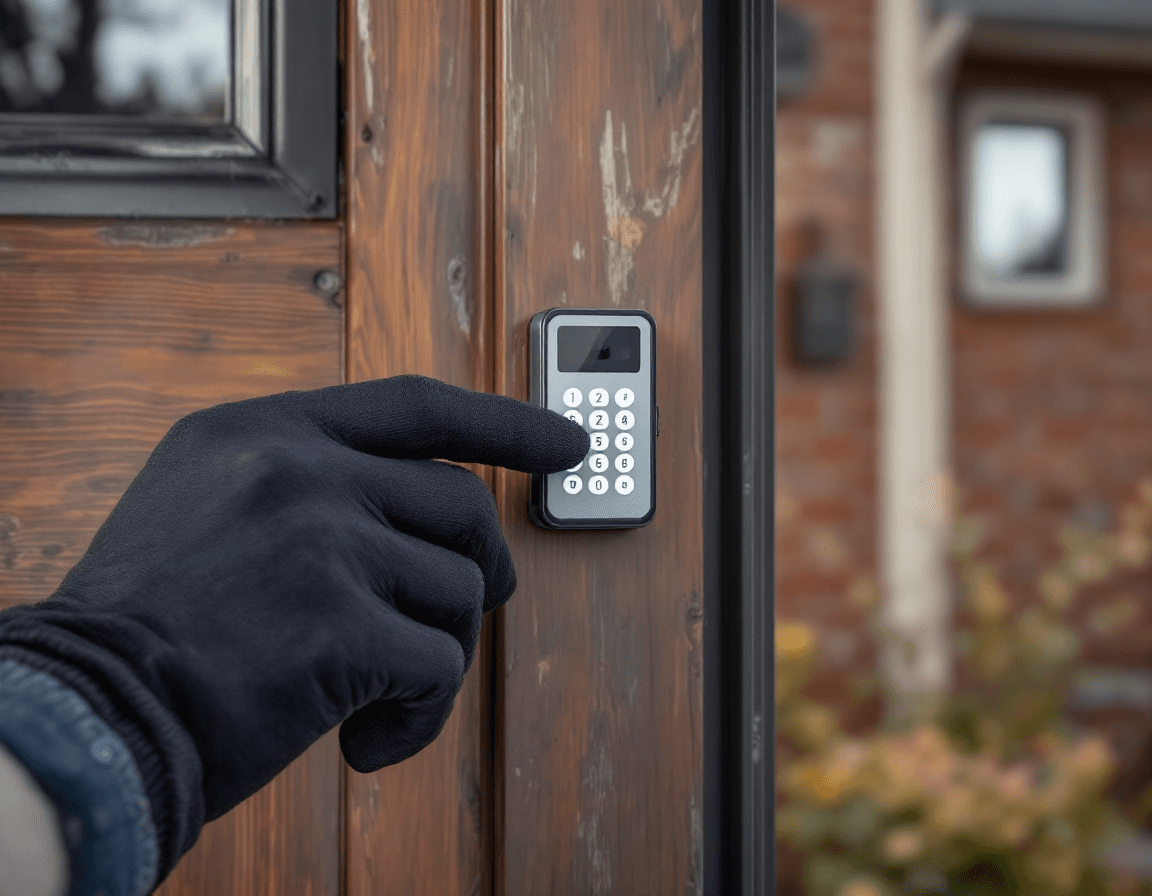
Garage Door Remote & Keypad Service in Federal Way, WA covers the small but important devices that let you open, close, and secure your garage without fumbling for keys. Seattle Garage Door Fix handles remote programming, keypad installation and troubleshooting, and in-car opener pairing for homes across Federal Way and the surrounding King County neighborhoods. Most of these calls start with a simple frustration: a remote that works in the driveway but not at the curb, or a keypad that rejects a code you know is correct. Our technicians treat each one as a real diagnosis rather than a quick guess.
Federal Way homeowners tend to rely on their garage door more than they realize. Many households use the garage as the main entry, so a dead remote can mean parking in the rain with arms full of groceries or kids waiting in a cold car. The area's mix of older split-level homes, newer subdivisions, and wooded lots means openers and remotes operate in very different conditions from one street to the next. A device that performs perfectly in a flat, open cul-de-sac may struggle on a hillside lot surrounded by tall conifers. Understanding those differences is the first step toward a fix that lasts.
Whether your remote has quit, your keypad is acting up, or you simply want to add convenience to your setup, the price range for this work is typically $65 to $185, plus the cost of any new remote or keypad you choose to install. The final quote depends on the equipment involved, how many devices need pairing, and whether a related problem turns up during the visit. You will always know the scope before work begins. Call (888) 799-3819 to describe what you are seeing, and we will help you decide what makes sense for your home.
Why Remotes Give Up Faster in Western Washington's Damp Air
Federal Way sits in a region that gets plenty of rain, long gray stretches, and humidity that lingers well into spring. That moisture does not stay outside. It finds its way into remote housings through seams around the battery cover, worn button membranes, and the small gaps where the circuit board meets the plastic shell. Over time, that moisture encourages corrosion on the battery contacts, which is one of the most common reasons a remote becomes weak or intermittent even when the battery looks fine on the surface. Remotes kept in a car door pocket or on a dashboard face additional temperature swings that accelerate wear.
The climate also affects the opener side of the system. Condensation can form on the receiver antenna wire and on the motor unit's circuit board during cold, damp nights, which sometimes causes a remote to work only after the garage warms up for a while. Dust and pollen from the surrounding trees can collect on button pads and sensor surfaces, especially on homes with mature cedars or Douglas firs nearby. Many properties also have longer driveways and detached garages that place the remote farther from the receiver than the original installation assumed.
Our technicians account for this environment when they inspect a remote or keypad. We look at battery contacts for green or white residue, check the button pads for moisture, and confirm that the receiver antenna is still positioned correctly and not pinched or damaged. Sometimes the fix is as simple as cleaning contacts and replacing a battery, but sometimes the device has absorbed enough moisture that replacement is the more reliable choice. We will tell you honestly which situation you are in.
Diagnosing an Intermittent Remote Before You Replace It
An intermittent remote is more frustrating than a completely dead one because it teaches you to press the button three or four times and hope for the best. Before you spend money on a replacement, it helps to work through a few checks that often reveal the real cause. These checks are safe to do yourself, and they take only a few minutes. They also give our technician useful information if you end up calling for a visit.
- Replace the remote battery with a fresh one of the correct type, and wipe both battery contacts with a dry cotton swab or a small amount of isopropyl alcohol.
- Stand at the same spot where the remote fails, then try again from the curb, the driveway, and inside the house to see whether the problem depends on distance or direction.
- Check whether the motor unit's lights flicker when you press the remote, which indicates the signal is reaching the opener even if the door does not respond.
- Look for a damaged or disconnected antenna wire hanging from the motor unit, and make sure it has not been trimmed or bent sharply.
- Note whether the problem happens only during rain, early morning, or after the car has been parked outside for hours, since those patterns point toward moisture or temperature.
If the remote still fails after those steps, the issue may lie in the opener's receiver, a signal obstruction, or a remote that has fallen out of sync with the motor. Signal problems are more common than many homeowners expect, particularly on lots where a large metal gutter, a steel carport frame, or a neighbor's wireless equipment sits close to the door. A technician can test signal strength at the door and identify whether the remote, the receiver, or the environment is the weak link. Do not attempt to open the motor housing or touch the spring and cable assembly while troubleshooting, since that equipment carries real force and should only be handled by a licensed professional.
Programming a Replacement Remote Without the Guesswork
Replacing a remote is usually straightforward, but programming it correctly matters a great deal. Most modern openers use rolling-code technology, which changes the transmitted code every time you press a button so that the signal cannot be easily copied. That security feature is excellent for your home, but it means the remote must be paired to the specific receiver in the motor unit. Buying a compatible remote is only part of the job. The other part is putting the opener into learning mode and completing the pairing step within the time window.
On most units, the process starts with pressing the Learn button on the motor unit, which is often located near the antenna wire or on the side of the housing. Learn buttons come in several colors depending on the manufacturer, and the color often indicates which remote technology is supported. Once the opener is in learning mode, the new remote is pressed to transmit its code, and the opener's light or indicator confirms success. Because timing varies from model to model, a technician who knows the specific opener family will complete this faster and avoid repeated attempts that can confuse the system.
Our technicians can program remotes from most major manufacturers and will confirm the frequency and technology before ordering any replacement, so you do not end up with a device that will not pair. We also check how many remotes are already programmed and whether any old ones are still active. That is an important step when you want to remove access from a former tenant, a babysitter, or a family member who no longer needs entry. Clearing unused codes is a quick way to tighten security while keeping the convenience of multiple remotes.
Keypads That Refuse Your Code: Common Causes
A keypad that rejects a code you know is correct can feel like a malfunction, but the cause is often one of several predictable issues. Some keypads lock out after a set number of incorrect attempts, which is a protective feature that can surprise homeowners who were simply mistyping. Others have worn button contacts that register some presses but not others, particularly after years of exposure to rain and temperature changes. Wired keypads may also suffer from loose connections at the terminal block inside the garage, while wireless keypads can lose their pairing after a battery change or a power interruption.
In Federal Way, moisture is a frequent culprit with exterior keypads mounted on the front wall or near the driveway edge. Water can run down the siding and seep behind the keypad housing, causing corrosion that interrupts the signal or the button circuit. Keypads placed beneath deep eaves are somewhat protected, but many homes in the area have exposed mounting locations where wind-driven rain reaches the device every winter. Our technicians check the seal, the mounting screws, and the wire path for signs of water intrusion, and we can recommend a more weather-resistant location or housing when the existing spot is causing repeat problems.
When we troubleshoot a keypad, we start by confirming the code programming and clearing any lockout, then we test the buttons individually and check the power source. Wireless keypads often need a fresh battery and a resynchronization step, while wired keypads require a careful look at the wiring and terminal connections. We will never attempt to alter the door's safety reversal system or bypass sensors to make a keypad work, because those protections are essential for preventing injury. If the keypad problem reveals a larger issue with the opener itself, we will explain what we found and what your options are.
Adding an Exterior Keypad on Twin Lakes and Dash Point Area Homes
Many homeowners decide to add an exterior keypad after a lost remote, a delivery driver who needs access, or a teenager who keeps forgetting the house key. An exterior keypad lets you enter a code at the door without carrying a remote, which can be especially useful for households with frequent guests or for families who park in the driveway and walk through the garage. Homes near Twin Lakes, with their mix of older single-family lots and newer infill, often have different wall materials and driveway layouts that affect where a keypad can be placed. Homes closer to the Dash Point area may sit on sloped lots where the approach and visibility differ from flatter streets.
Placement is the most important decision when adding a keypad. The keypad should be mounted at a height that is comfortable to reach from the driveway, shielded from direct downpours where possible, and positioned so the signal reaches the opener reliably. Wireless keypads perform best when they have a clear line of sight to the receiver, so a keypad mounted behind a metal gate or on the far side of a steel-sided garage can struggle. Wired keypads avoid most signal issues but require a clean cable run through the wall or along the exterior, which we route carefully to prevent water from following the cable into the house.
Installation involves more than mounting a box and connecting wires. The technician confirms the opener's compatibility, sets the access code, and tests the keypad through several cycles to make sure the door responds consistently. We also explain how to change the code, how to remove codes, and what to do if a code is entered incorrectly several times. Adding an exterior keypad is a practical upgrade that can improve daily convenience and reduce the chance of being locked out, and our team will help you choose a configuration that fits your home and your habits.
Pairing Your Car's HomeLink Buttons Without Losing an Afternoon
Many newer vehicles include built-in HomeLink buttons that can open and close your garage door without a separate remote. Pairing those buttons is convenient, but the process can be confusing because it involves both the car and the opener, and the steps differ by vehicle make, model year, and opener brand. Some systems require you to hold the car's HomeLink button while pressing the opener's Learn button, while others require a specific sequence or an app-based step. Homeowners often spend a long time repeating the same steps without success, and the result is frustration rather than a working system.
A key point is that not every opener is compatible with every vehicle's HomeLink system, and some newer rolling-code systems require a specific pairing method or a compatible bridge device. Our technicians can check your opener's model and your vehicle's HomeLink capability before the visit, which saves time and avoids unnecessary attempts. We will also confirm whether the car's HomeLink system can store multiple door codes if you have more than one garage door, and whether any older buttons need to be cleared before new ones are learned. When a pairing will not complete, we explain the reason clearly rather than leaving you to guess.
For many Federal Way drivers, HomeLink pairing becomes especially helpful during rainy commutes when fumbling for a remote in a soaked jacket is the last thing anyone wants. Once paired, the car's buttons can be a reliable backup if a standalone remote is lost or damaged. We recommend keeping at least one physical remote in a secure place even after pairing, because certain battery issues or system resets can temporarily disable in-car controls. Our goal is to leave you with a setup that works in every weather condition, not just on a dry afternoon.
Lost Remote? Re-Securing Your Garage Door Quickly
A lost remote is more than an inconvenience. Anyone who finds it could potentially open your garage door, especially if the device is still programmed and the opener has no additional protection. The safest response is to clear the lost remote's code from the opener and reprogram the remaining devices, which removes its access without requiring you to replace the entire system. This step is often overlooked, and many households keep a lost remote active for years simply because they never realized they could remove it.
The process typically involves clearing all remote codes from the motor unit, then reprogramming each remote you still use. On some openers, you press and hold the Learn button until the indicator light blinks or turns off, which signals that the stored codes have been erased. After that, each valid remote must be learned again, which is why it helps to gather all remaining devices before starting. If a keypad is also in use, its code may need to be reset or verified during the same visit so that the entire system is tightened at once.
Re-securing the door is a good moment to review other access points, including keypad codes, smart opener apps, and any shared accounts that control the garage. Many Federal Way families are surprised to find that a former roommate, cleaning service, or relative still has access through an old device. Our technicians help you audit what is currently programmed and recommend simple changes that keep your home secure without making daily use difficult. If you suspect someone may have used a lost remote, let us know during scheduling so we can prioritize the visit.
What the Visit Covers and What Shapes the Price
Our remote and keypad service generally falls within a $65 to $185 range, not including the cost of any replacement remote or keypad. The lower end usually reflects a straightforward reprogramming or a single-device pairing on a well-functioning opener, while the upper end reflects more involved work such as troubleshooting a keypad with wiring issues, pairing multiple devices, or adding an exterior keypad with a longer cable run. Every quote is discussed before the work begins, so you can decide how you want to proceed.
Several factors shape the final cost. The make and model of the opener affects how the learning process works and whether compatible hardware is needed. The number of devices involved matters, since clearing old codes and reprogramming three remotes takes more time than programming one. The condition of the equipment matters too, because corroded contacts, water-damaged housings, or damaged antenna wires may require extra time or replacement parts. Access, such as a detached garage or a difficult ceiling height, can also affect the time required.
It helps to gather a few details before calling. Know the brand label on the motor unit if you can see it, the make and model year of your car if you are pairing HomeLink, and a rough count of the remotes and keypads you currently use. Describe the symptoms in your own words, such as whether the remote fails only in rain or whether the keypad rejects every code or only some. That information lets us prepare the right tools and set a realistic expectation for the visit. Once we are on site, we will confirm the scope and explain any additional charges before proceeding.
Choosing Remotes and Keypads That Hold Up to Pacific Northwest Weather
Selecting new hardware is an opportunity to choose devices that will handle Federal Way's weather better than the originals. Remotes with sealed battery compartments and reinforced button membranes tend to resist moisture more effectively than basic models, and they are worth considering if your current remote has failed repeatedly. For exterior keypads, look for housings rated for outdoor use, with gaskets or sealed covers that keep rain from reaching the circuitry. Placement under an overhang or a small awning adds protection without affecting the signal.
Compatibility always comes first. A remote or keypad must match your opener's technology and frequency, and some high-security options only work with specific opener families. Our technicians will recommend products that fit your existing system rather than pushing equipment you do not need. Where an upgrade makes sense, such as moving to a newer rolling-code system during a repair, we will explain the benefits and the cost difference so you can weigh them against your budget and your priorities.
We also suggest thinking about how many people need access and how you want to manage it. Some households prefer one remote per adult plus a keypad for children or visitors, while others use a smartphone-connected system for remote monitoring. Each approach has tradeoffs in convenience, security, and cost. A short conversation with a technician can help you settle on a setup that meets your needs without adding complexity you will never use. Choosing the right hardware now can prevent the same problems from returning next winter.
When to Call a Licensed Technician Instead of Going DIY
Simple tasks like replacing a remote battery, cleaning contacts, or confirming that the opener's lights respond are safe for homeowners to try. Those steps help you narrow down the problem and may save a service call. But remote and keypad work sometimes reveals issues that extend beyond the controls, and those issues belong in the hands of a licensed, bonded, and insured professional. A garage door is a heavy, high-tension system, and mistakes near the springs, cables, or door balance can cause serious injury.
Call a licensed technician promptly if you notice the door moving unevenly, hearing grinding or popping sounds, seeing frayed cables, or finding that the door reverses without a clear reason. Those symptoms can indicate problems with the spring system, the safety sensors, or the door's balance, and they should never be handled with a DIY fix. The same goes for any repair that requires opening the spring assembly or adjusting tension, since those components store enough energy to cause harm even when the door appears still. Spring and cable work is always handled by a licensed professional.
Our technicians are glad to help with remote and keypad issues, and they will also tell you when a related problem needs a different kind of repair. We prefer to give you a clear picture of what is happening so you can make informed decisions about your home. If something seems off during a visit, we will stop, explain the concern, and recommend next steps rather than pressing ahead. For questions about remotes, keypads, or HomeLink pairing in Federal Way, call (888) 799-3819 and a member of our team will help you schedule a visit that fits your day.