
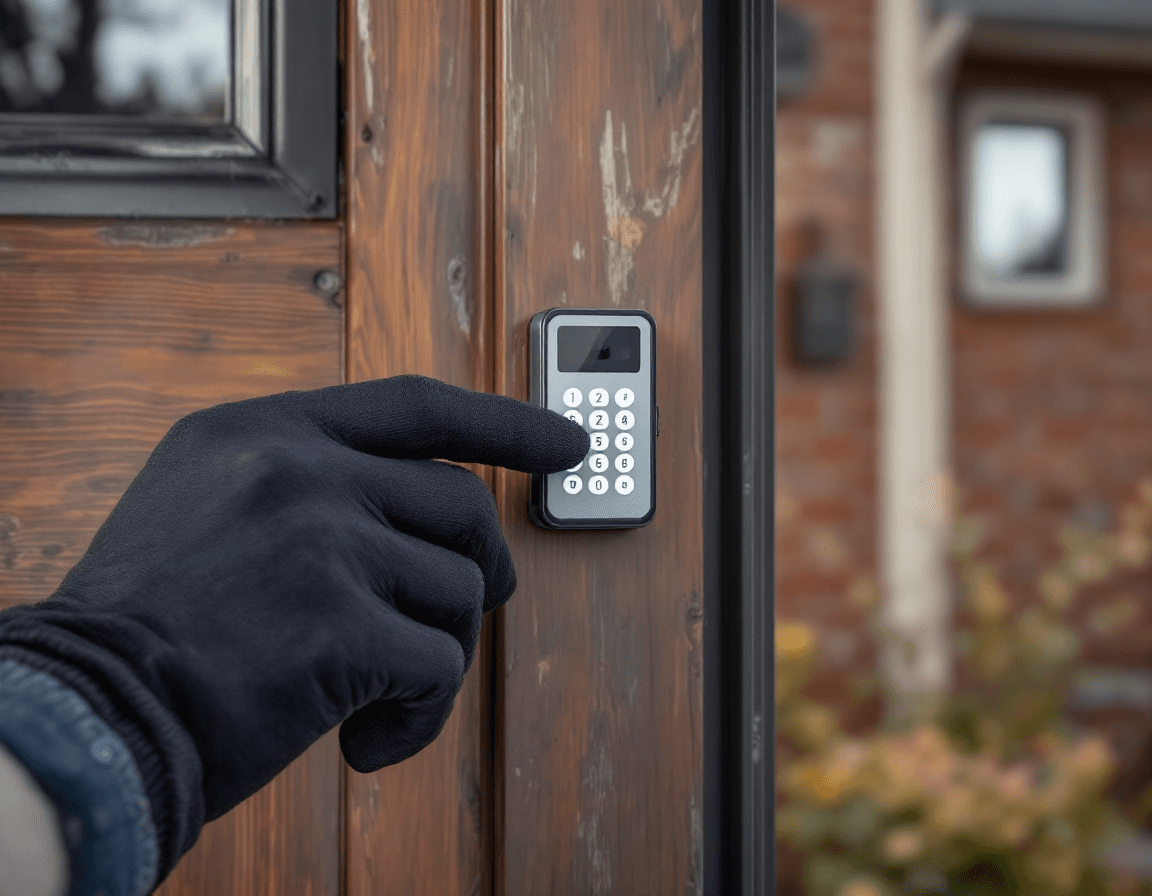
Garage Door Remote & Keypad Service in Des Moines, WA is one of the most common calls we take from homeowners on the south end of King County, and it's often the simplest fix on the list. A remote that quits at the bottom of the driveway, a keypad that rejects a code you've used for years, or a car button that refuses to learn the signal can all make a short trip feel like a major problem. Most of the time the cause is a battery, a sync issue, or a setting that drifted, not a failed opener. Our technicians handle remote programming, keypad installation and troubleshooting, and in-car opener pairing for homes across Des Moines, and the work typically runs $65 to $185 before the cost of any new remote or keypad.
Des Moines sits on the Puget Sound shoreline, and that location shapes how garage door electronics behave. Salt-laden air drifts in from the water, especially around the Des Moines Marina and the blocks running toward Woodmont and Redondo. Damp winters, long stretches of low cloud, and the steady drizzle that can last from October into April all work against small plastic housings, exposed contacts, and button membranes. When we visit a home in ZIP 98198 with a complaint about a sticky or unresponsive remote, we often find corrosion on battery contacts or moisture trapped behind a keypad cover, rather than anything wrong with the opener itself.
This page explains what we check when a remote or keypad misbehaves, how we approach car pairing, what to expect when you lose a remote, and when a simple programming visit is not the right answer. We have written it for people who want to understand the process before they call, and for anyone who would rather know what a fair service visit looks like. If you are dealing with a problem right now, the notes below should help you narrow down the cause and decide what to do next.
Why Your Remote Quits Halfway Down the Driveway
An intermittent remote is frustrating because it works sometimes, which makes the problem hard to reproduce while you are standing in the garage with the door behaving perfectly. In our experience, the first suspect is almost always the battery. Many common remotes use small coin cells, and they lose capacity faster in cold snaps, which Des Moines gets a few times each winter, than they do in dry summer weather. A battery that still reads near full on a tester can sag enough under load to drop the signal at the edge of its range.
The second suspect is the environment between the remote and the opener. Wet cars, a heavy wind-driven rain, and the large metal bodies of neighboring vehicles can all shift the signal path just enough to matter. Homes near the marina often sit close to sheds, boats, and metal fencing, and some of the older Des Moines garages were built with wiring and framing that can absorb or deflect radio energy. We also see remotes that have been dropped in a glovebox or a backpack, where the internal contacts shift slightly and make the connection unreliable.
Before we open a remote or a receiver, we will ask a few questions: when the problem started, whether it happens from every distance, and whether the door responds to the wall button. Those answers quickly separate a remote problem from an opener problem. A remote that works from the wall but not the car is pointing toward the transmitter. A door that ignores every signal, including the wall control, points toward the opener, the safety sensors, or a control board issue that needs a different visit.
Remote Programming and Replacing a Lost or Damaged Transmitter
Programming a new remote is one of the most routine jobs we do, and it is worth understanding how the process works because it changes slightly depending on the opener brand and the age of the system. Most modern openers use rolling-code technology, which means each button press sends a changing code so that the signal cannot be copied and replayed. The receiver has to be put into learn mode, usually by pressing a button on the motor unit, and the new transmitter then has to be trained to match it within a short window. Older fixed-code remotes work differently, and some models require a specific sequence of presses rather than a single button.
If you have lost a remote, the practical question is whether you want to simply add a new one or re-secure the whole system. Any remote that is still programmed to your opener will open your door, and a lost remote left in a car, a shared rental, or a dropped bag is a real security concern. Our technicians can erase all existing transmitters from the receiver's memory and then program only the ones you still have in hand, plus any new ones you want. This takes a few extra minutes but gives you a clean slate. Ask us to do this rather than leaving an unknown remote active.
Replacement remotes vary a great deal in price and compatibility. Some openers use a universal frequency that accepts many aftermarket transmitters, while others require a specific model tied to the receiver board. We will tell you before we order anything whether the remote you want is compatible with your opener, and whether the job is best handled as a simple reprogramming or as a full replacement of the receiver. The service fee is separate from the hardware, so you will always see both numbers before you approve the work.
Keypad Installation for Front-Entry and Side-Gate Access
A wall or exterior keypad is a practical addition for families who are often in and out, for households with teenagers who forget their remotes, and for homes where a side gate or a rear service door leads to the yard. Keypads are also popular with people who want to give a contractor or a family member temporary access without handing over a remote. Installation is manageable for a homeowner with basic tools, but the placement and wiring matter more than most people expect, particularly on a home exposed to wind-blown rain.
We usually recommend mounting an exterior keypad under a covered entry or on a wall that receives some protection from the prevailing weather. Direct exposure to driving rain on the south end of Des Moines can overwhelm even a rated housing over time, and condensation can build up inside the case during the long gray months. The keypad should sit at a comfortable reach height, not so low that it collects splashback from the driveway, and it should have a clear sightline to the door so you are not guessing whether it registered your code. Wiring runs should be routed away from standing water and sharp edges, and any penetration through siding should be sealed properly.
When installing a keypad on a home with an older opener, we check whether the receiver has a dedicated keypad input or whether an add-on accessory is needed. We also confirm that the keypad's code length and lockout behavior match your security preferences. A keypad with a temporary code feature is useful for guests, but we will walk you through how to delete codes, because forgotten codes that remain active are one of the most common ways access gets out of control.
When a Keypad Refuses Your Code
A keypad that suddenly rejects a code you have used for years usually has a simple explanation. The most common cause is moisture or grime on the keys, which can cause a button to register as a different digit or fail entirely. Winter drizzle and the salt film that settles on exterior surfaces near the water both contribute to this, and a cloth dampened with mild soap and water often restores normal operation. We do not recommend spraying cleaners directly into a keypad, because the fluid can migrate into the circuitry.
Another cause is a lockout. Many keypads temporarily disable entry after several incorrect attempts, sometimes for a set period. If a child, a guest, or a delivery driver has tried a few wrong combinations, the keypad may simply be waiting before it accepts another attempt. Some models also require a re-sync if the code table was reset during a power outage, a battery change, or a firmware update. Check the keypad's manual for lockout and reset procedures before assuming the hardware has failed.
If the keys respond but the door still will not open with a correct code, the problem is more likely in the programming or the receiver. We will verify the stored codes, check the signal path between the keypad and the opener, and look at whether a nearby wireless device is causing interference. We can usually tell within one visit whether the keypad is failing or whether the opener is simply not recognizing the entry. Either way, you should not have to guess.
Getting Your Car's HomeLink Buttons to Pair
Many newer vehicles include a built-in garage opener system, often branded as HomeLink, that can replace a clip-on remote. In theory this is convenient, but in practice pairing can be the most time-consuming part of a remote service visit. The process depends on the car's make and model, the age of the vehicle, and the specific opener it is trying to learn. Some cars learn in a few minutes, while others require holding buttons in a particular sequence and waiting for a light to change before the next step.
Several things commonly cause pairing to fail. The opener's learn button must be pressed within the required window, and the car must be positioned close enough to the receiver for the signal to be heard. Some openers have a newer security setting that rejects older car-based transmitters, and some vehicles need the battery in the original remote to be fully charged before they will accept a new program. If the car's built-in system has been reset, such as after a battery disconnect or a dealer service, the buttons may have to be cleared and trained again from scratch.
We are happy to help with HomeLink pairing, and we will tell you up front if your particular vehicle or opener combination is one that calls for a manufacturer's app, a dealership visit, or a different approach. Please keep your car's owner manual handy, because the steps can differ even between two model years of the same vehicle. For a household where every family member drives, having a clip-on backup remote is often a good idea while the in-car buttons are being set up.
Keeping Remotes Working Through Damp Des Moines Winters
Preventive care is the simplest way to avoid a surprise remote failure during a rainy stretch. Battery replacement is the top item. Rather than waiting for the remote to die, consider changing batteries once a year, particularly before the fall rains set in. Use a fresh battery of the type specified in the remote, and inspect the contacts for green or white residue. A small pencil eraser or a cotton swab lightly dampened with isopropyl alcohol can clean most contacts without leaving residue behind.
Storage matters too. A remote kept on a damp windowsill, in a cup holder that collects spilled coffee, or in a coat pocket that gets soaked on the walk from the car will fail earlier than one kept dry. Some homeowners keep a spare remote in the house, away from the garage door, so they are not caught without one after a wet commute. A small waterproof case or a key ring cover can add real protection for remotes that live in a car or a bag.
For exterior keypads, a periodic visual check helps. Look for water beading under the cover, a clouded display, or keys that feel sticky. Gently wipe the surface, confirm the seal is intact, and make sure no vegetation has grown up against the housing. Moss and ivy are common on shaded walls in our area, and they can trap moisture against the keypad for weeks at a time. A quick trim now prevents a larger repair later.
Safety Limits: What We Recommend Leaving to a Licensed Professional
Remote and keypad service is generally a low-risk task, but there are boundaries every homeowner should respect. Programming a remote, replacing its battery, cleaning a keypad, and testing the wall button are all reasonable things to do yourself. Working on the door's springs, cables, drums, or tension components is a different matter entirely. Torsion springs and extension springs store enormous force, and mishandling them can cause serious injury. If your remote problem is accompanied by a door that binds, pulls unevenly, rattles, or fails to stay open, stop and call a licensed technician rather than trying to diagnose it from the driveway.
Our company is licensed, bonded, and insured, and our technicians are trained to recognize when a remote complaint is actually a sign of a larger mechanical or safety issue. A door that reverses unexpectedly, fails the safety sensor test, or closes without reversing when it meets resistance needs to be looked at right away. Safety reversal is a critical feature, and it should be tested regularly. If you are unsure whether your door is responding correctly to obstructions, ask us to check it during the same visit.
It is also worth knowing that a good remote visit does not require us to alter the door hardware. If the fix turns out to be a damaged cable or a worn roller rather than a programming issue, we will explain what we found and give you a clear estimate for the separate repair. You should never feel pressured into work you did not ask for.
What a Typical Remote and Keypad Visit Looks Like
A standard service call usually begins with a short conversation about the symptoms and the opener brand, if you know it. Many homeowners can read the model number from the motor unit's label, which speeds up the process considerably. Our technician will then test the existing remotes, the wall control, and any keypad, and will check the receiver's memory for stored transmitters. This helps us determine whether the issue is a dead battery, a sync problem, a lockout, or a receiver that needs attention.
Once the cause is clear, we proceed with the programming, keypad installation, or troubleshooting you requested. Most reprogramming jobs are completed in a single visit, and the service fee in our standard range of $65 to $185 reflects the labor involved. New remotes and keypads are billed separately, so you will know the hardware cost before any part is installed. If the job requires more time, such as a multi-keypad installation or a complicated HomeLink setup, we will discuss the scope before we start.
Before leaving, we will test every device you use, including remotes, keypads, the wall button, and any in-car buttons, and we will explain what we did. We will also tell you whether any other part of the system deserves attention in the coming months. The goal is a clean, working setup that you understand, not a quick fix that leaves you wondering what happens next time.
Common Questions From Des Moines Homeowners
Homeowners often ask whether they can use a remote from a different manufacturer. Sometimes they can, but compatibility depends on the frequency and the receiver's security design, so we check before recommending a specific model. Others ask whether it is safe to leave a remote in the car. That is a personal decision, but we suggest keeping a clip-on remote out of an unattended vehicle, especially in areas where car break-ins are a concern. Some people want to know how many remotes an opener can hold, and the answer varies by model, which is why we review the receiver's memory during every programming visit.
Many people also want to know whether a keypad can be used for a side gate or a separate entry. In many cases, the keypad controls only the garage door, so a separate gate may need its own access hardware. We are happy to talk through options for the gate, but we will be clear about what the garage door opener can and cannot control. Finally, homeowners ask whether a remote problem means the opener is near the end of its life. Usually it does not, but if the motor is noisy, the door is slow, or the unit is more than a decade old, we will tell you honestly what we see and what it might cost to plan for.
Schedule Remote and Keypad Service in Des Moines
If your remote is unreliable, your keypad is rejecting valid codes, your car will not pair, or you have lost a transmitter and want the system locked down, our team can help. Call (888) 799-3819 to describe the problem, confirm your address in ZIP 98198 or nearby, and set up a visit. Remote programming, keypad installation and troubleshooting, and in-car opener pairing are typically priced between $65 and $185, with any new remote or keypad billed separately.