
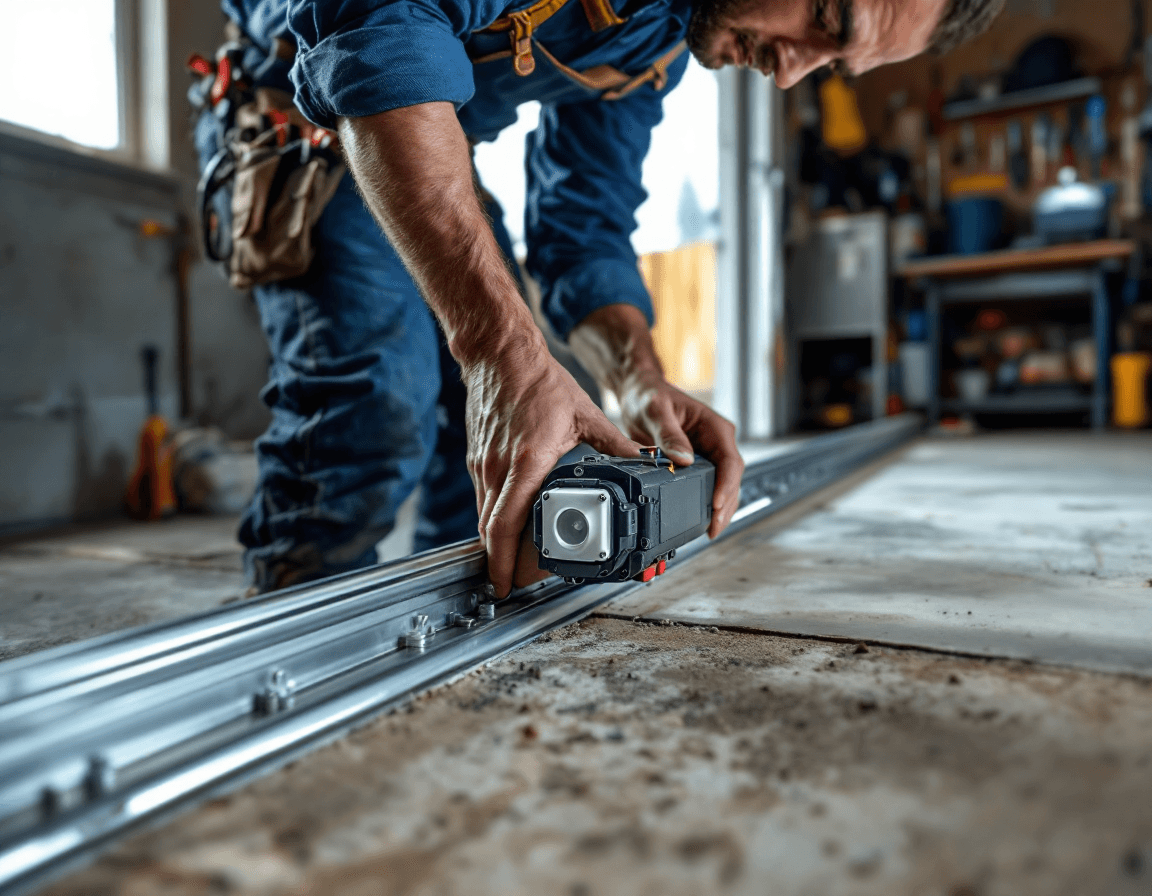
Garage Door Sensor Repair in Beaux Arts Village, WA is one of the most common calls we take from homeowners along the Lake Washington shoreline, and it is often the easiest fix in the whole garage door system. A door that refuses to close, or that slams back up the instant it touches the floor, usually has nothing wrong with the motor, the springs, or the opener logic. The problem is almost always the pair of photo-eye sensors near the bottom of the door tracks, which have stopped seeing each other clearly. That small beam is what tells the opener the path is clear, so when it breaks down the door behaves as if something is standing in its way.
Beaux Arts Village is a small, quiet community, and many of its homes have detached or semi-detached garages that open onto driveways shaded by mature trees and sloping down toward the water. Those conditions create a specific set of sensor problems that we see more often here than in drier parts of the region. Damp air off the lake, low winter sun coming across the water, and the simple wear that comes from years of daily use all work against a pair of little plastic lenses mounted about six inches above the concrete. Our technicians serve Beaux Arts Village and the surrounding ZIP codes 98004 and 98005, and we know the patterns well enough to diagnose most sensor problems on the first visit.
This page explains what causes sensor failures in our area, how to read the indicator lights, what you can safely check yourself, and when it is time to call a licensed technician. Most sensor repairs we complete fall between $85 and $225, depending on whether the job is a simple realignment, a sensor replacement, or a wiring repair. Read on for the details, and call us at (888) 799-3819 if your door is currently stuck open or refusing to close.
Why Lakeshore Air Makes Sensor Lenses Work Harder
The Pacific Northwest is famous for its gray, damp winters, and homes near Lake Washington feel that moisture more than most. Fog rolls off the water on cool mornings, condensation beads on cold metal, and the humidity in an attached or detached garage can stay high for weeks at a time. Moisture works its way into sensor housings, clouds the plastic lens, and corrodes the small contact points where the wire connects to the sensor body. A sensor that worked perfectly through August may start acting up in November without anyone touching it.
Temperature swings add another layer of stress. A garage that warms up in the afternoon and cools sharply overnight causes the sensor housing and mounting bracket to expand and contract slightly, and over time that movement can nudge the sensors out of their original angle. The bracket bolts can also loosen after a few seasons of vibration every time the door cycles. This is why a sensor pair that was carefully aligned by a previous installer may drift out of line after a year or two, even though nobody bumped it.
Salt air is less of a factor on Lake Washington than it is on the open coast, but the lake environment still brings fine mineral residue, pollen, and tree debris that settle onto the lenses. A quick wipe with a soft dry cloth fixes most of that, yet many homeowners never think to clean the eyes at all. Keeping the lenses clear is one of the simplest things you can do to prevent a nuisance reversal, and we cover the routine in more detail later on this page.
Reading the Sensor Lights Before You Pick Up the Phone
Every standard garage door opener uses a pair of photo-eye sensors, one on each side of the opening, and most have small indicator lights that tell you what the system is seeing. The sending eye usually shows a steady light, and the receiving eye shows a light that stays on only when the beam is connected. Reading those two lights correctly is the fastest way to narrow down the cause, and it can save you a service call if the answer is something you can fix in a minute.
- A steady light on both sensors with the door still reversing usually points to a wiring or control board issue rather than alignment, because the beam itself looks healthy.
- A light that is off on one sensor often means that unit has lost power, has a broken wire, or has a failed internal component.
- A light that blinks or flickers suggests the beam is being interrupted intermittently, which can happen with a loose bracket, a bent wire, or sun glare hitting the receiver.
- Both lights off means the sensor pair is not getting power at all, so check the opener and the wire run before assuming the sensors themselves have failed.
Opener manufacturers use slightly different light patterns, so the exact meaning of a blink code varies by brand. Your opener manual or the label inside the power unit usually explains what each pattern means for your specific model. If the manual is missing, a licensed technician can identify the system quickly, and that is one reason we always recommend checking the lights before trying anything more complicated.
When the Door Reverses the Moment It Starts Down
A door that reverses immediately, sometimes before it has even moved more than a few inches, is one of the most frustrating symptoms a homeowner can face. The opener is reacting as if the sensor beam has been broken, and in most cases the cause is a sensor that is misaligned or dirty. Sometimes a sunbeam is hitting the receiving eye, which confuses the sensor into thinking it is looking at an obstruction, and sometimes a bent bracket has pushed the two units apart so the beam misses its target.
Check the simplest things first. Look for anything on the floor between the sensors, such as a garbage can, a bicycle, a rolled-up mat, or a pile of leaves that has blown in from the yard. Then wipe both lenses with a dry cloth and look for cobwebs, which are surprisingly common in lakeside garages where spiders like to build near the tracks. If the door still reverses after those steps, the sensors likely need realignment, and that work is best done with the right tools and a careful eye.
Be cautious about one thing: do not leave a door that reverses constantly running on the remote out of frustration. A repeated reversal can stress the opener and the door hardware, and it can create a false sense of security if you start working around the problem by holding the button. Safety reversal is there to protect people, pets, and property, so a sensor that is not working needs to be repaired rather than tolerated.
Hold-to-Close Mode and Why It Is a Warning Sign
If your door will only close when you hold down the wall button, the opener has been placed into a mode that ignores the photo-eye sensors. Some systems have this as a deliberate setting for troubleshooting, and some homeowners discover it after a previous technician bypassed the sensors to get a door working temporarily. Either way, hold-to-close means the automatic safety reversal is not active, and that is exactly the protection you need most when a door is coming down on a child, a pet, or a vehicle.
Several things can trigger this condition. A sensor wire that has been cut or pulled loose will often cause the opener to fall back to a manual-pressure mode, and a sensor that fails the opener's self-test can do the same thing. Some wall control panels and opener logic boards also enter a safe state after detecting an unexpected fault, requiring a repair before automatic closing will resume. We have seen cases where a door was left in hold-to-close for months because the owner assumed it was normal.
Our technicians recommend that you do not use the bypass as a long-term solution. We will test the sensors, check the wiring, verify the opener's logic, and restore full safety reversal as part of every sensor repair. If you find that your door only closes under constant pressure, please treat it as a safety issue and schedule service before anyone uses the door again.
Sun Glare Over the Water and Your Sensor Beam
Homes near Lake Washington often sit at angles that catch low sunlight in ways you might not expect. A garage facing west or southwest can receive a strong beam of afternoon sun that skims across the water and lands directly on the receiving sensor. Infrared-based photo-eyes are designed to detect the sending beam, but intense direct sunlight can overwhelm the receiver and make the opener think the path is blocked. The problem is worst in the late afternoon during spring and early fall, when the sun sits lower in the sky.
Sun glare typically causes intermittent reversals, so the door may work fine in the morning and then start reversing at the same time each evening. If you notice that pattern, try closing the door at the same time of day and watch whether the sensor light flickers. A small adjustment to the sensor angle, or a simple shield made from a dark, non-reflective material mounted above the sensor, often solves the issue without replacing any hardware. We always check for sun glare when a customer describes a time-of-day reversal problem, because it is easy to overlook.
We do not recommend pointing the sensors at the sky or covering the sending unit in a way that blocks the beam. The goal is to keep the receiver out of direct sun while keeping the sending beam clear and properly aimed. A technician can usually see the glare pattern in person and suggest the best fix for your particular garage orientation.
Chewed, Brittle, or Pinched Sensor Wiring Along the Track
Sensor wiring is low-voltage, thin, and typically routed along the door tracks and up the side jamb to the opener. That makes it vulnerable to damage from several sources. Squirrels and rats are common visitors in Western Washington garages, especially in neighborhoods with mature trees and older outbuildings, and rodents sometimes chew through the jacket of a sensor wire. Garden tools, ladders, and carelessly placed storage bins can also pinch or snag a wire, and a single cut strand can take the entire sensor pair offline.
Age matters too. Wire insulation becomes brittle over many years of temperature changes, and the constant flexing of a wire near a moving door can wear through the coating. We often find sensor wires that were stapled too tightly to the wood trim, pinched where the door panel rubs against the jamb, or left dangling where they catch on the track rollers. Repairing these wires usually means splicing in a fresh section with proper connectors, securing the run with clips that do not crush the insulation, and checking the entire path for additional damage.
Wiring repairs should always be done with the opener disconnected from power. If you suspect a wire is damaged, do not attempt to splice it while the system is live, and do not use household tape as a permanent fix. A proper connection protects against shorts and keeps the sensor signal reliable through rain, humidity, and the occasional temperature swing that Puget Sound winters bring.
Realigning Photo-Eyes Without Making the Problem Worse
Realignment is the most common sensor repair we perform, and it is often the simplest. Each sensor has a small bracket that lets you adjust its angle, and the goal is to make the sending and receiving units face each other directly. Many technicians use a steady light source or a simple alignment indicator, and the correct position is usually confirmed when the receiver's light turns steady and stays on as the door moves. The distance between the sensors and the floor also matters, and most manufacturers recommend mounting the units within about six inches of the concrete, though the exact specification is in your opener manual.
If you want to try a basic adjustment yourself, start with the power off at the opener, then gently loosen the bracket bolt and nudge the sensor until the lights line up. Tighten the bolt without overtightening, because a cracked bracket is harder to fix than a misaligned one. Restore power, test the door by running it through a full cycle, and watch the indicator lights as it moves. If the door still reverses or the lights blink, stop and call for help rather than forcing the bracket into a new position.
We recommend a professional alignment in most cases because the sensors often need more than a simple nudge. Our technicians check the mounting height, the wire connections, the lens condition, and the opener's sensitivity settings at the same time, so the repair addresses the real cause rather than just the visible symptom. Realignment is a relatively quick service, and it is the most cost-effective option when the hardware is healthy and only the angle has drifted.
Knowing When Replacement Makes More Sense Than Repair
Sometimes a sensor is simply finished. The lens may be cracked from a lawn mower strike or a stray basketball, the internal electronics may have failed after years of moisture exposure, or the housing may be warped from repeated heat cycles. In those situations no amount of realignment will restore reliable operation, and replacing the pair is the right call. A replacement set usually matches the opener brand and model, so a technician will confirm compatibility before ordering parts.
Replacement is also a good option when the sensors are an older style that is hard to keep aligned or when the wiring has been damaged in several places. Modern sensor pairs often include better sealing against moisture and improved resistance to sunlight, which can make a meaningful difference in a damp, sun-shifting environment like the Lake Washington shoreline. We will explain the trade-offs honestly and let you decide, rather than pushing a replacement when a simple adjustment would do the job.
When we replace sensors, we also inspect the mounting brackets, the wire runs, and the opener's safety settings. A new sensor pair connected to a damaged wire or a misconfigured opener will not solve the problem for long, so the complete check is an important part of the service.
What a Sensor Repair Typically Costs Here
Most garage door sensor repairs we complete in Beaux Arts Village and nearby communities fall between $85 and $225. Where a job lands in that range depends on the work involved. A basic realignment with a clean inspection usually sits near the lower end, while a sensor replacement, a wiring repair, or a combination of the two will typically run higher. Parts, the opener model, and the difficulty of accessing the wire run all influence the final price.
Pricing is shared before we begin work, so you know what the repair will cost before any parts are installed or any wiring is changed. We do not add surprise charges for a quick check, and if the problem turns out to be something other than the sensors, such as a failed opener logic board or a worn spring, we will explain the situation and give you options before continuing. Our technicians are licensed, bonded, and insured, which matters when someone is working around a heavy door and a live electrical system.
If you are comparing quotes, ask what is included. A low price that covers only a visual check may not include the wiring test or the safety reversal verification that a complete repair requires. We would rather give you a fair, clear estimate than a number that changes once the technician is on site.
Keeping the Eyes Clear Through a Wet Puget Sound Year
Preventive care for garage door sensors is simple, and it makes a real difference in a region where moisture and changing light are constant companions. Wipe both lenses with a soft, dry cloth every few months, and check that the brackets are still snug. Look at the sensor wires once or twice a year and make sure nothing is pinched, stapled too tightly, or hanging loose where the door rollers can catch it. A quick glance at the indicator lights during a regular door cycle can also tell you whether something is changing before it becomes a full failure.
Think about the garage environment as well. Keep the floor clear near the sensors, store garden tools and ladders away from the tracks, and avoid stacking bins where they could lean against the wire run. If you have pets or rodents in the area, a periodic check for chewing damage is worthwhile. Small habits like these reduce the number of emergency calls you will need to make during the wet months.
Finally, schedule a professional inspection every year or two, especially if your door has started behaving differently. A technician can check alignment, test the safety reversal, look for wiring wear, and catch small problems before they become stuck doors. That routine visit is far less expensive than a midnight call when the door will not close before you leave for work.
When Springs and Cables Are Involved, Call a Licensed Professional
Sensor repairs are generally safe for a careful homeowner to observe and, in limited cases, to adjust. Springs, cables, and drum assemblies are different. Torsion and extension springs store enormous tension, and a spring that releases unexpectedly can cause serious injury. Cable repairs and spring replacements require specialized tools, correct winding procedures, and a clear understanding of the door's weight and balance. Please do not attempt spring or cable work yourself, and do not let anyone who is not licensed handle that part of the job.
If a sensor problem turns out to be connected to a broader issue, such as a door that sags, binds, or drops unevenly, our technicians will stop, explain the risk, and recommend the appropriate licensed service. We are happy to diagnose the whole system so you understand what is happening, but we always prioritize safety over speed. A sensor repair should never be the reason a spring is left in a dangerous condition.
Keeping the door balanced and the hardware in good shape also helps the sensors do their job. A door that moves smoothly puts less stress on the opener, the brackets, and the wiring, so good mechanical health and reliable sensors go hand in hand.
Garage door sensors are small components, but they carry a big responsibility, and the lake shoreline environment of Beaux Arts Village puts them to a real test every season. If your door is reversing, refusing to close, or only moving while you hold the wall button, please do not wait for the problem to fix itself. Call Seattle Garage Door Fix at (888) 799-3819 to schedule a licensed technician who can align, repair, or replace your sensors and confirm that your door's safety reversal is working properly.