
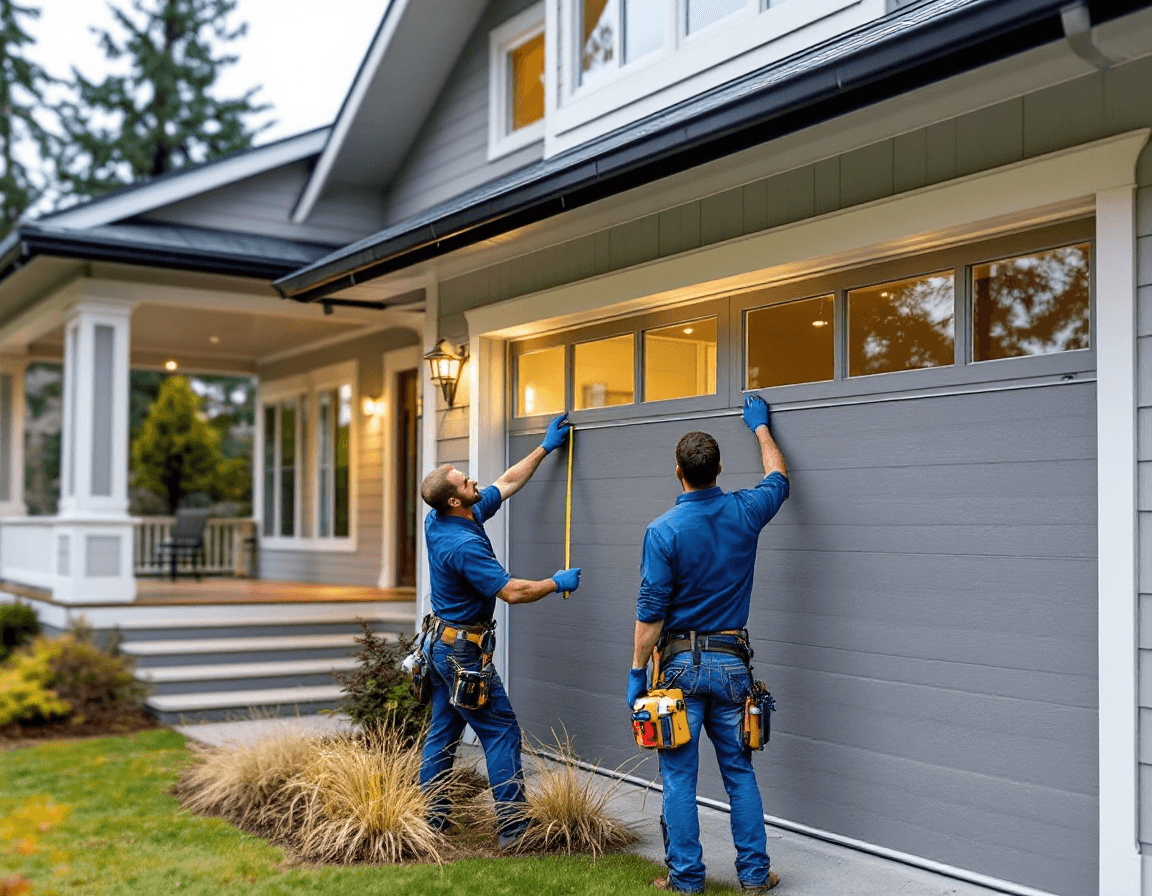
Garage Door Installation & Replacement in Beaux Arts Village, WA is a service many homeowners on this small, tree-lined town along the east shore of Lake Washington eventually need, whether the old door has simply worn out or a remodel has changed how the garage is used. Beaux Arts Village is one of the few incorporated communities in King County with a distinctly residential character, and many of its homes were built decades ago with garages sized for the cars of their era. Those openings often don't match the wide, tall doors that modern vehicles and storage needs call for, so a replacement is sometimes an opportunity to fix a problem that predates the current owners.
The lake shapes the daily life of this area in ways that affect a garage door more than most people expect. Winters bring long stretches of drizzle, morning fog that settles off the water, and wind gusts that can rattle a poorly sealed door in its track. Summers are mild, but humidity lingers in shaded lots, and the moisture that collects along the bottom of a door and inside the panels does its quiet work year after year. A well-chosen door handles these conditions without drama, and a poorly chosen one can warp, rust, or rot within a few seasons.
This page explains how our technicians approach installation and replacement for homes in Beaux Arts Village and the nearby 98004 and 98005 areas. You will find guidance on recognizing when repair no longer makes financial sense, how materials behave in Pacific Northwest weather, which styles suit the character of older and wooded properties, and what drives the typical installed price range of $950 to $3,800-plus. We also cover what to expect on installation day and why spring and cable work should always go to a licensed professional. Read on, or call (888) 799-3819 to talk through your specific opening.
When Repair Stops Making Sense on Your Current Door
Most garage doors do not fail all at once. They give warning signs over months or years, including slow or jerky operation, a panel that has bowed out of line, or a section that no longer seals against the floor. A technician can often fix a single broken roller, a torn weather seal, or a misaligned track for a modest charge. The question worth asking is whether the door as a whole still has useful life left, because repairing a tired door every eighteen months adds up quickly.
A useful rule of thumb is to compare the cost of the latest repair against the age and condition of the rest of the door. If the springs, tracks, and panels are original and showing corrosion, paying for one more part may simply delay the next call. When a door has needed multiple service visits in a single year, the cumulative cost often approaches the price of a new insulated door that will operate more quietly and reliably. We walk through this comparison honestly during every estimate, and we will tell you when a repair is still the smarter choice.
Some damage leaves no real alternative. A door that has been struck by a fallen branch during a windstorm, a panel that has cracked along its seam, or a frame that has rotted at the base can rarely be restored to a safe, weather-tight condition. When the structural members are compromised, replacement is the responsible path, and continuing to operate the door puts people, vehicles, and stored items at risk. Those situations deserve prompt attention rather than a wait-and-see approach.
Recognizing Storm, Rot, and Rust Damage Common to Lakeside Properties
Homes in and around Beaux Arts Village are frequently surrounded by mature conifers, big-leaf maples, and dense understory. Those trees are part of what makes the area appealing, but they also drop needles, moss-holding debris, and heavy limbs onto roofs and driveways. During the windy months, a single limb can dent a steel panel or crack a wood section, and the resulting gap lets rain reach the core of the door. Left alone, that water finds its way into hinges and bottom brackets.
Rust is the most common problem we see on steel doors in this part of King County. The damp air near the lake keeps surfaces wet longer than inland neighborhoods, and any scratch that exposes bare metal can begin to corrode. Look for orange-brown bleeding along seams, bubbling paint near the bottom edge, and crumbling at the hinge points. Surface rust can sometimes be treated, but deep corrosion weakens the panel itself and is a strong signal that replacement is coming.
Wood doors, which remain popular on older and custom homes, face a different challenge. Cedar and fir absorb moisture through end grain and unsealed edges, and the constant cycle of wet winters and drier spells causes swelling, cupping, and eventually soft spots. Rot often begins hidden behind trim or along the bottom rail, where water collects after rain. Probing the bottom edges with a screwdriver is a quick check; if the tool sinks into the wood easily, the section is likely compromised.
Matching Door Materials to Pacific Northwest Moisture
Material choice matters more in this climate than in drier regions. Insulated steel doors are a dependable workhorse because they resist moisture when properly primed and finished, and modern models use a foam core that adds both rigidity and thermal performance. Galvanized steel with a quality powder-coat or baked-on finish handles the damp months well, especially when the bottom seal is maintained and the surface is washed occasionally to remove salt-laden film and debris.
Aluminum is a lighter option that resists rust entirely, which appeals to homeowners closest to the water. It does not insulate as well as foam-filled steel, and thin aluminum panels can dent more easily, so we typically recommend thicker frames and reinforced sections for larger openings. Glass and aluminum combinations bring abundant natural light into a garage, though they require attention to glazing, sealing, and UV-resistant finishes to avoid early fading or seal failure.
Wood remains the most visually rich choice, and it can last for decades when it is selected and maintained carefully. Western red cedar, Douglas fir, and engineered wood products with factory sealing are all used in this region, but each needs a finish schedule and periodic inspection. Some homeowners choose a hybrid approach, with a wood-look composite or steel skin over an insulated core, which captures the appearance of traditional wood while managing moisture far more predictably.
Carriage-Style and Traditional Looks for Historic and Wooded Homes
Many houses in Beaux Arts Village have a traditional or cottage-inspired character, and the garage door is one of the most visible elements from the street. Carriage-style doors, with their vertical plank appearance, decorative hardware, and divided upper panels, complement that architecture well. They can be built in steel with a wood-grain texture, in real wood for a premium finish, or in aluminum with a painted carriage pattern for a lighter look that will not rust.
Modern homeowners who have remodeled sometimes want the opposite: clean horizontal lines, a flush panel, and a substantial glass section that echoes contemporary windows. A glass-and-aluminum door in a bronze or charcoal finish can make a garage feel like part of the living space rather than a utility room. The key is proportion, and we spend time on site measuring how the door will sit relative to the entry, the siding, and any trim that frames the opening.
Hardware and color decisions carry more weight than many people expect. Hinges, handles, and windows can shift a door from plain to distinctive without adding significant cost, and paint color can either harmonize with neighboring homes or create an intentional contrast. Before finalizing a selection, it helps to bring a sample of your siding, roofing, or trim color to the showroom so the door reads correctly in natural light.
Insulation, Energy Use, and Comfort in an Attached Garage
An attached garage shares walls, ceilings, and sometimes plumbing with the living space, so the main door is one of the largest uninsulated openings in the house. A single-layer steel door without foam can let significant heat escape in winter and transfer warmth from a sunny afternoon into the garage in summer. Insulated steel doors use a polyurethane or polystyrene core, and many models offer R-values in the low-to-mid teens, with thicker, premium designs reaching higher. The exact figure depends on the product, so compare the manufacturer's stated rating rather than assuming.
Insulation is only part of the picture. Weather seals along the bottom, sides, and top of the door determine whether that insulation actually works. A worn bottom seal lets cold air and moisture enter at floor level, and a gap at the jamb creates a draft that can make the adjacent room feel unsettled during windy nights. During installation, we check that the seals make full contact and that the frame is square, because even an excellent door performs poorly when it does not close evenly.
Comfort also depends on what happens inside the garage. A well-insulated door keeps temperature swings more manageable, which helps protect stored paint, tools, and any workshop equipment from the damp cold. If you plan to heat the garage or use it as a workspace, pairing a higher-efficiency door with adequate ventilation and a sealed threshold will make a noticeable difference in daily use.
Sizing, Openings, and Structural Checks for Remodels and Additions
Adding a new door during a remodel or an addition is one of the most common reasons we are asked to visit a property in this area. When the garage is being enlarged, reconfigured, or converted partly into living space, the opening often changes, and the new door must match the finished framing precisely. Measuring the rough opening, checking for level and plumb, and confirming header and jamb conditions are essential steps before any door is ordered.
Older homes sometimes reveal surprises when the old door comes off. Framing may be out of square, the header may be undersized for a wider opening, or the slab may slope toward the house in a way that makes the threshold difficult to seal. Our technicians identify these issues during the site visit and explain what corrections are needed, whether that means shimming, reinforcing the header, or adjusting the threshold. We would rather catch a problem before the door is ordered than discover it on installation day.
Wind resistance deserves attention for larger doors, particularly those facing open lots or the lakeshore. Wide single doors and double doors are more susceptible to flexing in gusts, so the panel design, track system, and reinforcement should match the size of the opening. Discuss the exposure of your property with your installer so that the door you choose is suited to the actual conditions around your home.
What a Typical Installation Day Looks Like
A professional replacement usually begins with the removal of the existing door, which is the most hazardous part of the job. Torsion springs and extension springs store enormous energy, and their removal and replacement must be handled by trained personnel with the right tools. Our crews secure the door, release tension in the proper sequence, and remove hardware carefully so that nothing shifts unexpectedly. Homeowners should keep children and pets well clear of the work area during this stage.
Once the old door is out, the crew checks the opening, cleans the track surfaces, and confirms the mounting points. The new door is assembled or unpacked, fitted to the opening, and aligned before the tracks, rollers, and springs are installed. Balance and tension are set according to the door's weight and the manufacturer's specifications, and the opener, if included, is programmed and tested. A properly balanced door should lift smoothly by hand when the opener is disconnected, and that test is part of our closing checklist.
Before leaving, we walk through the operation with you, show where the manual release is located, explain the safety reversal test, and review basic care such as keeping the tracks clean and scheduling a periodic inspection. Expect the work to take most of a day for a standard single or double door, with longer timelines for custom wood or complex remodel openings. Clean-up of the work area is part of the service, and we remove the old door from the property.
Pricing: What Drives the $950 to $3,800-Plus Range
Installed pricing for new garage doors in this region typically falls between $950 and $3,800, with some custom or premium configurations exceeding that figure. The spread reflects several variables: the door material, the size of the opening, the style and hardware, the insulation package, and whether an opener is included or upgraded. A basic insulated steel single door sits at the lower end, while a large custom wood or glass-and-aluminum double door occupies the upper range.
Labor complexity affects the total as well. A straightforward replacement in an existing opening with sound framing costs less than a project that requires header reinforcement, slab work, or adjustments for a remodel. Access to the property, the number of trips needed for special-order components, and any necessary permit fees also factor into the final quote. We provide itemized estimates so you can see exactly what is included and can compare options side by side.
Financing and seasonal timing are topics many homeowners raise. Scheduling outside of peak weather periods can sometimes make planning easier, though we do not pretend that demand is ever perfectly predictable. The most reliable way to understand your number is to share the door's size, your current condition, and your goals, then receive a written estimate after a site visit or detailed assessment.
Permits, Safety, and Working With a Licensed Crew
Permit requirements for garage door replacement vary depending on the scope of the project, particularly when structural framing, openings, or electrical components are involved. Because Beaux Arts Village is a distinct municipality within King County, homeowners should confirm with the town whether a permit is needed for their specific work. Our team can advise on what documentation is typically required and will not start work on a project that needs permits until they are in order.
Safety is the principle that governs everything we do. Spring replacement, cable repair, and the removal of a door under tension are jobs for licensed and trained technicians, not weekend projects. Attempting to adjust or remove a spring without proper equipment can cause serious injury, and even experienced homeowners underestimate the stored force. Our company is licensed, bonded, and insured, and every installation is performed by crews who understand the hazards involved.
If you are unsure whether your door is safe to operate, the simplest step is to stop using the opener and call for an inspection. Look for frayed cables, visibly stretched springs, and doors that move unevenly or drop suddenly. Keep the manual release handle in good condition, and never stand under a door that is opening or closing. A brief consultation can clarify whether repair, partial service, or full replacement best protects your household.
Choosing a new door is a long-term investment in how your home looks, feels, and performs through many Pacific Northwest seasons. Whether you need a durable insulated steel door for a family home near the shoreline, a carriage-style design that suits a historic property, or a complete opening rebuild for a remodel, our technicians will measure carefully, recommend honestly, and install with care. Call (888) 799-3819 to schedule an assessment for your Beaux Arts Village home, and we will help you find the right door for your opening, your budget, and the weather you live with every day.