
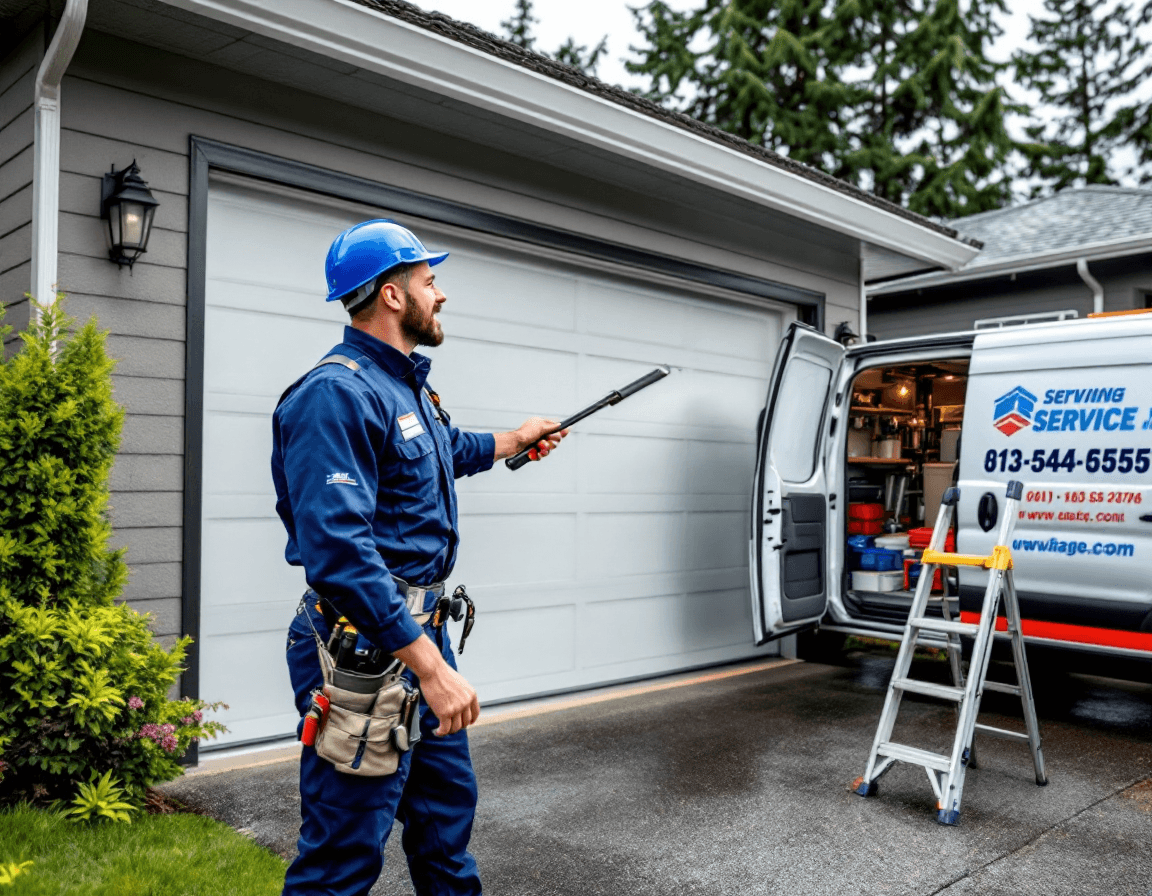
Garage door repair in Beaux Arts Village, WA is a different kind of job than it is in most of King County, and the difference starts with the lake. This small, close-knit enclave sits on the eastern shore of Lake Washington, where homes are set on lots that run toward the water and the air carries moisture most of the year. Doors here tend to show wear sooner than they would a few miles inland, especially the springs, rollers, and bottom seals that take the brunt of damp, cool weather. When a door won't open, stalls, or moves unevenly, the cause is often a combination of age, humidity, and daily use rather than one dramatic failure.
Seattle Garage Door Fix provides fast, reliable residential repair for homeowners across Beaux Arts Village and the surrounding Eastside communities, including properties in the 98004 and 98005 ZIP codes. Most residential repairs fall in the range of $95 to $450, depending on the part involved, the door's size and weight, and how much diagnostic time the problem requires. We are licensed, bonded, and insured, and we treat every visit as a chance to explain what is wrong, what it will take to fix it, and what can safely wait. This page walks through the symptoms we see most often here, what they usually mean, and where the line sits between a homeowner check and a call to a licensed technician.
If your door is currently stuck, reversing, making noise, or hanging crooked, you do not need to diagnose the whole system before reaching out. Reading the signs in this guide will help you describe the problem clearly when you call, and it will help you avoid the common mistake of trying to force a door that is telling you something is wrong. The sections below are organized by what you are likely to notice first, from the door that will not respond at all to the one that slams or sags over time.
Lakeshore Humidity and the Hardware That Feels It First
Beaux Arts Village gets a lot of moist air coming off Lake Washington, particularly from October through April when the lake stays cooler than the land and fog settles along the shoreline in the mornings. That moisture finds its way into garage door hardware through the tiny gaps around hinges, roller stems, and track brackets. Over a few seasons it causes surface rust, stiffens lubricant, and leaves grit that grinds against moving parts. Many homeowners here notice the change first as a door that opens a little slower in January than it did in August.
Steel tracks and galvanized hardware resist corrosion well, but they are not immune, especially where coastal-style salt air from winter storms meets older finishes. Nylon rollers can flatten or crack after years of heat and cold cycling, and once a roller starts to wobble it pulls the door slightly off its path. Hinges that were painted over during a previous exterior refresh can seize, forcing the opener to work harder than it was designed to. None of these issues is an emergency on its own, but together they can turn a smooth door into an unreliable one.
A practical habit helps a lot in this climate. Once or twice a year, wipe down the tracks with a dry cloth to remove grit, then apply a silicone-based or lithium-based lubricant to the hinges, rollers, and bearings. Avoid heavy grease on tracks, since it collects dust and dirt that holds moisture against the metal. If you see orange or brown spots on track surfaces, note where they are and mention them during service so a technician can assess whether the section needs cleaning, replacing, or protective treatment.
When a Door Stops Halfway or Jams in the Tracks
A door that stops partway up or down is one of the most common calls we receive from homes near the lake, and it is also one of the easiest to misread. The opener may hum, the motor may strain, and the door may refuse to move past a certain point. Often the cause is not the motor at all but a track that has shifted, a roller that has popped out of its channel, or a section that has bent slightly after bumping a vehicle or a stored item. Forcing the door up or down by hand can worsen the damage and create a safety hazard.
Look along both vertical tracks for visible bends, gaps between the track and the wall, or a roller sitting crooked in its groove. Check whether any bolts holding the track brackets have loosened, which is common after several years of vibration. Keep in mind that a door under spring tension can be dangerous even when it appears stuck, so do not attempt to pry it free or lift it manually while the springs are loaded. Stand clear of the door and keep children and pets away from the area while you investigate.
Here is a short list of conditions that typically point toward track or roller trouble rather than an opener fault:
- A door that stops at the same height every time, often near the top of the tracks
- A visible gap or hairline bend where the track meets a bracket
- A roller that looks flattened, cracked, or sitting off-center in its track
- Loud popping or scraping at the point where the door stalls
If the door is jammed and you see any of these signs, disconnect the opener by pulling the emergency release cord, which is typically a red handle hanging from the trolley, and leave the door in place. Then contact a technician. Track alignment and roller replacement are straightforward for a trained crew, but they require proper tools and an understanding of how the spring system is loaded.
The Opener That Goes Silent: Remotes, Wall Buttons, and Power
Sometimes the door is perfectly fine and the problem lives in the controls. A remote that works one day and fails the next often has a simple cause, such as a weak battery, a sticky button, or a receiver that has lost its programming after a power interruption. Lake-area homes see frequent short outages during winter windstorms, and some openers need to relearn their remotes after a reset. Before assuming the worst, check whether the wall button responds and whether the opener's indicator light is on.
Start with the basics. Replace the remote battery and make sure you are within range of the opener, keeping in mind that thick concrete walls and metal garage doors can weaken the signal. Check the wall-mounted control for a stuck button, and inspect its wiring for cracks or fraying, since moisture can creep into wall plates over time. If the opener has a lock or vacation mode, confirm it is turned off. Test the circuit breaker or outlet that supplies the opener, because a tripped GFCI can cut power without any obvious sign.
If the opener does not respond to any control and the light stays off, the problem may be in the power supply, the logic board, or the safety wiring. Those components require careful testing, and a repair that looks simple can conceal a deeper fault. A technician will check voltage, inspect the safety reversing circuit, and confirm whether the opener is compatible with the rest of the system. Many of these visits are completed within a single appointment, and the cost depends on whether a board, a sensor, or a wall control needs replacement.
Reversing Before the Floor: Why the Safety Sensors Matter
A door that starts down, gets about halfway, and then reverses is doing exactly what it was designed to do, which is a frustrating thing to witness. Modern openers use photo-eye sensors mounted near the bottom of the door track, one on each side, to detect obstructions. The sensors send an invisible beam across the opening, and if the beam is interrupted while the door is closing, the opener stops and reverses. Lake-area homeowners often find that a sensor has been knocked out of alignment by a bicycle, a recycling bin, or a dog brushing past.
Begin by clearing the path under the door and checking for debris, cobwebs, or a stray toy on the floor. Look at each sensor, which usually has a small indicator light. A steady light on the sender and receiver typically means they are communicating. A blinking or dark light suggests misalignment or a wiring issue. Gently adjust each sensor so it faces the other directly, and make sure the mounting brackets are tight. Wipe the lenses with a soft cloth, since spider webs and dust can block the beam even when alignment looks correct.
If the sensors appear aligned and clean but the door still reverses, the issue may be a damaged wire, a failing sensor, or an opener setting that is too sensitive for the current door weight. Sensor wiring runs through the garage ceiling and can be pinched or stressed over time, particularly in older homes. Do not bypass or disconnect the safety sensors to make the door close, even temporarily. Those sensors protect people and property, and a technician can diagnose the fault without compromising the system.
Grinding, Squealing, and Banging: Listening to Your Door
Noise is the door's way of talking, and each sound tends to point toward a particular area of the system. A rhythmic squeal during opening often comes from dry or dirty rollers and hinges, a common result of lakeside humidity combined with infrequent lubrication. A deep grinding noise, especially when the door is near the top, usually suggests worn bearings or a gear inside the opener. A sharp bang at the end of travel can mean the door is hitting its stops too hard, which may point to an adjustment problem or a weak spring.
Pay attention to when the noise happens. If it occurs only in the cold morning hours, moisture may be swelling a component or stiffening lubricant. If the sound gets louder over several weeks, a part is probably wearing out and will not improve on its own. Note whether the noise comes from the opener unit on the ceiling, the springs above the door, or the tracks along the sides. This simple observation helps a technician narrow the search quickly.
Some sounds call for immediate attention rather than a scheduled visit. A loud snap or crack from the spring area is a warning that a spring may have broken, and the door should not be operated until it has been inspected. If you hear a sudden cable slap or see a cable hanging loose, keep everyone away from the door and avoid touching the mechanism. Broken spring and cable situations are among the most hazardous garage door conditions, and only a licensed professional should handle them.
Crooked Travel and Uneven Panels: Balance and Alignment
A door that rises at an angle, or one side that lags behind the other, is usually telling you about balance or alignment. Garage doors depend on springs and cables working in sync on both sides of the opening, and when one side loses tension or one track drifts out of plumb, the door begins to twist. You may notice a gap at the top of one side, a panel that looks tilted, or a door that seems to travel in a slight curve. Left alone, this condition strains the opener and can damage the door's panels and hinges.
Stand inside the garage and look at the door from a few feet away while it moves slowly. Check whether both sides of the top section reach the header at the same time and whether the bottom seal sits evenly on the floor. Measure the distance from the top of the door to the ceiling on both sides. A difference of more than a small fraction of an inch is worth documenting. Also check whether the tracks are level and whether the vertical sections are parallel to the wall.
Because uneven travel often involves spring tension, cable condition, and track geometry all at once, this is an excellent case for professional service. A technician can measure each component, correct the balance, and confirm the door tracks evenly through a full cycle. Attempting to adjust tension yourself is risky, and it is one of the reasons we consistently recommend licensed help for any balance issue.
Slamming Shut or Racing Down: Gravity, Springs, and Control
A door that drops too quickly can feel alarming, especially if it lands with a hard thud that shakes the garage or the house. Several factors contribute to this, including a weakened spring system that no longer counterbalances the door's weight, a worn or incorrectly set opener force adjustment, and in some cases a damaged cable or drum. Heavy doors, such as insulated models with added hardware, put extra stress on these components and may show the problem sooner than lighter ones.
Some causes are easy to check. Confirm that the door is the same weight it was when the opener was installed, since adding heavy décor or a new insulation layer can change the balance. Look at the bottom seal and weatherstripping, because a torn or compressed seal can allow the door to fall faster than normal. Listen for scraping or rubbing during the drop, which can indicate a roller problem that makes the door feel like it is falling instead of gliding.
The more serious possibilities involve springs and cables. A spring that has lost tension, or a cable that has frayed or slipped off its drum, can allow the door to drop with dangerous speed. Those components are under significant load, and attempts to adjust them without training can cause serious injury. If your door slams, racing or uncontrolled movement is a clear sign to stop using it until a licensed technician has inspected the system.
Sagging Sections, Gaps, and Worn Weatherstripping
Over time, many doors develop sagging sections, visible gaps at the top or sides, or weatherstripping that no longer seals against wind and water. Lake-area weather makes this more noticeable, since winter storms push moisture and cold air into any opening. A sagging panel can also signal a damaged hinge, a loose bracket, or a bent track, and ignoring it can allow the problem to spread to adjacent sections. Gaps at the bottom may let in leaves, drafts, and small pests, while gaps at the sides can compromise insulation.
Start by inspecting the door from the outside in daylight. Look for panels that bulge, dip, or separate from their neighbors, and check the hinges for cracks or missing fasteners. Run your hand along the perimeter seals to feel for stiffness, splitting, or sections that have pulled away from the frame. Note any areas where light shows through when the door is closed, since those spots are usually where weatherstripping has failed or the door has shifted.
Replacing weatherstripping is often a modest repair that improves comfort and reduces moisture intrusion. Hinges and damaged panels take more care, because a replacement section must match the existing door's dimensions and style. A technician can assess whether the sagging is caused by hardware fatigue, which is usually fixable, or by structural damage, which may call for a section replacement. Either way, addressing sagging early tends to cost less than waiting until a panel fails outright.
Repair Pricing and What a Typical Visit Covers
Homeowners often ask what a garage door repair will cost before they agree to any work, and that is a fair question. For most residential repairs, our pricing falls between $95 and $450. Smaller jobs, such as sensor realignment, minor lubrication and adjustment, or a remote programming fix, usually land near the lower end of that range. Larger repairs, such as roller replacement across the door, opener component replacement, or hinge and panel work, typically fall in the middle to upper portion. Because every door is different, the final figure depends on what is found during the visit.
A typical service call begins with a safety check of the door, opener, springs, cables, and sensors, followed by a diagnosis of the symptom you reported. The technician explains what is causing the problem, what the repair involves, and whether any related components show early wear. You are never obligated to approve work beyond what you choose to authorize, and a good technician will separate urgent repairs from items that can be scheduled later. Clear communication matters more to us than an inflated estimate.
- Diagnostic and safety inspection of the door system
- Sensor and control testing, including wall unit and remote programming
- Track, roller, and hinge adjustment where needed
- Minor parts replacement, such as rollers, brackets, or weatherstripping
- Written explanation of findings before any additional work begins
Pricing can also be affected by after-hours scheduling, the type of door, and whether specialty parts must be ordered. We aim to share those factors before work starts so there are no surprises when the invoice arrives.
Where We Draw the Line: Springs, Cables, and Licensed Work
Every garage door repair involves judgment about what a homeowner can safely do and what belongs in the hands of a licensed technician. Our position is simple. Torsion springs, extension springs, cables, drums, and any work that involves tensioning or releasing the spring system should always be performed by a licensed professional. These parts store large amounts of energy, and mistakes can cause severe injury or damage to the door and the structure around it. Even experienced do-it-yourselfers can be surprised by how much force a single spring holds.
Homeowners can safely handle a number of tasks on their own. Cleaning tracks, applying lubricant to hinges and rollers, replacing a remote battery, checking sensor alignment, and tightening visible bolts on the outside of the door are reasonable checks. Test the door's balance by disconnecting the opener and lifting it halfway, which should leave it stationary if the springs are working. If it drifts or slams, stop and call for service. Never climb on a stepladder to reach overhead spring components, and never attempt to cut, adjust, or remove a spring.
These boundaries exist because garage doors are heavy and the consequences of error are serious. Our technicians are licensed, bonded, and insured, which protects you and your property during every visit. If you are ever unsure whether a task belongs to you or to a professional, the safe answer is to call. A brief conversation can prevent an injury, and in many cases it can also prevent a repair from becoming more expensive than it needed to be.
Garage door trouble in Beaux Arts Village rarely announces itself politely, but it is almost always easier to address when caught early. If your door is stuck, reversing, grinding, crooked, sagging, or simply not responding to your remote, call Seattle Garage Door Fix at (888) 799-3819. We serve Beaux Arts Village and nearby Eastside communities, we can usually explain your options on the first call, and we will tell you plainly what needs attention now and what can wait.