
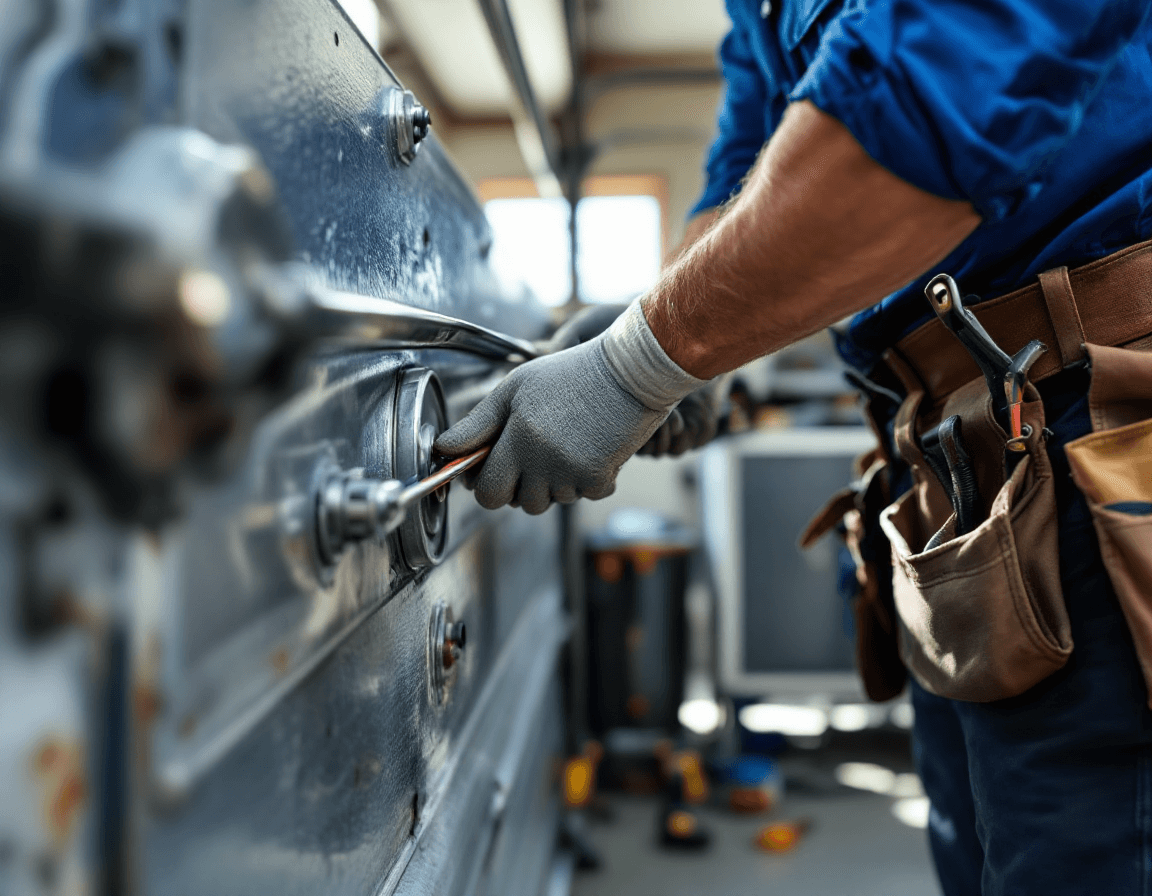
Garage door cable replacement in Beaux Arts Village, WA is one of the more common repairs we handle on the east side of Lake Washington, and it is also one of the most important to get right. The village is a small, close-knit enclave with lakefront and wooded lots, many of them set on sloped driveways with older garages that were built long before modern door hardware became standard. When a lift cable frays, rusts, or snaps, the door can drop unexpectedly or stop mid-travel, and that can leave a vehicle, a stored boat, or a family member's path blocked. Understanding what the cable is doing and why it fails will help you decide when to act.
This page is written for homeowners who have noticed something off with their garage door, whether that is a loud bang, a door that sits crooked, or a cable that has visibly come off its pulley. We will explain how the cables work, what the warning signs look like, how cable drum service fits into the picture, and what a typical repair involves. We will also be direct about pricing and safety. Most cable replacements we perform fall in the range of $110 to $300, depending on the door size, the parts needed, and whether the drum or other hardware needs attention at the same visit.
Our service area includes the 98004 and 98005 ZIP codes, and we regularly work on doors throughout the surrounding communities on the Eastside. If your door has already stopped working, or if you are unsure whether a noise is serious, you can reach us at (888) 799-3819 and a licensed technician can talk through your situation before anyone visits the property.
Why Lift Cables Wear Faster Near the Lake
Homes close to the Lake Washington shoreline live with a different set of conditions than homes a few miles inland. Moist air rolls off the water for much of the year, and during the long gray months from late autumn into early spring, humidity often stays high enough that metal surfaces never fully dry out. Garage interiors are especially vulnerable because they are partly open to outdoor air every time the door cycles, and they often lack the insulation and ventilation that keep living spaces stable. Steel lift cables are galvanized or coated to resist corrosion, but that protection erodes over time, and damp air accelerates the process.
Beaux Arts Village also has a good deal of mature tree cover, and that brings its own problems for garage hardware. Fallen needles, pollen, and fine organic debris collect in the track and on the drum assembly, holding moisture against the cable and trapping grit that works its way into the strands. Over several seasons, that grit acts like sandpaper every time the door rises and lowers. Homeowners often assume the door is failing from age alone, when in reality the cable has been slowly abraded and corroded from the outside in.
Temperature swings matter too. Our winters are usually mild compared with the interior of the state, but they include stretches of freezing nights followed by wet, warmer afternoons. That cycle expands and contracts metal and can cause surface rust to form in small pits that look harmless but weaken the wire underneath. A cable that has been sitting in these conditions for a decade may look intact from a distance and still have broken individual strands that will not hold the door's weight when it is called upon to do so.
Reading the Warning Signs Before the Cable Lets Go
Most lift cables give some warning before they fail completely, but the signs are easy to overlook if you do not know what to look for. The most reliable early indicator is a change in how the door moves. A door that once rose smoothly now hesitates, jerks, or seems to pull to one side. Homeowners often describe it as the door "thinking about it" before it goes up, and that hesitation is frequently the cable slipping or binding on the drum before it reaches the breaking point.
Visual checks can reveal a great deal if you do them carefully and safely. With the door fully closed and the opener disconnected, you can inspect the cables from a stable position without putting any part of your body under the door. Look for the following conditions:
- Visible fraying, where individual wire strands stick out or the cable looks fuzzy along its length
- Orange or brown rust, especially near the bottom bracket, the pulley, or the point where the cable wraps the drum
- Kinks, flat spots, or a cable that looks compressed or doubled back on itself
- A cable that sits loose or slack on one side while the other remains taut
- Gaps or misalignment where the cable should run cleanly over the pulley groove
If you see any of these conditions, treat the cable as compromised even if the door still works. A cable does not usually recover from fraying, and a door that is still operating on a damaged cable is one hard jolt away from a serious problem.
Sound is another important clue. A quiet, steady door operation is what you want. Popping, grinding, or a rhythmic clicking that changes with the door's position often points to a cable that is catching on a worn pulley or a drum with uneven winding. Pay attention to whether the noise happens at the same point in the door's travel every time, since that repeatability can help a technician locate the source quickly.
When a Cable Jumps Off the Drum
A cable that comes off the drum is a common scenario, and it deserves respect. The drum is the grooved cylinder at the top of the door assembly, and the lift cable winds around it in a precise spiral. When the cable slips out of its groove or the tension goes uneven, it can jump the drum and bunch up or wedge itself against the shaft. Often the first sign is a door that will not rise evenly, or one that stops partway with a noticeable sag on one side.
This situation can be deceptively dangerous. The cable and the spring system are under significant tension, and attempting to force the door, pull the cable back into place, or tug on the drum with a tool can cause the cable to release suddenly. Many people who are hurt by garage doors are not injured by the door falling; they are injured while trying to fix something they thought was minor. If your cable has come off the drum, keep the door closed, keep children and pets clear of the area, and disconnect the opener if you can do so without touching the door. Then contact a licensed technician.
Once a cable has jumped the drum, the drum itself may have been damaged. The grooves can wear, flatten, or accumulate debris that makes the next winding pattern unreliable. A technician will typically check the drum for cracks, loose set screws, and grooves that no longer match the cable diameter. Replacing only the cable without inspecting the drum can lead to a second failure within a short period, which is why drum condition is part of a proper cable service visit.
The Snap That Leaves the Door Stuck Halfway
A loud snap followed by a door that stops mid-travel is one of the most alarming experiences a homeowner can have. The sound is usually the lift cable parting under load, and the door may drop a few inches, lurch, or refuse to move at all. Because the door is now hanging on one side or relying on the remaining cable and spring tension, it can be unstable, and the opener may strain or trip its safety reversal system.
If this happens, do not try to lift or push the door manually to get it to close. Keep everyone away from the opening and the area directly beneath the door. If you need to get a vehicle out, use the emergency release cord only if the door is not hanging dangerously and you understand how to operate the release without putting weight on the door. Many homeowners are surprised to learn that the emergency release can allow the door to fall suddenly if the opposing cable is also compromised, so when in doubt, wait for a technician.
A snapped cable seldom occurs in isolation. The companion cable on the other side of the door has been subjected to the same load and the same environmental wear, so it is often close to failing as well. For that reason, replacement is generally performed on both cables at once. Replacing only the broken one leaves the door with mismatched tension, which can make the new cable wear faster and can cause the door to hang crooked.
Lopsided Doors and the Problem of Uneven Cable Tension
A door that hangs crooked, closes unevenly, or binds on one side is often telling you about cable tension rather than the track or rollers. Lift cables work in pairs, and each side must carry roughly equal load for the door to travel level. When one cable stretches, frays, or slips on the drum, the door tilts toward the weaker side. Over time, that tilt stresses the rollers, the track, and the opener, and the damage can spread.
Homeowners in Beaux Arts Village sometimes notice this problem after a long wet season, when the door seems to stick near the bottom or catches at one corner. It is easy to blame the weather alone, but a binding door is frequently a sign that one cable has lost tension or that the drum on one side has moved out of alignment. Sometimes the fix is a cable replacement, and sometimes it involves adjusting the drum set screws or checking the spring system. A technician will verify which component is responsible before making changes.
It is worth knowing that a door can look level and still be out of balance. If you lift the door manually to about waist height and it stays put on one side while sinking on the other, that is a sign of uneven tension. Do not repeat that test repeatedly, since the imbalance itself can stress the cable. Schedule a service visit so the balance can be corrected under controlled conditions.
Frayed and Rusted Cable: Why Surface Looks Can Mislead
Many homeowners assume that a cable with light rust is still safe because the wire looks thick. That assumption is risky. Rust on a lift cable often penetrates deeper than the surface, and individual strands can fail long before the cable visibly separates. Fraying is particularly important to watch for, because each broken strand reduces the cable's capacity to hold load. When several strands break in the same area, the cable can part suddenly.
Pitting is another concern in our climate. Small rust pits form where moisture and salt-free mineral deposits sit against the wire, and they create stress points. Under the repeated bending that happens each time the door cycles around the drum and pulley, those pits can become cracks. A technician checking a cable will run a hand along its length, looking for stiffness, flat spots, or areas where the lay of the strands has loosened. Those tactile checks often reveal problems that a quick glance will miss.
Replacement cables are typically made from galvanized steel rated for the door's weight and spring system. Matching the correct diameter and length is essential. A cable that is too thin will fail prematurely, and one that is too long can change the door's balance and cause the drum to wind incorrectly. This is one reason why cable replacement should be handled by a licensed technician who measures and verifies the specification before installation.
What Cable Drum Service Includes
The drum is easy to overlook, but it plays a central role in how the door lifts and lowers. During a cable service visit, a technician will typically inspect the drum for wear in its grooves, check the set screws that secure it to the shaft, and confirm that the drum turns freely without wobbling. Drums that have been damaged by a jumped cable or by years of uneven winding may need to be replaced rather than repaired.
Drum service also includes making sure the cable is seated correctly in its groove and that the winding pattern is consistent. On some doors, the drum has a specific orientation that must be respected, and misaligned installation can cause the cable to climb or overlap. A technician will verify this alignment and test the door through several cycles to confirm that the cable tracks cleanly from closed to fully open.
While the drum is accessible, it is sensible to check the bearings, pulleys, and hinges that support the cable path. Lubricating these components with a garage-door-specific lubricant, rather than a general-purpose oil that can attract dust, helps extend the life of the entire system. We usually recommend that homeowners keep the track and rollers clean between service visits, since debris that gets into the drum area can accelerate wear.
What a Typical Cable Replacement Involves
A cable replacement is a focused job, but it is not a quick DIY task for most people. The technician begins by confirming the door's type, size, and spring configuration, since these determine the correct cable specification. The door is then secured using appropriate clamps or a locking method that prevents it from moving while the spring tension is managed. This step is critical, because releasing or adjusting spring tension is the most hazardous part of the work.
Next, the old cable is removed from the drum and bottom bracket, and the drum and pulleys are inspected. If the cable is being replaced because of a snap or jump, the technician checks for any damage to surrounding components. The new cable is then routed through the pulley system, secured to the drum and bracket, and wound carefully so that it sits in the grooves without overlap. Tension is restored in a controlled manner, and the door is tested through several full cycles.
Finally, the technician checks balance and alignment, confirms that the opener is functioning correctly, and tests the safety reversal system. A properly completed cable service should leave the door running quietly and level. We also recommend that homeowners ask about the parts used, the expected service life of the new cable, and any maintenance steps that will help the cable last longer in the damp conditions common to the lake area.
Pricing Expectations for Beaux Arts Village Homeowners
Most garage door cable replacements we perform fall in the range of $110 to $300. Where a job lands in that range depends on several factors. The size and weight of the door matter, since heavier doors require heavier-duty cable and may need more labor to balance. Whether you have a single-car or double-car door also affects the scope of work, as does the age and type of spring system. Some homes in older sections of the village have custom or nonstandard hardware that requires additional time.
Other costs can arise if the inspection reveals related problems. A drum that is cracked or badly worn may need replacement, and a damaged pulley or bearing may add to the total. We believe homeowners should understand these possibilities before work begins, so a technician should explain any additional parts or labor and get your approval before proceeding. Pricing should be clear, and you should never feel pressured into work you did not ask about.
It is worth comparing a cable repair to the cost of waiting. A cable that is left in a frayed state can break without warning, potentially damaging the door panels, the track, the opener, or a parked vehicle. Replacing a cable at the first sign of wear is almost always less expensive and far safer than dealing with the consequences of a sudden failure.
Keeping Cables Healthy Through Wet Seasons
Preventive care can extend the life of your lift cables, especially in a climate where damp conditions persist for many months. The simplest step is to keep the garage door track, rollers, and drum area free of debris. A soft brush and a shop vacuum can remove the needles, leaves, and dust that collect in these areas. Avoid spraying water directly onto the cables or drum, as this can drive grit into the strands.
Lubrication is another useful habit, though it should be applied with care. Use a silicone-based or lithium-based lubricant designed for garage door hardware, and apply it to the rollers, hinges, and bearings rather than the cable itself. Some lubricants can attract dust and grime, so choose a product that is recommended for outdoor-adjacent conditions. If you are unsure, ask your technician which product they use during service.
Ventilation helps too. Garages in the village that are closed tightly for long periods can trap moisture, and that moisture settles on metal surfaces. Opening the door periodically on dry days, running a dehumidifier, or ensuring that the garage has adequate airflow can slow the corrosion that leads to cable failure. These measures are not a substitute for professional inspection, but they reduce the rate at which problems develop.
Why a Licensed Technician Should Handle Cable Work
Garage door cables are under tension from the springs, and that tension can release with enough force to cause serious injury. Even experienced homeowners underestimate the risk, and the tools commonly found in a household toolbox are not designed for the job. Our technicians are licensed, bonded, and insured, which means that both the work and any unexpected events are covered by the appropriate protections. That is an important consideration for a repair that involves stored energy and heavy moving parts.
Professional work also includes diagnosis. A cable failure is often a symptom of a larger issue, such as an unbalanced door, a worn drum, or a spring system nearing the end of its life. A licensed technician will look at the whole system and explain what they find, so you can decide how to proceed. Replacing only the cable without considering these factors can lead to repeated failures and unnecessary expense.
If you are dealing with a broken cable, a jumped drum, or a door that hangs crooked in Beaux Arts Village or nearby communities, the safest course is to stop using the door and call for service. Our team is available to discuss your symptoms, explain the likely cause, and schedule a visit at a time that works for your household. Call (888) 799-3819 today to talk with a licensed technician about your garage door cable replacement and get your door moving safely again.