
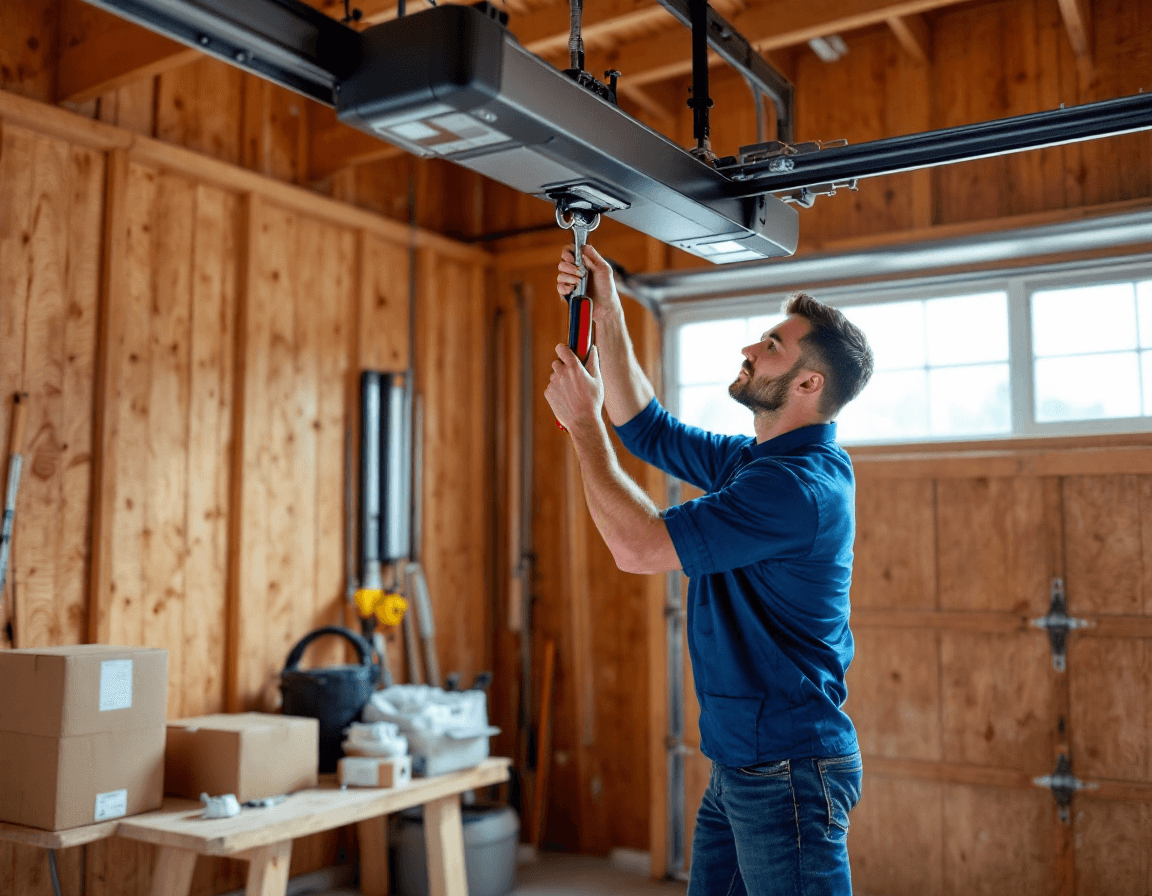
Garage door opener installation and replacement in Beaux Arts Village, WA is one of the most practical upgrades a homeowner can make to a garage. The opener is the motor that lifts, lowers, and secures a door thousands of times a year, and when it starts to fail, the problems show up quickly: a door that stalls halfway, a unit that grinds loudly at dawn, or a remote that stops responding during a rainstorm. Beaux Arts Village is a small, quiet enclave on the eastern shore of Lake Washington, and many of its homes have been around long enough that their original openers are no longer doing the job they were installed for.
Replacing an opener is rarely an emergency, but waiting too long usually makes the process more expensive. A failing motor can burn out at an inconvenient time, leaving you with a closed door and no way to open it manually from the car. A well-chosen replacement, installed by a licensed technician, can be quieter, safer, more secure, and far more convenient than the unit it replaces. Our installed pricing for belt-drive, chain-drive, and wall-mount smart openers generally falls between $275 and $650, depending on the model, the drive style, and what your garage needs.
This page explains how we approach opener work for homes in Beaux Arts Village and nearby ZIP codes including 98004 and 98005. You will find practical guidance on recognizing when an opener has reached the end of its useful life, how to choose between drive types, what rolling-code security actually does, and how battery backup and smart controls fit into daily life on the Eastside. We also explain where opener work ends and spring or cable work begins, since those tasks belong with a trained professional.
Why Lakeside Garages Put Extra Strain on Openers
Homes near the Lake Washington shoreline live with a different set of conditions than inland neighborhoods. Winters are long and damp, with frequent overcast stretches, and the air off the water carries moisture that settles on metal, wiring, and electronics. Over several seasons, that humidity can corrode exposed terminals, loosen connections, and encourage condensation inside the motor housing and control board. A garage that is not heated or fully insulated will see those effects more quickly than a conditioned living space.
Wind is another factor. Storm systems that roll across the lake can rattle a garage door and stress its tracks, hinges, and mounting brackets. When a door is pushed or pulled against wind resistance, the opener works harder to move it, and the motor, gears, or belt absorb more load over time. Many homes in the area also have older garage door systems that were never designed for the vibration and weight of modern heavy-duty tracks or insulated panels.
Because of these conditions, we recommend checking the opener at least once a year, ideally before the wet season sets in. A technician can look for corrosion on the power head, verify that the safety sensors are aligned and clean, test the limit settings, and confirm that the chain or belt has the right tension. A short inspection is often enough to catch a problem before it turns into a no-start situation on a cold January morning.
Telltale Signs Your Opener Has Reached the End
Some openers fail suddenly, but most give warning signs for weeks or months beforehand. Learning to recognize those signs helps you decide whether a repair will hold or whether replacement makes more sense. The following symptoms are the ones we hear about most often from homeowners in the area:
- The motor runs but the door moves slowly, pauses partway, or reverses without an obvious obstruction.
- The unit makes a grinding, clicking, or rattling noise that was not present a year ago.
- Remote controls work only when you stand very close to the door, or they stop working after storms.
- The light on the power head flickers, or the opener resets itself at random times.
- Repair parts for the model are no longer available, or the cost of a repair approaches the cost of a new unit.
Keep in mind that a single symptom does not always mean replacement. A worn remote battery, a dirty photo-eye sensor, or a loose wall-control wire can mimic serious motor trouble. A proper diagnosis looks at the full system, including the door balance, the tracks, and the safety reversal setup. If the opener is more than a decade old and showing several of these signs together, replacement is usually the more reliable choice.
Choosing Between Belt, Chain, and Wall-Mount Drives
The drive type determines how the opener moves the door, and it affects noise, maintenance, and the space you need in the garage. Belt-drive openers use a reinforced rubber belt running along a rail, which operates much more quietly than a metal chain. For a home with a bedroom above the garage, a shared wall with a living area, or a family member who works nights, a belt drive is often the most comfortable choice. Belts also avoid the metal-on-metal contact that causes chain noise and some of the vibration that can loosen fasteners over time.
Chain-drive openers are sturdy and generally cost less upfront. They are a practical option for detached garages, workshops, or situations where noise is less of a concern. Chains do require occasional lubrication and a periodic check of tension, and they are louder when the door is operating, so placement and insulation matter more. A technician can help you decide whether the chain model you are considering suits the building and your daily routine.
Wall-mount openers attach to the side wall of the garage rather than the ceiling. They are useful when ceiling joists are weak, when a garage has a high-lift or vaulted ceiling that leaves little headroom, or when the space above the door is already crowded with storage or ductwork. Wall-mount installation requires a solid mounting surface and correct alignment with the door arm, so the job should always be planned on site rather than assumed from a catalog description.
Rolling-Code Security and Why Older Units Fall Short
Many openers installed twenty or more years ago used fixed codes. That means the signal from the remote was the same every time, and anyone with a simple code-capture device could potentially copy it and open the door. Rolling-code technology changes the signal with every use, so a captured code is useless for future access. This is one of the most important security improvements a homeowner can make, and it is standard on modern openers from reputable manufacturers.
For households in Beaux Arts Village, where homes often sit on generous lots and garages may be used for storage of bicycles, boats, tools, and outdoor equipment, that added protection is worth considering. An opener without rolling-code security may still work perfectly well mechanically, yet it leaves the garage vulnerable in ways the owner may not realize. Replacing the unit also gives you the chance to review every remote, keypad, and wall control in use, removing any old transmitters you no longer recognize or need.
A good installation includes setting up the new system so that each remote and keypad is programmed deliberately, and any legacy devices are cleared. We also confirm that the safety reversal sensors are working correctly and that the door will reverse if it contacts an obstruction. These features protect people and pets as well as property, and they are part of what makes an upgrade meaningful.
Smart Control, Wi-Fi, and myQ Compatibility
Smart openers let you check the door status, open or close it, and receive alerts from a phone or tablet. Many homeowners appreciate being able to confirm that the garage is closed after leaving for work or to let a contractor in without leaving a key. Compatible systems commonly work with myQ-enabled hubs and apps, which provide notifications and remote access. The convenience is real, but it requires a stable home network and some attention to setup.
Before choosing a smart model, check the Wi-Fi signal in the garage. Concrete walls, metal shelving, and distance from the router can all weaken the connection, and lakeside homes sometimes sit farther from the main access point than expected. A technician can test signal strength during the site visit and recommend a range extender or mesh node if needed. We also suggest enabling two-factor authentication on the account and sharing access only with people you trust.
Smart features should complement, not replace, sound mechanical operation. If the door is unbalanced or the tracks are out of alignment, a smart opener will simply open and close a difficult door with more precision and no improvement in reliability. Our advice is to address the door's condition first, then add the control features you want on top of a sound foundation.
Battery Backup for Winter Outages on the Eastside
Power outages on the Eastside can happen during winter windstorms, when falling branches or damaged lines leave neighborhoods without electricity for hours or occasionally longer. When the power goes out, a standard opener cannot lift the door, and the manual release cord becomes the only way in or out. In a garage with a vehicle inside, that can be a real inconvenience, especially for families who need to leave early, use an electric vehicle, or reach a medical appointment.
Battery backup kits provide a temporary power source that allows the opener to run during an outage. Capacity varies by model, and the number of door cycles a battery can support depends on the opener, the door weight, and whether any accessories draw power. Batteries also need periodic replacement, so the backup system should be part of your maintenance schedule rather than something you forget about until a storm arrives. We can recommend a backup option that fits the opener you choose and explain realistic expectations for how many cycles you can count on.
It is worth noting that battery backup is not a substitute for a working manual release or a properly balanced door. If a door is heavy or the springs are worn, the battery may struggle to lift it, which shortens its life and places extra strain on the motor. We check the door's balance during installation and recommend repairs before adding backup power, so the system performs as intended when you need it most.
What Happens During a Typical Installation Visit
Opener installation follows a sequence that protects both the equipment and the people in your home. A technician begins by confirming the door type, size, weight, and spring system, along with the ceiling height, the condition of the mounting surfaces, and the electrical outlet location. This assessment determines which opener model and drive style will fit, and it identifies any work that needs to happen before the new unit goes in. In older garages, the outlet may need to be relocated or upgraded to a grounded, code-compliant receptacle.
Once the model is confirmed, the old opener is disconnected and removed. The technician then installs the new rail or wall bracket, attaches the trolley or arm, and connects the door to the motor according to the manufacturer's specifications. Limit settings are adjusted so the door stops fully open and fully closed, and the force settings are tested with an approved obstruction method. Safety sensors are mounted at the correct height, aligned, and tested before the job is considered complete.
The final steps include programming remotes, keypads, and any smart connections, then walking you through how the system works. A good technician will explain the manual release, the battery backup if you installed one, and the routine checks you can perform yourself. We also review the warranty terms and recommend a service interval so the new opener stays reliable for years.
Pricing From $275 to $650: What Shapes the Final Number
Our installed price for opener work generally ranges from $275 to $650, depending on the model and the requirements of your garage. A basic belt or chain drive with standard features will sit at the lower end, while a smart wall-mount unit with battery backup and a more advanced control system will fall toward the upper end. Labor is part of the total, as are removal of the old unit, bracket or rail adjustments, and any electrical work that is needed to power the new opener safely.
Several factors can move the price within that range. A detached garage that needs a new outlet, a door that requires track alignment before the opener can be installed correctly, or a home where the wall-mount option requires added bracing will each affect the total. We give you a clear quote after the site assessment and explain which items are required and which are optional upgrades. Nothing is added without your agreement.
If a repair is being considered instead of replacement, we will say so when it makes financial sense. An opener that needs only a new logic board or a sensor replacement may be a better value than a full upgrade, particularly if the motor and drive are in good condition. Our goal is to recommend the option that solves the problem without spending more than necessary.
Keeping the Door in Balance and Knowing Where Openers Stop
An opener is only as good as the door it moves. If the door is out of balance, the opener must work against the weight of the panels, which causes strain, noise, and early wear. A simple test can reveal imbalance: disconnect the opener, lift the door by hand to about waist height, and see whether it stays in place. If the door drops or rises on its own, the springs may need adjustment, and the opener should not be expected to compensate for the difference.
Spring and cable work is different from opener work, and it carries serious risks. Torsion springs and extension springs are under high tension, and cables can fail with force that causes injury. Homeowners should never attempt to wind, unwind, or replace springs or cables on their own. Those tasks should be performed only by a licensed, trained professional with the proper tools and safety procedures. When an opener installation reveals a spring or cable problem, we will explain what needs attention and recommend licensed service before the new opener is put into regular use.
This distinction matters because the cheapest path is not always the safest one. An opener installed on a door with failed springs can burn out quickly, and the attempt to save money on balance work often costs more in the long run. A complete assessment protects your investment and gives you confidence that the door and opener work together as a system.
Choosing a Replacement That Will Serve Your Home for Years
The best opener for your garage is the one that matches your door, your daily routine, and your long-term plans. A household with frequent late-night arrivals may value a quiet belt drive and a smart keypad. A family that uses the garage as a workshop may prefer a sturdy chain drive with a simple wall control and reliable battery backup. Someone with a vaulted ceiling or limited headroom may find that a wall-mount design is the only practical solution. Each choice has trade-offs, and the right answer depends on how the space is actually used.
Warranty coverage, parts availability, and the manufacturer's track record also matter. A reputable model with clear documentation is easier to service and more likely to receive firmware updates that improve security and smart features. We discuss these points during the consultation so you understand what you are buying, what the warranty covers, and what routine maintenance will keep the system running well. If you plan to remain in your home for many years, a durable unit with strong support is usually a better investment than the least expensive option on the shelf.
Finally, remember that an opener replacement is an opportunity to review the entire garage. Check the door's weather seals, the condition of the photo-eye sensors, the lighting, and the manual release. Small improvements made at the same visit can make the system safer, quieter, and easier to live with for the next decade.
Ready to replace an old or unreliable opener in Beaux Arts Village or nearby 98004 and 98005? Call Seattle Garage Door Fix at (888) 799-3819 to schedule a licensed technician. We will assess your door, explain your options clearly, and provide a straightforward quote for belt-drive, chain-drive, or wall-mount smart openers, with battery backup available if you want protection during winter outages.