
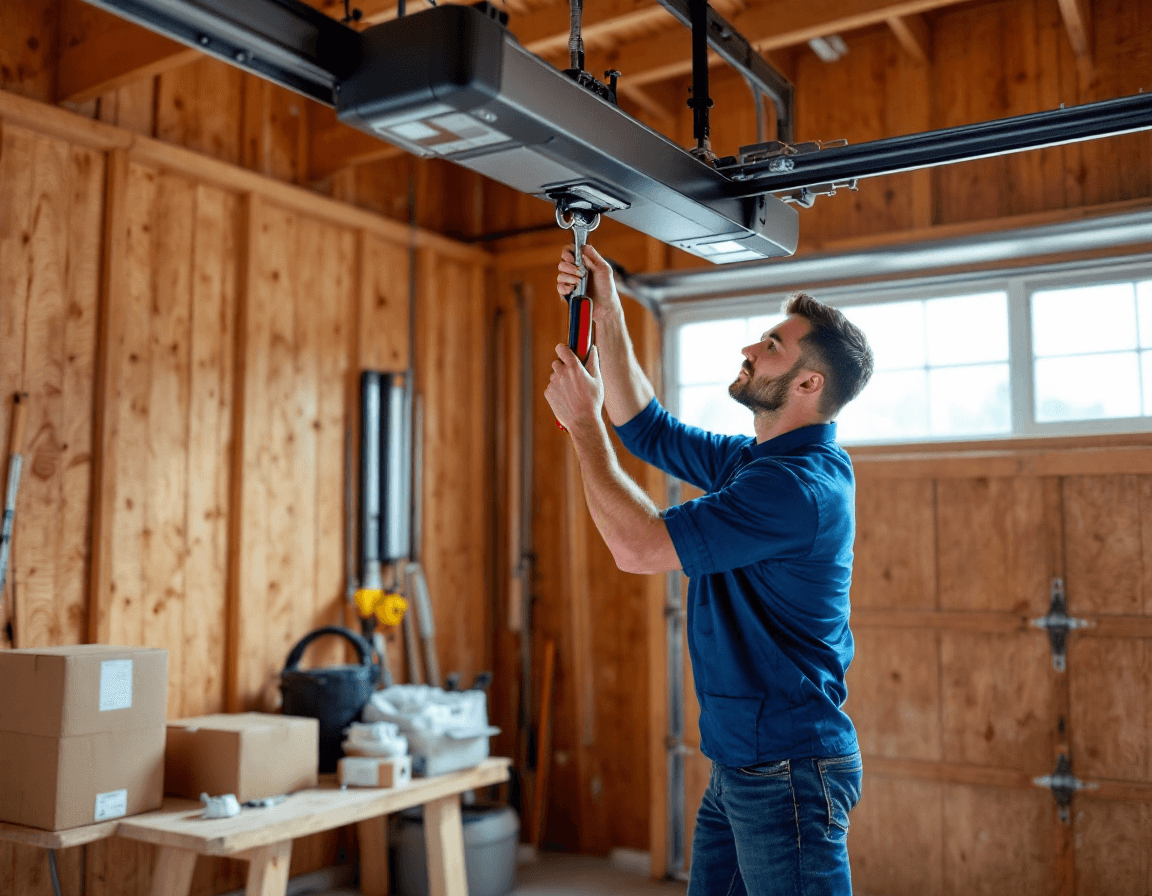
Garage Door Opener Installation & Replacement in Clyde Hill, WA is one of the most practical upgrades a homeowner can make to a daily routine that most people never think about until something goes wrong. The opener is the motor that lifts and lowers your door, and it works hard in every season, every time you leave for work or pull in after dark. When it starts to grind, stall, or ignore the remote, the problem is rarely just an annoyance. It can mean a security gap, an unreliable exit during a power outage, or a repair bill that keeps climbing.
Clyde Hill is a small, residential community in King County, and its homes range from older garages built decades ago to newer ones designed around modern vehicles and smart-home habits. Many properties have longer driveways, sloped approaches, and detached or semi-detached garages that make wireless signal and mounting space more complicated than they look from the street. Our team serves Clyde Hill and the surrounding area, including ZIP 98004, and we install belt-drive, chain-drive, and wall-mount openers with battery backup options so the system fits the way your household actually uses the garage.
This page explains what to watch for, how to choose between drive types, why rolling-code security matters, what installation typically costs, and what happens during a professional visit. Pricing for a complete installed opener generally runs from $275 to $650, depending on the model and the hardware your door needs. If you are weighing a replacement right now, the information below should help you ask better questions and make a confident decision.
Reading the Signs Your Opener Has Reached the End of Its Useful Life
Most openers do not fail overnight. They give warnings over months, sometimes over years, and homeowners often adapt without noticing. The door takes a little longer to start moving, the motor hums louder than it used to, or the remote needs a second press before it responds. Those small changes add up, and they usually point to a motor, logic board, or gear assembly that is wearing out under daily use.
Common symptoms that suggest it is time to talk about replacement include a door that stops partway and reverses for no clear reason, a unit that is loud enough to wake people in the house, and a remote or keypad that works only some of the time. Another clear sign is a unit that was installed before rolling-code technology became standard, because older fixed-code systems are far easier to exploit than modern ones. If your opener is also throwing error codes that a reset does not clear, the internal electronics may be the limiting factor.
- Slow or hesitant travel, especially when the door is cold or damp in the morning
- Loud grinding, clicking, or rattling during normal operation
- Intermittent remote response that resets only after unplugging the unit
- Door reversing unexpectedly even when the path looks clear
- An opener installed before rolling-code security was common
- Repair quotes that approach or exceed the cost of a new installed unit
Choosing Between Belt, Chain, and Wall-Mount Drives for Your Garage
The drive style determines how the opener moves the door, and it affects noise, maintenance, and where the unit can physically go. A chain-drive opener uses a metal chain running along a rail. It is typically the most affordable and handles heavy doors well, but it is also the loudest option and needs periodic lubrication. Chain drives remain a sensible choice for detached garages where nobody sleeps close to the door, and for owners who want strong lifting power at a modest price.
A belt-drive opener uses a reinforced rubber belt instead of a chain, which makes it considerably quieter and smoother. Many Clyde Hill households prefer belt drives when the garage shares a wall with a bedroom, a family room, or a home office. Belt drives also tend to have fewer vibration-related issues over time, although they still need the door balanced correctly to perform well. A wall-mount opener attaches to the side wall rather than the ceiling, which is useful when ceiling joists are too shallow, when the garage has a finished or vaulted ceiling, or when you need to free up overhead space for storage.
- Chain drive: strong, economical, and best suited to detached garages or workshops
- Belt drive: quiet and smooth, ideal for attached garages near living spaces
- Wall mount: a practical answer for limited ceiling clearance or finished overhead areas
Choosing the right drive comes down to three questions: how close the garage is to living space, how much clearance you have overhead, and how heavy the door is. A technician should measure the rail length, check the door's weight and track condition, and confirm that the header and mounting points can support the new unit. Skipping those checks is how homeowners end up with an opener that is either too weak for the door or too loud for the house.
Why Rolling-Code Security Matters More Than Most Owners Realize
Older openers often used fixed codes, meaning the remote sends the same signal every time. A determined person with inexpensive equipment can record that signal and replay it later to open the door. Rolling-code technology changes the transmitted code with each use, so a recorded signal is useless once it has been sent. For a home that depends on the garage for daily access, that difference is significant.
Modern openers also support features like encrypted communication, lockout settings after repeated failed attempts, and auto-close timers that reduce the chance of leaving the door open. When we replace an older unit, we review which security features are active and confirm that the remotes, keypad, and any wall control are paired correctly. We also recommend deleting old remotes that belonged to former owners, neighbors, or contractors who no longer need access. That step is free, takes only a few minutes, and is one of the most overlooked parts of a secure installation.
Safety sensors deserve the same attention. Photo-eye sensors near the floor must be aligned and clean, and the door must reverse when an object breaks the beam. We test the auto-reverse force as part of every installation, because a door that does not reverse properly is a hazard to children, pets, and anyone who might be caught underneath.
Smart Wi-Fi and myQ Control Across Clyde Hill Properties
Many homeowners want to open the garage from a phone, check whether the door closed after they left, or let a family member in without handing over a key. Smart openers make that possible through Wi-Fi connections and compatible apps. Systems such as myQ work with a bridge or built-in connectivity, and they can send alerts, schedule closing times, and integrate with other smart-home platforms. The convenience is real, but it depends on a stable network connection in the garage.
Wireless range is a practical concern in Clyde Hill because many properties are spread out, and garages are often located at the edge of the house or in a separate structure. A router on the opposite side of a large home may not reach the garage reliably. Before installation, we check the signal strength where the opener will mount and recommend a Wi-Fi extender or a relocated access point if needed. Mounting the logic board in a spot with a clear path to the router can make the difference between a dependable system and one that disconnects every few days.
Smart features should never replace the basics. A connected opener still needs a working safety reverse system, a secure remote, and a clear path for the door. We walk homeowners through account setup, app permissions, and how to disable remote access if they sell the home or change phones. Those steps keep convenience from turning into a vulnerability.
Keeping Your Home Running Through Windstorms and Power Outages
Western Washington winters bring heavy rain, saturated ground, and periodic windstorms that can knock out power to neighborhoods for hours or longer. When the electricity goes off, a standard opener is useless, and the garage door becomes a manual task. For households that rely on the garage as their main entrance, that can mean a cold, dark wait outside or a struggle with a heavy door during a storm. Battery backup solves that problem by keeping the opener running for a limited number of cycles during an outage.
Battery backup options vary by model. Some units include a built-in battery, while others accept an add-on kit. The battery supports a set number of door openings depending on the unit, the door weight, and how often you use it. A battery backup will not run the house, but it can give you reliable access to your garage when the grid is down. Many customers also appreciate that the battery can keep the door usable when a storm has knocked out power for only part of the night.
We recommend checking the battery condition every year and replacing it according to the manufacturer's schedule. Lithium and sealed lead-acid batteries each have different lifespans and temperature preferences, and the garage can get cold and damp in winter. Storing the backup battery where it stays dry and away from direct moisture helps it perform when you need it most.
What a New Opener Costs Installed in Clyde Hill
Our installed pricing for garage door opener installation and replacement generally falls between $275 and $650. The final figure depends on the opener model, the drive type, whether battery backup is included, and what the door needs for a safe, balanced installation. A basic chain-drive replacement sits near the lower end of that range, while a belt-drive or wall-mount smart opener with battery backup typically costs more. Those numbers reflect the unit and standard installation, not a promise that every job will land at a specific price.
Several factors can move the total. A door that is out of balance, has worn rollers, or needs a new safety sensor pair may require additional parts or time. A garage with unusual mounting conditions, such as a low header or a finished ceiling that requires a wall-mount setup, can also change the scope of work. We explain those variables before any work begins, so you know what is included and what would be an add-on.
- Opener model and horsepower rating, matched to the weight of your door
- Drive type: chain, belt, or wall-mount
- Battery backup kit or built-in battery option
- Smart-control compatibility, including myQ or other Wi-Fi platforms
- Door condition, including balance, tracks, and existing hardware
- Mounting conditions, such as ceiling clearance and structural support
Deciding Whether to Repair or Replace the Current Opener
Not every opener needs replacing. A worn remote, a misaligned sensor, or a tripped breaker can often be fixed with a short service call. The question becomes harder when the motor is failing, the logic board has been repaired more than once, or the unit lacks modern security. At that point, paying for repeated repairs on an aging system can cost more than installing a new opener that will serve you for years.
When we inspect an opener, we look at the age of the unit, the number of recent repairs, the condition of the rail and gear, and whether replacement parts are still readily available. We also consider how the opener fits your home today. If you want smart control, battery backup, quieter operation, or stronger security, a repair may solve the immediate problem while leaving the bigger limitations in place. A clear comparison helps you decide without pressure, and we are happy to explain both paths honestly.
How a Professional Installation Visit Typically Unfolds
A professional installation begins with a walkthrough of the garage and the existing door. The technician checks the door's balance, the condition of the tracks and rollers, the header height, and the electrical outlet location. We confirm the drive type and mounting style, then review the smart features and battery options you want. Taking time at this stage prevents surprises halfway through the job.
Next, the old opener is removed and the new unit is assembled and mounted according to the manufacturer's specifications. The rail is aligned, the door is connected, and the travel limits are programmed. Safety sensors are installed and aligned, and the auto-reverse force is tested with a standard reversal check. Finally, we pair remotes, set up keypads or wall controls, and walk you through the app if you are using smart features. Before we leave, we make sure you know how to operate the emergency release and how to reset the system if needed.
Important Safety Note on Springs, Cables, and Door Hardware
Garage door springs and cables store enormous amounts of tension, and they can cause serious injury if handled incorrectly. An opener replacement does not require you to touch those components, and we strongly advise homeowners never attempt spring or cable work themselves. Torsion springs, extension springs, and lift cables should only be serviced by a licensed, bonded, and insured professional with the right tools and training. If a spring is broken or a cable has frayed, the door should stay closed and the work should wait for a qualified technician.
During an opener installation, we inspect the door hardware for wear that could affect safe operation. If we find a worn cable, a stressed spring, or a damaged track, we will explain the issue and recommend the appropriate repair. We will not improvise spring work, and we will not leave a door in an unsafe condition. Protecting your household is part of the job, and it is why we treat every component of the door system with the same care we give the opener itself.
Quieter Routines for Homes Built Close to the Garage
Noise is one of the most common complaints we hear about older openers, especially when the garage shares a wall with a bedroom or sits beneath a living area. A chain-drive opener can transmit vibration into the framing, and that sound can carry through a house in the early morning or late evening. Switching to a belt-drive model often reduces the noise dramatically, and proper mounting with vibration-reducing hardware can help further.
Other factors also affect how loud the opener sounds. A door that is out of balance forces the motor to work harder, and worn rollers or dry hinges add squeaks and rattles. We check the balance, lubricate the moving parts where appropriate, and tighten fasteners during installation. The goal is a smooth, quiet operation that does not disturb the household when someone comes or goes at odd hours.
Scheduling Your Opener Replacement in Clyde Hill and 98004
If your garage opener is loud, unreliable, outdated, or simply due for a replacement, the best time to act is before a failure leaves you stranded. Our team serves Clyde Hill and nearby communities, including ZIP 98004, and we can assess your current system, recommend the right drive type and battery option, and explain the installed price before any work begins. Whether you want a budget-conscious chain drive, a whisper-quiet belt drive, or a wall-mount smart opener with backup power, we will help you match the unit to your home. Call (888) 799-3819 today to schedule a visit, ask questions about your door, or request a clear, no-pressure estimate for your garage.