
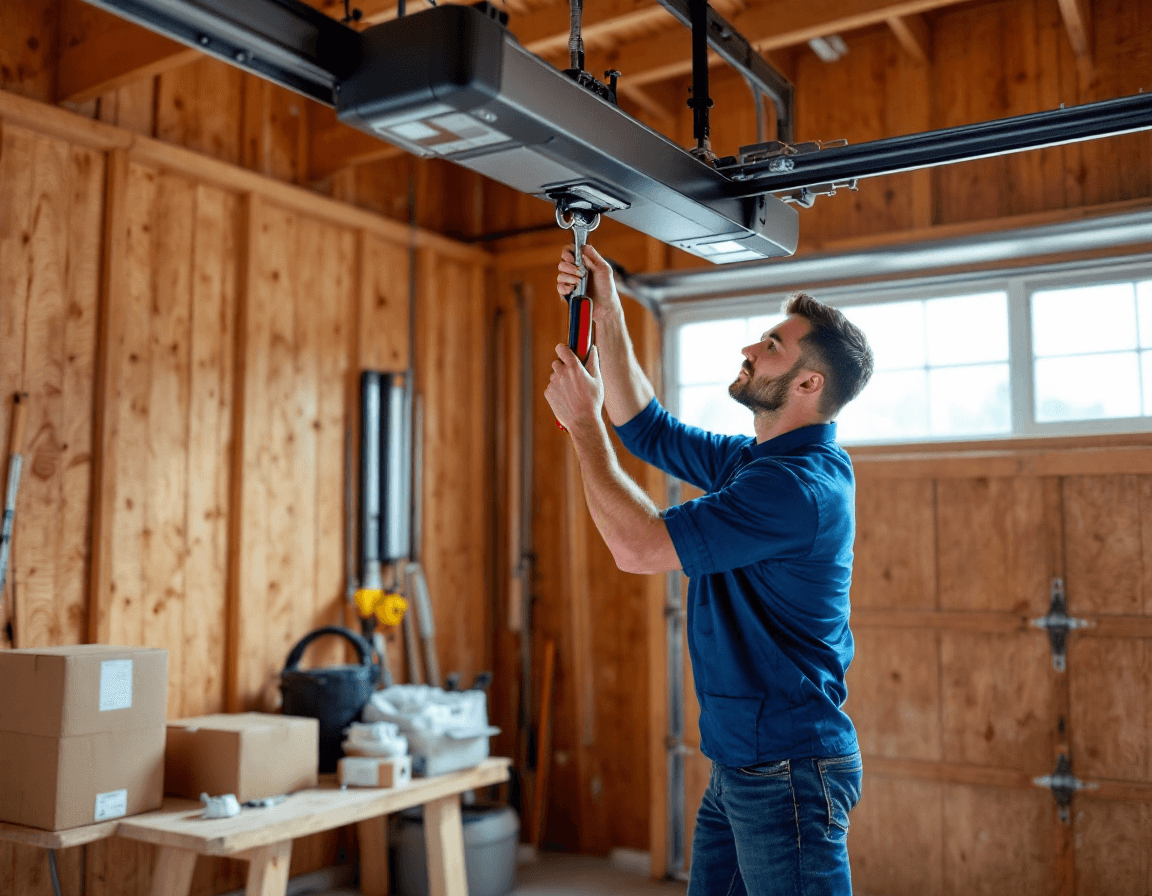
Garage Door Opener Installation & Replacement in Medina, WA is one of the most practical upgrades a homeowner can make to a daily routine, and it is also one of the easiest to put off. Many Medina households keep an opener running long after it has started to sputter, because it still lifts the door most mornings. The problem is that a tired opener rarely fails all at once. It gets louder, slower, and a little less predictable each season until one cold, wet morning it stops responding to the remote with the car idling in the driveway.
Medina sits on the east shore of Lake Washington, and its homes range from older estates with detached or multi-bay garages to newer custom builds with generous driveways and tight lot lines. Those differences matter when choosing an opener. A long, sloped driveway, a garage that sits far from the main router, or a door that is heavier than average all shape what the right unit looks like. Our technicians serve the 98039 area regularly, and we approach every opener job by first asking how the door moves, where the power comes from, and how the household actually comes and goes.
This page explains how we think about opener installation and replacement for Medina homes. You will find guidance on spotting the warning signs, choosing between belt-drive, chain-drive, and wall-mount designs, understanding security and smart-control options, planning for battery backup, and knowing what affects the final price. Pricing for a professionally installed opener generally runs from $275 to $650, depending on the model and the features you choose. If you would like a specific recommendation for your garage, the team at (888) 799-3819 can talk through the details.
Reading the Warning Signs Your Medina Opener Is Wearing Out
Openers rarely announce their decline with a single dramatic event. Instead, they send smaller signals that are easy to dismiss, such as a grinding noise at the start of travel, a door that pauses halfway up, or a motor that hums for a second before the carriage moves. Homeowners in Medina often notice these changes first on the cold mornings typical of a Pacific Northwest winter, when lubricant thickens and the drive has to work harder to overcome the door's inertia. If the opener seems to strain every time, that strain is usually the motor and gear train telling you they are near the end of their service life.
Reliability problems are another clear signal. An opener that works on Tuesday but refuses the remote on Thursday may have a failing logic board, a worn receiver, or a safety sensor that is misaligned or damaged. Lights that flicker, a remote with inconsistent range, or a wall control that needs several presses are all worth documenting, because a technician can often connect these symptoms to a specific component. Keeping a short note of when the problems happen, such as after rain or during high winds, helps us diagnose the cause faster when you call.
Some openers are worn beyond what makes financial sense to repair. When a repair estimate approaches the cost of a new opener, or when a unit is discontinued and parts are hard to source, replacement is usually the smarter path. An older opener also lacks many of the protections built into modern units, and that is worth weighing as you decide. A replacement not only restores dependable operation, it also brings the door back under the control of current safety and security features.
Belt-Drive, Chain-Drive, or Wall-Mount: Matching the Drive to Your Medina Garage
The drive type determines how the opener moves the door, and it has a larger influence on noise and maintenance than most people expect. Chain-drive openers use a metal chain running along a rail. They are typically the most affordable option, and they handle heavy doors well, but they transmit more vibration and sound into the house structure. For garages attached to living spaces, or for homes where bedrooms sit above the garage, the chain drive can be noticeable at all hours.
Belt-drive openers use a reinforced rubber belt in place of a chain, and this single change makes a substantial difference in operating noise. Belts run quieter and smoother, which is why many Medina homeowners choose them for attached garages and for properties where the sound of the door travels easily across a yard or down to the water. Belt-drive units usually cost more than chain drives, but the quieter operation and reduced vibration often justify the difference, especially in homes where the garage shares a wall with a family room or office.
Wall-mount openers are installed on the side wall rather than from the ceiling, which can be the right answer when the garage ceiling has limited clearance, when the door has unusual track geometry, or when the homeowner wants to free up overhead storage. Wall-mount units are also useful in some detached garage layouts where the ceiling framing is not designed to carry the opener's weight. Choosing among these designs is not about one being universally better. It is about matching the opener to the door's weight, the garage's structure, the noise sensitivity of the home, and the way the space is used.
Quieter Evenings Near the Lake: Why Belt Drives Earn Their Keep
Medina's residential areas are known for quiet evenings, and a noisy garage door can stand out more than it would in a busier neighborhood. Late-night door cycles, early morning departures, and garage use during a family's evening routine all put the opener in close contact with bedrooms and living spaces. A belt-drive installation reduces that intrusion considerably, and it is one of the most noticeable improvements homeowners report after replacing an older chain or screw drive.
Quiet operation also depends on how the opener is mounted and balanced, not just on the drive type. A belt-drive unit fastened to a flimsy header or a loose ceiling bracket can still transmit vibration, so we pay close attention to bracket placement, torque on the mounting hardware, and the condition of the door's rollers and hinges. A door that binds in its tracks will be loud regardless of the opener, which is why a quick inspection of the door itself is part of a thorough installation. When a homeowner wants the quietest possible result, we often recommend addressing the door and opener together.
It is worth being honest about what a quieter opener cannot fix. A worn torsion spring system, a squeaking hinge, or track that is out of alignment will still produce noise, and an opener upgrade will not silence those issues. In those cases we explain what we see and recommend the appropriate service. Spring and cable work is hazardous and should always be handled by a licensed professional, and we will never encourage a homeowner to attempt that work alone.
Rolling Codes, Fixed Codes, and the Security Gap on Older Units
Security is one of the strongest reasons to replace an older opener. Many units installed decades ago use fixed-code remotes, where the signal between the transmitter and receiver is the same every time. A fixed code can be captured and replayed by someone with the right equipment, which means an older opener may be less secure than the homeowner assumes. Rolling-code technology changes the transmitted code with each use, making a captured signal far less useful to anyone attempting to copy it.
Rolling-code systems are standard on most modern openers, and they are one of the first features we check when evaluating a Medina property. If an existing unit uses a fixed-code system, we explain the trade-off and show how a replacement would address it. This is especially relevant for homes with long driveways or frequently used side entries, where the garage is an important part of the home's perimeter. Upgrading the opener is a practical way to close that gap without changing the door itself.
Security is not only about the remote. Keypads, wall controls, and smart-control accounts all need sensible settings, including unique passwords, the removal of old remotes after a move or a vehicle change, and a review of who has access. We typically walk homeowners through these settings during setup so the system is secure from day one. A good installation leaves you with a clear list of which devices are paired and how to remove them.
Wi-Fi and myQ Control Across Long Medina Driveways
Smart control has become one of the most requested features for new openers, and for good reason. Being able to check whether the door is closed, open it for a delivery, or receive an alert when it moves can be genuinely useful, especially for households with changing schedules. Many modern openers support myQ and similar platforms, which link the opener to a phone app and, in some cases, to voice assistants.
Connectivity in a Medina garage can be more complicated than the product packaging suggests. Garages are often far from the main router, and thick exterior walls, concrete slabs, and detached structures can weaken the signal. We test the Wi-Fi strength at the installation location before finalizing the setup, and when signal is marginal we discuss options such as a mesh node, a relocated router, or a repeater placed closer to the garage. A smart opener that drops offline every few days is more frustrating than a basic unit, so this step matters.
Smart features should also be set up thoughtfully. Alerts, activity logs, and remote access are helpful, but each one adds an account that needs protection. We recommend enabling two-step verification where the platform offers it and limiting remote access to people who genuinely need it. Households that share vehicles or hire outside help should review the user list periodically, and we are happy to show how to do that during or after installation.
Battery Backup for Winter Power Interruptions in Eastern King County
Power interruptions are a real consideration for homes on the Eastern King County side of the lake, particularly during winter windstorms when trees and lines can be affected. Without battery backup, a standard opener cannot lift or lower the door when the power is out, and the only manual option is the emergency release cord. That may be acceptable for some households, but for families who rely on the garage as their main entrance or who need to get a vehicle out during an emergency, battery backup is a valuable addition.
Battery backup units keep the opener running for a set number of cycles during an outage, and the number depends on the battery size and the door's weight. Some models also include a status light or an alert in the app that tells you when the battery is low, which helps prevent a surprise during the next storm. Batteries do age, so they should be checked periodically and replaced according to the manufacturer's guidance. We include battery condition in our post-installation review so you know exactly what the system can handle.
It is also worth thinking about the manual release before you need it. The emergency release handle should be easy to reach, and everyone in the household should know how to use it safely. When the door is open and the release is engaged, the door can fall if it is not counterbalanced correctly or if the springs are damaged, so the release should only be used with the door in the appropriate position. If a spring or cable problem is suspected, that repair belongs with a licensed technician.
What the $275–$650 Installed Price Actually Covers
Homeowners often ask why opener prices vary so widely, and the answer lies in the components and the work involved. The installed price generally ranges from $275 to $650, and the figure depends on the drive type, the motor strength, the features built into the unit, and whether battery backup or smart control is included. A simple chain-drive unit with a basic remote will sit at the lower end, while a quiet belt-drive with battery backup and smart control will sit higher.
The installed price should cover more than the opener box. A proper installation includes mounting the unit securely, setting the travel limits, adjusting the force settings, testing the safety reversal system, aligning the photo-eyes, programming remotes and keypads, and checking that the door balances correctly before the opener does its work. These steps are what keep the system safe and reliable, and they are easy to overlook if the job is rushed. Ask any installer to explain exactly what is included before you commit.
Additional costs can arise if the door needs repair before the opener can work properly. A door with worn rollers, a bent track, or a damaged spring system may need service before a new opener is installed, and we will always explain those needs separately. Our goal is to give you a clear estimate that reflects the actual work, not a surprise at the end of the job. Ask for the specifics in writing so you know what the final number includes.
Humidity, Lake Air, and Protecting Electronics in Medina Garages
The Pacific Northwest climate is kind to lawns and difficult for electronics. Medina's proximity to Lake Washington means the air often carries moisture, and wet winters bring long stretches of damp weather that can reach the garage through door seals, cracked slabs, and ventilation gaps. Openers contain circuit boards, wiring, and sensors that do not enjoy repeated condensation, so protecting them is part of responsible installation.
We look at the garage environment before mounting any unit. Good weatherstripping on the door bottom, a properly sealed garage slab, and adequate ventilation all reduce moisture buildup, and they also help the opener last longer. Photo-eye sensors near the floor can be affected by dampness, dust, and spider webs, so we check their alignment and clean the lenses as part of setup. A few simple maintenance habits make a visible difference over time.
Temperature swings also matter. Cold mornings can slow the motor and thicken lubricants, while warm afternoons can soften weatherstripping and change how the door seals. Replacing an opener during a mild season is a comfortable option, but installations are performed year-round, and our technicians adjust the settings to suit the conditions on the day of the work. If you notice condensation inside the opener housing or corrosion on exposed terminals, call for an inspection rather than waiting for the unit to fail.
Our Installation Process from Inspection to Final Test
A dependable opener installation follows a clear sequence, and homeowners appreciate knowing what will happen before the technician arrives. We begin by evaluating the door's weight, balance, and general condition, because the opener can only perform as well as the door it moves. Next, we confirm the ceiling or wall structure, the available clearance, and the power supply location, which together determine the mounting method and drive type.
- Inspect the door for balance, track alignment, roller condition, and visible wear before selecting an opener.
- Confirm mounting structure, headroom, and electrical access, including whether a dedicated outlet is needed.
- Check the Wi-Fi signal at the garage location if smart control is part of the plan.
- Mount the opener with correct bracket placement and torque, then set travel limits and force settings.
- Align and test the photo-eye safety sensors and confirm automatic reversal on an obstruction.
- Program remotes, keypads, and smart accounts, and remove any outdated access codes.
- Walk through battery status, emergency release use, and app settings with the homeowner.
Each of these steps matters, and skipping one can leave the system unsafe or unreliable. We would rather take the extra time to test the reversal system and confirm the settings than leave a homeowner with a door that behaves unpredictably. Once the installation is complete, we review the results with you so you know how the system works and what to watch for.
Knowing When Repair Makes Sense and When Replacement Wins
Not every struggling opener needs to be replaced, and an honest technician should be willing to say so. A simple problem, such as a dead remote battery, a misaligned sensor, or a loose wire, can often be corrected quickly and inexpensively. Those repairs keep a reasonably new opener running well and may be the best choice when the unit is otherwise healthy.
- Repair is often reasonable when the opener is relatively recent, the parts are readily available, and the fault is isolated to a sensor, remote, or wiring issue.
- Replacement usually makes more sense when the motor is strained, the logic board is failing, the unit lacks rolling-code security, or repair estimates approach the cost of a new installation.
- Replacement also deserves a look when the household wants quieter belt-drive operation, battery backup, or smart control that the existing unit cannot provide.
Making the decision is easier when you have a clear diagnosis. We will explain what we found, outline the repair option and the replacement option, and let you choose. There is no pressure to upgrade when a repair will serve you well, and no hesitation to recommend replacement when that is the more reliable path.
Safety Boundaries: What Always Stays With Licensed Professionals
Garage doors are heavy, and the springs and cables that counterbalance them store a great deal of energy. Spring replacement, cable repair, and any work that involves tensioning or releasing torsion springs carry serious risk of injury, and these tasks belong with a licensed, bonded, and insured professional. We will always recommend licensed service for spring and cable work, and we ask homeowners to resist the temptation to attempt those repairs themselves.
Opener installation involves its own safety responsibilities, including proper mounting, correct force settings, and functioning safety reversal. An opener that does not reverse when it meets an obstruction can cause injury, and the safety sensors must be aligned and tested before the system is handed over. These steps are part of the standard installation process, and they are not optional extras. Homeowners should also keep children and pets clear of the door during operation and should never use the emergency release with the door in a position where it could fall unexpectedly.
If you notice a door that reverses unpredictably, a spring that appears broken, a cable that looks frayed, or a door that slams or drops, stop using it and call for service. Those conditions are signals that the system needs a professional inspection before it operates again. Your household's safety matters more than any single repair, and we would rather help you plan the right fix than see anyone hurt by a shortcut.
Medina households deserve an opener that is quiet, dependable, secure, and ready for the next winter storm. Whether your current unit is loud, unreliable, outdated, or simply beyond repair, a careful assessment will show the best path forward. For a tailored recommendation on installation or replacement, call Seattle Garage Door Fix at (888) 799-3819 and we will walk through the options for your Medina garage.