
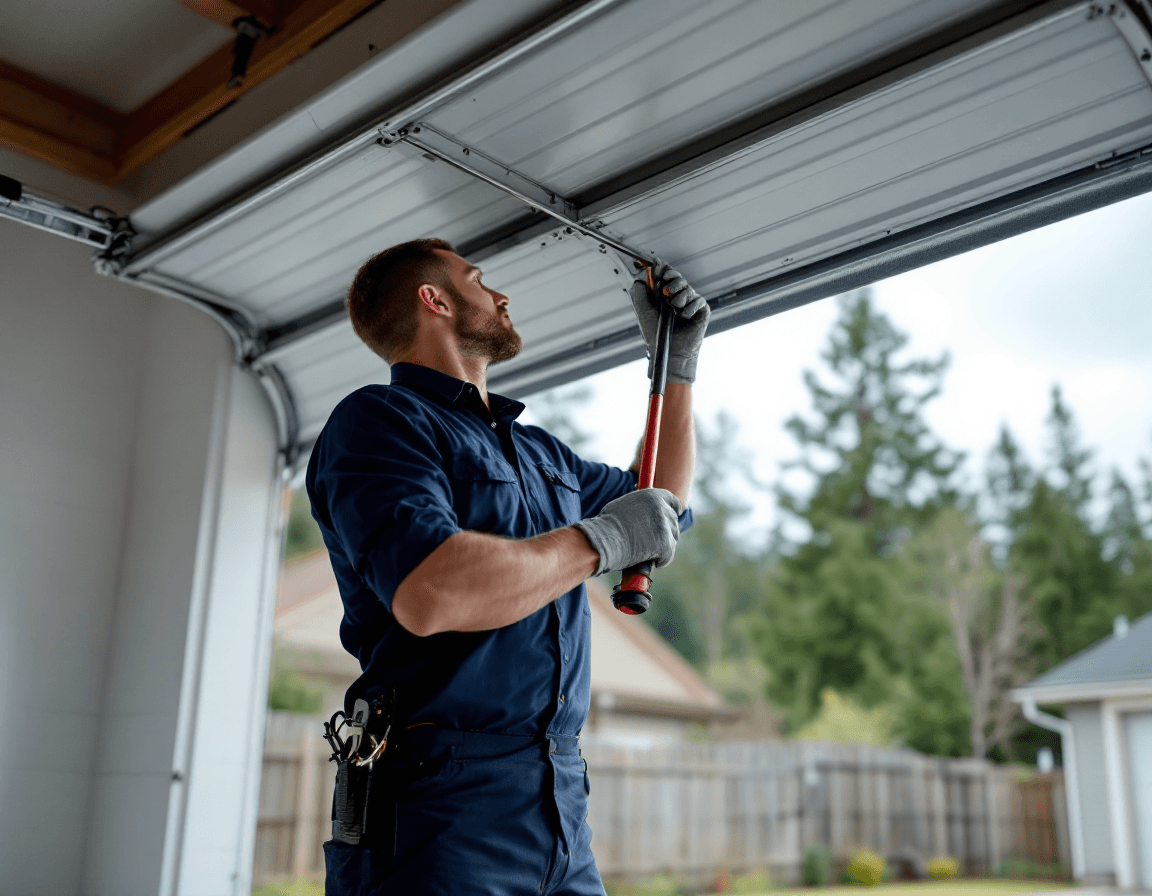
Garage Door Spring Replacement in Medina, WA is one of the most common repairs we handle for homeowners along the lake and in the tree-lined neighborhoods that surround it. A broken spring is usually the reason a door suddenly refuses to lift, sags on one side, or slams down when you least expect it. Because the springs carry most of the door's weight, a failure can turn an ordinary morning into an urgent problem. This page explains what a spring break looks like, why it happens so often in our part of Western Washington, and what to expect when a licensed technician replaces the springs and balances the door.
Medina homes tend to have wider two- and three-car garages, heavier custom doors, and sometimes oversized openers that were installed to handle the extra weight of insulated panels and decorative glass. That added mass puts more strain on the spring system than a standard builder-grade door would experience. Many owners in this area have also noticed that a door that worked perfectly for years suddenly feels different after a wet winter or a stretch of cold mornings. Understanding the mechanics behind that change makes it easier to decide whether you're dealing with a simple adjustment or a spring that needs to come out.
If you are reading this because something already sounds wrong, the safest first step is to stop using the door and keep children and pets away from the garage. Do not attempt to wind, unwind, or remove a spring yourself, and do not climb onto the door track to "fix" a cable. Call a licensed technician who can inspect the system, confirm the cause, and explain your options in plain language. You can reach our team at (888) 799-3819 at any hour when you need help with a damaged spring.
What a Snapped Spring Sounds Like in a Medina Garage
Most homeowners remember the first time a spring broke. The sound is often described as a sharp crack or a loud bang that seems to come from the ceiling, and it can rattle windows throughout the house. In many cases the noise is followed by a sudden change in how the door behaves, with the panels suddenly feeling light, heavy, or uneven when you try to operate it manually. Because garages in Medina are often attached to larger main living areas, that sound can carry further than people expect.
After the break, the door may stay closed and refuse to open, or it may lift only partway before stopping. Some owners notice the door drooping at one edge while the opposite side stays higher, which is a sign that the load is no longer evenly shared. You may also hear the opener running without the door moving much, which can be stressful for the motor and the gear assembly. These symptoms are not always the result of a spring alone, but they are a strong signal that the spring system needs professional attention.
It helps to note exactly what you heard and saw before calling for service. Write down whether the noise happened while opening, closing, or sitting idle, and whether the door was cold or warm at the time. Technicians use these details to determine whether the spring failed from fatigue, whether a cable or drum has been damaged, and whether the balance has shifted. A clear description also helps the technician arrive with the right parts on the first visit, which saves time for busy households.
Torsion Versus Extension Springs: Knowing What Your Door Uses
Garage doors in this region typically rely on one of two spring systems. Torsion springs are mounted on a steel shaft above the door opening and wind up to lift the door through a rotating action. Extension springs run along the horizontal tracks on each side and stretch as the door moves upward. Each type has its own failure pattern, and each requires different tools and different safety procedures during replacement.
Torsion systems are common on newer and heavier doors, including many of the insulated models found on larger properties. A broken torsion spring often shows a visible gap in the coil, and the spring may appear stretched or separated from its neighbors. Extension springs usually show their failure differently, with one half of a spring hanging loose or a cable kinked near the end of the track. Some older homes still have extension springs, and the type of spring you have determines the replacement approach.
Because the two systems behave so differently, homeowners should avoid guessing. Looking up the wrong part online can lead to a mismatched spring that won't hold the door correctly. A technician will identify your system, measure the spring dimensions, and match the correct wire size, length, and cycle rating. This is one of the reasons spring work should always be handled by someone with proper training and equipment.
Why Lakeside Moisture and Winter Weather Wear Springs Faster
The Pacific Northwest is known for long, damp winters, and the homes around Lake Washington feel that moisture in a particular way. Humidity, cool nights, and morning condensation can encourage light surface rust on steel components, especially when a garage is not heated or ventilated well. Springs are made from hardened steel that is designed to flex thousands of times, but corrosion can weaken the metal over time. Once the surface pits, the spring can lose strength more quickly under repeated tension.
Temperature swings also play a role. Steel contracts in the cold and expands in warmer weather, and the tension inside a spring shifts slightly with each change. Homeowners in Medina often notice that a door feels stiff on the first cold morning of the season and then smooths out later in the day. That pattern is normal to a point, but a door that consistently struggles after cold snaps may already have a spring that is close to failing. Regular observation helps you catch the problem before it becomes an emergency.
Wet conditions also affect the surrounding hardware. Rollers, hinges, and the lubricant on the track can break down when water gets into the system, and the added friction forces the spring to work harder. Garages near the waterfront may have a bit more ambient moisture than inland properties, and drive-in doors may see water spray during heavy rain. Keeping the door sealed, checking the weatherstripping at the bottom, and making sure the drainage around the driveway is clear all help reduce the stress on the springs over the long term.
Early Warning Signs That a Spring Is Wearing Out
Springs rarely fail without warning. Most of them give off signals for weeks or months before they finally break, and those signals are easy to overlook when the door still opens. Recognizing them early can save you from a sudden lockout, a damaged opener, or a cable that has jumped off its drum. Here are the signs homeowners most often see before a full break:
- The door feels noticeably heavier when lifted by hand, especially in the first few feet of travel.
- A squeaking, groaning, or popping noise occurs during opening or closing, particularly on cold mornings.
- The door appears to rise unevenly, with one side lagging behind the other.
- A small gap or visible separation appears between coils on a torsion spring.
- The opener seems to run longer than usual before the door finally moves.
- The door slams shut or drops quickly at the end of its travel.
If several of these symptoms appear together, schedule an inspection promptly. A technician can measure the spring, check the cable tension, and determine whether the system is safe to operate for a short time. In many cases, a worn spring can be replaced before it breaks, which turns an unplanned emergency into a controlled service visit. That approach is generally less costly and less disruptive than dealing with a broken spring at the wrong moment.
When the Door Stops Halfway or the Opener Hums Without Lifting
One of the most confusing problems homeowners report is a door that rises a few inches and stops, or an opener that hums loudly while the door barely moves. Many people assume the opener has failed, but in a large percentage of cases the real issue is an unbalanced door caused by a weakened or broken spring. When the spring cannot supply enough lift, the opener is asked to do the work of several springs at once. That overload can damage the gears and cause the motor to strain.
Medina garages often house heavier doors than the average residential setup, which means the balance margin is smaller. A spring that has lost only a portion of its strength may still lift the door on a warm afternoon but fail to do so on a cold morning. The result is an intermittent problem that can be frustrating to diagnose. A technician will test the balance by disconnecting the opener and lifting the door by hand at several points along its travel.
Do not keep running the opener while the door is stuck. Continued operation can strip gears, damage the trolley, or burn out the motor, which turns a spring repair into a much larger bill. If the door stops mid-travel, disengage the opener, keep the area clear, and call for service. Once the spring is replaced and the door is balanced, the opener should operate smoothly without the labored sound that signals overload.
Checking Cables, Drums, and Track After a Spring Break
When a torsion spring breaks, the cables that connect the spring to the bottom bracket are no longer under tension in the same way. Often the cable will loosen, slip off its drum, or become tangled inside the track. In a worst-case scenario, the cable can snap or the drum can crack from the sudden shock. These secondary problems are important because they can make a door unsafe to operate even after the spring is replaced.
A thorough service call includes an inspection of every cable, drum, and fitting in the system. The technician will look for fraying, kinks, or worn ends, and will confirm that each cable seats correctly in the drum groove. Track alignment matters as well, since a bent or loose track can cause the door to bind and stress the new spring. Replacing a single spring without checking these parts may leave the homeowner with a second failure a few months later.
It is also worth checking the rollers and hinges while the door is open for service. Worn rollers can make the door feel heavy, and loose hinges can change how weight is distributed across the panels. Lubricating moving parts with a garage-door-specific lubricant, rather than household oil, can help reduce friction and extend the life of the system. A technician can recommend the right products for your specific door.
High-Cycle Springs and Longer-Lasting Options
Standard springs are rated for a certain number of cycles, which is roughly one full open and close movement. Many builder-grade springs are designed for around ten thousand cycles, which is adequate for a typical household but may wear out sooner in a busy home. Homeowners who use the garage as a main entry, who run home businesses from the space, or who have multiple drivers may benefit from high-cycle springs. These are engineered from heavier-gauge wire and are built to handle more frequent use.
High-cycle options are not always necessary, but they can be a practical upgrade when the door is especially large or when the existing spring has failed early. A technician will review how often the door is used, the weight of the panels, and the type of opener installed before recommending a cycle rating. In some cases, pairing a high-cycle spring with a properly balanced door can extend the service life and reduce the strain on the opener. The goal is to match the hardware to the way your household actually uses the garage.
Cost and longevity should be balanced carefully. A higher-cycle spring typically costs more than a standard replacement, but it may save money over time if it prevents repeated service calls. Ask your technician to explain the difference in writing so you can compare the options without pressure. Good service providers will be transparent about what each option delivers and will not push an upgrade you do not need.
What Influences the $180–$450 Range for Most Spring Replacements
Most spring replacements we perform fall within a range of $180 to $450, but the final number depends on several factors. The type of spring, the size and weight of the door, and whether the job involves cables or drums all affect the total. A single extension spring on a lightweight door will usually cost less than a pair of heavy torsion springs on a large insulated door with cable replacement. Balance adjustment and a full system inspection may also be included or added depending on the condition of the hardware.
Here are the main variables that shape the estimate for a Medina spring job:
- The spring type and whether one or two springs need replacement.
- The door's weight, width, and panel style, including glass or custom insulated sections.
- Cycle rating, such as a standard spring or a high-cycle upgrade.
- Whether cables, drums, bearings, or brackets also need replacement.
- The condition of the track and rollers, and whether alignment work is required.
- Access and site conditions, including ceiling height and the location of the opener.
A reliable estimate should be given before any work begins, and it should explain what is included. Be cautious of any provider who quotes a vague price without inspecting the door or who adds surprise charges after the spring is removed. Ask whether the quote includes balancing, the opener safety test, and a check of the cables. Clear communication up front is a sign of a company that respects your time and your budget.
Balancing a Heavy Door After the New Springs Go In
Installing new springs is only part of the job. Once the replacement is complete, the door must be balanced so that it holds steady at any point in its travel. A properly balanced door should stay in place when released halfway up, and it should move smoothly without sagging or rushing. Balance is essential for safety, for the longevity of the opener, and for the comfort of everyday use.
Balancing involves adjusting the spring tension and checking how the door behaves when the opener is disconnected. The technician will test the door at several heights and make small corrections as needed. On heavier Medina doors, this step can make a noticeable difference in how the door feels, even if the old springs seemed fine. A door that is well balanced also reduces wear on the rollers and hinges, which helps the entire system last longer.
Homeowners should expect the technician to walk through the results before leaving. Ask to see the door move manually and under power, and ask how the safety reversal system was tested. A door that closes too fast, closes crooked, or fails to reverse when it meets an obstacle should not be left in that condition. A proper final check protects everyone who uses the garage.
Why Spring Work Should Always Go to a Licensed Professional
Garage door springs store a large amount of energy, and working on them without proper training and tools can lead to serious injury. Torsion springs are under high tension even when the door appears to be at rest, and a slip during winding can cause the bar or the spring to whip with force. Extension springs can also release stored energy if the safety cable or hardware fails. These are not tasks for an untrained homeowner, no matter how handy they may be.
Licensed, bonded, and insured technicians are trained to recognize the hazards and to use the correct winding bars, safety cables, and lift equipment. They also understand how each spring type behaves under load and how to test the system safely after installation. Professional service protects you from personal risk and also protects your property from damage to the door, opener, and surrounding structure. If something goes wrong during a DIY attempt, you may be responsible for the cost of repairs that a professional would have avoided.
Choosing a licensed provider is a practical decision as well as a safety one. A qualified company will document the work, explain each step, and stand behind the installation. If you have questions about your system or want a second opinion, call (888) 799-3819 and a member of our team can walk you through the options for your Medina home.
Spring problems can feel sudden, but they are almost always manageable when you act early and rely on trained hands. If your garage door is stuck, noisy, uneven, or showing any of the warning signs described above, do not wait for the next break to make the decision for you. Call Seattle Garage Door Fix at (888) 799-3819 to schedule a licensed inspection and a clear estimate for your Medina spring replacement. We will explain what we find, recommend the right spring and balance for your door, and help you get your garage working safely again.