
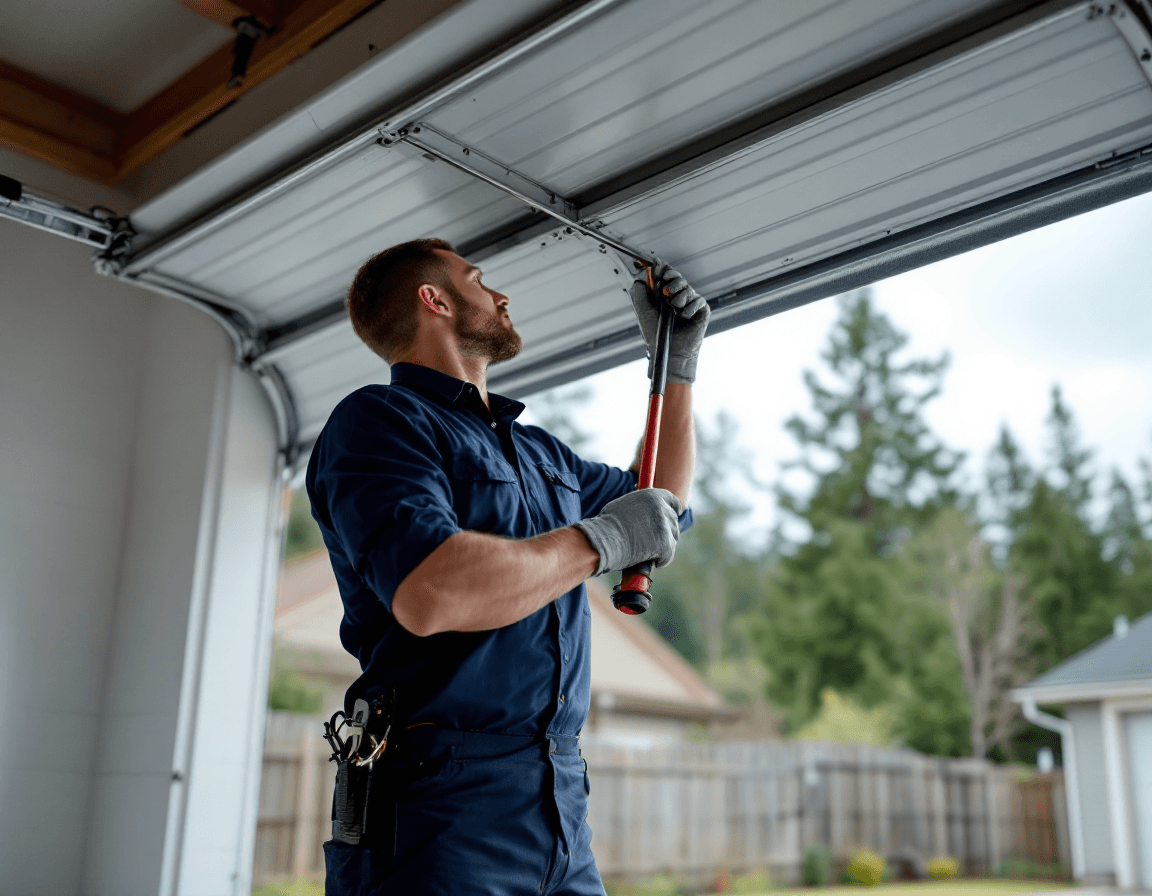
Garage door spring replacement in Clyde Hill, WA is one of the most common repairs we handle, and it is also one of the most dangerous to attempt yourself. The springs that lift your door carry enormous tension, and when one fails it can release that energy in a fraction of a second. Homes in this part of King County often have two-car garages, long driveways, and heavier custom doors, so the springs are working harder than the generic setup many homeowners picture. Understanding what a failed spring looks like is the first step toward getting your door safely back in service.
Most spring replacements we perform in Clyde Hill fall between $180 and $450, depending on the spring type, door weight, and whether cables, drums, or the opener need attention at the same visit. That range covers the parts and the labor needed to remove the broken spring, install a matched replacement, and confirm the door moves smoothly. The actual cost depends on what your specific door requires, so a technician should inspect the hardware before any number is settled. If you are reading this because your garage just made a loud noise or the door refuses to rise, the sections below explain what likely happened and what to do next.
Seattle Garage Door Fix is a licensed, bonded, and insured garage door company serving Clyde Hill and more than 60 communities across Western Washington. We write this guide to help homeowners recognize the signs of a spring problem, understand the options, and avoid the mistakes that turn a manageable repair into a costly one. Nothing here replaces a hands-on inspection, but a clear picture of the problem makes the call to a professional faster and more productive.
Reading the Bang: What a Snapped Spring Sounds Like From Inside the House
A snapped spring usually announces itself with a sharp, metallic bang that can be startling, especially if you are in a bedroom or a kitchen on the far side of the house. Many Clyde Hill homeowners describe it as sounding like a rifle shot or a heavy piece of steel dropped on concrete. The noise often happens when the door is closed, because the spring is under the most tension at rest. Some people hear it while the door is partly open and assume the opener has jammed.
After the bang, the door may look normal from the outside but behave very differently when you try to use it. Closed doors that had worked fine for years can suddenly refuse to budge, or they may drop with a jolt when the opener is engaged. A broken torsion spring often leaves a visible gap in the coil, while a broken extension spring may leave one half hanging loosely near the track. Look carefully at both ends of the spring assembly on the horizontal shaft above the door, and check the sections of spring above the tracks if your system uses extension springs.
Do not try to remove, adjust, or stretch the broken spring yourself, even if it looks like a simple fix. The remaining tension can still be dangerous, and the cables attached to the bottom brackets may have slackened in ways that make the door unstable. Keep children and pets away from the garage, avoid standing directly beneath a door that is not secured, and disconnect the opener by pulling the emergency release cord only if the door is closed. Then call a professional who can make the area safe and replace the spring correctly.
Why Hillside Lots and Larger Homes Put Extra Strain on Garage Doors
Clyde Hill is known for its wooded, sloping properties, many of which sit on hillsides with long driveways and detached or oversized garages. Those features shape how garage doors age. Driveways that slope steeply can cause the door to sit at an angle to the ground, and a door that is slightly out of square will load one side of the spring system more than the other. Over years of daily use, that uneven load can wear one spring faster than its partner, which is why a single broken spring is often accompanied by a worn companion spring that is close to failing.
Larger residences also tend to have wider doors, sometimes double-wide units or custom panels with glass or heavy wood overlays. A heavier door requires springs with higher lift ratings, and the springs themselves are closer to their limits. When a homeowner upgrades a door's insulation, adds decorative hardware, or installs a heavier opener, the springs may no longer be sized for the new load even if they were correct when the door was installed. We often find that a spring which lasted many years on a builder-grade door was not matched to a heavier replacement panel installed later.
Hillside and mature-tree lots also bring moisture and debris into the garage area. Leaves, needles, and damp soil collect along the tracks and near the bottom of the door, and that grime can accelerate wear on rollers and cables. Keeping the tracks clear and checking that the door seals are intact helps reduce the stress on the springs, but it does not eliminate the need for periodic inspection. A technician who understands how the property sits on the land can spot balance and alignment issues that a general inspection might miss.
Torsion or Extension: Knowing Which Spring Your Door Is Carrying
Before any replacement, the technician needs to identify which spring system your door uses, and homeowners often find this surprisingly confusing. A torsion spring system mounts on a steel shaft above the door opening, usually centered over the header, and it twists to store the energy that lifts the door. Torsion systems are common on newer residential doors because they are generally quieter and more stable, and they tend to last longer when properly maintained. When a torsion spring breaks, the gap is typically visible in the coil, and the door will often refuse to lift at all.
Extension springs run along the horizontal tracks on each side of the door, stretching as the door rolls up and contracting as it closes. They are simpler and cheaper to install, which is why many older garages still use them. Extension systems usually come with safety cables running through the center of each spring, and those cables are meant to keep a broken spring from flying loose. If you see a spring hanging at an odd angle near the track or notice that the door drops suddenly on one side, an extension spring failure is a strong possibility.
Identifying the system matters because the replacement process, parts, and safety procedures differ. Torsion springs are wound with specialized bars under high tension, and the work requires specific tools and training to do safely. Extension springs can be easier to access but still store significant energy. In either case, the tension should be released and handled only by a licensed technician. Ask the technician to explain which system you have and why they recommend a particular replacement, so you understand the work before it begins.
Five Signs the Spring Has Failed and the Door Is No Longer Safe to Operate
Spring failures do not always produce a loud bang. Some develop slowly, with the door gradually becoming harder to lift until it finally stops. Others happen quickly and leave the door in an awkward position that is difficult to diagnose without a closer look. Knowing the most common symptoms helps you decide when to call for service and when to keep the door closed while you wait for a technician.
- A loud bang from the garage, often when the door is closed, followed by a door that no longer moves smoothly or at all
- A visible gap in the torsion spring coil, or a broken extension spring hanging loosely along the track
- A door that opens a few inches and then stops, sometimes with the opener straining or humming without lifting the panels
- A door that feels extremely heavy when lifted by hand, or one that drops quickly and closes too fast or crooked
- Cables that have come loose from the drum after a spring break, leaving one side of the door lower than the other
If any of these appear, stop using the door and keep people clear of the area. Do not force the door open or closed, because forcing it can damage the opener, the cables, or the tracks. A door that is stuck halfway up should not be left in that position for long, since the panels can shift and the opener can overheat. Call a licensed technician to inspect the system before the next use, even if the door seems to work intermittently.
Pacific Northwest Weather and the Quiet Wear It Causes on Springs
Western Washington's climate plays a larger role in spring wear than many homeowners realize. Our wet winters bring extended periods of rain and humidity, and the moisture settles on steel components that are supposed to stay lubricated and protected. Over time, that moisture can lead to surface rust on the coils and cones, which weakens the metal and makes it more likely to fatigue. Garages without strong ventilation or a heated environment can trap that dampness for months at a stretch.
Temperature swings are another factor. Cold snaps, which occasionally arrive in January and February around the Eastside, cause metal to contract, and that contraction can change the tension in a spring. Some homeowners notice the door feels heavier on the first frosty morning after a warm spell, and the sensation is real. Repeated expansion and contraction across many seasons adds fatigue to the spring wire, particularly when the door sits in a garage with little insulation or a poorly sealed bottom edge.
Good maintenance can slow these effects. Wiping down the springs and shaft once or twice a year, applying a light lubricant recommended for garage door hardware, and keeping the garage free of standing water all help. Inspect the seals and weatherstripping so that rain and cold air do not penetrate the door. A professional inspection every year or two can catch early rust and balance changes before they turn into a failure during a rainy weekend.
High-Cycle Spring Options for Busy Clyde Hill Households
Some homeowners ask about high-cycle springs when they replace a broken spring, and the question is reasonable. High-cycle springs are engineered from wire and processed with a design intended to last longer under frequent use. For households that open and close the garage several times a day, such as families with teenagers driving, home businesses with frequent deliveries, or those who use the garage as a main entrance, a high-cycle option can be a worthwhile upgrade. Your technician can explain the rating differences and whether they make sense for your door.
High-cycle springs are not a substitute for correct sizing. A spring that is too strong for the door will make the door dangerous to operate, and a spring that is too weak will strain the opener and fail prematurely. The technician needs to measure the door's weight, height, and track configuration before recommending a spring. Many doors on properties in Clyde Hill have custom features, so the calculation should account for insulated panels, glass inserts, and any added hardware. Never choose a spring based solely on a number you read online.
When a high-cycle upgrade is part of the plan, ask the technician to show you the old and new springs side by side. Discuss the expected lifespan in plain terms, and ask how often the springs should be inspected. A reputable technician will explain the options honestly without pressuring you toward the most expensive choice. Your household's habits, the door's weight, and your budget should all factor into the decision.
Why Door Balancing Is the Final Step That Protects Your Opener and Your Family
A spring replacement is not finished when the new spring is installed. The door must be balanced so that it stays put when half open and rises and falls smoothly under the opener. A correctly balanced door should hold its position when you lift it manually to about waist height and release it, without drifting up or down. If the door drifts, the spring tension may be off, or the cables may be wound unevenly on the drums.
Poor balance strains the opener, shortens the life of the rollers and hinges, and can cause the door to close too fast or crooked. An unbalanced door may also trigger the safety reverse feature on the opener, which is a good sign that the system is protecting itself but a frustrating experience for the homeowner. Balance adjustments are precise and require checking the cables, drums, and tension at several points along the door's travel. Rushing this step is a common reason homeowners call back after a replacement.
Ask the technician to demonstrate the balance test before they leave. You should be able to see the door hold steady at the midpoint and move evenly in both directions. If anything looks off, such as one side lifting before the other or a door that squeaks or grinds, mention it before the appointment ends. Clear communication at this stage prevents small issues from becoming bigger ones over the next few months.
What Goes Into the $180–$450 Range for a Typical Spring Replacement
Most spring replacements we perform in Clyde Hill land within the $180 to $450 range, but the final figure depends on several factors that vary from home to home. Understanding these factors helps you compare quotes and avoid surprises. The price usually reflects the spring type and size, the door's weight, whether cables or drums need replacement at the same visit, and the time required to balance the door correctly.
- The type and size of spring needed, including whether the door uses torsion or extension hardware
- Whether both springs need replacement, which is often recommended when one has already failed
- Condition of the cables, drums, and bearings, which may need attention after a break
- Door weight and size, including insulated panels, glass inserts, and custom materials
- Whether the opener requires adjustment or repair during the same appointment
- The balance test and final safety check required before the job is considered complete
Be cautious with any quote that seems dramatically lower or higher than the typical range without a clear explanation. A very low price may reflect a spring that is not properly matched to the door, while an unusually high price may include work that was not necessary. Ask for an itemized estimate, and ask the technician to explain what each line covers. A transparent quote is a sign of a company that wants you to understand the repair before it begins.
Safety Rules That Apply Whether You Hire Us or Another Licensed Technician
Garage door springs deserve respect at every stage of the job. The most important rule is that spring and cable work should be performed only by a licensed, trained professional. Attempting to wind, unwind, or remove a torsion spring with improvised tools is one of the most common causes of serious injury in residential garages. Even experienced do-it-yourselfers can be struck by a spring or a winding bar that slips under tension, and those injuries can be severe.
Homeowners can take several safe precautions while waiting for service. Keep the area clear of vehicles, tools, and children, and avoid placing hands or fingers near the torsion shaft or the spring coils. Do not attempt to lift a door that is stuck, and do not try to disconnect the cables. If you need access to the garage, use the side door, and keep the main door in its current position until the technician arrives. Label the opener's emergency release cord so family members know not to pull it while the door is partly open.
When you choose a technician, ask whether the company is licensed, bonded, and insured, and ask how they handle tension release and safety procedures. A reputable company will be glad to explain its process and will not pressure you into a same-day decision without giving you time to think. Trust your instincts if the technician seems rushed or dismissive of your concerns. The goal is a repair that keeps your household safe for years, not just one that gets the door moving today.
Scheduling a Spring Repair Around Life in Clyde Hill and the 98004 Area
Scheduling a garage door repair in Clyde Hill often means fitting the appointment around school drop-offs, commutes to Bellevue or Seattle, and the family's regular routine. Many homeowners prefer morning or late-afternoon windows so that the garage is accessible when they need it. If your door is currently stuck, mention that when you call, because the technician may be able to prioritize the visit or advise you on temporary steps to keep the household moving.
Weather can also influence scheduling. During heavy rain or a cold snap, the garage may be the most important entry point for the household, and a broken door can feel urgent. Our technicians plan for these situations, but availability can change quickly during peak periods. Having a clear description of the symptoms, the door type if you know it, and whether the opener is responding will help the technician prepare the right parts and tools before arriving.
Before the appointment, clear a path to the garage, move vehicles out of the way, and gather any receipts or warranty information for the door or opener. If the home has a gated driveway or a long approach from the street, let the dispatcher know so the technician can plan the arrival time. A little preparation helps the visit run smoothly and reduces the time the door is out of service.
If your garage door is making a loud noise, refusing to lift, or behaving unevenly, the safest step is to call a licensed professional rather than attempting repairs yourself. Seattle Garage Door Fix serves Clyde Hill and the 98004 area with licensed, bonded, and insured technicians who handle torsion and extension spring replacement, high-cycle options, and precise door balancing. Call us today at (888) 799-3819 to schedule an inspection and get a clear, upfront estimate.