
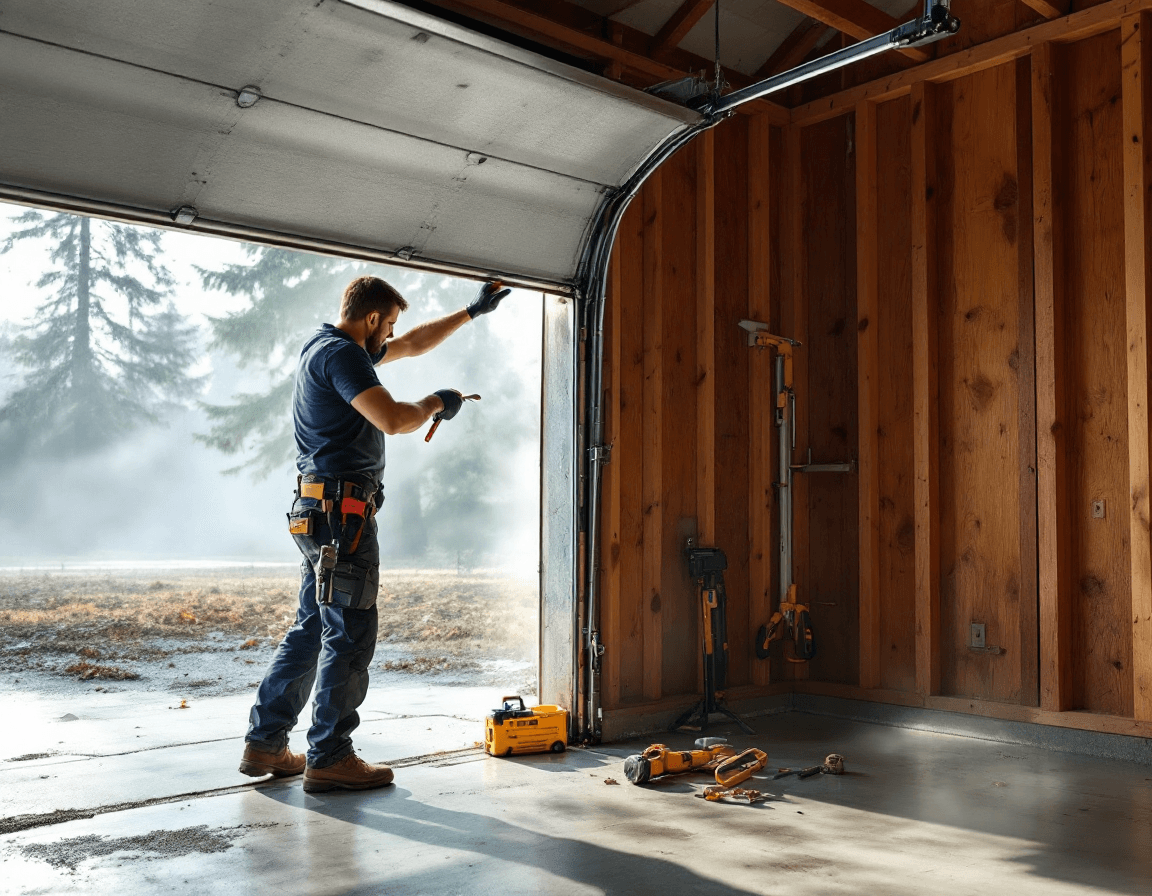
Off-track garage door repair in Clyde Hill, WA is one of the most common reasons homeowners call us, and it is rarely a problem that fixes itself. A door that has jumped its rollers or slipped sideways in its track can look almost normal from the driveway while the hardware underneath is under real strain. Clyde Hill's sloped driveways, mature tree cover, and wet winters all add to the stress on a door's track system. Catching the problem early usually means a simpler and less expensive repair.
Most of the homes in Clyde Hill have two-car or wider doors, and many of them are heavier than the standard builder-grade doors found in newer subdivisions. Heavier panels, insulated sections, and glass or wood accents put more load on the rollers and hinges every time the door travels. When one roller leaves the track, the entire weight shifts to the remaining points, and the door can start to rack or bind. That chain reaction is why a small derailment can turn into bent track sections within a few weeks.
This page explains what off-track damage looks like, why it happens so often in our area, what you can safely check on your own, and what a professional realignment usually involves. We also cover the safety boundaries you should respect, since spring and cable work is never a do-it-yourself job. Typical off-track repairs for our customers run between $125 and $400, depending on how much hardware and track needs attention. Read on for the details, and call us if your door is stuck or sitting crooked right now.
What a Derailed Door Looks Like From the Driveway
A door that has come off one or both tracks rarely drops dramatically. More often it shows up as a subtle change, like a panel that sits a half-inch lower on one side or a gap along the top seal that was never there before. Some homeowners notice a grinding or popping sound as the door moves, while others only realize something is wrong when the opener strains and stops partway through its cycle. Stand inside the garage with the lights on and look at the vertical track on each side. If the track has pulled away from the door edge, or the rollers are visibly sitting outside the channel, you are dealing with an off-track condition.
Crooked doors are especially common on Clyde Hill properties with wide openings. When a door is hung on a double-wide opening, both sides carry their own tracks and springs, and a single failure can make the whole panel lean. You may see the bottom seal scraping the floor on one end while the other end floats a few inches above it. The door can also look like it is sitting "off square" in the frame, which is a sign that the rollers on one side have slipped forward or backward in the track.
A jammed door is the most urgent version of this problem. If the door will not move in either direction, do not keep pushing the opener button, since repeated attempts can strip gears in the opener or further bend the track. Stop, disconnect the opener from the door if you know how to do that safely, and call a technician. Forcing a binding door can turn a straightforward realignment into a much longer repair that involves replacing sections of track and possibly the rollers themselves.
Why Hillside Driveways and Mature Trees Push Doors Out of Line
Clyde Hill is known for its hillside lots and sloping driveways, and that terrain has a direct effect on garage doors. When a driveway pitches toward the house, vehicles tend to roll or settle differently at the threshold, and the door's bottom edge can be pushed against the track more often than it would be on a flat lot. Over time, that repeated pressure can nudge the lower rollers out of their channel, especially on doors that have older hinges or worn track brackets. A door that worked perfectly for years can start to drift once the mounting hardware loosens a little under daily use.
Mature trees add another layer of trouble. Large conifers and deciduous trees shed needles, cones, and leaves that collect in the track channel and around the bottom seal. Debris packed into the track can prevent rollers from seating properly, and in wet weather it can turn into a compacted mass that catches a roller and pulls it free. Overhanging branches also rub against upper door sections and gutters, and a limb that has grown into the path of the door can knock a panel out of alignment during a particularly windy storm.
Because many Clyde Hill homes sit on generous lots with long, straight drives, owners sometimes park with one wheel close to the garage wall or leave a heavy vehicle idling against the door. Those habits create a small but steady lateral load that the track was never designed to handle. If you notice the door leaning toward one side after you park in a certain spot, consider adjusting your parking habits while you schedule a realignment. A technician can often spot the pattern quickly by checking how the track brackets have shifted.
How Pacific Northwest Rain and Moisture Loosen Track Hardware
Western Washington's long, damp winters are hard on steel track. Repeated soaking, followed by cool, humid mornings, encourages surface rust on galvanized track and can work its way into the joints where track sections meet. Rust itself does not always cause an off-track condition, but it can roughen the inside of the channel enough that rollers stick, stall, or hop out when the door is opened under load. Once a roller starts to hesitate, the whole panel can begin to wander sideways.
Wood doors and wood-look composite panels add another variable. Wood absorbs moisture and expands during wet months, then contracts again during drier stretches, which can subtly change the spacing between the door edges and the track. Many of the older homes in the area have custom or cedar doors that look beautiful but need extra attention to keep their tracks aligned through the rainy season. Even steel doors with insulated cores can flex slightly in cold snaps, so a door that fits perfectly in July may bind in January.
Ice and freezing fog also play a role during the coldest stretch of winter. Frozen moisture in the track can stop a roller in mid-travel, and forcing the opener to push through that resistance is a common way to bend a track section. If you notice stiffness on frosty mornings, avoid operating the door until the track has thawed enough to move freely. Keeping the bottom seal and the track clear of ice, leaves, and grit is one of the simplest ways to protect your door from unexpected derailment.
Early Warning Signs That Get Overlooked
Off-track problems usually announce themselves days or weeks before the door fully derails. One of the most common early signs is a door that opens more slowly on one side than the other, or that seems to hesitate briefly at a certain height. You might also hear a faint rubbing or chirping noise near the top corners, which often indicates that a roller is riding against the edge of the track instead of rolling freely inside it. These sounds deserve attention even when the door still works.
Visual clues matter as well. Look for light showing between the top of the door and the header, uneven gaps along the sides, or a bottom seal that compresses more on one end than the other. A roller that has partly backed out of its track may leave a small scuff mark on the track or a bright metallic wear line on the roller stem. Gaps that grow each week are a strong sign that something is shifting, even if the door still appears to close.
Pay attention to changes in how the door sounds when the opener engages. A sudden clunk at the start of travel, or a jerking motion that wasn't there before, can mean the door is hanging unevenly and the opener is compensating. Persistent noise from the opener itself may be a symptom of the door pulling against a misaligned track, not a problem with the motor. Catching these early signs can save you from a more involved repair later.
Quick Checks You Can Safely Make Before Calling a Pro
There are a few checks any homeowner can make safely, as long as the door is fully closed, the opener is disconnected, and nobody is standing underneath it. These checks help you describe the problem accurately when you call, and they can sometimes reveal an easy fix such as debris in the track. Never attempt to adjust springs, cables, or drums yourself, because those components store enough energy to cause serious injury even when they look harmless.
- Turn off the opener power and pull the emergency release cord so the door can be moved by hand, then confirm the door is fully closed before you begin.
- Look inside each vertical track for leaves, pine needles, gravel, or dried mud, and clear them out with a stiff brush and a shop vacuum.
- Check that the track bolts and brackets are snug, using only a standard wrench or socket, and do not loosen any spring or cable hardware.
- Measure the gap between the top of the door and the header at both ends so you can tell a technician whether one side has dropped.
- Take photos of the track and rollers from a safe distance, including any bends, dents, or gaps, so you can share them with the technician before the visit.
If the door is still jammed after clearing debris, stop there and make the call. Do not use a hammer to tap a track back into shape, and do not attempt to pry a door up by hand while the springs are under tension. Those shortcuts are how a manageable off-track repair becomes an emergency involving injury or broken hardware.
Rollers, Hinges, and Why a Single Pop-Out Matters
Rollers are the small wheels that ride inside the track and carry the door's weight as it moves up and down. Most residential doors use steel rollers with sealed bearings, while some higher-end doors use nylon rollers that run more quietly. When a roller pops out, it usually does so because the stem has worn, the track has widened slightly, or the roller was never fully seated after a previous repair. A roller that is simply sitting in the wrong position can often be re-seated, but worn or cracked rollers should be replaced rather than reused.
Hinges and brackets deserve equal attention, because they hold the panels together and keep them following the track. A bent hinge or a loose hinge bolt can pull a panel slightly out of plane, which then forces the rollers to climb the track edge. In older doors, the hinge rivets can work loose after years of cycling, creating a gap that makes the door appear to lean. Replacing a single hinge or tightening a set of bolts is often a short job, but it must be done with the door properly supported.
Technicians inspect the entire roller set during an off-track visit, not just the one that popped out. A roller that has stayed in its track while its neighbor failed may be showing the same wear pattern, and replacing only one can lead to another derailment within months. Our technicians typically check the stem, bearing, and wheel surface on every roller, then recommend replacements only where the wear justifies them. That approach keeps the repair cost reasonable while protecting the door from repeat problems.
When the Track Itself Has Moved: Bends, Dents, and Vehicle Impacts
Sometimes the problem is not the rollers but the metal track they ride in. A bent track section can result from a door that was forced past a binding point, from a vehicle that backed into the garage, or from a heavy object that struck the lower channel. Dents usually show up as a flat spot or a narrowed opening where the roller must squeeze through, and that narrowing can cause a roller to jump the track every time the door passes that spot. Separated track sections, where the joint between two pieces has pulled apart, are also common after an impact.
Vehicle contact is a particular concern in driveways where cars are parked close to the garage opening. A side mirror or bumper can strike the lower panel or the track bracket, bending the steel or knocking a section out of its mounting. Even a minor tap can shift a bracket enough to throw the whole track out of plane. If your door was hit by a vehicle, check the track for visible bends before operating it, and avoid running the opener until a technician has looked it over.
Repairing bent track involves carefully straightening or replacing the affected section while keeping the entire track aligned with the header and the opposite side. Technicians use level and plumb measurements to confirm that the vertical and horizontal runs are true before tightening the mounts. Sometimes a section can be reshaped and reinstalled, and other times replacement is the more reliable path. A good repair restores smooth travel without placing hidden stress on the rollers or opener.
What a Realignment Visit Usually Involves
A typical off-track service visit begins with a conversation about what the homeowner observed and when the problem started. The technician then inspects the door from both inside and outside the garage, looking at the track, rollers, hinges, springs, and opener connection. Any safety concerns, such as worn cables or damaged drums, are noted before the technician touches the door. Only after this assessment does the actual realignment begin.
- The technician confirms the door is secured and the opener is disconnected, then checks the spring system from a safe position without adjusting any tension components.
- Tracks are inspected for bends, gaps, and loose brackets, and any debris is cleared from the channels.
- Rollers are checked for wear and proper seating, with worn or cracked rollers flagged for replacement.
- The door is lifted or guided back into the track using proper support, and the panels are checked for square alignment.
- Track brackets, hinges, and bolts are tightened to the correct torque, and the bottom seal is adjusted if it has been compressed unevenly.
- The door is tested through several full cycles, with the opener reconnected only after the door moves smoothly by hand.
Most repairs are completed in a single visit, but larger jobs involving multiple track sections or hardware replacement may require parts to be ordered. We always explain what we found before beginning work, and we confirm the scope with the homeowner so there are no surprises on the final invoice. Asking questions during the visit is encouraged, since a clear understanding of the cause helps prevent a repeat problem.
Typical Costs for Off-Track Work in Clyde Hill
Most off-track repairs in our service area fall between $125 and $400. Where a job lands in that range depends on how many rollers need seating or replacing, whether track sections must be straightened or swapped, and how much hinge or bracket hardware needs attention. A simple re-seat of a single roller with no track damage usually sits at the lower end, while a door that has been hit by a vehicle and needs multiple track and hinge repairs will generally be at the higher end. Access can also play a role, particularly in garages with tight clearances or unusual track configurations.
Clyde Hill homeowners sometimes ask whether it makes sense to wait until the door is completely stuck before calling. In most cases, earlier service costs less because the track and rollers are not yet damaged. A door that is only slightly off can often be realigned with minimal hardware work, while one that has been forced repeatedly may need additional parts. Calling at the first sign of crookedness or unusual noise is usually the more economical choice.
Pricing discussions should always be clear before work begins. We recommend asking the technician to explain the expected scope, what parts may be needed, and whether any additional items are likely to come up. A reputable provider will tell you what they found and what it will cost to correct it, and you should feel comfortable asking questions before approving any repair.
Safety Boundaries Every Homeowner Should Respect
Garage door springs and cables are under extreme tension, and that tension is the reason off-track repairs must be handled carefully. Torsion springs store enough energy to cause serious injury if they are adjusted, released, or removed incorrectly, and lift cables can snap under load and whip across the garage. Any work involving springs, cables, drums, or the shaft requires training and specialized tools. Homeowners should never attempt these tasks on their own, even when online guides make them seem straightforward.
We always recommend a licensed professional for spring and cable work. Our technicians are licensed, bonded, and insured, and they follow established procedures for relieving tension and safely handling door components. If an off-track inspection reveals a spring or cable problem, the technician will explain the risk and the proper repair path before proceeding. Please do not allow anyone without proper licensing or insurance to work on these components in your garage.
Never stand under a door that is being lifted by hand or while it is partially raised and unsupported. Keep children and pets away from the garage during any repair, and make sure the work area is clear of vehicles and tools. If the door begins to move unexpectedly during an inspection, step clear and let the technician handle the situation. Safety comes first, even when a quick fix seems tempting.
Keeping Your Tracks Aligned Through Clyde Hill's Wet Seasons
Preventive care is the best way to avoid repeated off-track problems. Start by keeping the tracks clean, especially during autumn when leaves and needles accumulate faster than most homeowners expect. A quick sweep of the channels every month or two can prevent the buildup that causes rollers to stall. Rinse away mud and grit after storms, and avoid spraying high-pressure water directly into the track, since water can push into bearings and promote corrosion.
Lubrication matters too, but the right product matters more than the amount. Use a silicone-based or garage-door-specific lubricant on the rollers, hinges, and track surfaces, and avoid heavy grease that attracts dirt. Do not lubricate the springs unless a technician specifically recommends it during service, since over-lubrication can create a slippery mess that collects debris. Seasonal checks are a good time to confirm that bolts are still snug and that the bottom seal has not started to pull away.
Finally, schedule an inspection if you notice any of the warning signs described above, especially before the heavy rains arrive. Early attention keeps small problems from becoming bent tracks or broken rollers. A well-aligned door protects your vehicles, your belongings, and the people who come and go through the garage every day. If your door is crooked, stuck, or making new noises, call (888) 799-3819 today to schedule an off-track assessment with a licensed Seattle Garage Door Fix technician serving Clyde Hill.