
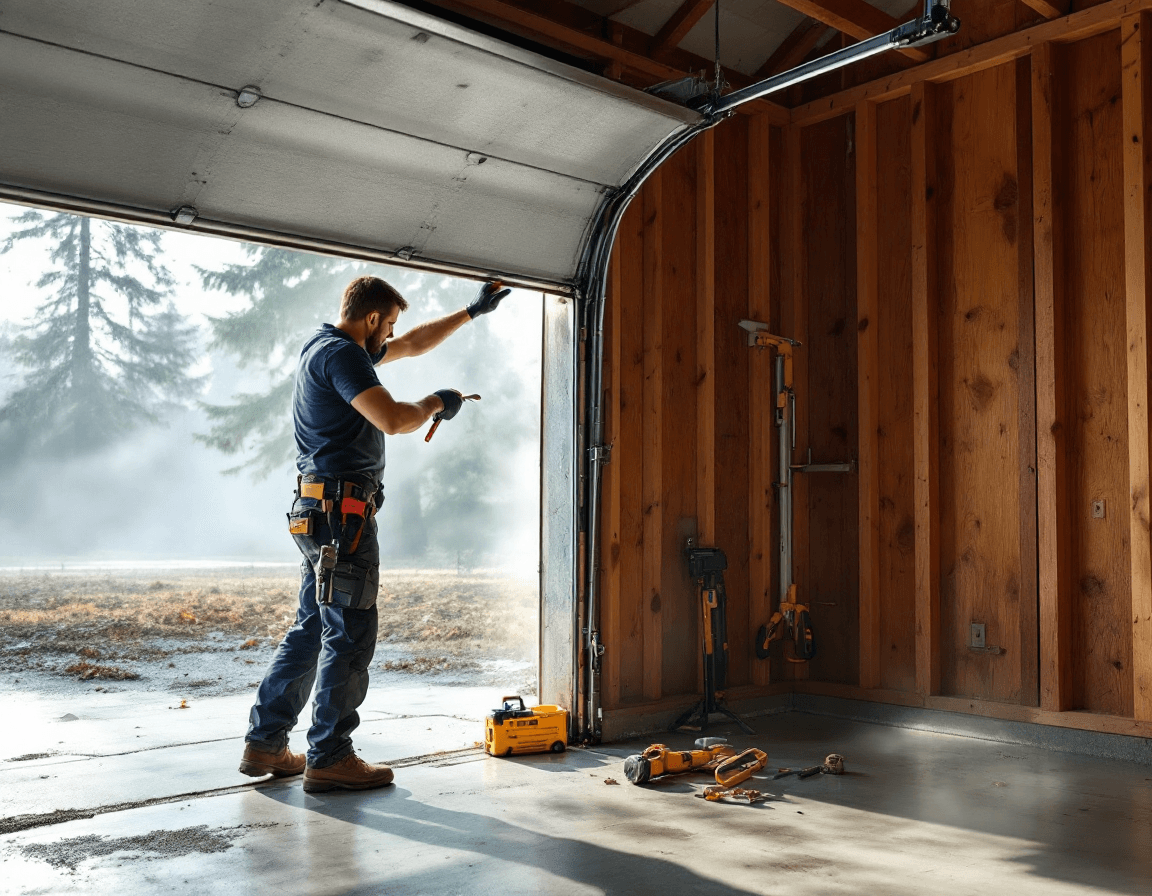
Off-track garage door repair in Medina, WA is one of the most common calls we handle, and it is also one of the most misunderstood. A door that has slipped off its track can look like a major mechanical failure, but in many cases the damage is limited to a few rollers, a bent track section, or a panel that has shifted out of line. Homeowners on the Medina waterfront and in the surrounding Overlake area often notice the problem when a door stops closing flush, makes a grinding noise, or sits visibly tilted when viewed from the driveway. Acting quickly matters because a door that is partly off its track can put stress on the opener, the springs, and the panels themselves.
Our technicians serve Medina and the wider Eastside from a base of licensed, bonded, and insured crews who understand how Pacific Northwest weather and large residential doors behave over time. Most off-track repairs in this area fall between $125 and $400, depending on what has been damaged and how much realignment the door requires. The sections below explain what causes doors to derail, how to recognize the warning signs, what a proper repair involves, and why certain tasks should be left to trained professionals. If your door is off its track right now, please keep it closed and call (888) 799-3819 before attempting anything with the hardware.
Reading the Early Signs That a Door Has Left Its Track
A door rarely goes off its track without giving some warning. The first sign is often a subtle change in how the door moves, such as a slight hitch near the bottom of the travel or a faint scraping sound that wasn't there last month. Over time, that hitch can turn into a door that stops halfway up or refuses to close all the way. Paying attention to these small changes can save a homeowner from a more involved repair later.
Visual cues are just as useful. Walk outside and look at the gap between the top of the door and the header, then compare the gap on the left and right sides. If one side shows a noticeably wider gap, or if the bottom seal sits higher on one end than the other, the door may be riding crooked on its rollers. A visible gap between the door panels and the vertical track, or a roller sitting outside the channel, are clear indicators that the door has already begun to separate.
Some signs are more urgent than others. A door that is jammed and will not move in either direction needs prompt attention, because forcing it can bend the track further or strain the opener's drive system. Here are the symptoms our technicians most often hear described on Medina calls:
- The door has come completely off one track or both tracks.
- One or more rollers have popped out of the track and are hanging loose.
- The door looks crooked, leans to one side, or binds as it travels.
- A gap has opened between the door edge and the track.
- The door is jammed partway open or partway closed and will not move either way.
- Track sections look bent, dented, or have separated at a joint.
If any of these appear, the safest move is to stop using the door and keep people and vehicles clear of the opening. Do not try to pull the door back onto the track by hand, because a door that is off track can shift suddenly and cause injury.
Why Doors in Medina Tend to Derail Under Local Conditions
The Pacific Northwest climate has a direct effect on garage door hardware. Long wet winters, damp air coming off Lake Washington, and cool temperatures that swing above and below freezing all place repeated stress on steel tracks, nylon or steel rollers, and the bearings that keep everything moving smoothly. Moisture gets into the track channel and encourages surface rust, which can make rollers grab and stall. Over several seasons, that friction pulls the door slightly out of square until a roller finally jumps the track.
Medina homes also present some specific conditions. Many properties sit close to large, mature trees, and conifer needles, maple debris, and wet leaves can collect along the bottom of the door and in the track channel. When debris builds up in the lower track, rollers can ride up over it and pop out, especially when the door is closed quickly or with an uneven load. Driveways on sloped or curved lots can also cause a door to track at a slight angle, which becomes obvious once the hardware begins to wear.
Wind coming across the lake can add lateral pressure to larger doors, particularly on double-wide or custom-built units that have more surface area. A gust that pushes against a long panel while it is in motion can nudge one side of the door off line. None of this means a Medina door is inherently unreliable. It simply means that the routine inspections and lubrication cycles suited to a drier climate need to be adjusted for the realities of Western Washington.
What Actually Happens Inside the Track When a Roller Pops Out
Understanding the mechanics of a garage door helps explain why a derailment can look dramatic while the actual fix is fairly contained. Each section of the door rides on rollers that fit into a vertical track on each side, which guides the door up and into a horizontal track near the ceiling. The rollers have a lip or stem that keeps them locked inside the channel as the door moves. When that lip is bent, worn, or pushed past the track edge, the roller slips out.
Once a roller is out of the track, the panel it supports can tilt, and the adjacent rollers may take on more load than they were designed for. This is why a single popped roller can lead to a bent track, a damaged panel edge, or a crooked door in a short period of time. The tension on the springs also matters here. Torsion or extension springs are holding a large part of the door's weight, and a derailed door changes how that tension is distributed across the system.
A technician must assess this carefully before any realignment begins. The track needs to be checked for straightness at multiple points, the rollers need to be examined for cracks or flat spots, and the panels need to be inspected for warping along the edges. In many off-track calls, the rollers and track can be reseated and adjusted without replacing major parts, which is why the typical repair cost for this type of work stays in the $125 to $400 range. More severe damage will require parts, and we will explain those options before proceeding.
Bent Track Sections and Damage From Vehicle Strikes
Garage doors near driveways are vulnerable to accidental impacts from cars, delivery vehicles, landscaping equipment, and the occasional backing-up mistake. A vehicle that clips the door or the track can bend the steel rail, dent the channel, or separate a joint where two track sections meet. Even a minor bump may leave a track slightly out of plumb, and that small misalignment can cause rollers to bind or pop out after a few cycles.
Track damage is not always obvious from the outside. A section may look fine at a glance but have a subtle bend that only shows up when the door is moving and a roller catches on the edge. Separation at a joint often shows as a small gap or step where the track should be smooth. Dents in the channel can also restrict roller travel, which creates friction that slowly pulls the door out of line.
When a track is bent, straightening it by hand is rarely adequate. Technicians typically remove the affected section, check its alignment against the rest of the system, and either straighten it carefully or replace it if the metal has been compromised. The bracket bolts, the header angle, and the vertical track mounts all need to be checked as well, because impact damage often travels through the hardware. If your door was struck recently, mention it when you call, since that information helps us prepare the right parts and tools for the visit.
How Repair Pricing Works for Off-Track Calls
Homeowners often ask why off-track repairs vary so much in price, and the answer depends on what the technician finds. For most off-track repairs, our pricing falls between $125 and $400. The lower end usually covers a door that has popped one or two rollers, where the track is intact and the realignment is straightforward. The higher end typically reflects situations involving multiple rollers, a bent section of track, a damaged panel, or a door that required significant adjustment across several components.
Several factors influence the final figure. The number of rollers that need replacement, the condition of the track, the size and weight of the door, and whether the door is a standard or custom model all play a role. Doors with heavier insulated panels or unusual dimensions may require more time and additional equipment. Access also matters, since a door that is jammed in the middle of its travel may need extra steps to stabilize before work can start.
We aim to explain the scope before work begins. A technician who arrives in Medina should be able to tell you what they found, what the realignment involves, and whether any parts are needed. If additional repairs such as spring replacement or opener adjustment are recommended, that work should be presented separately so you can decide how to proceed. This kind of transparency helps homeowners avoid surprises and keeps the focus on getting the door back to safe, reliable operation.
A Walkthrough of How a Technician Realigns the Door
A proper off-track repair follows a sequence that protects both the technician and the homeowner. The first step is securing the door. Because the door is under spring tension and may be partly unsupported, the technician will use clamps or locking pliers on the track and will stabilize the panels before touching the rollers. This prevents the door from dropping or shifting while work is underway.
Next, the technician inspects the track and rollers. Each roller is checked for wear, cracks, and flat spots, and the track is measured for straightness at several points along its length. Any bent section is either corrected or flagged for replacement. Once the track is confirmed to be sound, the rollers are guided back into the channel one at a time, starting with the ones closest to the floor and working upward. The door is then moved slowly through its full travel to confirm that it runs smoothly and that the panels stay level.
The final stage involves testing and adjustment. The technician checks the balance of the door, looks for uneven gaps along the top and sides, and confirms that the opener can run the door without binding. Lubrication is applied to the rollers, hinges, and track where appropriate, using products suited to the Pacific Northwest climate. The homeowner is then walked through what was done and what to watch for in the coming weeks. A well-executed realignment should leave the door moving quietly and evenly, with no visible gap on either side.
What Homeowners Should Never Attempt on Their Own
The most important safety message we can offer is this: do not attempt to repair a garage door that is under spring tension, and do not work on the springs or cables yourself. Torsion springs and extension springs store enormous amounts of energy, and mishandling them can cause severe injury. Even a door that appears to be only slightly off track may have springs or cables that are carrying a significant load. Spring and cable work should always be performed by a licensed professional with the proper tools and training.
Homeowners can take safe, limited steps while waiting for a technician. Disconnect the opener by pulling the emergency release cord so the door can be moved manually, but do not use that release to lift or force the door if it is jammed. Keep children, pets, and vehicles away from the door and do not stand underneath it. Clear visible debris from the bottom of the track using a dry brush or a hand, and take photographs of the door and track so you can describe the problem accurately on the phone.
There are also things you should avoid. Do not pry rollers back into the track with a screwdriver or pry bar, because that can bend the track further or send a roller flying. Do not loosen track bolts or brackets to try to "realign" the door, since the tension in the system can shift unexpectedly. Avoid spraying heavy lubricants into the track before a technician has inspected it, because grease and oil can attract grit and make the next repair more difficult.
Preventive Habits That Reduce the Chance of Derailment
Most off-track problems can be reduced with simple seasonal habits. In the Pacific Northwest, the period after the first heavy rains of fall is a good time to inspect the door, clear the track of leaves and needles, and check that the rollers still turn freely. Spring is another useful checkpoint, since the drier weather makes it easier to spot surface rust and loose hardware. A quick inspection twice a year can catch problems before they lead to a derailment.
Lubrication should be done with care. Apply a silicone-based or garage-door-specific lubricant to the roller bearings, hinges, and the lift cables, but keep it off the track surface where it can collect dirt. Wipe away excess and avoid overspraying near the springs. Checking the bottom seal and the weather stripping also helps, because a damaged seal can allow debris and water into the lower track.
Watch the door's behavior as well. A door that has begun to hesitate, make a new noise, or sit slightly unevenly should be looked at before it fails completely. We recommend scheduling a professional inspection if the door is more than a few years old, if it has been struck by a vehicle, or if you have noticed changes in how it travels. A short inspection can identify worn rollers, slightly bent track, or early spring wear that would otherwise lead to an off-track call during a busy week.
Choosing a Qualified Technician for Off-Track Work in Medina and Overlake
Selecting the right technician matters, especially when the job involves a door that is partly off its track. Look for a company that is licensed, bonded, and insured, and ask to confirm those credentials before the visit. A reputable provider should be willing to explain the work in plain language, provide an honest assessment of the damage, and give you a clear price range before any work begins. Be cautious of anyone who insists on replacing major components without first showing you what is wrong.
Familiarity with local conditions is also valuable. A technician who regularly works in Medina, Bellevue, Redmond, and the Overlake corridor will be accustomed to the mix of older homes, custom estate doors, and newer construction common to the area. They will understand how lake-influenced humidity and seasonal rain affect track hardware, and they will know which lubricants and components tend to hold up best. That experience shows up in the quality of the realignment and in the advice given to homeowners afterward.
Communication matters too. You should feel comfortable asking questions about the cause of the derailment, the repair options, and what you can do to prevent a repeat. A good technician will take the time to answer those questions and will respect your decision about how to proceed. If you have a question about your specific door, call us at (888) 799-3819 and describe what you are seeing, and we will help you understand the most likely cause and the next step.
Timing Your Call and What to Expect From a Visit
Off-track doors rarely wait conveniently, so it helps to know how to prioritize a call. If the door is jammed, partly open, or tilted in a way that could allow someone to get hurt, treat it as urgent and keep the area clear until help arrives. If the door is still moving but making unusual noises or sitting unevenly, you may have a little more flexibility, but it is still wise to schedule a visit soon. Waiting for weeks can allow a minor roller problem to grow into a bent track or a damaged panel.
When you call, be ready to describe the situation. Tell us which side of the door is affected, whether one or both tracks are involved, whether the door is moving at all, and whether a vehicle or object struck it. Mention whether the opener is still connected and whether you have already pulled the emergency release. Photos sent by text or email can also help a technician arrive with the right tools and a reasonable expectation of the repair.
On the day of the visit, expect the technician to introduce themselves, review the problem with you, and explain the steps they plan to take. They should secure the door before touching the hardware, inspect the track and rollers, and walk you through the results. Once the door is back on track and running smoothly, they should show you how it moves and point out anything you should monitor. Our goal is to leave every Medina homeowner with a door that works safely, sits level, and has a clear plan for keeping it that way.
Whether your door has jumped one roller or come completely away from both tracks, our team is ready to help. Call Seattle Garage Door Fix at (888) 799-3819 to schedule off-track garage door repair in Medina, WA, and let a licensed, bonded, and insured technician get your door realigned safely and correctly.