
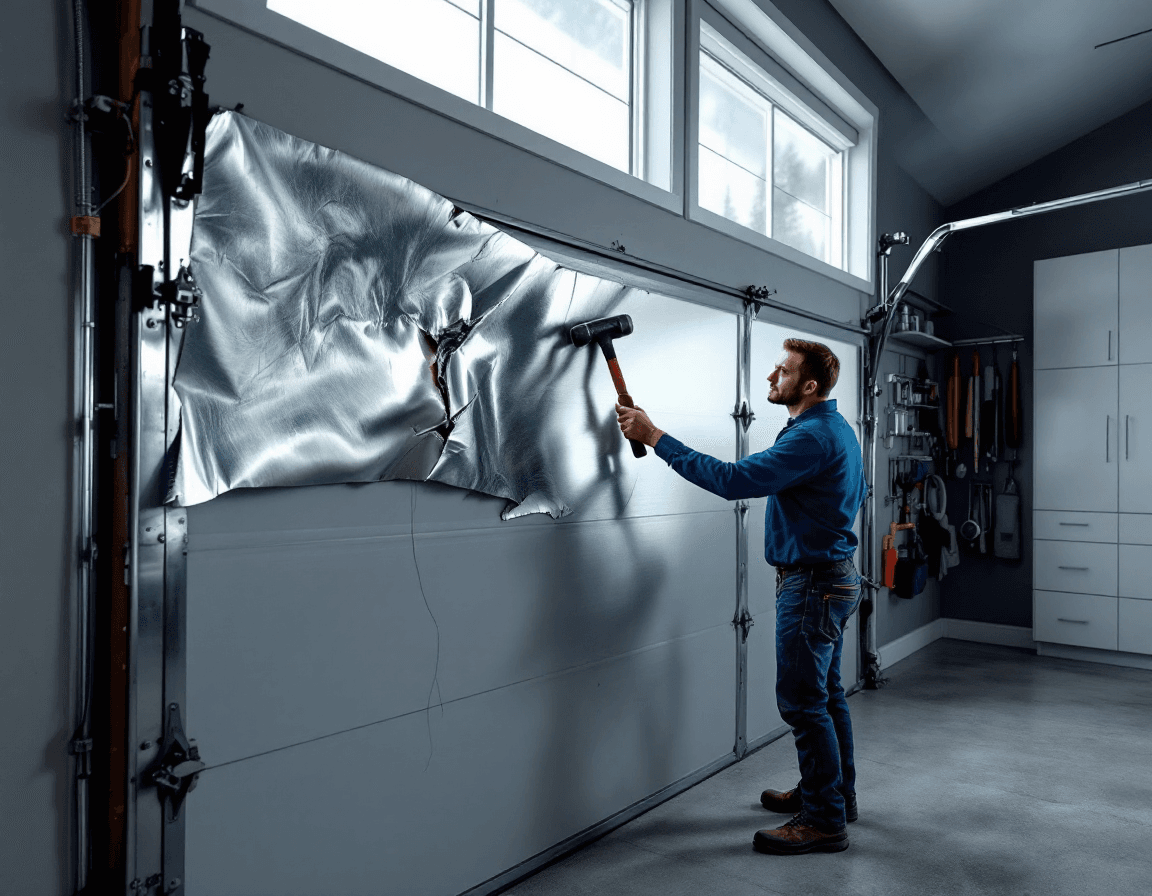
Garage Door Panel Replacement in Medina, WA is often the most practical fix when one section of a sectional door is damaged but the rest of the system still works well. A dented, cracked, or water-logged panel can make an otherwise solid door look worn, and it can also let weather and drafts into the garage. On the tree-lined streets and lakeside properties around the 98039 area, we regularly see doors that lift smoothly and balance correctly but carry a single damaged section that stands out against the home's siding, stone, or trim. Replacing only that section can restore both the appearance and the seal.
Many Medina homes have wider openings, multi-car layouts, insulated custom doors, and finishes chosen to complement cedar, stucco, or natural stone. Those details make replacement panels more demanding than a standard off-the-shelf job, because the new piece has to match the existing door's thickness, profile, color, and surface texture. Most sectional doors are built from modular panels that can be swapped individually, which is why a targeted repair is possible in the first place. Getting that match right is where experience matters most.
This page explains how to tell when a panel swap makes sense, when a full door replacement is the smarter choice, what affects cost, and what to expect during the visit. Pricing for panel replacement generally falls between $250 and $800 per section, depending on the door's size, material, insulation, and finish. The sections below walk through each consideration so you can make a clear decision before anyone picks up a tool.
Reading the Dents, Cracks, and Creases Before You Call
Not every mark on a garage door panel requires replacement, and a careful look at the damage will tell you a lot about what you are dealing with. A shallow dent in the middle of a steel panel may only affect the appearance, while a crack that runs along a seam or through the rib of a panel can compromise the structure and allow water to migrate inside the insulation. Take a few photos in daylight from several angles, and note whether the damage is on the exterior face, the interior face, or both. Those photos are also helpful if you need to explain the situation to an insurance adjuster or a homeowners association.
Pay attention to how the door behaves when it moves. If a panel is bulging or pressing against the track, you may hear rubbing, see the door sit unevenly, or notice that one side seems to drag. A damaged panel can change the way the door flexes and can put extra strain on the hinges and rollers at that section. Stop using the door if it binds badly, lurches, or makes grinding noises, and schedule service promptly rather than forcing it open or closed.
Finally, check whether the damage is limited to the panel or extends to the hardware that connects it. Hinges that have been bent, rollers that have been knocked out of their tracks, or brackets that have pulled loose all need to be inspected at the same time. A panel swap is a straightforward repair when the surrounding components are sound, but it should always include a check of the adjacent parts. That way you are not paying for a new panel only to discover a second problem a few weeks later.
Why Lakeside Humidity and Winter Rain Work on the Bottom Panel
The Pacific Northwest climate is gentle in many ways, but its long, damp winters are hard on the lowest section of a garage door. Rain blows under the door, runoff pools against the threshold, and the constant humidity keeps the bottom panel from drying out completely between storms. Over time, that moisture can lead to swelling, separation of the panel edges, and corrosion at the base of steel panels. Homes near the lake can see especially high moisture levels because the air stays cool and damp for long stretches.
Bottom-section damage often starts small. A hairline separation along a seam, a bubble in the paint, or a faint stain on the inside face may be the first sign that water is getting behind the surface. Wood and wood-composite doors are particularly vulnerable when the finish is worn or the end grain is exposed, and softened material can rot out quickly if it is not addressed. Steel doors can rust from the inside out when the insulation has absorbed moisture, which is why a door that looks fine from the driveway may be in worse shape than it appears.
If you notice soft spots, flaking paint, a musty smell near the garage floor, or white mineral deposits along the edges, have the section evaluated before the damage spreads. Replacing a rotted or rusted bottom panel is often more economical than waiting until several sections need work. Keep the threshold seal in good condition and make sure the garage floor drains away from the door, because those two steps reduce the moisture that reaches the lowest panel in the first place.
Impact Marks From Backing Out and Yard Work
Many panel repairs in Medina begin with a single moment: a car backing out too quickly, a delivery truck clipping the door, or a landscaping trailer swinging wide in a tight driveway. These impacts often bend one panel while leaving the rest of the door untouched, which is good news because it means the repair can stay focused. The panel may look only slightly out of shape, but even a modest bend can prevent the section from tracking properly through the rollers.
After any impact, resist the urge to pound the dent back into shape yourself. Hammering on a loaded door can distort the panel further, crack the paint, or create stress points that fail later. Metal fatigue is real, and a panel that has been straightened repeatedly may never sit flush again. It is better to document the damage, make sure the door can still operate safely, and have a technician assess whether the panel should be replaced outright.
Keep in mind that an impact can also affect the spring system, even when the panel itself looks like the only casualty. If the door jumped, dropped, or hesitated during the incident, the springs, cables, or drums may have been stressed. That is a job for a licensed technician, not a homeowner with a ladder and a set of wrenches. A single-panel repair should always begin with a full safety check of the door's counterbalance system.
Repair or Replace: A Practical Decision Framework
Deciding between a panel repair and a full door replacement comes down to a few honest questions. How old is the door? Is the damaged section still available in a matching design? Are the other panels in good condition? How well does the door insulate and seal? If the answers point toward a sound, reasonably current door with one damaged section, replacing that panel is usually the most efficient choice. If the door is aged, badly out of square, or missing parts, spending money on a single panel may not be worth it.
Consider the following points when weighing your options:
- A single cracked or dented panel on a door that otherwise operates smoothly is typically a strong candidate for replacement.
- Widespread rust, rot, or delamination across several sections suggests the door may be nearing the end of its useful life.
- Doors with insulation that has absorbed water may need the affected panels replaced together to restore thermal performance.
- If an exact match is impossible to source, a full door replacement may produce a more uniform appearance than a patched one.
- Doors that are noisy, unbalanced, or hard to operate may have mechanical wear that a panel swap will not solve.
Cost is an important part of the comparison, but it should not be the only factor. A panel replacement that costs a few hundred dollars can extend the life of a good door by years, while a new door is a larger investment that makes sense when the existing one is failing across the board. Ask for an honest assessment rather than a sales pitch, and expect a licensed technician to explain both options with clear reasoning.
Matching a Panel Nobody Makes Anymore
Matching is one of the most common challenges in panel work, especially on doors installed several years ago. Manufacturers update profiles, change paint systems, and discontinue finishes, which means a replacement panel may not look identical to the originals. Differences in color, sheen, or embossed texture can be noticeable in daylight, particularly on a large double door facing a sunny driveway. Before ordering anything, the technician should identify the door's manufacturer, model, panel width, and insulation type as accurately as possible.
Start by gathering information from the door itself. Look for a label or stamped serial plate, often on a bottom section or inside a track bracket, and note the panel dimensions, the number of ribs, and whether the door has a flush or raised profile. Photos of the exterior, taken straight on in natural light, help a technician compare the finish against available options. If the exact product is no longer manufactured, a close match may still be possible, and in some cases the damaged section can be shifted to a less visible location on the door.
Set realistic expectations about color. Paint that has faded for ten years will not match a brand-new panel perfectly, even if the color code is correct. Some homeowners choose to have the entire door refinished or to accept a small variation rather than replace every section. A candid conversation about these trade-offs, before the work begins, prevents disappointment when the new panel arrives and the difference is visible from the street.
What Drives the $250 to $800 Per-Section Range
The price for a single-section panel replacement typically falls between $250 and $800, and the spread reflects real differences in the work involved. A standard single-car steel door with an uncomplicated panel will land near the lower end of that range, while a large custom wood-look or insulated door with a specialty finish will land closer to the top. The price is usually quoted per section because each panel is a discrete component, though the technician will confirm the scope after inspecting the door.
Several factors shape the final number. The material and thickness of the panel, the presence of insulation, the complexity of the finish, and the accessibility of the damaged section all play a role. Doors with decorative glass, windows, or unusual hardware may require extra care during removal and reinstallation. The following items commonly affect the quote:
- The door material, such as steel, aluminum, wood, or wood-composite, and the panel thickness.
- Whether the panel is insulated and how the insulation needs to be handled or replaced.
- The difficulty of matching color, texture, and profile to the existing door.
- The panel's location, since bottom and top sections can require different handling.
- Any additional repairs found during inspection, such as hinges, rollers, or seals.
Ask for an itemized estimate so you understand what is included. A reputable technician will explain whether the quote covers removal, the new panel, reinstallation, alignment, and a test cycle of the door. Clear pricing is part of working with a licensed, insured team, and it helps you compare options fairly.
Mechanically Sound but Visually Damaged: Why Springs Can Stay Put
One of the most reassuring things a technician can tell a homeowner is that the door's mechanical system is in good shape, and many panel replacements fall into exactly that category. When the springs are intact, the cables are not frayed, the tracks are straight, and the door balances evenly, the job can focus on the damaged section alone. In those cases, the counterbalance system generally does not need to be disturbed, which keeps the work simpler and safer.
That said, it is important to understand that panel work is not always a purely cosmetic task. Removing or replacing a section can require the door to be secured in a specific way, and in some designs the panel is connected to hinges and rollers that carry significant load. Spring and cable work involves stored mechanical energy that can cause serious injury if handled incorrectly, and it should always be performed by a licensed professional with the right tools and training. If a technician determines that the springs need adjustment or replacement, that work should be done by a qualified team rather than attempted at home.
Homeowners should never attempt to remove a panel while the door is under tension or while a spring is wound. If you are unsure whether the door is safe to operate, keep it closed, disconnect the opener if appropriate, and call for an inspection. A short delay is far better than an injury, and a professional can confirm the system's condition quickly.
The Replacement Process, Step by Step
A typical panel replacement follows a predictable sequence, although the details vary with the door design. The visit usually begins with an inspection of the damaged section, the adjacent panels, the hinges, the rollers, and the seals. The technician will confirm the door's specifications, check whether the panel is still available, and discuss any color or texture differences before ordering the part. Clear communication at this stage prevents surprises after the work begins.
Once the replacement panel arrives, the technician will secure the door safely and remove the damaged section, usually by detaching the hinges and any connecting hardware. The new panel is then fitted, aligned, and fastened, with attention to how it sits against its neighbors and how it tracks through the rollers. Weatherstripping and bottom seals are checked and replaced if needed. The door is then tested through several full cycles to confirm smooth operation, proper balance, and a tight seal at the threshold.
Before leaving, a good technician will walk you through the work, explain what was done, and point out any items that may need attention later. You should be able to see the new panel clearly and understand any slight variations in finish. If something does not look or operate correctly, ask about it right away, because it is much easier to correct during the visit than after the crew has left.
Protecting Your New Panel Through Pacific Northwest Seasons
A replacement panel will last longer if it is cared for with the local climate in mind. Gentle, regular cleaning removes the film of pollen, tree sap, and moisture that can cling to garage doors in the Pacific Northwest. Mild soap and water, applied with a soft cloth, is generally sufficient, and a rinse afterward helps prevent residue from drying into the finish. Avoid abrasive pads and harsh solvents, which can dull paint or strip protective coatings.
Pay particular attention to the bottom of the door during the wet months. Keep the threshold seal supple and replace it when it begins to crack or flatten, because a failing seal lets rain and leaves collect at the base of the lowest panel. Make sure the driveway or garage floor slopes away from the door, and clear debris from the track so water and organic matter do not sit in contact with the hardware. Small habits like these help protect the new section from the same moisture problems that damaged the old one.
Inspect the door at least twice a year, ideally in spring and fall. Look for new dents, hairline cracks along seams, peeling paint, and any hint of softness or staining. Catching a small issue early keeps a single-panel repair from turning into a multi-panel project, and it gives you time to plan the work at a convenient moment rather than in an emergency.
Working With a Licensed Team on Medina Properties
Medina properties often present practical details that affect how panel work is scheduled and performed. Long driveways, circular approaches, and gated entries can make equipment access a consideration, and garages on lakeside or hillside lots may have limited space for staging a replacement panel. Homes in the broader Overlake corridor often have multi-bay garages or custom doors that require careful handling, and a technician familiar with those layouts can plan the visit to minimize disruption to your household.
Choosing a licensed, bonded, and insured company gives you important protection on any repair, and it is especially valuable when the work involves a large or high-value door. Ask who will perform the work, confirm that the crew is trained for the specific door type, and make sure you receive a written estimate that describes the scope. A professional team will be upfront about what can be matched, what may look slightly different, and what additional repairs might be needed.
If you are weighing a panel replacement in Medina, a short inspection is often the fastest way to get clarity. A technician can assess the damage, check the door's mechanical condition, identify the correct replacement, and explain the options in plain terms. Whether you need one panel restored or a broader review of your door's condition, a careful evaluation will help you spend your money wisely and keep your garage looking and performing its best.
For a straightforward, honest assessment of a damaged garage door panel in Medina, call Seattle Garage Door Fix at (888) 799-3819. Our licensed technicians can inspect the section, confirm whether a replacement is the right choice, and give you a clear quote before any work begins.