
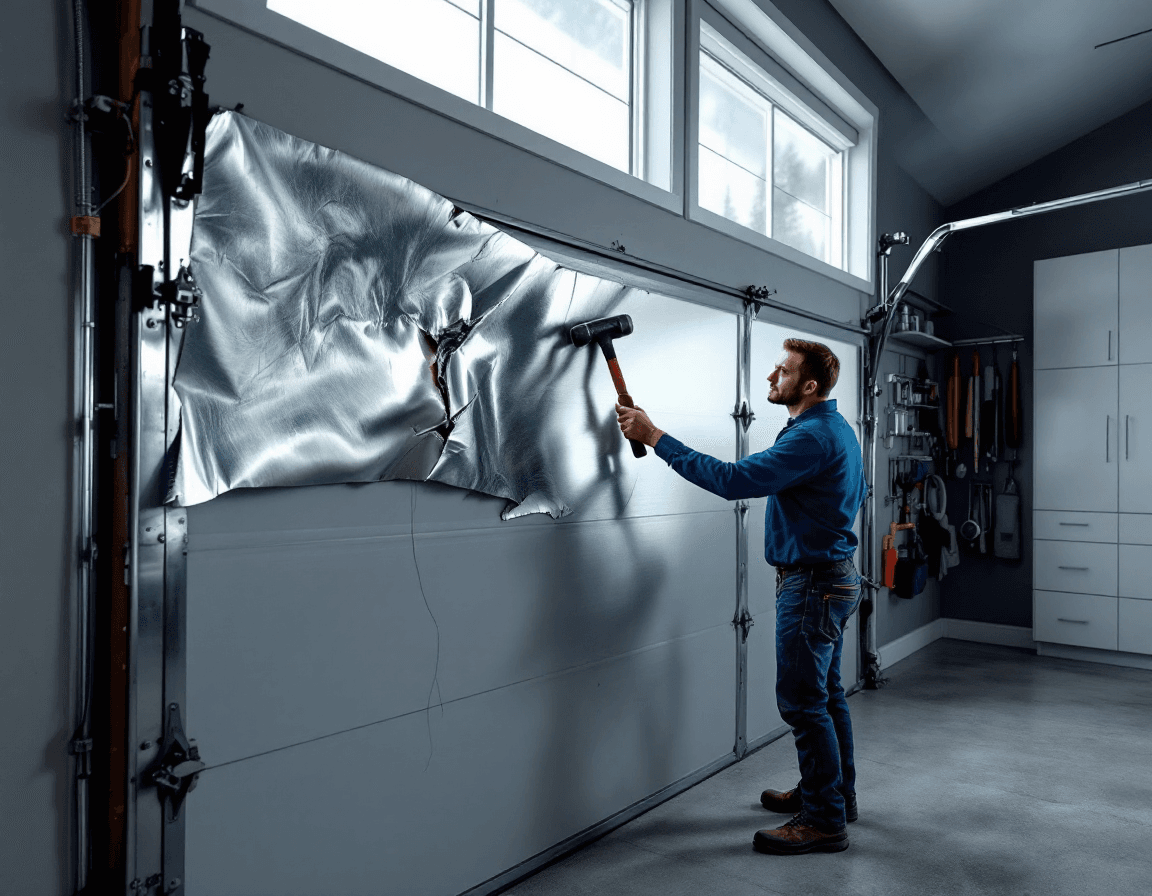
Garage door panel replacement in Yarrow Point, WA is often the most practical fix for a door that still runs smoothly but looks worn, dented, or patched. Yarrow Point sits on the Lake Washington shoreline in King County, and its homes tend to have wide, architecturally detailed garage openings that carry real visual weight from the street and the water. When one section of that door cracks, rusts through, or gets crushed by a bumper or a fallen branch, the damage is obvious to everyone who drives up. The good news is that a damaged panel rarely means you need a whole new door. In most cases, a single section can be swapped out for a few hundred dollars, usually in one visit.
This page explains how panel replacement works, what it typically costs, and how to decide between repairing a section and replacing it outright. We also cover the local conditions that wear down garage doors on the Eastside, including damp winters, wind coming off the lake, and the way moisture collects along the bottom of a door. If you are in the 98004 area and you are looking at a dented or failing panel, the information below should help you understand what you are dealing with before a technician arrives.
Seattle Garage Door Fix provides this work across Western Washington, and we know that a good replacement depends on accurate matching, sound installation, and honest advice about whether the rest of the door is worth keeping. Our goal here is to give you enough detail to ask the right questions and make a confident decision, whether you call us or someone else.
Reading the Damage Before You Call
Start by looking closely at what happened to the panel. A clean dent with no cracking in the surface can sometimes be pushed back or left alone if it does not affect operation. A crack, a split seam, or a sharp crease usually means the metal or composite has lost its structural integrity, and it will not stay tight over time. Walk around the outside of the door in daylight and run your hand along each section, feeling for soft spots, bubbling paint, or flaking metal. Note whether the damage is confined to one panel or spreads across several sections, because that difference matters a great deal when you are estimating cost.
Next, check the inside of the door. Damage that looks minor from outside can hide problems like bent hinges, a sagging panel edge, or a track that has been knocked slightly out of alignment. Open and close the door slowly and listen for scraping, popping, or uneven movement. If the door sits crooked or one side rises faster than the other, the panel may not be the only issue. A technician should inspect the whole assembly before anyone orders a replacement section, so you do not pay to fix a panel while a worn roller or cracked bracket is quietly causing the next failure.
Finally, take a few clear photos from inside and outside the garage, along with a close-up of the panel's model markings if you can find them. These photos help a technician identify the manufacturer, insulation type, and panel profile before arriving. They also give you a useful record for insurance if the damage came from a vehicle, a storm, or a neighbor's tree. Documenting the condition early is a simple habit that saves time and frustration later.
Why Lakeside Moisture Works on Bottom Panels First
Yarrow Point's proximity to Lake Washington brings a damp, cool air pattern that most garage doors feel over time. Winter months in King County bring frequent rain, long stretches of overcast skies, and humidity that does not fully dry out between storms. Garages on the lake side of the street often see the most moisture because air moves across the water and settles into low-lying spaces. This is why the bottom panel, which sits closest to the concrete slab and takes splashed water, is often the first section to show rot, rust, or swelling.
Bottom sections are especially vulnerable when water pools on the driveway or runs toward the garage threshold during heavy rain. Water wicks up under the door seal, sits against the lower edge of the panel, and never fully evaporates. Over several seasons, that trapped moisture can cause steel panels to rust from the inside out, or cause wood and composite panels to swell, delaminate, or crack. In older garages, the bottom section may also have been damaged by a previous flood or a leaking gutter that dumped water right at the door base.
Replacing a water-damaged bottom panel gives you a chance to address the cause as well as the symptom. Check the threshold seal, the weatherstripping along the sides and top, and the drainage slope of the driveway. Even a small improvement, like redirecting a downspout or replacing a cracked seal, can keep a new panel from failing the same way within a few years. A technician familiar with Eastside conditions can point out the specific weak spots on your door during the estimate.
Matching a Panel to Your Existing Door
One of the biggest challenges in panel replacement is finding a section that matches the rest of the door. Garage door manufacturers update their designs regularly, and a panel that was made fifteen years ago may no longer be sold in the same profile, thickness, color, or texture. Even when the manufacturer still produces the model, paint can fade differently across a door that has spent years facing south or west, leaving a new panel looking noticeably brighter or darker than its neighbors.
Start by identifying the door's manufacturer and model number. These are usually printed on a label on an inside panel, on the bottom bracket, or on the track near the header. If the label is missing or unreadable, measure the panel height and width, note the number of ribs or grooves, and check the thickness of the steel or the depth of any insulation. A technician can often match a profile from these measurements, but an exact match is not always possible. In those cases, the best solution may be to replace every section of the same design, or to talk through options like a custom-painted panel or a complementary finish.
Color matching deserves a careful look. If your door is faded but otherwise sound, a fresh replacement panel can look jarring until the rest of the door catches up. Some homeowners choose to repaint the full door, which costs more than a single section but produces a uniform result. Others accept a slight difference, especially when the new panel is on the bottom and out of direct sight. Whichever direction you choose, ask for a side-by-side comparison in natural light before the work is finalized.
Repair Versus Replacement: A Practical Way to Decide
Not every damaged panel needs to be replaced. Small dents that do not crack the surface, minor scratches that expose bare metal, and surface rust on a steel panel can often be treated with filler, sanding, primer, and paint. These repairs are far cheaper than a new section, and they work well when the structural integrity of the panel is still intact. The key question is whether the damage affects how the panel fits, seals, or holds its shape.
Replacement makes more sense when the panel is cracked through, when the seam between sections has separated, when the insulation is soaked or crushed, or when rust has eaten through the steel. A panel that is bent badly enough to bind in the track or rub against the frame should also be replaced rather than hammered back into shape. Attempting to straighten a deformed panel can introduce new stress points and create a hazard if the door is under tension.
Consider the age and overall condition of the door as well. If the rest of the door is showing wear, such as corroded hardware, worn rollers, or deteriorating weatherstripping, it may be smarter to plan a larger repair or a full replacement. A single panel is a good investment on a door that has years of life left. On an aging door with multiple problems, the money spent on one section may be better applied toward a new door that will serve the home for decades.
Here are the signs that a single panel replacement is likely the right call:
- The damage is limited to one or two sections and the door still tracks smoothly.
- The panel can be matched to a current or near-current profile.
- The hardware, springs, and tracks are in good working order.
- The damaged area does not extend into the frame or the seal along the edges.
Here are signs that you may need a broader repair or a new door:
- Several panels show cracks, rust, or swelling at the same time.
- The door no longer matches any available replacement profile.
- The tracks, rollers, or hinges are severely worn or bent.
- The door is noticeably unbalanced, slow, or hard to lift even after the panel is fixed.
Costs for Panel Replacement in Yarrow Point
Panel replacement typically runs between $250 and $800 per section, depending on the door. Several factors drive that range. Standard steel panels in common profiles are generally at the lower end, while insulated panels, wood or wood-look designs, custom finishes, and wide sections on large or double doors cost more. The labor involved also varies, since removing and reinstalling a panel on a door with tight tracks or complicated hardware takes longer than a straightforward swap.
Your final cost will depend on the panel's size, the door's construction, and whether the replacement needs to be ordered from the manufacturer. Some panels are stocked locally, which speeds up the work. Others may need a few days to arrive, which means a second visit. A reputable technician should explain these variables upfront so you understand what you are paying for and why.
Be cautious of estimates that sound unusually low or that promise a replacement without inspecting the door. A panel that looks like an easy swap can reveal bent tracks, damaged end caps, or a cracked bottom bracket once the old section is removed. Ask whether the quote includes a basic inspection of the rest of the door, and whether any additional repairs would be discussed with you before work begins. Clear communication protects both your budget and your schedule.
Safety Limits and When to Call a Licensed Technician
Panel replacement is a manageable job for an experienced technician, but it is not always a safe weekend project for a homeowner. Garage doors are heavy, and a section that is not supported properly can fall, pinch fingers, or crush hands. Many doors are also under high spring tension, even when the panel damage looks unrelated to the springs. Removing a panel can disturb the balance of the door, and if the door is not properly supported, it can move unexpectedly.
Springs and cables should never be adjusted, removed, or repaired by a homeowner. Torsion springs and extension springs store enough energy to cause serious injury, and cable repair requires specialized tools and training. If your panel replacement requires disassembly that touches the springs, drums, or cables, call a licensed professional and let them handle the tension-related work. Our technicians are licensed, bonded, and insured, and they are trained to lock the door, support the panels, and work safely around the spring system.
If you are unsure whether a repair is safe to tackle yourself, that uncertainty is a good reason to call. Even a seemingly simple panel swap can turn into a complex job once the door is opened up. Professional help costs less than an injury, and it gives you a clear, documented repair from someone accountable for the work.
Working With Neighborhood Standards and Permits
Yarrow Point is a small, residential community with its own character, and many homeowners take pride in how their properties look from the street and from the water. Before replacing a visible panel, it is worth checking whether your property is subject to any design guidelines, covenants, or review requirements. Some neighborhoods have rules about exterior materials, colors, or changes to facade elements, and a garage door is part of the streetscape. Your local town office can explain whether a permit is required for a like-for-like panel replacement, since requirements can change and depend on the scope of work.
In most cases, replacing a single panel with a matching section is considered routine maintenance and does not require the same review as a new door installation or a structural change. However, switching to a different style, adding windows, or changing the door's dimensions may trigger different requirements. A technician can help you understand which category your project falls into and what documentation might be useful if questions come up.
Keep your paperwork organized. Save the invoice, the panel's specifications, and any photos of the work. If you ever sell the home or file an insurance claim, a clear record showing when and how the panel was replaced can save time and answer questions buyers or adjusters may have.
Protecting Your New Panel From Future Damage
A new panel will serve you well for years if you take a few simple steps to protect it. Keep the bottom seal in good condition and replace it when it cracks, flattens, or pulls away from the threshold. Check the weatherstripping on the sides and top of the door at the same time, since gaps there let wind-driven rain reach the panel edges. Keep gutters clear and make sure the downspouts discharge away from the garage door opening, especially during the wet months of late fall and winter.
Clean the door a few times a year with mild soap and water, then rinse it thoroughly. Avoid harsh chemicals or abrasive pads that can strip finishes and expose metal to corrosion. Inspect the panel's paint or finish for chips and scratches, and touch them up promptly with a compatible primer and paint. A small chip left alone can grow into a rust spot within a single wet season.
Finally, think about impact protection. Many damaged panels in driveways come from backing accidents, delivery vehicles, or kids and bicycles. Parking guides, reflective markers, or a simple bollard on the driveway edge can reduce the chance of another dent. For homes near the lake where trees are common, trimming branches that could fall onto the door during windstorms is a worthwhile precaution.
Choosing the Right Team for Your Panel Replacement
When you are choosing a technician, look for a company that inspects the entire door before quoting, explains the difference between repair and replacement, and gives you a clear, written estimate. Ask whether the technician is licensed, bonded, and insured, and whether the company stands behind its installation. A good provider will be comfortable answering questions about the panel's profile, color match, and expected lifespan, and will tell you honestly if a repair is not worth the money.
Seattle Garage Door Fix serves Yarrow Point and surrounding Eastside communities with the same practical approach we bring to every job. Our technicians look at the whole door, match panels as closely as the manufacturer allows, and explain your options in plain language. We would rather tell you that a small dent can be left alone than sell you a replacement you do not need. When a panel does need to come out, we handle the work carefully and leave the area clean.
If your Yarrow Point garage door has a dented, cracked, rusted, or water-damaged panel, call Seattle Garage Door Fix at (888) 799-3819. We will look at the damage, check the rest of the door, and give you a straightforward estimate for panel replacement or repair. Our team is ready to help you restore the look and function of your garage door.