
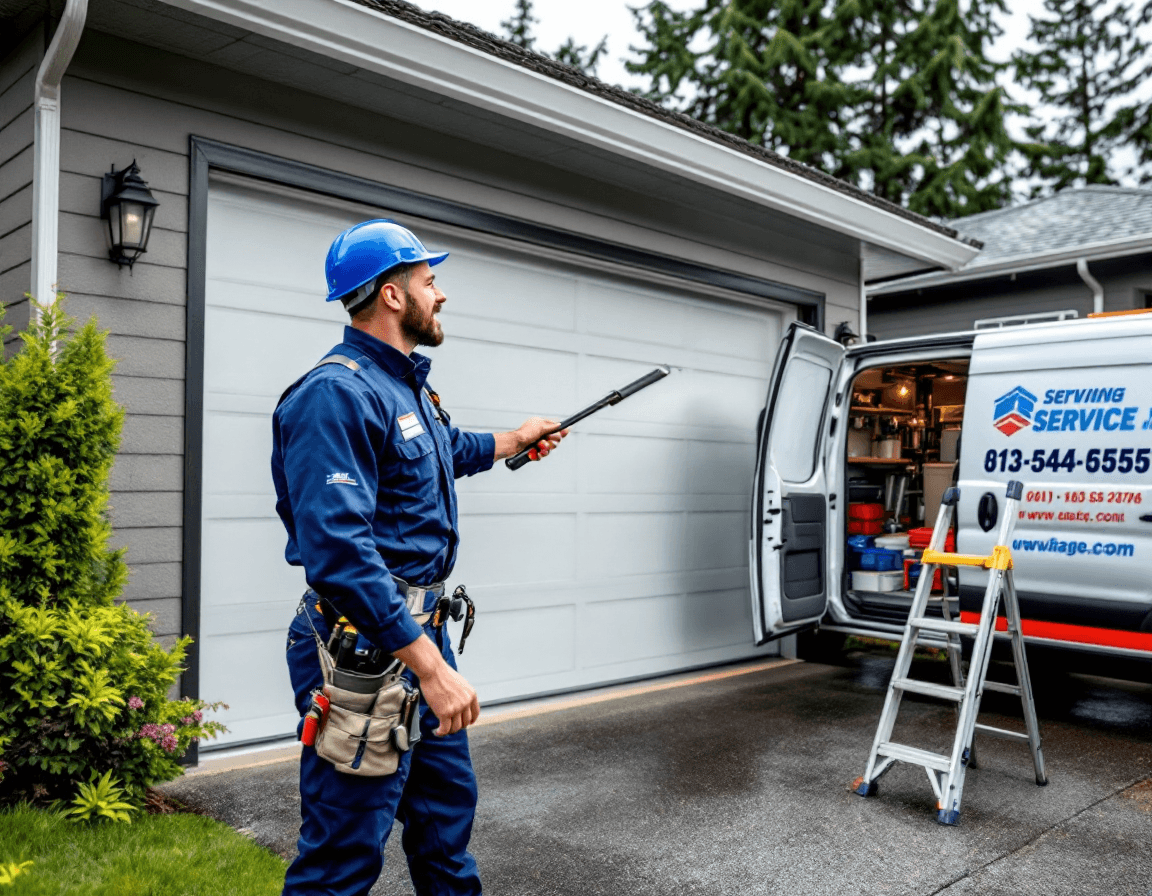
Garage Door Repair in Yarrow Point, WA is a service many homeowners on this quiet peninsula need sooner than they expect, because the lakeside setting puts extra strain on every part of a garage door system. Our technicians serve Yarrow Point from our Western Washington routes, and we arrive ready to diagnose a door that won't open, won't close, or refuses to travel smoothly between those two points. Most of the calls we answer here involve doors that have been working fine for years and suddenly start acting up after a wet stretch, a cold snap, or a hard winter storm off Lake Washington. A stuck or erratic door is rarely random, and the pattern of symptoms usually points to a specific component that can be identified and repaired in a single visit.
Yarrow Point homes tend to have a mix of architectural styles, from older estate-style houses to newer custom builds, and many of them have garages with long runs, sloped approaches, or doors that were fitted decades ago with hardware that has since worn unevenly. Some properties sit close to the water and see more moisture in the air than inland neighborhoods, which affects metal, lubricants, and wiring over time. Whatever the age of your home, the goal of a good repair is the same: restore safe, predictable movement and address the cause rather than only silencing the noise. The sections below explain what we typically see, how to recognize the warning signs early, and what you can safely check before a technician arrives.
If your door is misbehaving right now, you do not need to understand every mechanical detail to take a useful first step. Knowing which symptoms are minor adjustments and which ones signal a safety concern will help you decide whether to wait, limit use, or call for help the same day. We have written this guide to be practical and specific to the conditions around the lake, so that you can have a more productive conversation with the technician who comes to your home.
How Lake Air and Winter Rain Affect Garage Doors Near the Water
The Pacific Northwest climate is gentle in many ways, but it is hard on steel and moving parts. Yarrow Point sits on the east shore of Lake Washington, where damp air often lingers into the morning and fog can settle over the water for days in late fall and early winter. That moisture works its way into door hardware, especially on the lower sections of the panels, along the bottom seal, and at the bearings of the rollers. Over several seasons, it encourages surface rust on the track, flaking on hinge plates, and gradual corrosion on the bolts that hold the brackets in place.
Winter rain adds another layer of trouble. Water that runs down a sloped driveway can pool at the threshold, freeze during a cold snap, and push up under the door, which increases resistance and can make the opener strain. Leaves, fir needles, and moss collect along the track in areas with mature trees, and grit from the driveway can end up in the rollers. When a roller is packed with debris or a track has a small bend from years of minor impacts, the door may move in short jerks or stop at the same spot every time.
Summer brings a different issue: heat and dry stretches cause the lubricant on springs, rollers, and hinges to thin out or dry, which can make the door sound rough in the morning and smoother by afternoon. Because the seasons in this area are not extreme, many homeowners do not think of them as a factor at all. In practice, a regular seasonal check of the track, rollers, and lubrication goes a long way toward preventing the sudden failures that show up after a wet December or a sticky August.
Doors That Reverse Before Reaching the Floor
One of the most common complaints we hear is a door that goes down, gets most of the way closed, and then rises back up before the bottom panel reaches the ground. This behavior is a built-in safety feature. Modern openers are designed to reverse when they sense resistance, and the sensors that detect obstruction are usually a pair of photo-eyes mounted near the bottom of the door track on each side. When those sensors are misaligned, dirty, or receiving no clear signal, the opener assumes something is in the path and sends the door back up.
Before assuming the opener itself is at fault, look at the photo-eyes. Each sensor has a small indicator light, and when the two units are correctly aligned, the lights are steady. A cobweb, a splash of rain residue, or a bump from a bicycle or a child's scooter can knock one sensor out of line. Sunlight coming in at a low angle in the late afternoon can also confuse some systems, particularly on the west-facing garages that catch the evening glow over the water. Wiping the lenses with a dry cloth and checking that the wires are secure is a reasonable first step for any homeowner.
If the sensors look correct and the door still reverses, the problem may be in the door's balance or in a section that is binding in the track. A door that has lost its spring tension will feel heavy and may stop or reverse partway down, and in that case the spring system needs professional attention. Likewise, a bent track or a roller stuck in a dent can create enough friction to trigger the reversal. Those issues require a careful inspection, and any repair that involves spring tension belongs with a licensed technician.
Remote and Wall Button Failures: Start With the Simple Checks
When the remote or wall button does nothing, the first instinct is often to assume the opener has died. In reality, a large share of these calls come down to something much simpler. Remote batteries lose strength over time, and a fob that worked fine in spring may fail in a damp winter. Wall buttons can be affected by a loose wire, a tripped safety circuit, or a keypad that has been exposed to moisture. Walking through a short checklist can often isolate the cause in minutes, and it helps the technician arrive with useful information.
The following checks are safe for most homeowners to perform before calling for service:
- Replace the batteries in the remote and test it while standing near the garage door, not from across the property.
- Confirm that the wall button is not stuck and that its wire connections look intact at the wall plate.
- Check the opener's power source by confirming that the outlet is live and the light fixture on the opener responds when you press the button.
- Look for a flashing indicator light on the motor unit, and note how many times it blinks, since many openers use blink patterns to signal specific faults.
- Make sure the emergency release cord is not hanging low enough to catch on a vehicle, and confirm the door is fully disengaged only if you already know the release procedure safely.
If none of these steps restores function, the issue may involve the receiver board, the logic board, or a wiring fault inside the opener housing. Those components are typically replaced or repaired by a technician. We recommend against opening the motor housing or attempting to rewire the unit yourself, because the opener carries significant electrical load and the door itself can move unexpectedly during testing.
Grinding, Squealing, and Banging: Reading the Sounds Your Door Makes
Garage doors speak through their sounds, and each noise tends to point toward a particular cause. A high-pitched squeal usually means a roller or hinge is dry or worn, and the metal is rubbing against metal without adequate lubrication. A low grinding noise often comes from the opener's drive system, especially a chain or belt that has stretched or lost tension. A sharp bang at the start or end of travel can indicate that a roller is loose in its track, that a bracket has shifted, or that the door is hitting a stop it was never meant to reach.
Sound alone does not tell the whole story, but it narrows the search considerably. A rhythmic clicking or thumping that matches the rollers passing over track joints usually points to worn or misaligned rollers, which are common replacement items. A scraping noise along one side of the door can mean the panel is out of square, the track is slightly bent, or a section is catching on the weatherstrip. Banging at the top of travel may suggest that the door is not balanced and is slamming into the header stop rather than settling gently.
Our technicians ask homeowners to describe when the noise happens, not just what it sounds like. Does it occur only in the morning, when cold metal contracts and the lubricant is thick? Does it happen only on the way down, or only when the door is almost fully open? Those details help a technician predict the likely culprit before picking up a tool. If you can record a short video on your phone while the door operates, that footage often helps the diagnosis, particularly when the noise is intermittent.
Crooked Movement and Off-Track Panels on Sloped Driveways
Many Yarrow Point properties have driveways that slope toward the street or down toward the lake, and that grade can affect how a door travels. When a door moves unevenly, one side rising faster than the other, the cause is usually a mismatch between the two sides of the system. A broken or stretched cable on one side, a spring that has lost tension, or a lift cable that has slipped off its drum can all make the door look crooked. The panels may begin to separate at the seams, or the door may appear to lean when it is partway open.
Off-track doors are one of the more serious conditions we encounter. When one or more rollers leave the track, the panel can bind, tilt, or drop at an angle. Continuing to operate the opener in this condition can bend the track further, damage the panels, and put strain on the opener motor. If your door has come off its track, stop using it, keep people and vehicles clear of the opening, and do not attempt to force it back into position. Forcing a door can cause a sudden shift that injures hands or fingers, and the tension system may be involved.
Crooked movement also has a practical side. A door that is out of level will often wear the weatherstrip unevenly, which lets wind and water into the garage. On waterfront-adjacent properties, that gap can allow damp air and blowing spray into the space, which accelerates corrosion on tools, stored items, and the floor. Correcting the alignment early protects both the door and the room behind it.
Doors Stuck Halfway or Jammed in the Track
A door that stops in the middle of its path and refuses to move in either direction is one of the most frustrating symptoms, and it is often caused by a combination of factors. A jam may come from debris in the track, a roller that has seized, a broken spring that leaves the door unbalanced, or an opener that has reached its force limit because the door is binding. Because the door is partially open, it may also be exposed to wind, and in a garage with a long run, a stuck panel can become a genuine hazard for anyone standing nearby.
Before calling a technician, you can take a few cautious steps. Make sure nothing is blocking the track, such as a bicycle, a stored item, or a bag of yard waste that has slid into the path. Look for visible debris or a bent section of track, and check whether the rollers appear to have popped out of their channels. Do not reach into the track, place your hand in the gap, or pry at the panels while the door is partly open. If the opener has stopped with the door under tension, the safest course is to leave it alone and call for service.
Jams that occur repeatedly at the same point often indicate a systematic problem, such as a worn track section or a spring that is losing tension in one location. Recording the exact height where the door stops can help the technician focus the inspection. Many of our calls for jammed doors end with a combination of track adjustment, roller replacement, and balance correction, and the total time on site is usually short once the technician is able to access the affected area.
The Door That Slams Shut Too Fast
When a door drops quickly and lands with a hard impact, it can be alarming and it puts unnecessary stress on the opener, the panels, and the floor. The most common cause is a loss of balance. A properly balanced door should stay in place when released partway open and should descend at a steady, controlled pace. If the door drops like a stone or accelerates as it approaches the floor, the springs may be weakened or the cable drums may have slipped.
Another factor is the opener's close-speed setting, which some models allow the owner or technician to adjust. A setting that is too aggressive can make even a well-balanced door feel rushed. However, adjusting the speed should not be used to mask a balance problem, because the door will still be working harder than it should. A technician will typically check the balance first, inspect the cables and drums for wear, and then fine-tune the opener if needed.
Hard closing also affects the seals at the bottom of the door. Over time, repeated impact can flatten or tear the weatherstrip and compromise the seal against the garage floor. On properties where heavy rain and wind are common, a damaged bottom seal can allow water to creep under the door during storms. Replacing the seal is a relatively inexpensive fix that improves comfort, energy performance, and protection for the garage interior.
Springs and Cables: Why This Work Belongs to a Licensed Technician
Springs and cables are the heart of a garage door's balance system, and they are also the most dangerous components to handle. Torsion springs are wound under very high tension, and the energy stored in them can cause serious injury if they are released improperly. Extension springs carry similar hazards, along with the risk of a cable snapping under load. Even when a homeowner has watched a technician do the job, attempting to replace a spring or cable without the correct tools, training, and experience can result in severe harm.
Our policy is clear: any work involving springs, cables, drums, or tension adjustments should be performed by a licensed, bonded, and insured professional. We are fully licensed, bonded, and insured, and our technicians follow established safety procedures for every spring and cable job. We will not recommend that a homeowner attempt to wind, unwind, or replace a spring, and we will always explain clearly when a repair falls into that category. Please do not try to adjust the tension on your own, even if you find instructions online.
Signs that a spring or cable needs attention include a visible gap in the coil, a cable that looks frayed or stretched, a door that feels heavy when lifted by hand, and a door that drifts when released in the middle of its path. If you notice any of these, avoid using the door until a technician has inspected it. Driving the car in and out of the garage with a damaged spring is not a safe compromise, and waiting too long can turn a manageable repair into a larger job involving the track, rollers, and opener.
Typical Repair Ranges for Common Garage Door Problems
Homeowners often ask what a repair should cost before they schedule a visit, and we understand why. Most residential garage door repairs we perform fall between $95 and $450, depending on the part involved, the complexity of the access, and the condition of the surrounding components. Simple adjustments, sensor realignment, and lubrication tend to sit at the lower end of that range, while roller sets, cable replacements, and more involved opener work generally cost more. Final pricing depends on the specific diagnosis, and a technician will explain the scope before any work begins.
Several factors influence the final number. The door's size and weight matter, as does the age of the opener and whether replacement parts are readily available for that model. Homes with long driveways or hard-to-reach garages may require additional time for setup and cleanup. A door that has been neglected for several years may reveal multiple small issues during one visit, which is why a thorough inspection is valuable even when the original complaint seems minor.
We aim to keep the process transparent. A technician should identify the problem, explain the options, and give you a clear picture of what the repair will involve before the work starts. If a component needs replacement, you should know the reason and understand whether the part is a safety item, a comfort item, or a convenience upgrade. Asking questions during the visit is encouraged, and you should never feel pressured into work you did not request.
What to Prepare Before the Technician Arrives
A little preparation makes a service visit faster and more productive. Clear the area around the door and the track so the technician has room to work, and move vehicles and bicycles out of the garage if possible. If the opener has a remote or keypad that you use daily, bring it along so the technician can confirm its programming. Note the make and model of the opener if you know it, and locate the owner's manual or the label on the motor housing, since those details help determine which parts are compatible.
It is also helpful to write down the symptoms you have observed, including when they started, whether they happen every time or only sometimes, and whether the weather seems to influence them. Mention any recent changes, such as a storm, a new vehicle, or a time when someone bumped the door. Photographs or short videos of the door in motion can be very useful, especially for crooked movement, reversing, or noise. The more complete your description, the more accurately a technician can prepare the right parts and tools for your visit.
Finally, please avoid operating the door repeatedly while you wait for service. Every extra cycle on a damaged spring, cable, or track puts additional stress on the system. If the door is unsafe, keep it closed or open as appropriate and use an alternate entrance until the repair is completed. A short delay in use is far better than a sudden failure that could injure someone or damage the vehicle inside.
Our team is ready to help homeowners in Yarrow Point and the surrounding 98004 area with fast, dependable garage door repair that respects both the age of your home and the realities of living near the lake. Call Seattle Garage Door Fix at (888) 799-3819 to describe what your door is doing, schedule a visit, and get a clear plan before any work begins.