
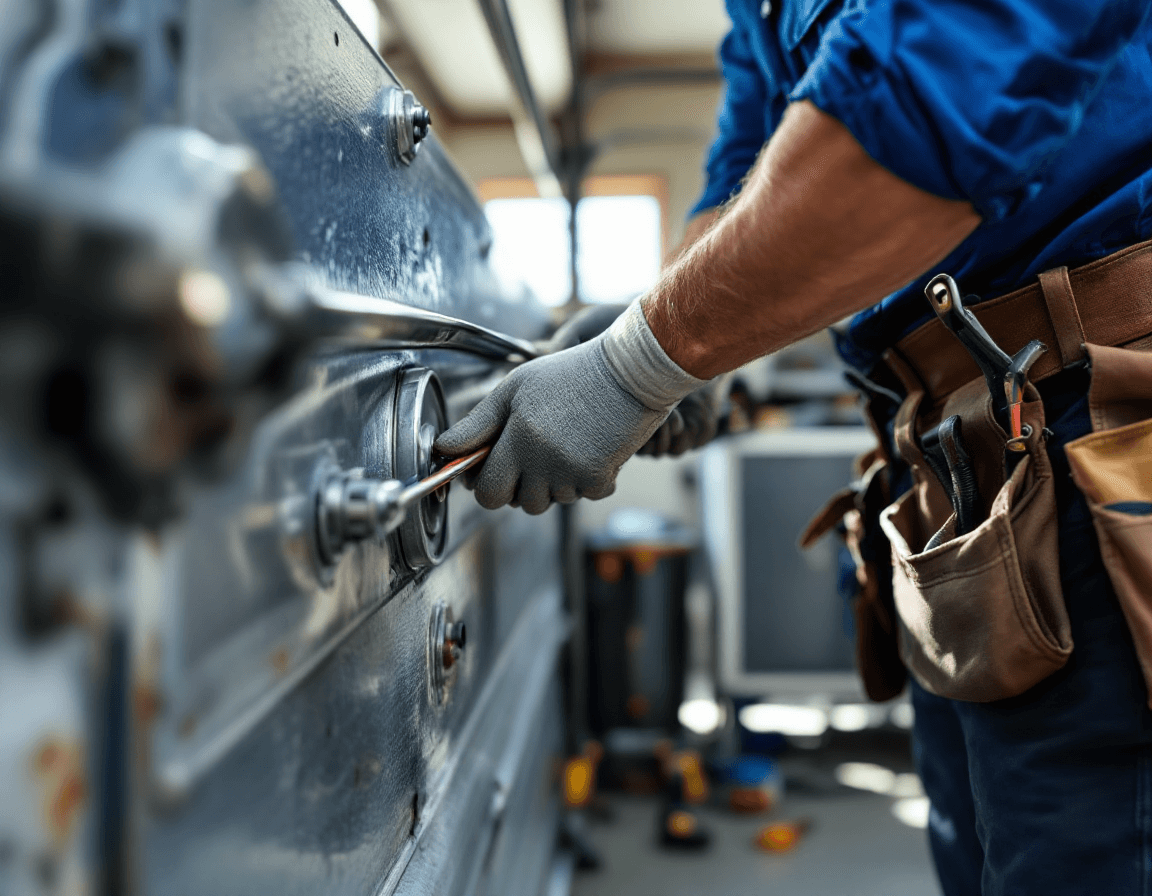
Garage Door Cable Replacement in Yarrow Point, WA is one of the most common repairs we handle for homeowners along the Lake Washington shoreline, and it is also one of the most misunderstood. A lift cable rarely fails without warning, but the warning is easy to miss when the door still opens most of the time. Once a cable snaps or slips off its drum, the door usually stops dead, sometimes with a loud bang that rattles the whole garage. If you are reading this with a door that hangs crooked or refuses to move, you are in the right place.
Yarrow Point sits in a setting that is hard on hardware. Homes here tend to be set among mature trees, close to the water, and exposed to the damp, cool air that rolls off Lake Washington for much of the year. Garage doors in these neighborhoods often face a longer cycle of moisture and drying than a door tucked inland. This guide explains how lift cables fail, what the symptoms look like, what a professional does during a cable replacement or drum service, and how to keep the problem from returning. It also explains why this work belongs in the hands of a licensed, insured technician rather than a weekend project.
Our goal is to give you a clear picture so you can make a good decision. You will not need to become an expert, but you should understand enough to recognize a failing cable, describe the problem accurately when you call, and know what to expect on the day of the visit. Where the advice touches on safety, we say so plainly, because spring and cable work involves forces that can cause serious injury.
Why Lakeside Moisture Works on Lift Cables
Lift cables are steel, usually galvanized or coated, and they run through the door's tracks, around the drum, and up to the top of the door panel. Every time the door opens or closes, the cable bends around the drum and flexes through a series of small strands. Over years, that flexing combined with moisture can cause the outer strands to corrode, weaken, and fray. Near the water, the air carries more moisture and salt-laden mist than many inland areas, and that accelerates surface rust on exposed hardware.
The Pacific Northwest adds its own rhythm. Long stretches of gray, damp weather keep garage interiors humid, and a cold snap followed by a rapid thaw can cause condensation to form on steel components overnight. Doors that sit closed for days at a time may also trap moisture against the cable and drum. A homeowner who parks cars, stores kayaks or paddleboards, and uses the garage as a workshop is often bringing extra humidity into the space without realizing it.
None of this means your cables are doomed. It does mean that inspection matters more here than it might elsewhere. A cable that looks fine from across the room may be corroded where it wraps the drum, and that is precisely where a failure tends to start. Paying attention to the condition of the cable each season is a simple habit that pays off.
Reading the Warning Signs Before a Cable Lets Go
The most common early sign is a door that behaves differently from one side to the other. Cables are installed in pairs, one on each side of the door, and they are designed to share the load evenly. When one cable starts to stretch, fray, or slip, the door begins to tilt as the stronger side lifts more of the weight. You may notice the door hanging lower on one side, or a gap at the top of the door that was not there before.
Other signs are more subtle but still worth acting on. Frayed or rusted strands, especially near the top bracket or where the cable meets the drum, are a clear signal that the cable is nearing the end of its service life. Listen for popping, grinding, or a dragging sound during operation, since these often indicate a cable rubbing against a bracket or a drum that is no longer seating properly. If the door closes unevenly, binds on one track, or seems to jerk at a particular point in its travel, stop using it until someone inspects it.
- Door hangs visibly lower or tilted on one side
- Fraying, kinks, or orange-brown rust on any part of the cable
- Cable that appears loose, slack, or unevenly tight between the two sides
- A popping or snapping sound followed by the door moving unevenly
- Drum that looks misaligned, or cable that is no longer neatly wound
Do not wait for a snap to act. A cable that is partially frayed still carries load, and when it finally gives way, it often does so with the door mid-travel. That can damage the door panel, the track, the opener, and the drum itself, which turns a modest repair into a larger one.
When a Snapped Cable Leaves the Door Stuck
A snapped cable is one of the more alarming garage door failures. The sound is usually sharp and sudden, like a rifle crack or a heavy metal bang, and it can be startling even if you are expecting it. Afterward, the door may be stuck partway open, sitting crooked in its tracks, or dropped into a sagging position with one edge higher than the other. The opener may still hum, but the door will not travel smoothly.
Many homeowners assume the opener has failed, and they reset it or replace it before realizing the real issue is a broken cable. If the door is off track or hanging unevenly, the opener cannot lift it safely. Continuing to run the opener in that state can strip gears, bend tracks, and create a second repair on top of the first. The safer move is to disconnect the opener from the door, which usually means pulling the emergency release cord, and then keeping people and vehicles clear of the door until a technician arrives.
Be careful with the door itself. A door with a broken cable is heavy, and it can drop unexpectedly once the tension is gone. Do not try to lift it by hand, do not stand under it, and do not attempt to rewind or reattach a cable. Keep children and pets away from the area, and if the door is partly open, prop it securely only if you can do so without placing your hands or body beneath the panel.
Cable Off the Drum: What Actually Happened
A cable that slips off the drum is a different problem from a cable that snaps, although the symptoms can overlap. The drum is a grooved cylinder mounted on the torsion shaft or near the track, and the cable winds onto it as the door closes and unwinds as the door opens. When the cable jumps off the groove, it can tangle around the drum or simply hang loose. You may see the cable hanging slack, or you may see it wrapped in an uneven heap on one end of the drum.
This typically happens when the cable has stretched, when tension is uneven between the two sides, or when the drum itself has worn or been knocked out of alignment. In some cases, a bent track or a broken bracket allows the door to shift just enough for the cable to leave its groove. Whatever the cause, the door will often sit crooked because the drum on that side is no longer lifting correctly.
A cable tangled around the drum needs professional attention. Unwinding it without releasing the tension in the spring system can injure the person doing the work. Our technicians first secure the door, then release the tension in the proper sequence, then inspect the drum, cable, and attachment points before deciding whether the cable can be re-seated or must be replaced. Attempting this yourself with a bar, a wrench, or a ladder is one of the more common ways homeowners get hurt during a garage door repair.
Crooked and Lopsided Doors in Lakeside Homes
A door that hangs crooked is one of the most frequent complaints we hear from Yarrow Point homeowners. Many of these properties have wider or heavier doors, custom panels, or insulated doors with glass or decorative inserts, and those features increase the load on the lift system. When the cable tension is slightly off on one side, the difference becomes obvious to the eye as the door rises and lowers. The top edge may look tilted, the bottom seal may not sit flush against the floor, or the door may stop short of fully closing on one side.
Crookedness is not always a cable issue. Worn rollers, a bent track, a loose bracket, or a misaligned hinge can produce a similar look. This is why a proper inspection matters before any parts are ordered. A technician will check the cable on each side, look at the drum and its seating, measure the track alignment, and observe the door's travel from start to finish. Only then can the cause be pinned down with confidence.
If you notice crookedness, avoid trying to adjust the cables yourself. Cable tension on a torsion system is tied to the springs, and adjusting it incorrectly can create a dangerous release of stored energy. A licensed technician can restore balance safely and confirm that the door is operating within its designed range. Often, correcting the balance also extends the life of the opener, because the motor no longer has to fight an uneven load.
Frayed and Rusted Cable: How Far Is Too Far
Homeowners often ask how much fraying is acceptable. The honest answer is that any visible fraying, broken strands, or significant rust on a lift cable means it should be inspected and usually replaced. Cable strands are designed to share the load, so when individual wires break, the remaining strands carry more stress. Once that process starts, failure can accelerate quickly, especially in a humid environment.
Rust is a particular concern in lakeside settings. Surface rust may look cosmetic, but it can hide pitting inside the cable, and a rusty cable may lose strength in ways that are not visible from the outside. If the coating has flaked off and the steel underneath is orange or brown, the cable has likely reached the point where replacement is the better investment. Waiting to see whether it lasts another season is a gamble that rarely pays off.
Our advice is simple. If a cable shows any broken strands, deep rust, kinks, flattened sections, or visible wear where it contacts the drum or bracket, schedule a replacement rather than a patch. Many technicians also recommend replacing both cables at the same time, since they age together and share the same environmental exposure. Replacing only one often leaves the door unbalanced and sets up the other cable for an early failure.
What Goes Into a Typical Cable Replacement
Most lift cable replacements we perform fall in the range of $110 to $300, depending on the door, the number of cables involved, and whether additional components such as the drum or bracket need attention. That range reflects the cable itself, the labor required to release tension safely, the installation, and the balancing and testing that follows. Prices can vary with the size and weight of the door, the spring system, and any access issues in the garage.
A proper service visit has several stages. The technician first confirms the cause of the failure and checks the other cable, the drum, the track, the rollers, and the spring system. Tension is then released in a controlled sequence, the damaged cable is removed, and the new cable is routed correctly over the drum and through the bracket. After installation, the door is balanced and tested through several full cycles to confirm smooth travel and proper seating in the tracks.
Some homeowners ask whether they can save money by buying a cable and installing it themselves. We understand the impulse, but we strongly discourage it. Spring tension is stored energy, and mistakes can cause severe injury. Our technicians are licensed, bonded, and insured, and they carry the tools and training needed to do this work safely. The modest difference in cost is rarely worth the risk.
Drum Service: The Step Most Quick Fixes Skip
A cable replacement that ignores the drum is only half a repair. Drums wear over time, and grooves can become rough, flattened, or uneven, which causes the new cable to bind, jump, or wear prematurely. A drum that is cracked, loose on its shaft, or pulled out of alignment can damage a fresh cable within weeks. For that reason, drum service is often part of a thorough cable job, especially when the door has been out of balance for a while.
Drum service typically involves inspecting the grooves for wear, checking the set screws or set collars that hold the drum to the shaft, and confirming the drum sits square and turns freely. Where needed, the technician will tighten fasteners, replace a worn drum, or correct a shaft alignment issue. These steps help the new cable run smoothly and reduce the chance of the same failure repeating.
Ask your technician to explain what they found in the drum. A good service call should leave you with a clear understanding of whether the drum is sound, what was adjusted, and whether any component should be monitored. This kind of transparency is one of the best indicators of a trustworthy garage door company.
Protecting Your Cables Between Service Visits
You cannot prevent every cable failure, but you can reduce the chances of an early one. Start with a visual check every few months. Look at the cables on both sides of the door, paying close attention to the area near the drum and the top bracket. Note any fraying, rust, or looseness, and mention it when you schedule service. A quick glance can catch a problem before it becomes an emergency.
Keep the garage as dry as practical. Run a dehumidifier if the space stays damp, ventilate the area when weather allows, and avoid storing wet gear or damp materials directly against the door mechanism. If your garage faces the water or sits under heavy tree cover, consider a periodic cleaning of the tracks and hardware to remove grit and salt residue. Use a light lubricant on the rollers and hinges as recommended by the manufacturer, but avoid spraying lubricant directly onto the cables, since it can attract dirt and make corrosion harder to spot.
Test your door's balance from time to time. With the opener disconnected and the door closed, lift it by hand about a foot off the ground. A balanced door should stay roughly where you leave it. If it drifts up or down quickly, the spring or cable system may need service. This is a simple diagnostic, but it should be done carefully and only by someone comfortable with the risks of a heavy door.
Choosing a Licensed Technician for Spring and Cable Work
Because cable replacement is tied to spring tension, it is not a job to hand off to an unlicensed helper or a general handyman. Look for a company that is licensed, bonded, and insured, and ask to confirm those credentials before the visit. A reputable technician will explain the work clearly, provide a written estimate, and describe what will be replaced and why. They should also be comfortable answering questions about the spring system, the cable specification, and the expected lifespan of the new parts.
When you call, describe what you are seeing in plain language. Mention whether the door is stuck, crooked, or making a noise, and whether you heard a snap or noticed the cable hanging loose. Say which side of the door looks lower and whether the opener is still running. That information helps the technician prepare the right tools and decide whether the visit can be handled in one trip.
Finally, expect a professional to take safety seriously. A good technician will ask you to keep clear of the door, will secure it before touching the springs, and will test the door thoroughly before handing it back. If someone rushes the process or suggests skipping steps, that is a sign to find another provider.
Mistakes to Avoid Before the Technician Arrives
Waiting for help is frustrating, but a few steps can protect your door and your household while you wait. Do not run the opener if the door is off track, crooked, or visibly loose. Do not try to lift the door by hand or use it as a barrier for anything. Keep vehicles, bicycles, kayaks, and storage bins out of the path of the door, since a sudden drop can cause damage well beyond the garage.
Avoid cutting, pulling, or re-threading a cable yourself. Many homeowners attempt to wrap a cable back onto the drum without releasing tension, which is a common route to serious injury. Avoid adjusting the spring or the bracket with tools you have on hand, even if you have watched a video about it. Garage door systems vary widely, and a small mistake can turn a repairable problem into a dangerous one.
Finally, take photographs of the cable, drum, and door before the technician arrives if you can do so safely from a distance. Photos help us diagnose the problem faster and often reveal details that are easy to miss in a rushed moment. Note the time the problem began, any sounds you heard, and whether the door has been operating differently for a few days. These details shorten the visit and help us deliver the right repair the first time.
If your Yarrow Point garage door has a frayed, rusted, or snapped lift cable, or if the door is hanging crooked or stuck, call Seattle Garage Door Fix today at (888) 799-3819. Our licensed, bonded, and insured technicians can inspect the cables, service the drum, and restore balanced, safe operation for your home. Please leave the spring and cable work to a professional, and let us take care of it before the next cold, damp week puts more strain on your door.