
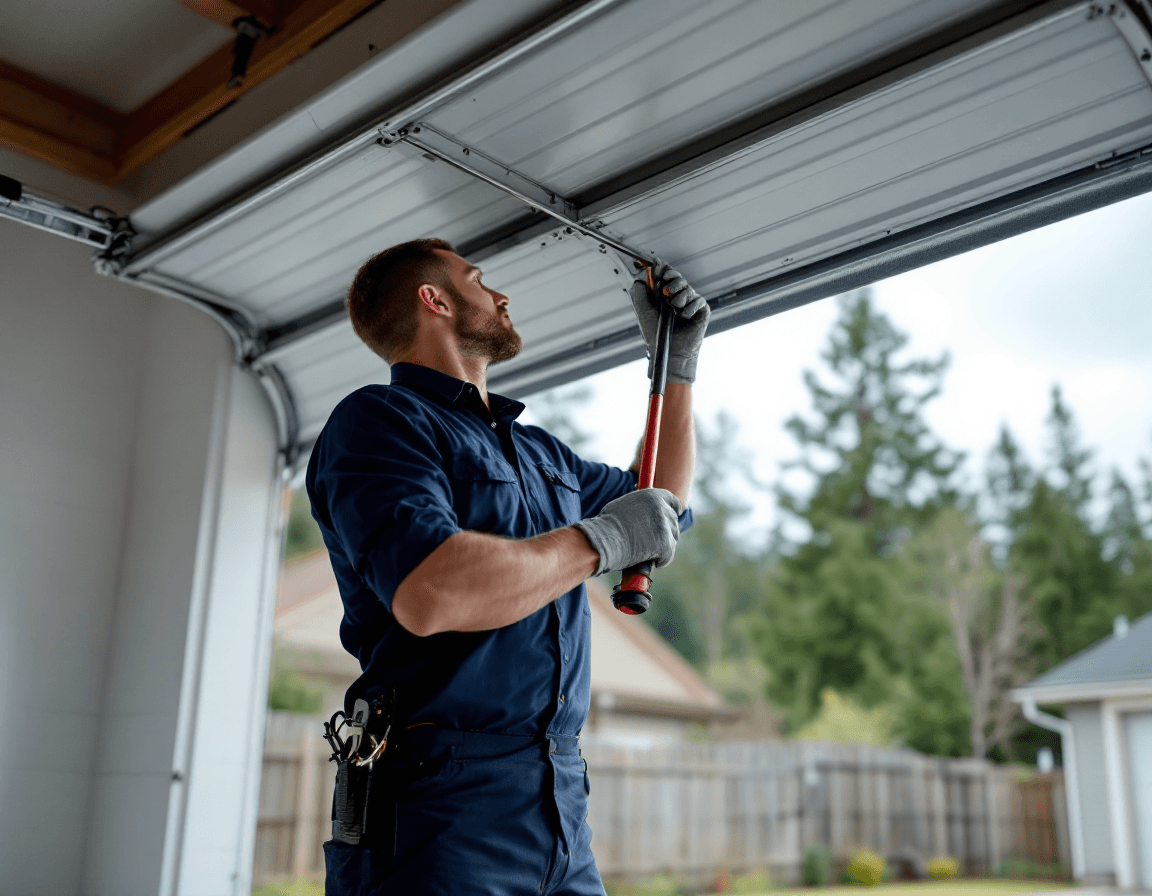
Garage door spring replacement in Yarrow Point, WA is one of the most common repairs we see on the peninsula, and it is also one of the most important to get right. The springs carry most of the weight of a heavy residential door, so when one fails, the door can become impossible to lift by hand and dangerous to operate. Many Yarrow Point homes have two-car garages with wide, insulated panels, and those doors can weigh well over a hundred pounds before any hardware is added. Without working springs, even a healthy opener will strain against that load.
Our technicians handle broken torsion and extension spring replacement, high-cycle spring options, cable inspection, and precise door balancing for homeowners across the area. Most standard spring replacements fall in the range of $180 to $450, depending on the spring type, door size, and what else the inspection turns up. We are a licensed, bonded, and insured garage door company, and we treat spring work as a licensed-professional job from start to finish. If you suspect a spring has broken, the safest first step is to stop operating the door and call us at (888) 799-3819.
This page explains what a failed spring looks like, how the Pacific Northwest climate affects spring life on the lake side of King County, and what a complete repair should include. It also covers the questions homeowners ask most often: how to tell a spring problem from an opener problem, what cycle ratings mean, and why balancing matters as much as the coil itself. Read it before you call, or keep it as a reference for the next time your door behaves strangely on a cold morning.
What a Snapped Spring Sounds Like From Inside the House
A broken spring is rarely subtle. Most homeowners describe a sharp, loud bang that seems to come from the garage, often without any warning and sometimes while the door is sitting closed. The sound is the spring releasing its stored tension all at once, and it can be startling enough to make people think a vehicle has hit the door. In quiet neighborhoods with large lots and mature trees, the noise travels, so neighbors sometimes hear it before the homeowner realizes what happened.
After the bang, the door usually behaves in one of a few predictable ways. It may refuse to lift at all, it may rise a few inches and then stop, or it may feel suddenly and dangerously heavy when you pull the emergency release. Some doors hang slightly crooked after a break because one side of the spring system has lost tension while the other side still holds. You may also notice a gap or unusual shape in the spring coil itself, which is a clear sign that the spring has parted.
Do not try to test the door repeatedly after a loud bang. Each attempt puts strain on the remaining hardware, the opener, and the cables, and a door that has lost its springs can drop without warning if it is not supported. Keep vehicles and people clear of the door path, avoid standing underneath it, and leave the door in its current position until a technician can inspect it. Our crews arrive ready to secure the door safely before any work begins.
Torsion Versus Extension Springs: Identifying What Your Door Uses
Before any spring can be replaced correctly, the technician needs to know which type is installed. Torsion springs mount on a steel shaft above the door opening, usually just above the header, and they twist to store energy when the door closes. Extension springs run along the horizontal tracks on either side of the door and stretch as it lowers. Many older Yarrow Point homes still have extension springs, while newer installations more often use torsion systems, though both types remain common across the area.
The two designs fail in different ways. A torsion spring that breaks often leaves a visible gap in the coil, and sometimes the broken halves separate noticeably along the shaft. An extension spring usually snaps at a hook or loop, or it may stretch and sag until it no longer holds tension. Knowing the type helps the technician plan the job, order the correct replacement, and anticipate whether cables, drums, or safety cables also need attention.
Homeowners should not attempt to identify the spring type by climbing a ladder and pulling on the hardware. The energy stored in a torsion spring can be substantial even after it appears to have failed, and extension springs can recoil violently when disconnected. A short visit from a trained technician answers the question safely, and it also confirms whether the door is using the correct size and cycle rating for its weight and daily use.
How Lake Air and Wet Winters Shorten Spring Life Near the Water
Yarrow Point sits on the Lake Washington shoreline, which means the air around many homes carries more moisture than inland areas of King County. Long, gray stretches of drizzle through fall and winter keep the surfaces of garage hardware damp for weeks at a time. Add the cool, humid mornings typical of the lake corridor, and metal components are exposed to the kind of slow corrosion that quietly reduces spring life. Galvanized and coated springs resist this better, but no spring is immune when it spends years in damp conditions.
Temperature swings also matter. A spring is a stressed piece of steel, and cold weather makes the metal stiffer while the door's lubrication thickens. On a chilly January morning, the door may feel heavier than it did in July, which can make an already tired spring fail under the extra load. Many homeowners first notice a problem during a cold snap, when the door that rose easily the day before suddenly groans or stops partway.
Lakefront and near-water properties often experience stronger wind as well. Wind pressure can push against a large door, especially on taller or wider models, and that repeated pressure adds stress to the hardware. Regular lubrication with a silicone-based or manufacturer-recommended product, combined with an annual look at the springs and cables, helps extend service life. Our technicians can also advise whether a high-cycle spring suits your household's habits and the way your garage is exposed to weather.
Symptoms That Point to a Spring Rather Than the Opener
Many homeowners blame the opener first because it is the most visible part of the system, but a worn or broken spring can produce symptoms that look like opener trouble. Sorting out the cause early saves money and prevents unnecessary parts from being replaced. Strong signs that the springs are the real issue include the following:
- A loud bang from the garage, often followed by a door that will not lift or lifts only partway
- A visible gap, separation, or stretched section in the torsion spring coil
- An opener that strains, hums, or clicks while the door barely moves
- Cables that have come loose from the drum, or cables that sit slack along the track
- A door that feels extremely heavy when disconnected from the opener
- A door that closes too fast, slams down, or hangs crooked on one side
An opener that is working correctly should lift a balanced door with relatively little effort. When the door is heavy and the opener is straining, the spring system is usually the first place to check. Replacing an opener to solve a spring problem wastes money and leaves the real fault in place. A technician can often tell the difference within a few minutes by testing the door's balance and inspecting the spring and cable system.
Why High-Cycle Springs Deserve a Careful Conversation
Every spring is rated for a certain number of open-and-close cycles before fatigue becomes a serious risk. Standard residential springs are commonly sized for a typical household's daily use, while high-cycle springs are designed to handle more frequent operation over the same period. For a family that uses the garage door many times a day, including school runs, weekend trips, and contractors coming and going, a high-cycle upgrade may extend the time between replacements.
High-cycle springs usually cost more than standard options, and they are not automatically the right choice for every home. A household that opens the door only a few times each day may never need the extra capacity, while a busy household with teenagers, frequent deliveries, or a home-based business may benefit from it. The door's weight also matters, since heavier doors with insulation, windows, or decorative hardware require springs that are correctly matched to their load. Pairing the spring to the door rather than simply choosing the most expensive option is part of responsible work.
When we discuss cycle ratings with homeowners, we look at the actual door, its weight, its size, and how the household uses it. The goal is a spring that performs reliably for years, not a spring that is oversold. Any honest technician should explain the reasoning behind the recommendation and give you the option to choose a standard or high-cycle spring based on your needs.
Balancing the Door After Replacement
Replacing a spring is only part of the job. A door that has been rebalanced correctly should stay in place when you lift it partway by hand, and it should rise and lower smoothly without the opener doing most of the work. If the balance is off, the door may slam, drift, or stress the opener every time it moves. Precise balancing is one of the most important steps in the entire repair, and it is often where a shortcut creates problems later.
The technician checks both sides of the door, examines the cable tension, confirms that the drums are seated correctly, and adjusts the spring tension as needed. On some doors, the two springs are not identical in age or wear, so balancing may involve more than a simple swap. Tracks, rollers, and hinges also affect the way the door moves, so a quick inspection of those components usually accompanies a balance adjustment. A door that is well balanced also reduces wear on the opener motor and gears, which can extend the life of that equipment.
Homeowners should expect the technician to test the door several times after the work is finished. The door should be checked at different heights, and the auto-reverse safety features should be confirmed. A door that closes too fast or hangs crooked after a spring swap indicates that the balance or cable setup needs more attention. Do not accept a repair that leaves the door visibly uneven or noisy.
Cables, Drums, and the Damage a Broken Spring Can Leave Behind
When a spring breaks suddenly, it can strike or stress nearby hardware. Cables may be pulled loose from the drum, the drum itself may be cracked or shifted, and the center bearing or end bracket can bend under the sudden release. Sometimes a broken spring also damages the track or pulls a roller out of position. These secondary problems may not be obvious at first, but they can cause a second failure if they are ignored.
Cables deserve close inspection after any spring failure. A frayed, kinked, or stretched cable may hold for a while, but it becomes a safety concern once the door is under load again. Drums should sit tightly on the shaft and wind evenly, and any sign of cracking or slipping calls for replacement rather than patchwork repair. The safety cables that run through the springs are designed to help contain a broken spring, and they should be checked and replaced when the spring system changes.
A complete repair therefore looks beyond the spring itself. We inspect the entire spring assembly, the cables, the drums, the bearings, and the track alignment so that the new spring is not forced to work with damaged support parts. Replacing everything at once can cost more up front, but it avoids a second visit and reduces the chance of another sudden failure.
Understanding Price Ranges for Spring Work on the Peninsula
Most standard spring replacements fall between $180 and $450, but the final price depends on several factors. The type of spring, whether it is torsion or extension, plays a major role. Door size, weight, and the number of springs required also affect cost, as do the condition of the cables and drums and whether a high-cycle option is selected. A single-car door and a wide two-car door do not carry the same spring load, so the price reflects that difference.
Access can also affect the quote. A garage with clear working space is easier to service than one crowded with stored items, bikes, kayaks, or lake equipment, and technicians may need time to move things safely before starting. Some homes have older doors with hardware that has seized or corroded, which takes longer to address properly. We aim to explain the cause of any additional work before performing it, so you can decide how to proceed.
Homeowners sometimes ask whether it is cheaper to wait and see whether a spring lasts longer. A broken spring rarely improves on its own, and continuing to operate a door with a damaged spring can stress the opener, cables, and drums. Addressing the problem promptly usually costs less than repairing the secondary damage that follows. A clear written estimate before work begins is the best way to avoid surprises.
Safety Rules Every Yarrow Point Homeowner Should Follow
Spring work is one of the few garage door tasks that should never be attempted by a homeowner. Torsion springs store large amounts of energy, and winding bars can slip, release, or strike with serious force. Extension springs can recoil and cause injury if released from their hardware. Even a spring that appears broken may still contain tension, which is why professional training and proper tools are essential. A licensed, insured technician carries the equipment and experience needed to work safely.
Several simple habits reduce risk until a technician arrives. Keep children and pets away from the door, and do not allow anyone to stand beneath it. Avoid pulling the emergency release repeatedly, since that can cause a heavy door to drop. Do not attempt to adjust cables, tighten spring hardware, or remove parts from the shaft. If the door is partially open and unstable, leave it where it is and keep the area clear.
- Do not wind, unwind, or adjust torsion springs under any circumstances
- Keep vehicles, bicycles, and stored items well away from the door path
- Use the emergency release only when necessary and only while standing to the side
- Turn off power to the opener at the outlet if the door has become unpredictable
- Call a licensed garage door professional rather than attempting spring work yourself
Scheduling a Spring Visit Without Losing a Day in the Driveway
When a spring fails, the most urgent need is often getting the household back to normal use of the garage. Many homeowners park vehicles in the garage, store equipment there, or use it as the main entrance to the house, so a door that will not open can disrupt the whole day. We try to schedule spring repairs promptly and explain what to expect during the visit, including how long the work may take and whether the door can be used during the process.
Before the technician arrives, it helps to clear the area around the door, move vehicles out of the driveway if possible, and gather any information about when the problem started. Photos of the spring, the cables, or the door's position can also help the technician prepare the right parts. If the door is stuck open, let the technician know so they can plan for safe securing and any temporary measures needed.
Once the repair is complete, we recommend a quick routine check. Watch the door open and close, listen for unusual noises, and confirm that it stays balanced when partially raised. Keep an eye on the cables and springs over the following weeks, and schedule a periodic inspection if the door is heavily used or exposed to weather. Catching small problems early is the simplest way to avoid another sudden break.
If a spring has broken or your garage door is behaving strangely near the lake, call Seattle Garage Door Fix at (888) 799-3819. Our licensed, bonded, and insured technicians can inspect the door, explain your spring options, and complete a safe, precise replacement with proper balancing. Reach out today so your Yarrow Point garage door can move smoothly again.