
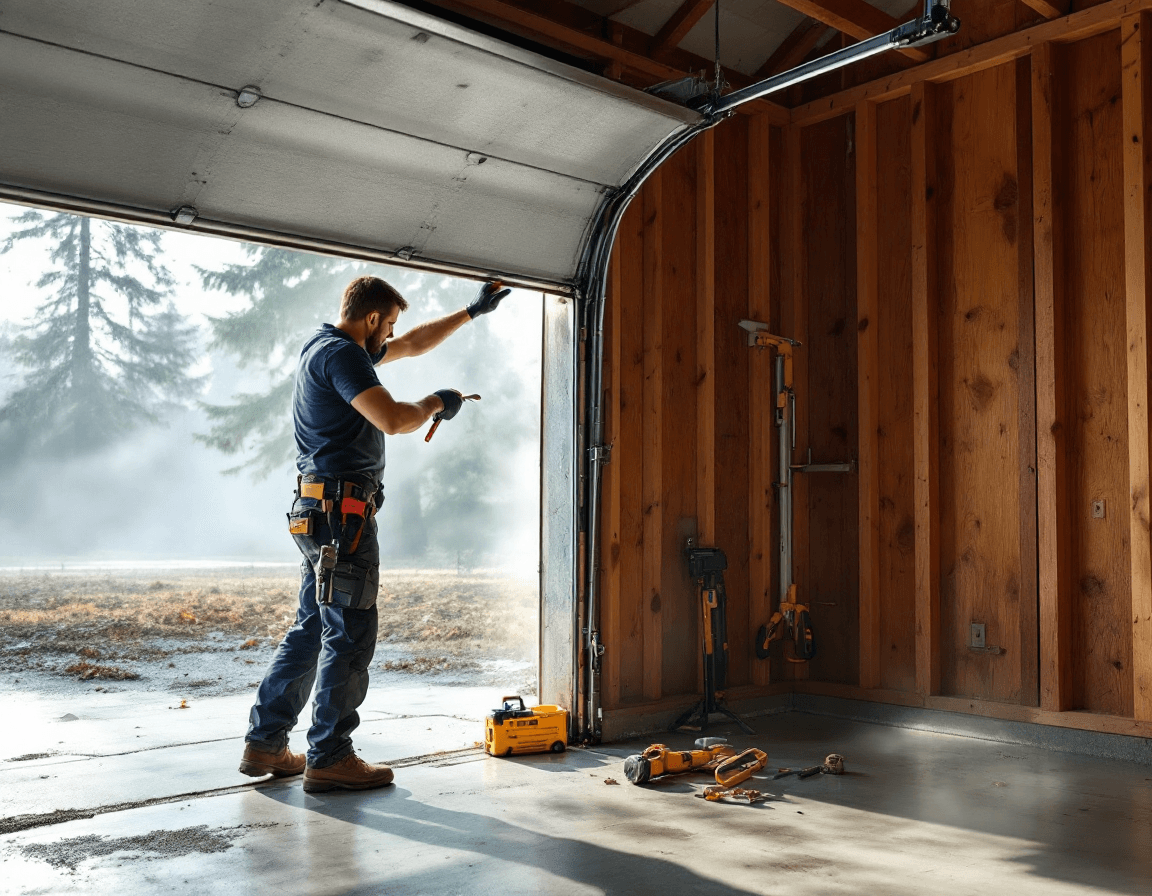
Off-track garage door repair in Yarrow Point, WA is one of the most common calls we take from homeowners along the Lake Washington shoreline, and it is rarely a problem that starts out as a disaster. A door usually shows a small sign first: a faint scraping sound, a slight lean at the bottom corner, or a gap that wasn't there last month. Left alone, that small shift can turn into a door that has popped a roller out of its channel or jammed halfway up in the opening. Our technicians serve Yarrow Point and the surrounding King County communities from the (888) 799-3819 dispatch line, and we know that a door stuck open at the end of a long day is stressful no matter how well the neighborhood looks from the street.
Yarrow Point is a small residential town of generous lots, long driveways, and homes that often have two or three bays. Many of those garages were built with heavier insulated doors, wide steel or wood-composite panels, and tracks that have been bumped by years of cars, bikes, kayak trailers, and lawn equipment. The town's position on the east side of Lake Washington means that moisture, wind, and temperature swings all play a role in how a door behaves. Realigning a crooked door, re-seating a roller, or straightening a bent track section is work that depends on understanding both the hardware and the local conditions that wear it down.
This page explains what usually causes a door to leave its track, how to recognize the early warning signs, what you can safely check yourself, and when you should stop and call a licensed professional. It also covers what off-track repairs typically cost, which for most jobs falls between $125 and $400, and what pushes a specific repair toward the higher or lower end of that range. Everything here is written from the perspective of a technician who spends a lot of time in Yarrow Point and nearby neighborhoods, so the advice reflects real conditions rather than a generic checklist.
Why Lake-Side Garages Around Yarrow Point Shift Off Their Tracks
Garages near the Lake Washington shoreline live in a more humid environment than many inland parts of the Seattle area. Damp air rolls in off the water in the fall and winter, and it can keep the garage interior cool and moist for days at a time. Steel tracks and roller hardware are especially vulnerable to this, and light surface rust on the track's inner curve can make rollers catch and stutter instead of gliding smoothly. Over time, that friction pulls the door slightly out of square, and a door that is out of square is far more likely to ride up out of the track when someone pulls the release cord or when the opener starts under load.
Wind is another factor that homeowners in Yarrow Point notice during winter storms. Gusts coming across open water can push against a large door panel, especially on a two-car or three-car bay with a wide opening. When a door flexes under wind pressure, the top rollers can be pushed sideways within the track, and repeated flexing loosens the bracket bolts that hold the track to the framing. Many of the off-track calls we receive after a windy weekend are really the result of cumulative movement that finally reached a tipping point.
Older homes in the area also bring their own character to this problem. Garages built several decades ago sometimes have framing that has settled or shifted, which means the tracks were originally installed on a slightly different plane than the current floor and wall. A door that has been working fine for years can start to bind when a small change in the structure pulls one side of the track out of level. Recognizing that a door's problem may be rooted in the building itself, not only the door, is an important part of getting a repair that holds.
Reading the Warning Signs Before a Door Fully Derails
Most off-track doors give notice well before the full event. The first signs are usually sounds and movements rather than visible damage, and they tend to show up when the door is opening or closing slowly. Paying attention to those early signals can save you from a stuck door and often keeps the repair simpler and less expensive. Common early warnings include:
- A grinding, popping, or clicking noise at one side of the door during travel
- The door appearing to lean or sit lower on one corner when it is closed
- A visible gap between the top or side seal and the track along one edge
- One roller that looks shiny or flattened while the others look normal
- The door pausing briefly or jerking as it passes a certain point in the track
- Sections of the track that look bent, dented, or pulled away from the wall bracket
If you notice any of these signs, avoid using the opener repeatedly to force the door through its full cycle. Each run puts the door's weight on the track in a slightly different way, and a door that is already partially out of alignment can ride further out of the channel with every pass. Taking the time to observe the movement and note exactly where it happens gives a technician much better information when they arrive, and it helps determine whether the problem is a simple roller issue or a larger track alignment concern.
Some homeowners wait because the door still closes. That is understandable, but a door that closes with difficulty is still a door under stress. If one side is binding, the opener motor is working harder, the door panels can be flexed or cracked at the joints, and the springs on that side may be carrying an uneven load. Addressing an alignment issue while it is still a minor noise or a small gap is almost always more affordable than waiting until the door is off the track entirely.
What Happens Inside the Track When a Roller Pops Free
To understand why a door comes off its track, it helps to picture what the rollers are doing. Each section of the door is connected to the next by hinges, and each side of the door carries a set of rollers that run inside the vertical and horizontal track channels. The vertical track guides the door up and down the side of the opening, while the horizontal track carries the door overhead into the ceiling space. A roller that pops out of its channel leaves that edge of the door unsupported, and the weight shifts onto the remaining rollers and hinges, which can pull them out of the track too.
Rollers can come out for several reasons. The most common is a worn or cracked roller stem, where the small axle has worn enough that the roller wobbles and eventually slips over the track lip. Nylon rollers that have been exposed to heat and cold cycles can become brittle, and a roller with a chipped wheel may ride unevenly and jump the track. In other cases, the roller is perfectly fine but the track has been slightly bent, creating a gap just wide enough for the roller to escape under load.
When a roller is popped out, the door should not be forced in either direction. Pulling hard on the door or attempting to lift it while one side is out of the track can strain the hinges, bend the panels, and sometimes separate the track further from the wall. The safe approach is to stop, keep people and vehicles clear of the opening, and call for service. A technician will check whether the track is still intact, inspect the roller and stem, and determine whether the door can be returned to the track without disturbing the springs or cables.
A Homeowner's Safe First Look (Without Touching the Springs)
There are a few things a homeowner can check safely before calling for service, and they can help you describe the problem accurately. Start with a visual look at the door from inside the garage with the opener disconnected and the door closed. Note whether the gap around the top and sides looks even, whether the bottom seal is sitting flat on the floor, and whether any track sections look bent or loose. Take a few photos from several angles, because they can be useful when you describe the situation to a dispatcher and they help a technician prepare the right parts.
A few cautions are essential. Do not attempt to adjust, loosen, or remove any torsion spring, extension spring, or cable. These components store a large amount of energy, and even a door that looks lightly loaded can release that energy suddenly if a fitting slips. Do not stand under a door that is partially open or hanging, and do not climb on the door panels to push them back into the track. Keep children and pets away from the area, and make sure the opener is unplugged or the breaker is off before anyone reaches near the track.
Some tasks are reasonably within a careful homeowner's reach. Clearing debris from the track, wiping away grit, and checking that the bottom bracket bolts are snug can all be done safely with the door closed and the opener disconnected. Confirming that the door's manual release cord hangs freely and is not tangled is another simple check. These steps will not solve a true off-track problem, but they can rule out a few common contributing causes and help the technician focus on the real issue faster.
Vehicle Strikes and Bent Track Sections on Tight Driveways
Many Yarrow Point driveways are wide and well-built, but garage openings are still a place where a moment of distraction can cause a lot of damage. A vehicle backing out too quickly, a delivery truck making a tight turn, or a trailer with a swinging hitch can strike the lower panels or the track sections near the floor. Even a glancing impact can bend a track several inches out of line, and that bend can cause the rollers to hit a ridge every time the door passes that point. The result is often a door that works for a few cycles and then jams.
After a vehicle strike, look carefully at the track for kinks, flattened sections, or places where the track has pulled away from its wall bracket. Check the door panels for dents or cracked sections, especially near the hinges, because a strong impact can transfer force into the panel joints. If the door has been struck and it now moves unevenly, do not continue running the opener to test it. Repeated movement across a damaged track section can tear fasteners out of the framing and turn a bent-track repair into a larger rebuild.
Track damage from impacts is usually more involved than a simple adjustment, and it is one of the places where the price range can move significantly. A single bent section may be straightened or replaced, while a track that has been wrenched away from the header may require new brackets and reinforcement in the framing. A technician will assess whether the track is salvageable, whether the door panels need attention, and whether the springs or cables were affected by the force of the impact. If the door was struck hard enough to bend the top section, the spring system should be inspected by a licensed professional before the door is used again.
Straightening Track Without Replacing the Whole Run
A common question from homeowners is whether a bent track has to be replaced entirely. In many cases, it does not. Track sections are made of steel that can be carefully straightened, and a skilled technician can often correct a moderate bend using hand tools and a controlled approach that restores the channel's original shape. The goal is to bring the track back to a true vertical or horizontal line, with consistent spacing from the door's rollers, so that the door travels freely without binding at any point.
Straightening is not always the right answer, however. If the track has a sharp crease, a split seam, or a section that has been flattened so severely that the channel no longer holds its shape, replacement is usually more reliable. Track that has been repaired several times, or that shows heavy rust at the bends, can lose strength in ways that are hard to judge by eye. In those situations, replacing only the damaged section, rather than the full run, is often a practical middle ground, provided the new section is matched to the existing track's gauge and profile.
Alignment does not end with the track itself. The brackets that hold the track to the wall and ceiling must also be secure and level, and the door must be checked to confirm it sits square in the opening. A technician will usually verify that the vertical tracks are plumb, the horizontal tracks slope gently toward the back of the garage as designed, and the door closes evenly at the bottom. Skipping any of these checks can leave the door vulnerable to derailing again within a few weeks.
Roller Replacement, Re-Seating, and Why Nylon Versus Steel Matters
When a roller has popped out but the track and door are still in good condition, the repair is often as straightforward as re-seating the roller and replacing any worn components. Re-seating means guiding the roller back into the track channel, checking that it rides smoothly, and confirming that the door's hinges and panels are aligned. A technician will also inspect the roller stem for wear, since a loose stem is one of the most common reasons a roller leaves the track a second time.
Roller material is a choice that homeowners often ask about. Steel rollers are durable and handle heavy doors well, but they can be noisier and may need lubrication more often. Nylon rollers run quietly and resist corrosion, which makes them popular in humid areas near the lake, but they can crack or flatten over time if they are overloaded or exposed to prolonged heat. Sealed-bearing rollers offer smoother operation and longer life, and they are often a good fit for heavier doors. The right choice depends on the door's weight, how often it is used, and whether the garage experiences the temperature and moisture swings common in this part of King County.
Whatever roller type is installed, the stems and bearings should be matched to the track's dimensions. A roller that is too large or too small for its channel will not seat properly, and it will likely pop out under normal use. When a technician replaces rollers, they will typically check that the new rollers sit fully in the channel, turn freely by hand, and do not rub against the track's edges. Testing the door through a full cycle, with careful observation, confirms that the repair has addressed the real cause.
What a Typical Off-Track Visit Costs and What Shapes the Price
For most off-track repairs in the Yarrow Point area, the typical cost falls between $125 and $400. That range generally covers realigning a door that has come partly out of the track, re-seating one or more rollers, or straightening a modestly bent track section. The final figure depends on how many components are involved, how accessible the track is, and whether the repair stays within the track and rollers or extends into the springs, cables, or framing.
Several factors can push a job toward the upper end of the range. A door that is heavily damaged, a track that requires replacement sections, or a repair that involves reinforcing the wall brackets will require more time and parts. Multiple rollers that need replacement, or a door that has been struck by a vehicle and has panel damage, also increase the scope. Garages with tight clearances or lift tracks that are difficult to reach can require extra labor, which is reflected in the final estimate.
A lower-end repair is more likely when the problem is limited to a single roller, a loose bracket, or a track section that can be straightened without removing the door. In those cases, the technician can often complete the work in one visit and leave the door operating smoothly. Every job is different, and the technician's on-site assessment is what determines the exact scope. If a repair reveals a need for spring work or cable replacement, that will be quoted separately, since those tasks involve significant safety considerations.
Keeping Tracks Aligned Through Wet Western Washington Winters
Prevention is not glamorous, but it is one of the most effective ways to keep a garage door running true in this region. Western Washington winters bring long stretches of rain, cool temperatures, and humidity that can keep metal components damp. A few simple habits can make a real difference. Wiping the tracks down with a dry cloth every few months removes grit and moisture before rust can form. Keeping the track free of leaves, mud, and debris prevents rollers from catching on obstructions.
Lubrication matters, but it must be the right kind. A light silicone-based or lithium-based lubricant applied to the roller stems and hinge pivots can reduce friction without attracting dirt the way heavy grease does. Avoid spraying lubricant inside the track's channel, where it can collect grime and turn into a sticky film that slows the rollers. Apply a small amount to the moving parts, operate the door a few times, and wipe away any excess.
Seasonal checks are also worthwhile. In late fall, before the wettest months, walk the perimeter of the door and look for gaps, loose fasteners, or areas where the weatherstripping has pulled away. Check that the bottom bracket bolts and track brackets are tight, and make sure the door's sensors are clean and aligned if your opener uses them, since a misaligned sensor can cause the door to reverse unexpectedly and stress the track. Catching small issues early keeps them from becoming off-track emergencies on a stormy evening.
When a Derailed Door Means Calling a Pro Right Away
Some off-track situations should be handled by a licensed technician immediately, without waiting to see whether the problem resolves itself. If the door has come completely off the track, if a spring has visibly broken or separated, or if a cable is frayed, slipped, or hanging loose, the door should be treated as hazardous. Do not attempt to lift or push the door back into place, and keep everyone away from the opening until a professional arrives. A door under tension can move unpredictably, and a cable that snaps can cause serious injury.
Spring and cable work is always a job for a licensed professional. Torsion springs and extension springs are under high tension, and their adjustment or replacement requires specialized tools and training. Our technicians are licensed, bonded, and insured, and they approach spring-related work with the caution it demands. If a derailment has involved the springs, expect the technician to inspect the entire spring system and the cable drums before returning the door to service, even if the immediate fix seems simple.
Calling for help early is the smartest choice whenever a door is out of its track, partly derailed, or noticeably damaged after an impact. Describe what you are seeing, note whether the door is open or closed, and mention any sounds or movement you noticed before the problem appeared. That information helps the dispatcher send the right technician with the right equipment, and it keeps the repair focused on what the door actually needs. For off-track repair in Yarrow Point, WA, a prompt call and a careful inspection are the most reliable path back to a quiet, level, dependable garage door.
If your door has come off its track, is binding, or shows a gap, bent track, or roller damage, call Seattle Garage Door Fix at (888) 799-3819. Our licensed, bonded, and insured team serves Yarrow Point and the surrounding King County communities, and we will assess the problem, explain the repair in plain terms, and give you a clear estimate before any work begins. Please do not attempt spring or cable work yourself, and keep the door closed or clear of the opening until a technician arrives.