
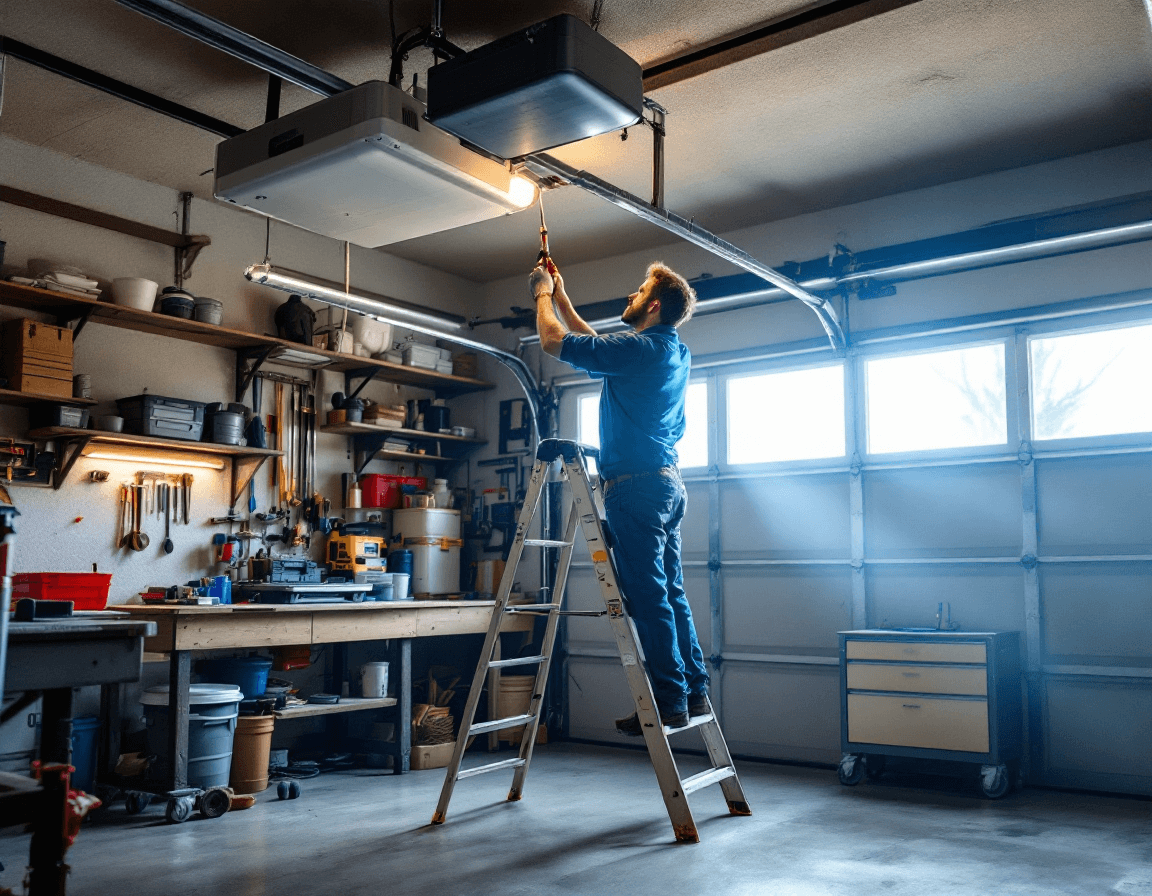
Garage Door Opener Repair in Yarrow Point, WA is a service many homeowners on the eastern shore of Lake Washington end up needing sooner than they expect. The combination of damp air off the water, long winter stretches of rain, and the heavy daily use that a family garage sees can wear down an opener's motor, gears, and electronics faster than the manufacturer's brochure suggests. When the door stops responding, the trouble is usually one of a handful of causes, and most of them can be identified with a careful inspection rather than a guess.
This page explains the most common opener problems we see across Yarrow Point, what each symptom usually means, and what a technician checks before recommending a fix. We work on every major opener brand, including chain drive, belt drive, and screw drive units, along with the circuit boards, travel-limit settings, safety sensors, and wall controls that connect them. Our goal here is to help you describe the problem accurately when you call, understand what a repair typically costs, and know which tasks belong to a trained professional.
Nothing below is meant to replace an on-site inspection. Every garage is different, and an opener that looks like it has failed may only need a sensor realigned or a limit adjusted. If you are unsure what you are hearing or seeing, a licensed technician can narrow the cause quickly and tell you honestly whether a repair is worth making. Read on for a walkthrough of the issues that bring Yarrow Point homeowners to us most often.
Lake-Edge Humidity and What It Does to a Yarrow Point Opener
Yarrow Point sits close enough to Lake Washington that many garages hold a steady dampness that drier inland areas never experience. Moisture settles into the opener head, gets into wiring connectors, and works its way into the logic board housing over several seasons. Over time it can corrode contacts, cause small circuits to behave erratically, and make plastic components brittle after repeated temperature swings. Homes with mature evergreens overhead also collect needles and debris that can trap moisture against the opener housing and the garage door tracks.
Winter in Western Washington brings long stretches of overcast, wet weather, and the damp cold can cause lubricants to thicken slightly, especially on older units. An opener that ran smoothly in August may hesitate on a cold January morning, then seem fine by afternoon. Technicians often hear the same story from homeowners: the door works until it doesn't, then works again once the garage warms up. That pattern points toward moisture, lubricant condition, or a loose connection rather than a single catastrophic failure.
Good habits make a real difference here. Keep the garage ventilated when possible, avoid storing damp yard equipment directly beneath the opener, and wipe down the track and rail area a couple of times each year. A tidy, dry environment will not prevent every failure, but it slows the wear that sets up the problems described below.
When the Motor Hums but the Door Refuses to Move
One of the most puzzling symptoms is an opener that clearly receives power and makes noise, yet the door stays put or only shudders. Many homeowners assume the motor has burned out, but that is only one possibility. The motor may be running against a disconnected drive, a stripped gear, a slipped trolley, or a door that has become heavy because of a spring or track problem. The sound alone rarely tells the whole story.
A technician typically starts by disconnecting the opener from the door using the emergency release cord and moving the door by hand. If the door lifts and lowers freely, the problem likely lies within the opener's drive system, such as a worn coupling or a trolley that has lost its engagement. If the door resists or feels unevenly weighted, the trouble may involve the springs, cables, or track, and that work must go to a licensed professional because spring tension is extremely dangerous to handle without the right tools and training.
Motor-related repairs can range from simple reseating of a connector to replacing a motor assembly. Many of the calls we receive in Yarrow Point turn out to be a combination of worn drive components and a neglected track that has been binding for months. We would rather identify the real cause first than replace parts that do not solve the underlying issue.
Dead Remotes and Wall Buttons That Stop Responding
When the remote fails to open the door, the first instinct is to replace the batteries, and that step is worth taking. Beyond batteries, several issues can prevent a signal from reaching the receiver, including interference from nearby electronics, a damaged antenna wire, or a receiver board that has lost sensitivity. Wall buttons and keypads can fail for entirely different reasons, such as worn switch contacts, a cut low-voltage wire, or water intrusion through a poorly sealed wall plate.
A practical way to narrow the problem is to test each control separately. If the remote fails but the wall button works, the receiver or remote programming is the likely culprit. If the wall button also fails, the issue probably sits in the wiring or the opener's control board. Homes with newer smart-home integrations sometimes experience additional complications when a hub or app loses its connection, which can look like a failed opener when the hardware is actually fine.
Reprogramming a remote is usually straightforward, but it should be done according to your opener manufacturer's procedure, which varies by brand and model. Our technicians carry common replacement remotes and keypads and can confirm compatibility on site. Please avoid repeatedly pressing a stuck button, since that can overheat contacts and make the fault worse.
Decoding the Blinking Light Pattern on the Opener
Many openers use the lights on the motor housing to communicate with the homeowner. A steady light is generally normal, but a light that flashes in a repeating sequence is often trying to tell you something specific. Each manufacturer uses its own code, so the exact meaning depends on the brand and model. Looking up the pattern in your owner's manual or on the manufacturer's support site is the fastest first step.
Common causes of flashing sequences include an obstructed safety sensor, a sensor wire that has become disconnected or damaged, a door that has exceeded its travel limits, or a control board that has logged an error after a power interruption. Sensors in particular are sensitive to sunlight, dust, and lake-humidity fogging on the lenses, so they sometimes report a problem when the path is simply blocked by a leaf, a spiderweb, or a bicycle leaning against the wall. A gentle wipe and a check of alignment often clears these faults.
Please write down the exact pattern before calling. The number of flashes, the timing between them, and whether the lights were blinking when the door was moving or sitting idle all help us diagnose the issue faster. A clear description can save a return visit and often lets us bring the right replacement part on the first trip.
Stripped Gears and the Grinding Sound From the Opener Head
A grinding, clicking, or metallic scraping sound coming from the opener head usually points to worn or stripped gears. Most residential openers use nylon or steel gears that gradually lose their teeth after years of stopping and starting. Once a gear slips, the motor may spin with a harsh noise while the door moves unevenly or not at all. Continuing to run a damaged gear can break additional parts, which turns a modest repair into a larger one.
Gear issues often develop slowly. Homeowners may notice the door taking a little longer to open, a slight jerk at the start of travel, or a sound that seems to appear only on cold mornings. A technician will check the gear housing, the drive shaft, and the clutch or coupling to determine whether the gear itself has failed or whether a related component is causing extra strain. Lubrication can help some units, but a stripped gear generally needs replacement rather than a coating of grease.
Please stop using the opener if you hear grinding that intensifies or is accompanied by a burning smell. Disconnect power at the unit, use the emergency release if needed, and call for service. Continued operation with a damaged gear can cause the motor to overheat and can leave the door in a position that is difficult to secure safely.
Doors That Stop Short, Reverse, or Won't Fully Close
A door that closes most of the way and then reverses immediately is one of the most common complaints we hear across Yarrow Point. The opener may be reacting to the safety reversal system, which is designed to protect people and objects. When the door reverses on its own, something in the path has triggered the response: an obstruction, a misaligned photo-eye sensor, a worn track roller, or an improperly set close-force limit. Less often, the travel limits have drifted so the opener believes the door has reached its bottom position too early.
The first step is simple. Clear the path under the door, check that nothing is resting on the floor or the tracks, and confirm that both sensor eyes face each other squarely and sit at a consistent height. Sensors mounted higher or lower than the manufacturer recommends often fail to line up after bumps or after a neighbor's accidental nudge against the wall. A technician can verify sensor alignment, test the reversal force, and adjust the travel limits within the manufacturer's specifications.
Repeated reversals should not be ignored. A door that reverses unexpectedly can stress the opener and the spring system, and it can trap a vehicle or a person if the sensors are not working correctly. Until the cause is found, use the wall button only when you can see the entire door path and nobody is in the way.
Chain, Belt, and the Slack That Signals Trouble
Chain-drive and belt-drive openers rely on tension to transfer the motor's force smoothly to the door. A chain that sags, jumps the sprocket, or comes off the rail will prevent the door from moving even though the motor is working. Belt-drive systems are quieter and popular in newer homes, but their belts can also stretch, slip, or separate from pulleys over time. Either way, an opener that suddenly feels loose or makes a rattling noise has likely lost its tension somewhere in the system.
Slack in the chain or belt can come from normal wear, from a door that has become heavier because of a spring problem, or from an installation that was never tightened to specification. Technicians inspect the rail, the trolley, the mounting brackets, and the tensioning hardware to determine what is pulling the system out of alignment. Adjusting tension is generally a modest repair, but if a chain has jumped, a technician should also check the sprocket and the rail for damage before reconnecting everything.
Please keep in mind that adjusting spring tension or working on cables is a different category of work. Those components store enormous force, and mistakes can cause serious injury. Our guidance is to let a licensed, insured technician handle any spring or cable task, while homeowners limit their own work to observation and to disconnecting the opener safely when required.
Intermittent Operation That Seems to Come and Go
Perhaps the most frustrating symptom is an opener that works reliably for a week and then fails for no obvious reason. Intermittent problems often involve loose wiring, a failing capacitor or relay, a worn limit switch, or a control board that overheats during long cycles. Lake-area humidity can also play a role by affecting connectors and sensor contacts, so the opener may behave normally in dry weather and misbehave during a damp spell.
Diagnosing intermittent faults takes patience. A technician will usually inspect every visible connection, check the power supply, review any stored error codes, and test the sensors and controls under the same conditions where the problem appears. Sometimes the opener must be observed through several operating cycles before the fault shows itself. Keeping a simple log of when the door acts up, including the weather, time of day, and what the door was doing, can speed up the process considerably.
Do not assume that an occasional glitch will disappear on its own. Intermittent faults usually progress, and a door that fails unexpectedly may leave a vehicle or a family member stranded. Early attention is typically less expensive than a complete failure during a busy weekday morning.
Brand Coverage and What a Full Opener Diagnosis Includes
Our technicians work with the major opener brands sold in the Seattle area, including chain, belt, and screw-drive models from manufacturers that are common in both older and newer Yarrow Point homes. Brand knowledge matters because limit adjustments, sensor wiring, and error codes differ from one system to another. When we arrive, we confirm the make and model, check whether replacement parts are still available, and explain your options clearly before starting any work.
A thorough diagnosis generally covers the same core areas regardless of brand. The list below outlines the checks we typically perform during a standard opener service visit.
- Confirm power supply, outlet condition, and any surge protection on the circuit
- Inspect the motor, gear assembly, drive shaft, and coupling for wear or damage
- Check chain or belt tension, sprocket condition, and rail alignment
- Test the photo-eye sensors, their wiring, and their mounting height
- Verify travel-limit settings and close-force reversal behavior
- Review wall controls, keypads, and remote receiver performance
- Read any blinking light patterns or stored error codes on the control board
Some repairs can be completed in a single visit, while others require ordering a part and returning later. We will tell you which category your repair falls into before you agree to anything.
Typical Pricing, Safety Limits, and Choosing the Right Technician
Most opener repairs we perform fall within a range of $95 to $375, depending on the brand, the parts required, and how much diagnostic time the problem demands. Simple adjustments and sensor realignment usually sit at the lower end of that range, while motor replacement, gear replacement, or control board work tends to sit higher. Every quote should identify what is included, so you know whether the price covers parts, labor, and any follow-up visit needed to complete the repair.
Safety boundaries are important. Homeowners should never attempt spring replacement, cable repair, or any task that requires winding or unwinding spring tension. These jobs involve stored energy that can cause severe injury, and they must be done by a licensed professional with the proper equipment. Opener troubleshooting that involves disconnecting power, checking sensors, and cleaning the lenses is generally safe for homeowners when done carefully, but if you are uncertain, stop and call.
When choosing a technician in Yarrow Point or the surrounding King County communities, look for a company that is licensed, bonded, and insured, and that can explain its work in plain language. A reputable provider will give you a clear diagnosis, identify what can wait and what should be fixed immediately, and respect your decision about the next step. Ask whether the technician will test the full system after the repair, since a door that works on a quick test may still need travel and reversal settings verified under load.
If your Yarrow Point garage door opener is motor-running but not moving, ignoring the remote, grinding, reversing, flashing lights, slipping a chain or belt, or cycling in and out of service, do not wait for it to fail completely. Call Seattle Garage Door Fix at (888) 799-3819 to schedule an inspection with a licensed, bonded, and insured technician who works on every major opener brand. We will explain what we find, give you a clear price before any work begins, and make sure your door closes and opens safely for the household that depends on it every day.