
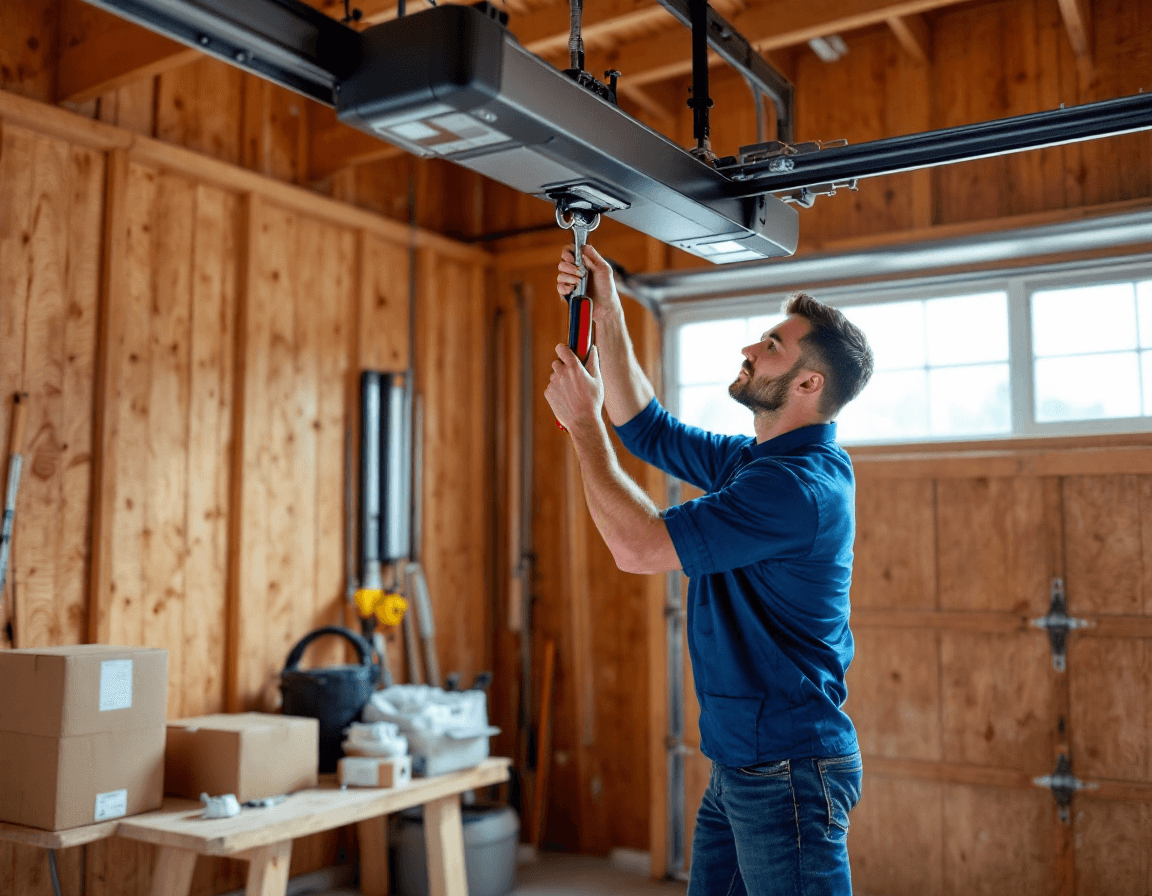
Garage Door Opener Installation & Replacement in Yarrow Point, WA is one of the most practical upgrades a household can make, and it matters more here than in many places. Yarrow Point sits on the Lake Washington shoreline in King County, where homes are set on generous lots and garages often see daily use from families with multiple vehicles, boats, and kayaks. An opener that groans, stalls, or quits without warning turns a simple morning routine into a frustration, and in a neighborhood where people expect things to work smoothly, that frustration adds up quickly. Seattle Garage Door Fix installs belt-drive, chain-drive, and wall-mount openers, including smart models with Wi-Fi control and battery backup, for homeowners on the Eastside and across Western Washington.
The moist, mild climate around the lake shapes how openers wear over time. Winter brings long stretches of drizzle and damp air, with occasional hard frosts when temperatures dip overnight, and those swings can slow down an aging motor and expose weak wiring connections. Summer is usually drier and cooler than many visitors expect, but the lake breeze and wet winters still keep metal parts prone to corrosion if the garage is not well ventilated. Knowing these conditions helps you decide whether a repair will hold or whether a replacement will serve you better for the next decade or more.
This page walks through the decisions that most Yarrow Point homeowners face: recognizing when an opener has reached the end of its useful life, choosing the right drive style for your garage, understanding why rolling-code security matters, weighing smart features and battery backup, and understanding what a professional installation involves. You will also find a realistic look at pricing, which runs from $275 to $650 installed depending on the opener model you select. Throughout, we point out where a licensed professional should handle the work, especially anything involving springs or cables.
Why Yarrow Point Garages Put Extra Demands on an Opener
Many homes in this part of King County were built with two- or three-car garages, and the doors on them tend to be heavier than standard single-car doors. Larger wood or insulated steel doors, glass-panel designs popular with lakefront architecture, and doors with decorative hardware all add weight that the opener has to lift and lower every time you use it. An opener that was sized for a lighter door may run hot, labor under the load, or strip its gears much sooner than expected. When we inspect these systems, the mismatch between door weight and opener capacity is one of the first things we check.
Lakefront properties also bring a particular kind of humidity into the garage. Moisture from the lake and from wet winter air can settle on the rail, the trolley, and the electrical connections inside the opener housing. Over several seasons, that moisture encourages surface rust on steel hardware and oxidation on contacts, which in turn causes intermittent operation that is hard to diagnose. A unit that works perfectly in July may act up in January, and homeowners often blame the remote or the wall button when the real issue is corrosion inside the motor housing.
Finally, many residents here use the garage as more than a parking space. It may hold bicycles, paddleboards, tools, and seasonal equipment, and it often serves as the main entrance to the house. That daily traffic means an opener is cycled far more often than the manufacturer's average household, and that wear accumulates. Choosing a model with the right duty rating and features for your household is a smart step, not an upsell.
Reading the Warning Signs Your Opener Is Finished
Not every noisy or slow opener needs to be replaced, but some symptoms point firmly toward the end of its service life. Most homeowners notice a change gradually, so it helps to know what to watch for before the unit fails completely. A few of the most common signs are listed below.
- The opener is noticeably louder than it used to be, with grinding, rattling, or a high-pitched whine during travel.
- The door starts and stops unevenly, pauses partway through its cycle, or reverses for no obvious reason.
- The motor runs hot, emits a burning smell, or trips the breaker when it is used repeatedly.
- The remote works only when you stand close to the door, or the range has dropped significantly over the past year.
- The unit has no rolling-code security and still uses a fixed code that can be copied with inexpensive equipment.
- Replacement parts are no longer available for the model, or the cost of a repair approaches the price of a new opener.
When several of these symptoms appear together, replacement is usually the more sensible path. A single repair on a worn opener often leads to another failure within months, and that cycle costs more over time than a single installation. We are happy to diagnose the problem and explain your options honestly, including cases where a simple repair is all that is needed.
Choosing Between Belt-Drive, Chain-Drive, and Wall-Mount Openers
Selecting the right drive style is the most important early decision in any opener replacement. Belt-drive openers use a reinforced rubber or polymer belt to move the trolley along the rail, which runs much more quietly than a metal chain. For homes where the garage shares a wall with a bedroom, a home office, or a living area above the garage, belt-drive is usually the best choice for everyday comfort. The trade-off is that belts cost a little more to replace if they fail, and the drive system needs to be kept clear of excess heat and debris.
Chain-drive openers are robust, simpler in design, and generally less expensive up front. They handle heavy doors well and are a dependable option for detached garages or spaces where noise is less of a concern. The metal chain does produce more sound during operation, so if your garage is attached to living space, you should weigh that against the lower purchase price. Chain-drive units also require periodic lubrication and tension checks, which is a straightforward maintenance task but one that is easy to forget.
Wall-mount openers attach to the wall beside the door rather than to the ceiling, which can be the right answer when the garage ceiling is low, when the door has an unusual layout, or when the ceiling has limited structural support. Wall-mount installation keeps the rail and motor out of overhead space, leaving room for storage racks or a lift. Not every door style is compatible with a wall-mount setup, so the decision should be based on an on-site inspection of your door, headroom, and wall construction rather than on appearance alone.
Rolling-Code Security and Why Older Remotes Should Be Retired
Older garage door openers often rely on fixed-code remotes, meaning the signal sent from the remote is the same every time you press the button. A person with a simple code-capture device can record that signal and replay it later to open the door. This is not a theoretical concern in a neighborhood where cars and homes are valuable and where people often leave garage door remotes clipped to sun visors. Rolling-code technology changes the signal with every use, so a captured code cannot be reused.
Upgrading from a fixed-code system to a rolling-code opener is one of the most meaningful security improvements you can make in a single afternoon. A new unit also allows you to erase old remotes and keypad codes that may still be in circulation, which many homeowners forget to do after moving in or after a relative has moved out. We recommend reviewing every remote, keypad, and wall control associated with your system during any replacement, and deleting any that you no longer use.
Security is also tied to the rest of the installation. Working safety sensors, properly aligned photo-eyes, and a correctly set auto-reverse feature are part of a secure and safe system, not separate extras. A new opener should always be tested for reversing force and sensor function before the technician leaves your home, and you should be able to watch that test happen.
Smart Wi-Fi and myQ Control Without the Headaches
Smart garage door control has become a popular feature for busy households, and many modern openers support Wi-Fi connectivity and compatible smartphone apps such as myQ. These systems let you check whether the door is closed, open the door remotely when a delivery arrives, or receive an alert if the door has been left open. For families whose schedules shift often or who travel regularly, that peace of mind can be genuinely useful. The key is to set the system up correctly so that convenience does not come at the cost of security.
A good smart setup starts with a stable home network. Openers that connect through Wi-Fi need a reliable signal in the garage, and large, older homes with thick walls or detached garages may need a repeater or a different placement for the unit's network hardware. We confirm signal strength during the installation visit and talk through any adjustments you might need. We also help you create a strong account password and enable two-step verification where the app allows it, since a connected door is only as secure as the account that controls it.
Smart features should be selected for how you actually live, not for the longest feature list. Some homeowners want only remote status checks and a phone notification, while others prefer scheduled closing or integration with home automation hubs. Our technicians will walk through the options available on each model and recommend the one that matches your routine without adding complexity you will never use.
Battery Backup for Power Outages and Winter Storms
Puget Sound winters bring windstorms that can knock out power for hours or, in more serious events, for days. When the power is off, a standard opener cannot lift or lower the door, which can trap you inside the garage or leave the car exposed in an emergency. Battery backup openers solve this by keeping a sealed battery charged so the door can still operate for several cycles during an outage. This is a practical feature for any home that depends on the garage as its main way in and out.
Battery backup is not a single product, and capabilities vary by model and by the battery installed. Some units are designed to run a limited number of openings after power is lost, while others provide a more extended reserve and automatically switch on when the grid fails. Battery life depends on how often the door is used and on the ambient temperature, since cold conditions reduce battery performance. Batteries also age and should be checked and replaced according to the manufacturer's recommendations rather than left in place indefinitely.
Keep in mind that a battery backup does not replace the manual release cord, which every opener includes and which you should test at least once a year. Knowing how to disengage the trolley and lift the door by hand is an important skill, especially for households with children or older residents. When a power outage occurs, make sure you are aware of how the door behaves on backup power, and never attempt to force a door that is not moving freely.
What Happens During a Professional Installation Visit
A professional opener installation follows a clear sequence, and understanding it helps you know what to expect. The technician begins by inspecting the existing door, the opener location, the mounting surface, and the electrical outlet, checking for anything that could affect safe operation. Doors that are out of balance, have damaged tracks, or show signs of worn hardware are noted at this stage, since an opener cannot compensate for a door that is mechanically unsound.
Next, the old unit is removed and the new opener is assembled, mounted, and connected to the door through the appropriate arm and trolley configuration. The technician then sets the travel limits so the door opens and closes fully without overrunning the track, and programs the force settings to match the door's weight. Safety reversal sensors are mounted and aligned, and the photo-eyes are tested for proper response. This is also the point where the new remotes are programmed, old codes are cleared, and smart features are connected if you have chosen them.
Finally, the installation is tested through multiple full cycles, including reversal tests and manual release checks. We walk through the operation with you, show you how the battery backup indicator works if your unit has one, and explain basic care steps you can take between service visits. A good installation ends with you feeling confident using the system, not with a stack of paperwork you do not understand.
Pricing From $275 to $650 and What Shapes the Final Number
Opener installation pricing in the Yarrow Point area typically falls between $275 and $650 installed, depending on the model you choose. Entry-level belt-drive and chain-drive units sit at the lower end of that range, while smart models with Wi-Fi, myQ compatibility, and battery backup are priced higher. Wall-mount installations can also shift the total, since they may require additional mounting hardware or a different layout than a ceiling-mount system. The most accurate figure always comes from a site visit, because door weight, headroom, and wiring conditions all influence the final setup.
Several factors shape the final cost beyond the opener itself. The condition of the door hardware, the need for a new outlet or wiring correction, and the presence of an older, incompatible wall control can each add to the total. We think it is better to explain these possibilities upfront than to surprise you with charges later, so we will identify them during the estimate and tell you which items are required for safe operation and which are optional upgrades. You should always feel free to ask why a particular part is recommended.
When comparing estimates, look at what is included. A low quote that omits safety sensor alignment, programming of your remotes, or a full operational test may not be the bargain it appears to be. A complete installation should leave your system working correctly, safely, and with clear instructions for everyday use.
Repair or Replace: A Practical Decision Guide
Deciding whether to repair or replace an opener comes down to age, the nature of the failure, and the cost of parts. If the opener is less than a decade old, has a common and inexpensive failure such as a worn sensor or a blown fuse, and otherwise runs smoothly, repair is often the sensible choice. If the unit is older, uses a fixed-code system, makes loud or erratic noises, or needs a major component such as the motor or logic board, replacement typically offers better value.
Consider how long you plan to stay in your home as well. A homeowner who expects to live in the house for many more years will benefit from a modern opener with current security features and a longer manufacturer support window. Someone preparing to sell may find that an updated opener with smart features and battery backup is a visible improvement that buyers notice, even though it is a modest line item in a larger project. In either case, the goal is a system you can rely on without worrying about the next failure.
We would rather give you an honest recommendation than push a replacement you do not need. If a repair will restore reliable operation at a fair cost and the rest of the system is in good shape, we will say so. If a replacement is the better long-term decision, we will explain the reasons clearly so you can compare the options with confidence.
Keeping a New Opener Quiet and Reliable Through Northwest Seasons
A new opener performs best when it receives simple, consistent care. Once or twice a year, check that the door opens and closes smoothly by hand when disconnected, and look for signs of dirt, debris, or corrosion along the rail and trolley. Wipe the rail clean, inspect the safety sensors for cobwebs or dust, and confirm that the photo-eyes are aligned and free of obstruction. These steps take only a few minutes and can prevent many of the common complaints that lead to service calls.
Lubrication needs vary by drive type. Chain-drive systems typically benefit from periodic lubrication of the chain according to the manufacturer's guidance, while belt-drive units generally require much less attention but should still be kept free of dust and kept away from excessive heat. Avoid spraying general-purpose lubricants onto the motor or electrical components, since these can attract dirt and damage sensitive parts. If you are unsure which product to use, ask the technician during your installation visit.
Seasonal humidity deserves attention too. Keep the garage ventilated where possible, and check weatherstripping at the bottom of the door, since gaps can let moisture and cold air in. Good airflow and sealing protect the opener's electronics and reduce the rust that can slowly affect hardware around the lake. A little attention each season keeps a new opener quiet, dependable, and secure for years.
When Spring and Cable Work Belongs With a Licensed Professional
Garage door springs and cables store a great deal of energy, and working on them without the right training and tools can cause serious injury. Torsion springs and extension springs are under high tension even when the door appears to be at rest, and a sudden release can cause severe harm. For this reason, any work involving spring replacement, cable repair, drum adjustment, or door balancing should be handled exclusively by a licensed, insured professional. Homeowners should never attempt these repairs on their own, regardless of how simple a video makes them appear.
Opener installation is different from spring work, but the two often happen during the same service visit. A technician replacing an opener may discover that the door is out of balance, that a cable is frayed, or that a spring shows signs of fatigue. When that happens, the opener work can often proceed safely, but the spring or cable repair should be scheduled with a qualified technician and completed before the door is put back into regular use. We will tell you clearly when a problem falls into this category and never ask you to handle it yourself.
If you notice the door sagging, lifting unevenly, or making a loud bang during operation, stop using it and call a licensed professional. Keeping the door disconnected from the opener until it is inspected is the safest approach. Your safety and your household's safety come first, and a short wait for proper service is always better than an avoidable injury.
Whether your current opener is loud and unreliable, lacks rolling-code security, or simply no longer keeps pace with how your household lives, Seattle Garage Door Fix is ready to help you choose and install the right system for your Yarrow Point home. Call (888) 799-3819 to schedule an inspection, ask about belt-drive, chain-drive, and wall-mount options, and get a clear estimate for your opener installation or replacement. Our team serves Yarrow Point and surrounding King County communities with licensed, bonded, and insured service you can count on.