
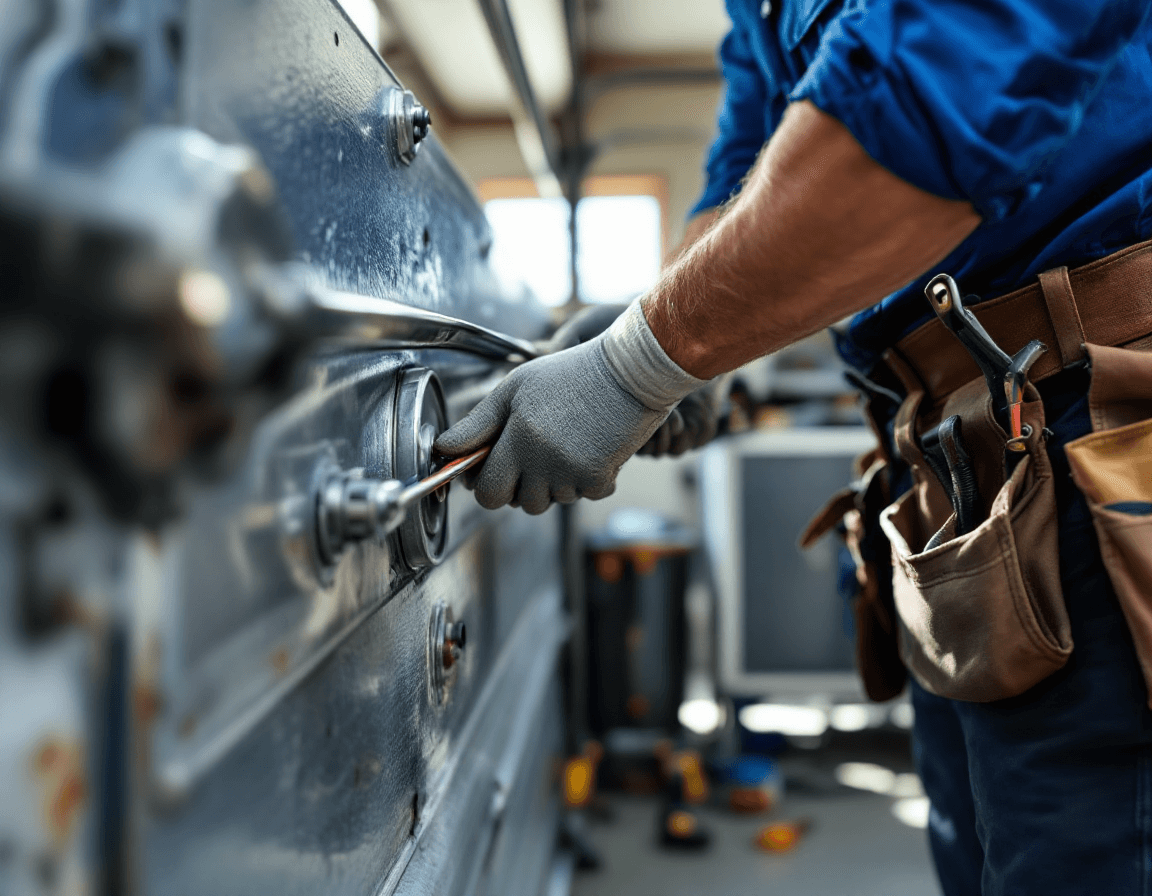
Garage door cable replacement in Clyde Hill, WA is one of the most common repairs we handle for homeowners on the hillside streets and larger lots around the village. A lift cable does a lot of work every time the door rises, and when one frays, rusts, or snaps, the door can drop, tilt, or jam in a way that makes the garage unusable and sometimes unsafe. Many Clyde Hill homes have two- or three-car garages with heavier doors, and those doors put more load on each cable than a single-car setup does. Knowing what is happening when a cable fails can help you decide when to call for help.
This page explains how lift cables work, what the warning signs look like, and why a broken cable is never a do-it-yourself job. It also covers the Pacific Northwest weather that wears down cables faster than many owners expect, what a typical cable replacement involves, and what you can expect to pay. Most cable replacements in our service area fall in the range of $110 to $300, depending on the door size, the parts needed, and whether the drum or the spring system also needs attention. Exact pricing always depends on an on-site inspection.
If your door is hanging crooked, has stopped in the middle of its travel, or made a loud bang followed by silence, the safest first step is to stop operating it and call a licensed technician. Phone (888) 799-3819 to reach our team. The sections below walk through what is likely going on inside that metal track, so you can describe the problem clearly and understand the repair when the technician explains it.
How Lift Cables Carry the Weight of a Clyde Hill Garage Door
Every standard sectional garage door relies on a pair of lift cables, one on each side, running from the bottom bracket of the bottom panel up over a pulley and wrapping around a drum mounted on the end of a torsion shaft. When the door opens, the drum winds the cable and the cable pulls the door upward along the track. The springs above the door, usually a torsion spring mounted on a shaft, store the energy that offsets most of the door's weight. The cable and drum keep both sides of the door moving together so the door rises level.
Because the cable is the link between the spring energy and the door panels, it is under constant tension whenever the door is closed. Cables are made of galvanized steel strands wound into a tight rope, and each strand is working hard every cycle. Over thousands of openings, small amounts of fatigue build up at the ends where the cable is crimped or swaged, and at the points where it passes over the pulley and around the drum. A cable can look intact from a distance and still have broken strands hidden inside the bundle.
Clyde Hill homes often use heavier insulated or carriage-style doors, particularly on double-width garages that were built or remodeled over the last few decades. Those panels weigh more than a basic steel door, so the cables and drums carry more load per cycle. When a cable is already worn, the extra weight can cause it to fail sooner than the owner expects. That is one reason we often recommend checking the entire cable and drum assembly whenever a cable is replaced, not just the single strand that snapped.
Early Warning Signs Your Cable Is Failing
Cables rarely fail without warning. In most cases, the door gives a few hints over days or weeks before the cable actually lets go. Paying attention to these changes can turn an emergency call into a scheduled visit. Here are the symptoms technicians hear about most often from homeowners:
- The door sits lower on one side than the other when it is closed, or the bottom seal pulls away at one corner.
- The door rises slightly crooked, with one edge lagging behind the other before it levels out.
- You notice fraying, loose wire ends, or a bristly appearance along a section of the cable.
- Rust-colored streaks or flaking appear near the drum, the pulley, or the cable ends.
- The door binds, shudders, or closes unevenly, especially in the last few feet.
Any one of these signs deserves attention. A door that has become crooked is putting uneven stress on the other cable, the drum, and the track rollers, so the problem can spread quickly. If you see frayed strands, do not wait for the cable to snap. A failed cable can release the door suddenly, and the spring may also be affected because the door's weight shifts onto other parts of the system.
Recognizing the Sound and Appearance of a Snapped Cable
A broken lift cable usually makes a distinct sound. Many owners describe a sharp crack or bang, sometimes louder than a car door closing, followed by the door dropping a few inches or stopping abruptly. In some cases the door slumps on one side while the other side stays partly raised. If you hear a loud snap while the door is moving, stop trying to open or close it and keep people and pets clear of the door.
Once the door is still, look at the tracks and the drum area from a safe distance. A snapped cable often hangs loose from the drum or lies in a loop near the bottom bracket. Sometimes the cable has come off the drum but remains attached at the bottom, which is a different problem that can look similar at first glance. In either case, the door is not stable, and it can move unexpectedly if someone bumps it or the remaining spring tension shifts.
Do not attempt to clamp the door, lift it by hand, or reattach the cable yourself. Garage doors are heavy, and the spring systems that balance them store enough energy to cause serious injury when they are released incorrectly. If the door has to be moved to get a car out, a licensed technician can secure it temporarily and tell you what to avoid until the repair is complete.
How Pacific Northwest Weather Affects Cables in the Hill Country
Western Washington's climate is hard on steel, even when the cables are galvanized. Our winters bring long stretches of drizzle, high humidity, and cold nights that keep moisture sitting on metal surfaces for days at a time. Clyde Hill's mature trees, including tall conifers and broadleaf maples, drop needles, sap, and debris into gutters and onto garage roofs, and some of that material ends up inside the door track, on the drum, and along the cable path. Moisture trapped with that debris accelerates rust.
Temperature swings matter too. A cold snap can make springs and cables stiffer, and a door that has been sluggish all winter may suddenly bind or jerk as the weather warms. Over time, repeated expansion and contraction can loosen fittings and fatigue steel strands. Homes in the surrounding hills may also see more wind exposure at the garage door, which can push panels against tracks and add side load to the cables.
Because of these conditions, cables in our area often show wear sooner than the manufacturer's rated lifespan suggests. We recommend that owners check the cables and drum at least once a year, ideally before the rainy season sets in, and after any particularly wet or freezing period. Rinsing debris out of the track and keeping the area around the door clear can slow the process, but it does not replace a proper inspection.
When a Cable Slips Off the Drum
A cable that has come off the drum is one of the most common problems we see in Clyde Hill garages. The usual cause is a door that has been dropped or forced, uneven tension between the two sides, or a worn drum groove that no longer holds the cable in place. When the cable slips off, the door often hangs lopsided, with one side lower than the other, and it may refuse to open smoothly.
Some owners try to fix this by pulling the cable back onto the drum while the door is up or by using a wrench on the spring. Both approaches are unsafe. The spring holds significant force even when it appears relaxed, and the drum can rotate suddenly when tension is applied or released. A technician working with the correct winding tools, safety bars, and the proper sequence can restore the cable without putting anyone at risk, and they can check whether the drum is damaged or whether the spring needs adjustment.
When we inspect a slipped cable, we also look at the pulley, the track alignment, and the bottom bracket. A cable that came off once is more likely to come off again if the underlying cause is not corrected. Addressing the root cause during the same visit is far less expensive than returning after a second failure.
What a Thorough Drum and Cable Service Involves
Cable replacement is often combined with drum service, and there are good reasons to do both at once. The drum is the part that receives the cable and turns the shaft as the door moves. Over time, the drum can develop worn grooves, cracks, or loose set screws. A worn drum can chew up a new cable quickly, so replacing only the cable may give the homeowner a shorter repair life than expected.
A proper service visit typically includes inspecting the cable ends and crimps, examining the drum for wear and alignment, checking set screws and bearings, testing door balance, and looking at the tracks and rollers for damage that could affect cable tension. The technician may also verify that the torsion spring is in good condition and that the door moves evenly from the bottom to the top of its travel. Any tangled or kinked sections of cable are removed and the new cable is routed correctly through the pulley.
Every step involves stored spring energy, and our technicians use the appropriate tools and procedures for it. Homeowners should not attempt these steps alone. The correct process protects both the technician and the household, and it ensures the door will operate evenly after the repair is complete.
Typical Costs for Cable Replacement in Clyde Hill
Most cable replacements in our service area fall between $110 and $300. The final price depends on several factors, including the door's size and weight, the type and gauge of cable required, whether the drum needs replacement, and whether additional components such as the pulley, bracket, or spring require work. A single-car door with a standard steel cable is generally at the lower end of that range. A heavier double-width door or a repair that includes drum service typically falls higher.
Pricing for cable work is best understood as a package rather than a single part. A technician who replaces a cable without checking the drum may leave a second failure waiting. Likewise, a repair that includes replacing a damaged drum or adjusting the spring will cost more but may prevent a repeat visit. We provide an estimate after inspecting the door, so you know what is involved before any work begins.
Homeowners sometimes ask whether they can save money by buying a cable and installing it themselves. We understand the appeal, but cable installation requires precise tension and the safe handling of springs. The savings rarely outweigh the risk of injury or further damage to the door, and an improperly installed cable can fail again quickly.
Choosing a Licensed Technician for Cable and Spring Work
Cable replacement is directly tied to spring safety, which is why we recommend hiring a licensed, bonded, and insured garage door professional. Ask any company you consider whether its technicians are trained in spring and cable work specifically, and whether the company carries liability and workers' compensation coverage. A reputable company will answer these questions directly and will not pressure you into a same-day decision without an inspection.
Local familiarity also helps. Technicians who regularly work in Clyde Hill and nearby neighborhoods see the same weather patterns, the same mix of older and newer home construction, and the same variety of garage door brands. That experience shapes how they inspect cables, how they prioritize repairs, and how they explain the options to homeowners who may be dealing with an unexpected breakdown.
When you call, describe what you have seen or heard, such as a loud snap, a crooked door, or a cable that has come off the drum. Let the technician know the door's approximate size and whether it is a single or double garage door. That information helps us arrive prepared with the right parts and tools.
Simple Habits That Extend the Life of Your Lift Cables
While cables eventually wear out, a few simple habits can help them last longer and give you earlier warning when something changes. Start by visually inspecting the cables from a safe distance every few months, looking for fraying, rust, or any section that appears darker or thinner than the rest. Make a note of anything unusual so you can mention it during a service call.
- Keep the tracks, rollers, and the area beneath the door free of leaves, pine needles, and gravel that can work into moving parts.
- Wipe down the cables and drum area during dry weather if they look dusty or dirty, and avoid spraying lubricant directly onto the cables themselves.
- Test the door's balance once a year by disconnecting the opener and lifting the door partway; it should stay roughly in place without drifting.
- Schedule a professional inspection before the rainy season, when moisture and debris are at their worst.
- Watch the door's movement and listen for new sounds, shuddering, or hesitation, and report changes promptly.
Lubrication matters, but it should be applied to the proper moving parts, such as the hinges, rollers, and bearings, and only with products suited to garage doors. Some homeowners apply oil to the cables, which can attract grit and does little to protect the strands. A technician can tell you exactly what to lubricate on your particular door.
Scheduling Your Clyde Hill Cable Repair
If your garage door has a broken or frayed cable, the best time to call is as soon as you notice a warning sign. Waiting until the door stops completely can turn a routine repair into a more involved service, and it may leave you without access to your vehicle or home in the meantime. Until a technician arrives, keep people and pets away from the door, use the side entrance if one is available, and avoid running the opener.
Our team can usually schedule an inspection quickly and will explain what they find before recommending any work. You will receive a clear estimate, and the technician will walk you through the repair so you understand what was replaced and why. For Clyde Hill homeowners, that clarity is often the difference between a quick fix and a repair that lasts for years.
If your door is crooked, has a cable that has snapped or come off the drum, or has started binding or closing unevenly, do not wait for the problem to get worse. Call Seattle Garage Door Fix at (888) 799-3819 to schedule a licensed technician for your Clyde Hill garage door cable replacement.