
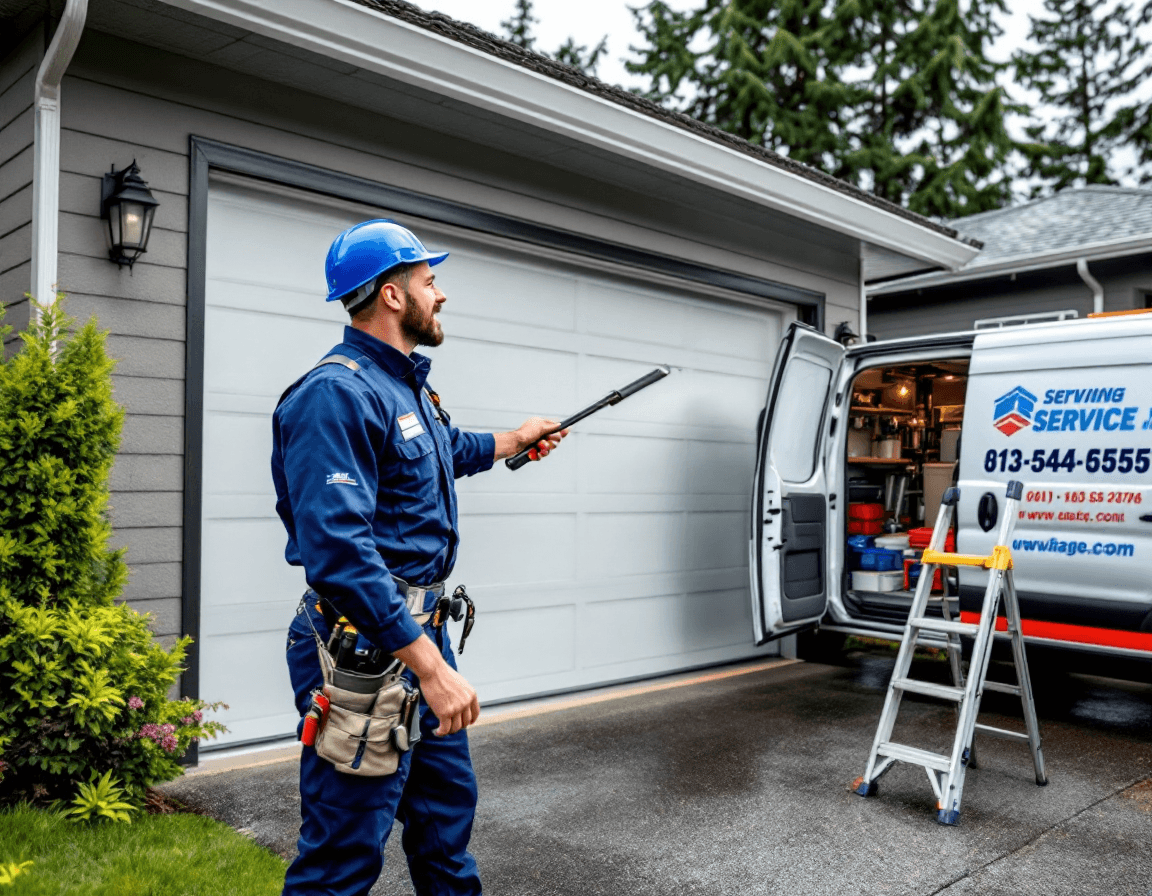
Garage door repair in Clyde Hill, WA calls for a different kind of attention than a typical suburban fix. The city's hillside driveways, mature evergreens, and long, wet Pacific Northwest winters all put extra stress on the door, opener, and tracks. When a door won't open, closes unevenly, or stops halfway, the cause is often a combination of age, moisture, and the way the door was installed on a sloped lot. Seattle Garage Door Fix serves Clyde Hill and the surrounding King County neighborhoods, and we see these patterns regularly.
This page walks through the problems homeowners in Clyde Hill most often report, what those symptoms usually mean, and what a repair typically involves. Some issues are simple adjustments you can check safely yourself, such as confirming a remote has battery power or that a sensor is clean. Others, especially anything involving springs, cables, or heavy panel components, belong in the hands of a licensed, insured technician. We have written this so you can match what you are seeing at home with the likely cause before you pick up the phone.
Many Clyde Hill homes have detached or side-entry garages, long driveways, and doors that have been in service for a decade or more. Those details matter because they shape which repairs make sense and how quickly a small problem can turn into a larger one. If you are unsure whether a noise or movement is normal, read the sections below and then call us at (888) 799-3819. We would rather answer a quick question than see a minor issue become an expensive emergency.
How Clyde Hill's Hillside Lots and Marine Air Affect Your Door
Clyde Hill is known for its rolling terrain, generous lots, and established landscaping, and those features influence how a garage door performs. Many driveways slope toward the garage, which means water, leaf litter, and fine grit tend to collect right at the threshold. Over time that debris works its way into the bottom roller tracks and the weatherstripping, creating friction that makes the door drag or stop. A door that moved fine in July can feel sluggish by December simply because the track has been catching wet debris all season.
Our marine air adds another layer. Moisture from the Puget Sound region keeps metal components damp for long stretches, especially on shaded sides of the house where the sun rarely reaches. Steel hinges, rollers, and torsion hardware can develop surface rust, and galvanized parts can lose their protective coating faster than homeowners expect. Rust does not usually fail overnight, but it steadily raises the force needed to move the door, which puts strain on the opener and the lift system.
Temperature swings are part of the picture too. A cold morning followed by a mild afternoon can cause lubricant to thicken and then loosen, and wood or composite panels can expand and contract enough to rub against weatherstripping. When you notice a problem that only appears on certain days, the weather is often the trigger rather than the root cause. A good repair plan accounts for both the mechanical fault and the environment the door has to live in.
When the Remote or Wall Button Does Nothing
A door that ignores both the remote and the wall button is one of the most common calls we receive, and it is often one of the easiest to diagnose. Start with the simplest checks: replace the remote battery, confirm the wall button is not stuck or unplugged, and make sure the opener's power light is on. Many homeowners discover that a remote battery has quietly died, or that a breaker tripped during a winter storm. Work through these items before assuming the opener itself has failed.
If the wall button lights up but the door still does not respond, the problem may be in the safety sensors, the control board, or the wiring between the two. Modern openers will not run if they detect a blocked photo-eye, so a dusty lens or a bumped sensor bracket can stop the door cold. Sensors on Clyde Hill driveways are also exposed to spray, leaves, and occasional wildlife, which can knock them out of alignment. Check that both sensor lights are steady and that nothing is in the path of the beam.
Here is a quick sequence to try before calling for service:
- Replace the batteries in every remote and keypad.
- Confirm the opener has power and the breaker has not tripped.
- Clean both safety sensor lenses and confirm they face each other.
- Check that the wall button is not stuck and is wired to the opener.
- Try the emergency release only to test whether the door moves manually, and then reconnect the opener before operating the door.
If none of these steps restore operation, the opener may need a board replacement, a logic reset, or a new receiver. A technician can test each component without guessing, which usually saves time and money.
A Door That Stops or Jams Halfway Up
A door that rises a few feet and then freezes is alarming, but it is also a signal the system is trying to tell you something. The opener may be detecting resistance from a track that is out of alignment, a roller that has popped out of its channel, or a panel that has shifted. In many cases the door has simply encountered something that exceeds its safety threshold, and it stops to protect people and property. Forcing it or repeatedly pressing the button can make the damage worse.
On older Clyde Hill homes, track alignment is a frequent culprit. Tracks can loosen from their mounting brackets over years of vibration, or they can be bumped by a vehicle or a stored item. Even a small gap between the track and the wall can cause a roller to catch at an angle. Look for a visible bend in the track, bolts that have backed out, or a roller sitting outside the channel. Do not attempt to bend track sections yourself, since they are under tension and can cause injury.
Jams can also come from the lift system. If one side of the door is noticeably heavier or higher than the other, the balance is off, and the opener is struggling to lift an unevenly loaded door. Cable drums, pulleys, and lift cables are under significant force, and any work on them should be left to a licensed professional. A safe diagnosis will include checking the track, the rollers, the balance, and the opener's force settings before anything is replaced.
Doors That Reverse Before Reaching the Floor
A door that starts to close and then reverses before it touches the ground is doing exactly what it was designed to do, but the trigger may not be obvious. The most common cause is a photo-eye sensor that is misaligned, dirty, or blocked. Sunlight shining directly into the sensor lens during a low winter sun angle can also confuse the receiver. Because Clyde Hill homes often have large windows and open sightlines, glare is more common here than in more enclosed neighborhoods.
The second common cause is the close-force setting. Openers include adjustable limits that determine how much resistance the door can encounter before reversing. If the door has gotten heavier over time, from rust, a worn bottom seal, or an accumulation of debris in the tracks, the opener may interpret normal friction as an obstruction. Adjusting these settings is possible, but it must be done carefully. Setting the force too high defeats the safety feature and creates a real hazard for children, pets, and anyone standing in the door's path.
If your door reverses in the middle of its travel with no obstruction, check the travel limits and the sensors first. If it reverses only at the very bottom, the bottom seal, the floor clearance, or the lowest limit setting may need attention. Repeated reversing can also wear components faster, so it is worth addressing early. A technician can test sensor response, confirm the force settings meet current safety standards, and verify that the door reverses correctly when it contacts an object.
Grinding, Squealing, and Banging Noises Explained
Garage doors are noisy by nature, but certain sounds signal specific problems. A high-pitched squeal usually points to dry or dirty rollers, hinges, or bearings. A grinding sound often means a gear inside the opener is worn or that a roller stem is failing. A sharp bang at the top or bottom of travel can indicate a loose bracket, a worn stop, or a track that is no longer seated properly. Listening carefully to when and where the sound occurs narrows the diagnosis considerably.
In Clyde Hill, where humidity and marine air are constant, lubrication breaks down faster than many homeowners expect. Rollers that were lubricated once and forgotten can collect grit, and the resulting friction makes the opener work harder. Lubricating the rollers, hinges, and track with a silicone-based or garage-door-specific product is a reasonable maintenance step, but avoid heavy grease or oil that attracts dust. Spray the moving parts, not the springs, and wipe away excess so debris does not stick.
Banging and rattling deserve prompt attention. A loose bracket or track can shift under load and eventually fail, and a loose opener mount can cause the entire unit to vibrate. If a noise is accompanied by a door that sits crooked, leans, or refuses to close fully, stop operating it and call for service. Continued use with a loose or damaged component can turn a modest repair into a replacement of the track, the rollers, or even the opener.
Crooked Travel and Panels That Look Out of Line
A door that rises or lowers at an angle, or that looks visibly crooked when closed, is telling you that one side is moving differently than the other. This can happen when a roller has come out of the track on one side, when a cable has slipped, or when one spring has weakened more than the other. Crooked travel is serious because it puts uneven stress on the entire assembly and can cause the door to bind, jam, or fall from the track.
Look at the top corners of the door when it is closed and compare the gap between the door and the header on each side. Check whether the bottom seal sits flat along the floor on both ends. If one side hangs lower, or if the panels show a visible bend, the door is likely out of square. Do not try to pull the door back into alignment by hand, since the spring tension can release suddenly and cause serious injury.
Off-track doors are a clear reason to stop using the door and schedule a repair right away. A door that has come off its tracks can drop unexpectedly, and attempting to lift it manually may not be safe. A licensed technician can realign the track, reseat rollers, check the lift components, and confirm the door is balanced before returning it to service. Until then, keep vehicles, children, and pets clear of the opening.
Sagging Sections, Visible Gaps, and Winter Weather Sealing
Sagging is one of the most overlooked issues on residential doors. A panel that dips in the middle or a section that no longer lines up with its neighbors often means a broken spring, a worn hinge, or a bent track. Over time the sag can cause gaps at the seals, which let rain, cold air, and pests into the garage. In a region as wet as ours, a poorly sealed door can also allow water to pool at the threshold and seep toward the house.
Visible gaps between panels, around the edges, or along the bottom are worth inspecting in daylight. Look for light coming through the door when it is closed, check the weatherstripping for cracks or flattening, and examine the bottom seal for tears or missing sections. Weatherstripping can be replaced as a relatively simple repair, but the replacement should match the door's profile so it seals correctly. Sealing gaps helps keep the garage warmer in winter and reduces the amount of moisture that can reach stored items and the opener.
Sagging sections can also indicate that the door is carrying more weight than it should. Heavy doors, particularly those with insulated panels, depend on balanced springs and sound hardware to stay level. If a spring is failing, the door may feel heavier to lift manually and may close unevenly. Spring replacement is a job for a licensed professional because the tension involved is extreme. Attempting it without the proper tools can cause severe injury.
Doors That Slam Shut or Move Too Fast
A door that drops quickly or slams onto the floor is more than an annoyance. It can damage the bottom seal, crack the panels, strain the opener, and create a serious injury risk if something is underneath. Fast closing is often caused by a failing spring that is no longer counterbalancing the door properly, or by a broken cable that allows the door to fall unchecked. Some openers also have a close-speed or force setting that can be adjusted, but a fast door usually signals a mechanical issue that the setting alone cannot fix.
If the door drops, do not try to catch it or hold it up by hand. Keep people and vehicles away from the opening and call for service. Sudden movement can be a sign that a cable has snapped or a drum has slipped, and those components store enough energy to cause harm. A technician can test the balance, inspect the cables and drums, and replace worn parts with properly matched components.
Doors that move too quickly in either direction may also have a worn opener drive or a damaged rail. Listen for a change in sound, watch for jerky starts and stops, and note whether the problem occurs only at certain points in the travel. Consistent speed and smooth operation depend on a balanced door, clean tracks, and an opener in good condition. Addressing the root cause keeps the system running predictably for years.
What a Typical Clyde Hill Repair Costs
Most residential garage door repairs we handle fall in the range of $95 to $450, depending on the problem, the parts needed, and the complexity of the job. Simple adjustments, sensor alignment, and minor track work usually sit at the lower end of that range. Roller replacement, opener diagnostics, and weatherstripping repairs fall in the middle, while spring replacement, cable work, and larger panel repairs typically cost more. The final price depends on what the technician finds, so a clear explanation before any work begins is important.
Several factors can shift the cost. Doors that are heavier because of insulation or decorative hardware may need additional balancing work. Older openers that are no longer supported by readily available parts can make a repair less economical than replacing the unit. Access can matter as well: a long driveway, a detached garage, or limited clearance around the opener can add time to the visit. Your technician should explain these factors so you can make an informed choice.
Homeowners often ask whether a repair is worth doing on an older door. The answer depends on the condition of the panels, the tracks, and the opener. If the door is structurally sound and the problem is a single worn component, repair is usually the practical choice. If multiple components are failing at once, or if the door is no longer balanced or safe, replacement may make more sense over the long run. An honest assessment should lay out both options without pressure.
Safety Limits: Work That Belongs to a Licensed Technician
Garage doors store a great deal of energy, and the springs and cables that lift them can cause severe injury if handled incorrectly. Torsion springs are under high tension even when the door appears closed, and extension springs can release suddenly when a cable or hook fails. For this reason, any work involving springs, cables, drums, or the lift system should be performed by a licensed, bonded, and insured professional. Attempting these repairs with improvised tools or without training is one of the most common ways homeowners get hurt.
There are still plenty of safe checks you can make yourself. You can clean sensor lenses, test the remote and wall button, inspect the weatherstripping, look for loose hardware you can see without tools, and observe how the door moves. You can also use the manual release to confirm whether the door moves freely, but you should disconnect the opener first and never stand under the door while testing. If anything looks bent, frayed, or out of place, stop and call for help.
Below is a short list of conditions that should prompt an immediate call rather than a DIY attempt:
- A visible spring that appears broken, stretched, or separated.
- A cable that is frayed, slack, or has come off its drum.
- A door that has dropped suddenly or will not stay put when raised.
- A track that is bent, cracked, or pulling away from the wall.
- Any smell of burning, sparking, or sounds of a motor struggling under load.
If you see any of these signs, keep the door closed, keep people and vehicles away, and contact us at (888) 799-3819 so a technician can assess the situation safely.
Scheduling a Garage Door Visit in Clyde Hill
When you call about a door problem in Clyde Hill, it helps to describe exactly what you are seeing. Note whether the door refuses to open, stops halfway, reverses early, makes a particular noise, looks crooked, or has sagged. Mention whether the remote, the wall button, or both are affected, and whether the problem began suddenly or developed over several weeks. These details help the technician prepare the right tools and parts before arriving.
It also helps to know how the door has been used recently. Did a storm, a cold snap, or a heavy item in the garage coincide with the change? Have you noticed debris at the threshold or water on the floor? Has anyone attempted a repair? Sharing this information gives the technician a clearer picture of what to inspect first and can reduce the time needed to reach a solution.
Our goal is to make the visit straightforward. We will explain the problem in plain language, outline the repair options with pricing, and proceed only with your approval. Because most residential repairs fall within the $95 to $450 range, you can plan for a clear and predictable cost. If you are dealing with a door that will not open, will not close, or has come off its tracks, call (888) 799-3819 today and let a licensed technician take a look at your Clyde Hill garage door.