
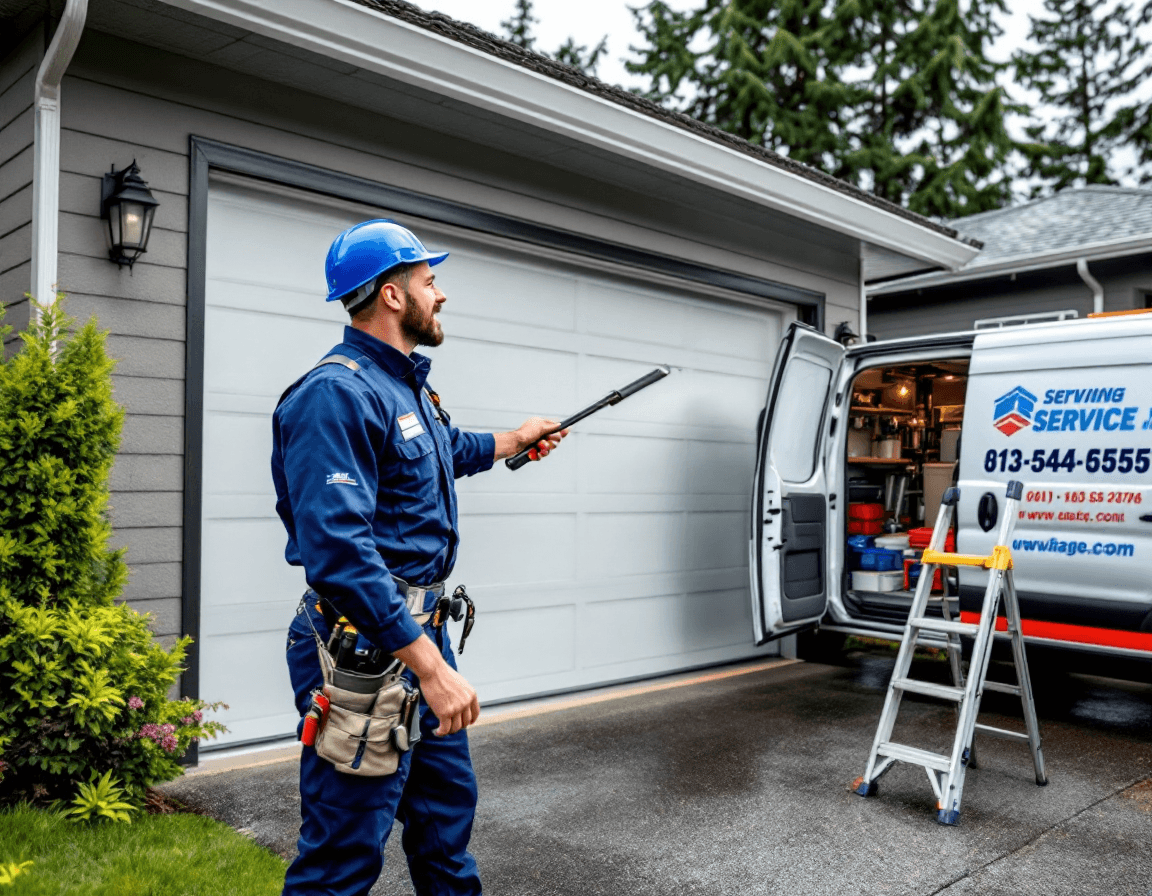
Garage door repair in Hunts Point, WA is a practical need for homeowners along the shoreline and on the wooded lots that climb away from the water. A door that won't open, closes unevenly, or stops halfway can leave a household stuck inside or unable to secure the car, boats, and tools stored in the garage. Seattle Garage Door Fix provides fast, reliable residential repair for these problems, and our technicians are licensed, bonded, and insured. Most residential repairs fall between $95 and $450, depending on the part involved and how much labor the job requires.
Hunts Point homes sit close to Lake Washington, and that location shapes how garage doors age. Moisture from the lake, damp mornings, and long stretches of gray Pacific Northwest weather all put steady stress on steel, wood, and hardware. Many homeowners notice that a door which worked smoothly through summer begins to complain once the autumn rains settle in. This guide explains the most common failures we see in the area, what each symptom usually means, and when it's time to call a professional rather than wait for the problem to grow.
If you're reading this because your door is currently giving you trouble, you don't need to read every section before picking up the phone. Call (888) 799-3819 and describe what you're seeing, and our team can help you judge how urgent the situation is. The sections below are arranged to help you match your symptoms to likely causes, so you can understand what a technician will be checking when they arrive.
How Waterfront Humidity and Lake Air Affect Your Garage Door
Garage doors near Lake Washington live with a different set of conditions than doors in drier parts of the state. The air carries more moisture for much of the year, and that moisture settles onto metal tracks, rollers, and hinges. Steel rusts more readily in damp air, and the thin film of corrosion that forms on a track can slow rollers and make the door drag. Wooden doors and wooden trim swell and shrink with the seasons, which can change how panels sit inside their frames.
Lakeside properties also collect organic debris. Fir needles, maple leaves, and the fine silt that drifts up from wet ground can work their way into the bottom seal and the track channels. Once that grit builds up, rollers that should glide begin to stutter, and the door can start to look as though it's leaning to one side. A technician who understands the local environment will often look for corrosion and debris first, because these conditions quietly set the stage for larger failures.
Temperature swings matter too. The Pacific Northwest rarely sees extreme cold, but mornings that drop near freezing and afternoons that warm up can cause metal to contract and expand. Lubricant that was fine in September can become thick and gummy by January, and then it no longer protects the moving parts the way it should. Regular attention to lubrication and drainage around the door opening is one of the simplest ways to prevent the wear that leads to emergency calls.
Early Warning Signs Worth Acting On Right Away
Most garage doors give some notice before they fail completely. The door may take a little longer to open, a rattle may appear at the top of the travel, or one side may seem to lag behind the other. Homeowners often dismiss these changes as normal wear, but in our experience they usually point to a specific component that is beginning to loosen, bend, or lose lubrication. Catching them early typically means a smaller repair and a lower bill.
A simple habit can help you notice changes. Once a month, watch the door go through a full open and close cycle, and pay attention to how it sounds and how it moves from one end of the track to the other. A door that once glided quietly but now hesitates, sways, or makes a new sound deserves a closer look. Keeping a short note of what you observe can also help a technician diagnose the issue faster when you call.
Some warning signs are more urgent than others. Any door that shows visible cable fraying, a panel that has separated, or a spring that looks stretched or broken should be treated as a safety concern, and the door should stay closed until a licensed technician can inspect it. Do not attempt to force a damaged door open, and keep children and pets away from the area while you arrange service.
- Door takes noticeably longer to open or close than it used to
- A new rattle, clunk, or squeal appears at the top or middle of the travel
- One side of the door sits lower or moves more slowly than the other
- Gaps have appeared at the bottom, sides, or top of the door when closed
- The opener motor runs but the door barely moves, or it stops and starts
- Visible rust, flaking paint, or debris is collecting inside the tracks
Doors That Reverse Before Reaching the Floor
One of the most common complaints we hear is a door that starts down, then immediately goes back up before it touches the ground. This behavior is usually a safety feature at work. Modern openers are designed to reverse when they sense an obstruction, and that sensing system depends on the photo-eye sensors mounted near the bottom of the door tracks. When the sensors cannot see each other clearly, or when they are misaligned, the opener assumes something is in the way and reverses.
Before calling for service, check the sensor lenses for dust, spider webs, or cobwebs, which are surprisingly common in garages near wooded lots. Look at the two sensors and confirm that the indicator lights on each are steady rather than blinking or dark. Gently nudge the sensors so they face each other directly, because even a small shift caused by a bump from a bicycle or a stored item can break the connection. If the lights are steady and the lenses are clean but the door still reverses, the issue may involve the opener's force settings or a problem with the wiring.
Reversing can also happen when the door encounters real resistance, such as a bent track, a warped section, or a roller that has seized. In those cases, the opener is responding correctly, and the underlying mechanical problem needs attention. Do not keep pressing the button repeatedly in an attempt to force the door down, because that can strain the opener and the door hardware. A technician will test the sensors, measure the force settings, and inspect the track alignment to find the cause.
Grinding, Squealing, and Banging Noises Explained
Noise is often the first clue that something inside the door system needs attention, but different sounds point to different problems. A high-pitched squeal usually indicates dry rollers or hinges that need lubrication, and this is especially common after a damp season when moisture has washed away earlier applications. A grinding noise, particularly one that comes from the center of the ceiling, can signal that the opener's drive gear or chain needs adjustment or replacement. A sharp bang at the start or end of travel often means a loose bracket, a worn bearing, or a roller that is not seating properly in the track.
Lubrication is a good first step for many noise complaints, but the type of lubricant matters. Use a silicone-based or lithium-based product designed for garage door components, and apply it sparingly to the rollers, hinges, and springs rather than to the tracks themselves. Heavy grease or oil on the track can collect dust and grit, which then creates the grinding sound you were trying to eliminate. Wipe away excess product and recheck the sound after the door has completed several cycles.
Banging and clunking deserve more caution. A loud bang from the top corners of the door may mean that a bracket has loosened or that a panel is flexing more than it should. Those components carry significant load, and a failing bracket can allow the door to fall unevenly. If you notice that the noise is accompanied by movement, visible gaps, or a door that looks out of square, schedule a repair visit promptly instead of waiting for the next storm to make the problem worse.
Crooked Doors, Sagging Panels, and Tracks Out of Line
A door that looks crooked, sits lower on one side, or shows a gap along one edge is telling you that the weight is not being distributed evenly. Garage doors are heavy, and each side depends on matching rollers, hinges, and springs to move in harmony. When one roller binds, or when a track shifts slightly out of its original position, the door can begin to lean and then sag under its own weight. Left alone, that pressure can bend the track further and damage the panels.
Visible gaps are another sign of trouble. A gap at the bottom of the door can let in water, leaves, and pests, while a gap along the side can let cold air and moisture into the garage. Check the weatherstripping along the bottom seal and the side jambs, because worn or torn seals can make a small alignment problem appear larger than it is. If the seal is intact but the gap persists, the track or the hinges may need adjustment.
Tracks deserve special attention in our service area. Lakeside humidity and the occasional bump from a vehicle or a stored item can knock a track out of its original plane. A track that is only slightly out of alignment may still allow the door to move, but it will wear rollers faster and can eventually cause the door to jump off its path. Technicians check track alignment with a level and measure the distance between the track and the door at several points, then correct the position and secure the mounting brackets. Adjusting tracks is a task for a trained professional, because the door is under spring tension and a misstep can cause serious injury.
Remote or Wall Button Not Responding
When your remote or wall button seems to do nothing, the cause is often simpler than it appears. Start with the remote itself by checking the battery, since weak batteries can allow the remote to show a light without transmitting a usable signal. Next, make sure the wall button is wired correctly and that it isn't stuck or damaged, because moisture and temperature changes can affect wall-mounted controls over time. If the door responds to one control but not the other, the problem is usually isolated to that device.
If every control fails, look at the opener itself. Check whether the opener's light is on and whether the motor makes any sound when you press the button. A completely silent opener may have lost power, which can happen if a breaker has tripped, an outlet has failed, or a surge has damaged the control board. Some openers also have a safety lockout that is triggered after repeated reversals, so it's worth checking whether the door recently reversed before the failure occurred.
Remote programming can also drift. After a power outage or a change in the opener, the remote may need to be reprogrammed with the opener's learn button. Consult the opener's manual for the correct procedure, and be aware that some older models use different methods. If you have tried the basic steps and the opener still does not respond, the control board, the logic board, or the motor may need repair, and a technician can test each component to isolate the fault.
When a Door Gets Stuck Halfway or Jams Mid-Travel
A door that stops partway through its travel is one of the most stressful situations for homeowners, especially when the car is inside or outside. A mid-travel stop often indicates a difference between the door's weight and the spring tension, or a mechanical obstruction in the track. It can also happen when the opener's force setting is too low for the current load, which may occur after a spring has weakened. In either case, the door is telling you that something is out of balance.
Before calling for help, check whether anything is obstructing the track, such as a stored item, a bike, or debris that has fallen into the channel. Make sure no one is standing near the door, and keep the area clear. Do not attempt to lift the door by hand or pull on the spring assembly, because the springs store a great deal of energy and can cause serious injury even when the door seems light. If the door is partially open and cannot be moved, it may be necessary to secure it in place until a technician can arrive.
Jams that happen once and clear themselves can still point to developing problems. A roller that is starting to fail may stick for a second and then free itself, and the door may appear to work normally afterward. Those intermittent problems are worth treating seriously, because they often escalate into a full jam during the next cold morning or wet week. A technician can inspect the rollers, the track, and the spring system to determine whether the jam is a symptom of a larger issue.
Doors That Slam Shut or Drop Too Quickly
A door that falls rapidly or slams into the closed position is not only startling but also hard on the hardware. Under normal conditions, the springs and the opener work together to control the speed of the door throughout its travel. When that control is lost, the door can accelerate downward and strike the floor with considerable force. This kind of movement can crack the bottom seal, bend the lower panel, or damage the opener's drive system.
A common cause is a spring that has weakened or broken, which removes the counterbalance that normally holds the door steady. Another cause is a cable or drum that has slipped or frayed, which can allow the door to drop unevenly. Worn rollers can also contribute, because they no longer guide the door smoothly down the track. Because springs and cables are under extreme tension, this category of repair must be handled by a licensed technician with the proper tools and training.
Do not try to test or repair the springs yourself. A broken spring can release suddenly and cause severe injury, and a cable that comes loose can whip with enough force to damage property or harm anyone nearby. If your door is dropping quickly, keep it closed, keep people and pets away from the opening, and call for service. Our technicians can inspect the springs, cables, and drums, replace the failed parts, and confirm that the door is balanced before returning it to normal use.
Typical Repair Visit Scope and Pricing in Hunts Point
Every repair begins with a diagnostic inspection, during which the technician checks the door's balance, the condition of the springs and cables, the track alignment, the rollers, the hinges, the opener, and the safety sensors. This inspection helps determine the root cause, which matters because a symptom such as a noisy door can be caused by several different components. The technician will explain what they found and provide a clear recommendation before any work begins. Most residential repairs fall between $95 and $450, depending on the parts required and the amount of labor involved.
Common repairs that fall within that range include sensor realignment or replacement, roller and hinge replacement, track adjustment, bottom seal replacement, opener adjustments, and remote programming. Larger jobs, such as replacing a spring pair or repairing a damaged panel, may run toward the upper end of the range or require additional scheduling. Because spring and cable work involves high tension, these repairs are always performed by licensed professionals, and we will never ask a homeowner to attempt them.
Hunts Point homeowners sometimes ask whether it makes sense to repair or replace an aging door. The answer depends on the door's condition, the cost of the needed repairs, and how long you plan to stay in the home. A technician can help you weigh those factors honestly. If a repair will restore reliable operation at a reasonable cost, it is often the better choice, but if the door has widespread rust, cracked panels, or multiple failing components, replacement may offer better long-term value.
Safe Checks You Can Do Yourself and What to Leave to Pros
There are several safe checks that homeowners can perform between service visits. Visually inspect the door once a month for visible gaps, loose hardware, and rust. Clean the photo-eye sensor lenses with a soft dry cloth, and confirm that their indicator lights are steady. Wipe the tracks gently to remove debris, but avoid spraying lubricant directly into the track channel. Test the auto-reverse feature by placing a flat object, such as a piece of wood, on the floor in the door's path and confirming that the door reverses upon contact.
Other tasks should be left to a professional. Never attempt to adjust, wind, or replace springs, cables, drums, or brackets. Do not disconnect the door from the opener while the door is under load, and do not attempt to remove panels or pry tracks. If you notice any sign of spring or cable damage, or if the door is out of balance, keep the door closed and call for service. Opener repairs involving the control board, motor, or internal wiring also belong with a qualified technician.
When in doubt, treat the situation as urgent and contact us. A short phone call can help you determine whether the problem can wait until the next scheduled visit or whether the door should remain closed until a technician arrives. Seattle Garage Door Fix serves Hunts Point and the surrounding communities, including ZIP code 98004, and our team is ready to diagnose your door, explain your options, and restore safe, smooth operation. Call (888) 799-3819 to schedule your repair today.