
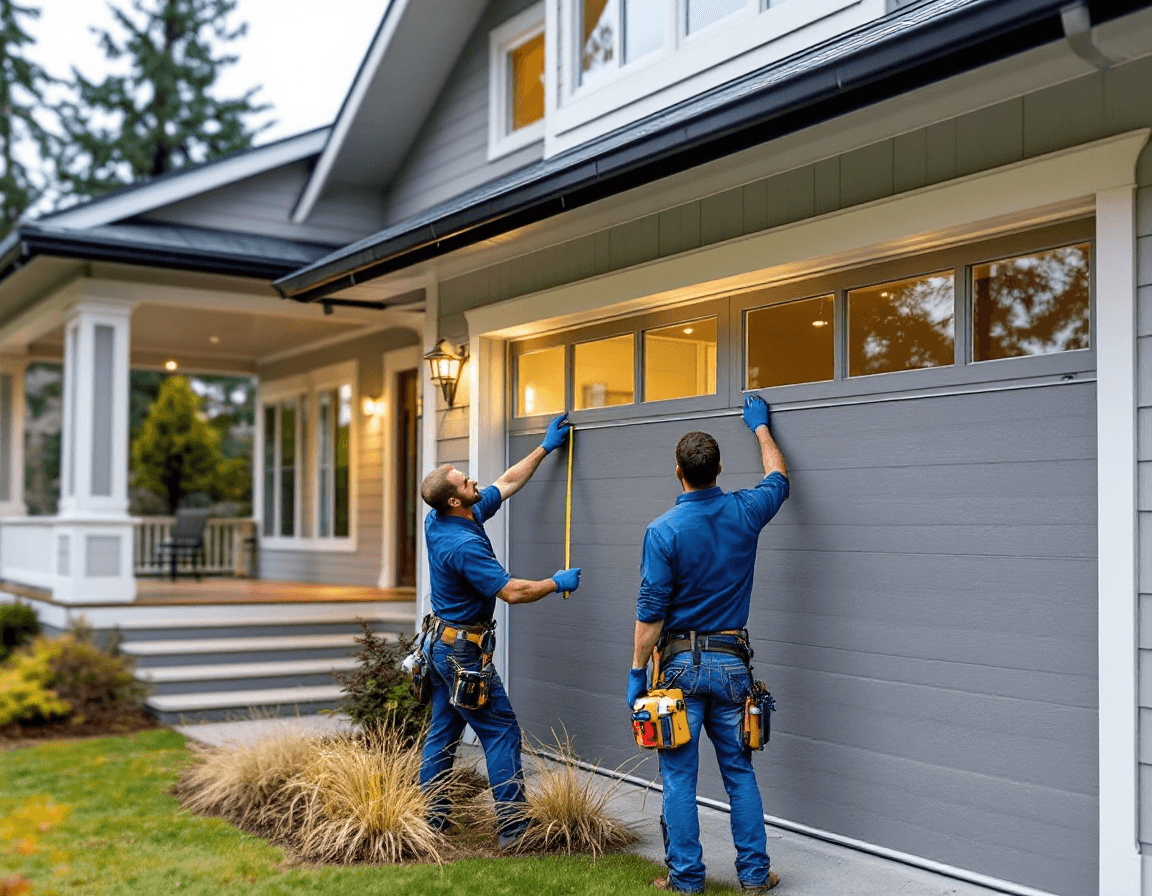
Garage Door Installation & Replacement in Hunts Point, WA is a decision many homeowners face sooner than they expected, usually after a spring spring-cable snap, a winter storm that bent a panel, or a remodel that makes the old door look out of place. Hunts Point sits on the Lake Washington shoreline, and the homes here range from older estates to newer rebuilds on generous lots. A garage door that works fine in a drier inland neighborhood can struggle with the damp, the wind off the water, and the freeze-thaw cycles that come with a Pacific Northwest winter. Replacing a door in this setting is about more than swapping one panel set for another.
Our technicians at Seattle Garage Door Fix install new single and double garage doors throughout the greater Seattle area, and we regularly work on the eastside waterfront and the surrounding Points Communities. We handle insulated steel, carriage-style, wood, glass, and aluminum doors, and we can help you sort out which one suits your home, your budget, and the way you use your garage. Installed pricing typically runs from about $950 to $3,800 and up, depending on the door type, the materials, the size of the opening, and the hardware you choose. We are licensed, bonded, and insured, and we will tell you plainly when a repair makes more sense than a replacement.
This guide walks through the practical questions Hunts Point homeowners ask most often. You will find notes on reading the signs that an old door is finished, on choosing materials that hold up near the lake, on insulation and energy use, and on what to expect from permitting and installation day. If you are weighing options right now, read through the sections that match your situation, and call us at (888) 799-3819 when you want a technician to look at your specific opening.
Why Waterfront Lots Change the Door Equation
Homes near the Hunts Point shoreline face a combination of conditions that many inland neighborhoods do not. Moisture hangs in the air for long stretches, especially during the cooler months when fog settles over the lake and the ground stays damp for days after a rain. Wind that funnels across open water can push against a large door face, which matters when you have a wide double-car opening. Even when a home is set back from the water, the moisture load on exterior materials is noticeably higher than it would be a few miles inland.
Those conditions shape which materials age well. Steel doors with a factory-applied, well-sealed finish handle humidity far better than doors with exposed raw edges or thin coatings that flake. Wood doors look beautiful on an estate-style home, but they require a disciplined maintenance schedule to keep moisture from swelling the panels and feeding rot along the bottom rail. Aluminum resists corrosion very well, though it dents more easily and is typically less insulating than foam-filled steel. Glass doors bring light and a modern feel, but the frames and seals need careful attention in a damp climate.
Lot layout matters too. Many Hunts Point properties have long driveways, sloped approaches, or garages positioned close to landscaping and retaining walls, and these details affect track clearance, slope compensation, and how a door opens without scraping. We look at the entire approach, not just the opening, before recommending a configuration. A door that fits the opening perfectly on paper can still cause trouble if the garage floor slopes toward the house or if a bumped curb limits the door's travel.
Reading the Warning Signs on an Aging Door
Most garage doors do not fail without warning. They give off signals for months, sometimes years, and homeowners who learn to recognize those signals often get to choose the timing of a replacement instead of being forced into an emergency call. The clearest signs include visible damage that cannot be fixed with a panel swap, repeated mechanical problems on the same aging system, and corrosion that has moved past the surface finish into the structural metal.
- Panels that are cracked, delaminated, or bowed in a way that does not straighten after a repair
- Rust that has eaten through the steel near the bottom seal, hinges, or track brackets, not just surface spotting
- Wood rot that has spread into multiple sections, especially along the bottom rail and at the corners of the frame
- Repeated failures of openers, rollers, or cables within a short period, suggesting the door itself is out of balance or worn out
- Gaps at the top, sides, or bottom that let in drafts, water, and pests despite new weatherstripping
Repairs remain the right answer in many cases. A single damaged section, a worn roller set, or a failed sensor can often be replaced at a fraction of the cost of a full door. When damage is spread across multiple components, however, the math changes quickly. If you are repairing a door every year or two and each visit costs a meaningful portion of a new door's price, a replacement can be the more economical choice over time.
Spring and cable work deserves special mention. Torsion springs and extension springs store a great deal of energy under tension, and they can cause serious injury if handled incorrectly. Do not attempt to wind, release, or replace springs yourself. Always have a licensed technician perform spring and cable work, and treat any broken spring as a reason to stop using the door until a professional has inspected it.
Insulated Steel, Wood, Glass, or Aluminum: Matching Material to Microclimate
Choosing a material is often the most consequential decision in a replacement, and it should follow from how you use the garage and how the door will be exposed. Insulated steel is the most common choice for good reason. A steel skin bonded to foam insulation gives a rigid, stable panel that resists dents, handles temperature swings well, and offers good thermal performance. Factory finishes are available in a range of colors and textures, including versions that mimic wood grain without the upkeep.
Wood doors remain the most visually striking option, and they suit homes where architecture and craftsmanship are the focus. A wood door can be paired with a carriage-style design or a clean, flush panel layout depending on the rest of the façade. The trade-off is maintenance. In a Lake Washington climate, a wood door needs periodic sealing or staining, careful attention to edges and the bottom rail, and prompt attention to any soft spots. We often recommend engineered or composite wood products for owners who love the look but want less upkeep.
Glass and aluminum options bring a different character. Frosted or clear glass panels admit natural light into the garage and can make a modest space feel open and modern. Aluminum frames with glass inserts are light, resist corrosion, and suit contemporary homes. Keep in mind that glass sections typically insulate less effectively than foam-filled steel, so if the garage is heated or shares a wall with living space, you may want to weigh that factor carefully. Ask about tinted or insulated glass options, and make sure the frame has proper seals to limit condensation.
Carriage-Style Looks That Suit Older Estates and Modern Remodels
Carriage-style doors have become one of the most requested designs for homes across the eastside, and they can transform the front elevation of a house without changing the rest of the structure. These doors use horizontal grooves and decorative hardware to mimic the swinging doors of historic carriage houses, and they come in both sectional and, in some cases, traditional hinged styles. On a home with a traditional or transitional exterior, a carriage door can tie the garage visually to the entry and landscaping.
The look is adaptable. Some homeowners choose faux hardware and hinges that appear to hold the panels in place, while others prefer a cleaner design with subtle grooves and a modern color. Window arrangements vary as well. Full-width windows create a lighter feel, while smaller top-row windows keep privacy and make the door appear more substantial. When a remodel adds a new wing or changes the roofline, we can help you choose a door that complements the new proportions rather than competing with them.
Carriage-style doors do add weight and cost, and the price range reflects that. The finish, glazing, hardware, and structural reinforcement all contribute to the final number. If you are only replacing a door because the old one has failed, you may find that a simpler panel design with a carriage-style pattern on the face provides most of the visual benefit at a lower price. We are happy to show samples and talk through options before you commit.
Energy Efficiency and Keeping Heat in During Lake Winters
Many homeowners ask about insulation first, and that is a sensible priority if the garage is heated, sits beneath living space, or shares a wall with the house. A door is one of the largest openings in the garage envelope, so its thermal performance affects comfort and energy use. Insulated steel doors with foam cores generally outperform single-layer doors by a wide margin, and the difference is most noticeable on cold, windy days when warm air escapes through gaps and the door surface itself.
Look for the manufacturer's rated insulation value on the door's specifications, and remember that these numbers describe the door panel in controlled conditions. Real-world performance depends on the quality of the weatherstripping, the bottom seal, the side and top seals, and how well the door sits in its tracks. A premium door installed with a poor seal will still leak air. We pay close attention to seal alignment during installation because a few millimeters of misalignment can undo much of the insulation benefit.
Thermal breaks in the frame, insulated garage-to-house doors, and sealed windows all contribute to overall efficiency. If you are building an addition or converting part of the garage into a workshop or living space, ask about insulation packages that match the rest of your envelope. We can also advise on whether a door upgrade should be coordinated with other improvements, such as adding insulation to the garage walls or sealing gaps around the header. Good results come from treating the garage as part of the whole house.
Measuring, Opening Types, and Headroom Checks
Accurate measurement is the foundation of a successful installation. Before a technician arrives, it helps to know the width and height of the opening, the depth of the garage, and the amount of clear space above the opening and along the sides. Those dimensions determine which track configurations will fit and whether a standard door will clear the ceiling and the opener. Older Hunts Point homes sometimes have non-standard framing, and an opening that looks standard from the driveway can vary by an inch or more from one side to the other.
- Width and height of the rough opening, measured at the top, middle, and bottom
- Headroom above the opening, including the clearance needed for the track and any ceiling-mounted opener
- Side room on each side of the opening, which affects the track layout and hardware choices
- Depth of the garage from the door to the back wall, including space for the door to travel when open
- Slope of the garage floor and driveway, which can affect how the door sits and how seals perform
Opening types also matter. A standard lift works for most garages with adequate headroom, while a high-lift or vertical-lift configuration suits garages with limited ceiling height but more usable space overhead. Low-headroom tracks are useful when the ceiling is tight, and rear-mount openers can be a good fit when the space above the door is limited. Each option has trade-offs in cost, noise, and appearance, and we walk through them during the estimate so you can make an informed choice.
Permits, HOA Considerations, and Working With Local Rules
Replacing a garage door often requires more paperwork than people expect, and the rules that apply depend on the specific jurisdiction, the scope of the work, and whether the change affects the structure or the exterior appearance. In some cases a simple like-for-like replacement needs no permit, while a change in opening size, a structural modification, or a new electrical connection for an opener may require review. Before scheduling work, contact the town of Hunts Point or the appropriate local authority to confirm what applies to your property.
Homeowners in planned communities or properties with architectural guidelines should also check for approval requirements. Exterior changes such as color, style, and hardware may need to be reviewed before installation, and submitting the request early can prevent delays. We are glad to provide product specifications, color samples, and photos that help with those approvals. Please keep in mind that we do not give legal advice about local codes; we can, however, share the technical details that most review boards and building departments ask about.
Inspections may be part of the process, particularly if electrical work or structural changes are involved. Our technicians build that into the schedule and can explain what the inspector will look for. When the paperwork is handled correctly from the start, the installation runs smoothly and the final result is easier to document for future resale or insurance purposes.
What a Typical Installation Day Looks Like
Knowing the sequence of an installation can make the day less stressful. Most replacements begin with a walkthrough to confirm measurements, check the existing track and springs, and review the final door selection. Once the order is placed, the new door is manufactured to your specifications and delivered for installation. Lead times vary by material and design, and custom finishes or glass options can add time, so it is wise to plan ahead rather than waiting until the old door has failed.
On installation day, the technician removes the old door and carefully inspects the opening, the header, and the surrounding framing. Any rot, rust, or structural weakness is noted and addressed before the new door goes in. The tracks are set level and plumb, the springs are sized and installed by a licensed professional, and the opener is connected and programmed if it is part of the project. The door is then tested through its full range of motion, and the seals and safety reversal system are checked carefully.
Before the crew leaves, we walk you through operation, safety features, and basic care. You will learn how to test the auto-reverse feature, how to use the manual release, and what to watch for in the months ahead. Keep the warranty paperwork and maintenance notes in a safe place, and schedule a follow-up check if you notice anything unusual. A new door should run smoothly and quietly, and any change in sound or movement is worth a call.
Budgeting From $950 to $3,800-Plus: What Drives the Price
Installed pricing for new garage doors typically ranges from about $950 to $3,800 and above, and the spread reflects real differences in materials, size, and features. A basic insulated steel single door in a standard size sits at the lower end of that range, while a large custom wood or glass double door with premium hardware and an upgraded opener will climb well past the midpoint. Installation complexity, removal of the old door, and any structural or electrical work also affect the final figure.
Size is one of the biggest drivers. A single-car door costs less than a double-car door, and oversized openings or non-standard dimensions add to the price. Material choice follows closely, with wood and high-end glass commanding a premium over insulated steel. Insulation rating, panel thickness, finish quality, and warranty length also influence cost. We provide written estimates that break down the door, hardware, labor, and any optional upgrades so you can compare options clearly.
Ask about what is included in the quote. Some estimates cover removal and disposal of the old door, new seals and weatherstripping, and opener installation, while others treat those as add-ons. A transparent estimate makes it easier to decide where to spend and where to save. In many cases, the least expensive door is not the best value, and a mid-range insulated model with a strong warranty can deliver better performance over the life of the home.
Protecting Your New Door Through Hunts Point Seasons
A new door will serve you well for many years, but a little attention each season extends its life considerably. The most useful habit is a simple visual check every few months. Look for gaps at the bottom seal, dirt or leaves building up in the track, signs of moisture around the frame, and any new scratches or dents in the panels. Catching these early keeps small issues from becoming costly repairs.
Lake-area homes benefit from rinsing the lower panels and the base of the door periodically, especially after winter storms or when salt and debris from the road accumulate. Keep vegetation trimmed back from the door so it does not trap moisture against the surface. Lubricate hinges, rollers, and tracks with the type of lubricant recommended by the manufacturer, and avoid heavy greases that attract dirt. Wood doors need their finish refreshed according to the schedule provided with the product.
Finally, keep the opener and safety systems in good working order. Test the auto-reverse feature monthly by placing a board on the floor in the door's path and confirming that the door reverses on contact. If the door does not respond correctly, stop using the opener and call for service. Spring and cable work should always be handled by a licensed technician, and any sign of imbalance, such as the door drifting when partially open, warrants prompt attention.
Choosing a Contractor for a Lakeside Garage Door Replacement
Selecting the right installer matters as much as selecting the right door. Look for a company that is licensed, bonded, and insured, that provides clear written estimates, and that explains the reasons behind its recommendations rather than pushing a single product. Ask who will perform the installation and whether they are trained in spring and cable work. A good technician will measure carefully, discuss the trade-offs of each material for your specific exposure, and be honest about whether a repair would serve you better.
Our team serves Hunts Point and dozens of nearby communities across Western Washington, and we bring that local experience to every project. We will look at your opening, your driveway, your exposure to moisture and wind, and your goals for the look and performance of the door. If you would like a clear picture of your options, we can schedule a visit, review samples, and provide an estimate with no obligation to proceed.
Whatever stage you are in, we are ready to help. A new garage door is one of the most visible upgrades a home can receive, and it should fit your property, your climate, and your budget. Call Seattle Garage Door Fix at (888) 799-3819 to talk through your options, schedule an in-home estimate, and get a door that will serve your Hunts Point home well for years to come.