
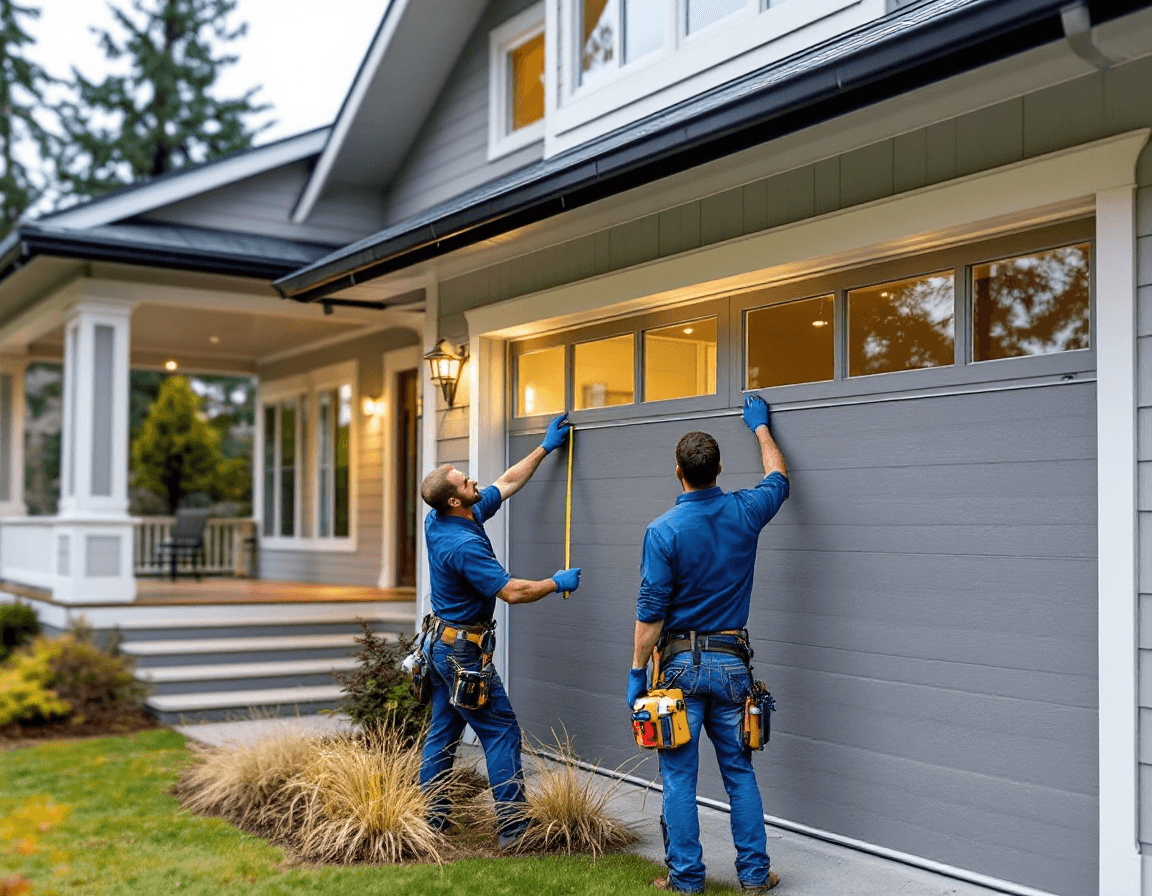
Garage Door Installation & Replacement in Medina, WA is one of the more important upgrades a homeowner in this part of King County can make, and it is often the one that gets postponed the longest. The garage door carries more weight than most people realize. It is the largest moving object on the house, it protects vehicles and stored belongings, and in many Medina homes it forms a major part of the street-facing facade. When a door starts to fail, the signs usually build slowly, from a slightly louder rattle to a panel that no longer sits flush, until one morning the door will not close at all.
Medina is a small, tightly held community on the east shore of Lake Washington, and its homes reflect that character. Many properties sit on generous lots with mature evergreens, long driveways, and garages designed to match the architecture of the main house rather than to disappear behind it. Some residences were built decades ago with custom wood doors that have since warped, while newer estates often call for wide double doors or multi-car layouts that a standard builder-grade door was never meant to handle. The homes near the water face the same Pacific Northwest weather as everywhere else in Western Washington, but they also deal with moist lake air and wind that can reach a garage door's hardware faster than people expect.
This page explains how we think about garage door installation and replacement for Medina homeowners. We cover the warning signs that point toward replacement instead of another repair, the materials that hold up best in our climate, how pricing generally works for the range of $950 to $3,800+ installed, and what happens between the first measurement and the day the new door is running smoothly. If you are weighing a new door for insulation, appearance, safety, or a remodel, the sections below are meant to help you make a clear decision before you call anyone out.
Reading the Signs That a Repair Has Become a Replacement
Every garage door gives some warning before it fails completely, but the signals are easy to dismiss when life is busy. A door that opens noticeably slower than it used to, grinds at the track, or stops halfway and reverses may simply need lubrication and a hardware check. When those symptoms keep returning after each repair, however, the door as a whole is usually near the end of its service life. Repeated breakdowns on an aging door are often the clearest signal that the cost of keeping it going is climbing faster than the value of the door itself.
Physical damage is another category where replacement often makes more sense than patching. A panel dented by a falling branch during a windstorm, a section cracked by a delivery vehicle, or a bottom seal that has rotted through may all be fixable on paper, but the repaired result can look mismatched and perform poorly. Wood doors that have absorbed moisture over several wet winters may show soft spots at the bottom rail or swollen stiles that a repair cannot fully reverse. When a door is damaged beyond repair, replacing it is the more practical path, and it gives you the chance to choose a material that better fits how you actually use the space.
Some homeowners reach the decision point for less dramatic reasons. The garage may feel cold in winter and hot in late summer, which suggests the door is passing a lot of air and heat through its panels and seals. Others notice that the house looks dated compared with the rest of the property, or that a previous owner installed a door that clashes with the current paint and trim. Any of these reasons is valid. A replacement door is a substantial investment, so it is worth being honest about whether you are solving a functional problem, an appearance problem, or both.
Matching Material to the Home: Steel, Carriage Style, Wood, Glass, and Aluminum
The material you choose shapes how the door looks, how it performs, and how much care it will need over the years. Insulated steel is the most common choice for good reason. Steel doors are generally durable, come in a wide range of finishes and textures, and can be filled with insulation to improve thermal performance. In a Medina garage that serves as a workshop or a space for a car that is driven often, insulated steel is a practical default that balances cost, strength, and energy efficiency.
Carriage-style doors have become popular across the Eastside for homes that aim for a traditional or farmhouse look. These doors use horizontal panels and decorative hardware to simulate the swing-out doors of older carriage houses, and they can be built as steel, composite, or real wood. Wood carriage doors offer a warmth that many estate-style homes call for, but they need to be sealed and maintained carefully, since the Pacific Northwest's extended wet seasons can cause wood to swell or check if the finish breaks down. Many homeowners who love the wood look choose a steel or composite version with a wood-grain finish to get the appearance with less upkeep.
Glass and aluminum doors suit homes where light and a modern profile matter most. Glass panels, often with tempered or frosted options, let daylight into the garage and work well with contemporary architecture and glass-heavy facades. Aluminum frames are lightweight and resist corrosion, which is valuable near water, though they generally offer less insulation than a thick steel or wood door unless the glazing is designed for thermal performance. Each material has trade-offs, and the right answer depends on the home's style, how the garage is used, and how much weather exposure the door will face.
How Lake Air and Winter Rain Shape Long-Term Performance
Medina's proximity to Lake Washington brings a level of humidity and moisture that inland neighborhoods do not always experience to the same degree. Over a long wet season, moisture in the air settles on metal surfaces, works into hinges and rollers, and accelerates corrosion on exposed hardware. Garage doors with galvanized or powder-coated steel, along with stainless or zinc-plated fasteners, hold up noticeably better in this environment. Choosing components with corrosion resistance from the start is one of the most useful decisions a homeowner can make when planning a new door.
Winter rain in Western Washington is not usually a single heavy storm but a long run of damp days, and that steady exposure is what wears down finishes. Wood doors are especially sensitive, since trapped moisture in the lower panels can lead to rot if the bottom edge and seals are not maintained. Even steel doors can develop rust at scratches or chips in the paint, particularly where the bottom panel meets the floor and water pools during a downpour. A well-sealed bottom weatherstrip and a door with a proper drip edge go a long way toward keeping water out of the garage.
Wind is the other seasonal factor to consider. Western Washington experiences periodic windstorms that can push debris against garage doors, flex panels, and stress the tracks and brackets. A door installed with sturdy bracing, properly anchored header and track hardware, and appropriate wind load ratings will handle these events more reliably. When we measure for a new door, we look at the exposure of the opening, the height of the header, and how the surrounding structure is built, because those details influence which configuration will hold up best over time.
Choosing Between a Single Door and a Double Door on Larger Lots
Many Medina properties include garages wide enough to house two or three vehicles, which raises the question of whether to install one wide door or two narrower ones. Double doors are the traditional choice for two-car garages and are often easier to handle in terms of weight and spring tension, since each panel is smaller. They also provide a balanced look that suits symmetrical facades and gives you the option of opening only one side for a single vehicle or a bicycle trip.
A single wide door can be the better option when the opening is large and the goal is a clean, uninterrupted look. Wide single doors eliminate the center post, which opens up the space for larger vehicles, workshop equipment, or boats and trailers, and they can make a garage feel more open. The trade-off is that wider doors are heavier and place greater demands on the springs, track, and opener, so the hardware must be matched carefully to the door's weight and the size of the opening.
Three-car arrangements are less common but do appear on some larger properties. In those cases, a combination of a single door and a double door, or a set of three narrower panels, can make the most sense. Regardless of configuration, the important step is to measure the rough opening accurately, check the header clearance and side room, and confirm that the chosen design fits both the structure and the way the family uses the garage.
Understanding Installed Pricing from $950 to $3,800+
Homeowners often ask why garage door pricing covers such a wide range, and the honest answer is that the door itself is only one part of the total. The installed price generally starts around $950 for a basic single door in a standard size with simpler materials, and it can exceed $3,800 for larger double doors, premium wood or custom carriage designs, glass-heavy configurations, or doors that require structural adjustments. The figure you see on a quote reflects the door, the labor to remove and haul away the old unit, the new hardware, and the time needed to set and test the system.
Several factors push the price toward the upper end of the range. Material is the most obvious, since real wood and custom glazing cost more than standard insulated steel. Size matters as well, because double and extra-wide doors use more material and require heavier-duty springs and tracks. Insulation level, finish options, decorative hardware, and the need to replace the header or framing can also add to the final number. If the existing opening is out of square or the surrounding trim needs repair, those corrections are part of an honest estimate.
Pricing also depends on what you already have in place. If your garage opener is in good working order and compatible with the new door, you may be able to keep it, which reduces the total. If the opener is old, noisy, or lacks modern safety features, replacing it at the same time can be a sensible investment, and it is best discussed as a separate line item so you can see exactly what each component costs. We recommend asking for an itemized estimate that shows the door, hardware, labor, and any optional upgrades, so you can compare options fairly.
From First Measurement to a Door That Runs Smoothly
A replacement project usually begins with a site visit, where the technician checks the rough opening, the condition of the header and jambs, the floor slope, and the clearance above and beside the door. These measurements determine which door sizes and track configurations will fit. We also look at how the garage is used, whether the space needs headroom for a lift or storage racks, and whether the existing opener and wiring are suitable for the new setup. Taking the time to measure carefully at this stage prevents surprises on installation day.
Once you choose a door, the order is typically arranged based on the manufacturer's lead time and the specific finish or configuration you selected. Custom wood and glass doors often take longer to produce than standard steel, so it helps to plan around that timeline, especially if the old door is still in use. On installation day, the old door is carefully removed, and the new door is assembled, balanced, and fitted to the opening. Springs, cables, and tracks are installed and adjusted with appropriate tools, and the opener is programmed and tested.
The final steps matter just as much as the installation itself. Balance, travel limits, auto-reverse safety sensors, and manual release operation should all be checked before the crew leaves. We also walk you through how the door operates, how to use the manual release safely, and what routine care will keep it performing well, such as checking the weatherstripping and keeping the tracks clear. A properly finished installation should feel smooth, quiet, and predictable from the first day you use it.
Keeping Heat in the Garage Wall: Insulation and Energy Efficiency
Many Medina homeowners want a garage that is more comfortable, whether it is a workshop, a home gym, a space for a wine refrigerator, or simply a buffer between the cold outdoors and the rest of the house. The garage door is often the weakest thermal point in that wall, since it is a large surface with panel joints and seals that can leak air. An insulated door with good weatherstripping can make a noticeable difference in how stable the temperature feels, especially during cold snaps and long stretches of damp weather.
Insulation levels are typically described by the manufacturer, and it is wise to compare the actual specifications rather than relying on general terms like "energy efficient." Look at the door's listed insulation value, the construction of the panels, and the quality of the seals along the sides, top, and bottom. Steel doors filled with polyurethane foam generally offer better thermal performance than single-layer designs, and a well-fitted bottom seal often has as much impact as the panel material. An honest installer will explain these trade-offs without overselling a particular product.
Air leakage is the other half of the efficiency equation. A door that sits slightly out of square or has worn seals can allow drafts that undo much of the benefit of insulation. During installation, we check that the door closes evenly, that the top and side seals make solid contact, and that the bottom seal meets the floor without leaving gaps. If the garage is attached to living space, tightening that wall also reduces the amount of cold air that migrates into the house, which can help the whole home feel more consistent.
Remodels, Additions, and Matching the Architecture
When a Medina homeowner plans a remodel or an addition, the garage door often becomes part of a larger design conversation. A new garage wing, an expanded driveway, or updated exterior siding can make an older door look out of place, while a thoughtfully chosen replacement can tie the whole facade together. In these projects, the door should complement the window style, the trim color, the roofline, and the scale of the new structure, rather than being selected as an afterthought.
Coordination with the rest of the project is especially important. If the opening is being widened or heightened, the header and framing must be designed to carry the door's load, and the work should be sequenced so the door is installed after the structural and exterior finish work is complete. If new lighting, electrical outlets, or an opener location are part of the remodel, planning them before the door is ordered helps avoid compromises later. A door that is sized and positioned with the finished exterior in mind will look intentional rather than added on.
Architectural style guides many of the best choices. Traditional and estate-style homes often suit carriage-style steel or wood doors with divided panels and decorative hardware, while contemporary designs may call for flush panels, horizontal grooves, or glass sections. Matching the door's color to the window frames or trim, rather than simply picking a neutral default, helps the garage read as part of the home. These details may seem small, but they are often what makes a home feel finished from the street.
Openers, Safety Sensors, and Spring Systems
A new door is only as safe as the system that drives it, so the opener and safety hardware deserve careful attention. Modern openers include automatic reversing features that stop and reverse the door if it meets resistance, and photo-eye sensors near the floor that prevent closing when something blocks the path. Testing these functions after installation and periodically thereafter is essential, and we always demonstrate them for the homeowner before leaving the job site.
Spring systems require particular caution. Torsion and extension springs store a large amount of energy under tension, and handling them improperly can cause serious injury. Adjusting, replacing, or winding springs should only be done by a trained, licensed professional with the proper tools and training. Homeowners should never attempt spring work themselves, even on a door that seems simple, because the stored energy is significant and the consequences of an error can be severe. If your door has a broken spring, the safest course is to call a technician rather than trying to fix it yourself.
Our installation process includes correct balance and tensioning from the start, so the door is not forced to rely on the opener to lift its full weight. A properly balanced door should stay in place when lifted halfway and released, and it should move smoothly under the opener's power. We also recommend that homeowners keep the manual release clearly accessible and teach everyone who uses the garage how to operate it safely, especially during power outages. Good hardware and a clear understanding of how it works are the foundation of a safe installation.
A Practical Checklist Before You Choose a Door
Before committing to a new door, it helps to walk through a few key questions. Doing so keeps the decision focused on what the home actually needs rather than on whatever looks attractive in a brochure. Consider the following points as a starting place for your conversation with a technician:
- Confirm the rough opening width, height, and header clearance before comparing door sizes.
- Decide whether the garage needs better insulation, a more modern look, improved security, or all three.
- Choose corrosion-resistant hardware and finishes suited to damp Western Washington winters.
- Check whether the existing opener is compatible with the new door, or budget for a replacement.
- Ask for an itemized estimate that separates the door, hardware, labor, and optional upgrades.
- Verify that the installer is licensed, bonded, and insured, and ask how they handle spring and cable work.
Working through these items early will make the rest of the project smoother. Many homeowners find that once they know their measurements and priorities, the choice between materials and configurations becomes much clearer. If anything is unclear, a site visit is the best way to get answers specific to your garage and your home.
Choosing a Local Installer You Can Trust
Selecting a garage door installer is a decision that affects safety, appearance, and long-term reliability, so it deserves more thought than simply choosing the first quote you receive. A trustworthy installer should be licensed and insured, should be willing to explain the reasoning behind each recommendation, and should provide written estimates that clearly describe the scope of work. They should also be comfortable discussing the specific conditions of Medina properties, including lake-area moisture, wind exposure, and the architectural details that matter to custom homes.
Local experience matters as well. A technician who regularly works on Eastside homes will be familiar with the common garage configurations, the typical wear patterns in this climate, and the questions homeowners in this area tend to ask. Ask whether the company handles both repairs and full replacements, since that means they can tell you honestly when a repair makes sense and when a new door is the better investment. You should also ask how they handle warranty questions, follow-up adjustments, and safety testing after installation.
Seattle Garage Door Fix serves Medina and more than 60 communities across the greater Seattle and Western Washington area. We are a licensed, bonded, and insured garage door repair company, and we handle new single and double door installations in insulated steel, carriage-style, wood, glass, and aluminum. If you are ready to talk through options for your Medina home, from a quick assessment of an aging door to a full replacement tied to a remodel, we are glad to help you plan the next step.
Whether your current door is damaged beyond repair, drafty and costing you comfort, dated in appearance, or simply breaking down too often, a clear plan will make the decision easier. Call Seattle Garage Door Fix at (888) 799-3819 to schedule a measurement and an itemized estimate for your Medina home.