
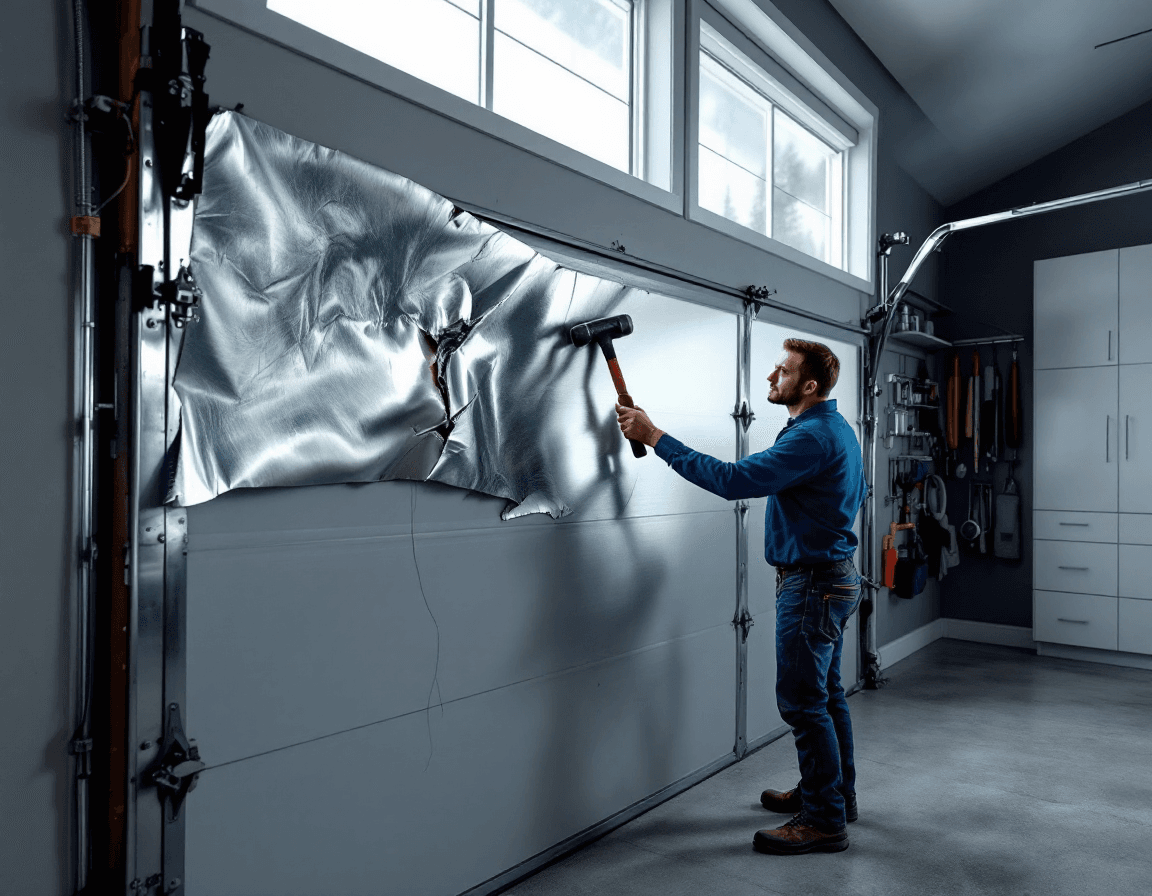
Garage Door Panel Replacement in Hunts Point, WA is often the most practical fix when a single section of your door is damaged but the rest still works smoothly. Hunts Point sits on the east shore of Lake Washington, where homes tend to have wide driveways, generous garages, and doors that see a lot of daily use from families, guests, and service vehicles. A dent from a backing accident or a rotted bottom section can make an otherwise sound door look neglected, and it can also let moisture and drafts into the garage. Replacing the affected panel, rather than the whole door, can restore both appearance and function at a fraction of the cost of a new installation.
This page explains how our technicians evaluate damaged panels on lakefront-area properties, what typically causes that damage in the Pacific Northwest, and how to decide between a repair and a full replacement. We also cover what a single-section swap involves, how pricing generally works at $250 to $800 per section depending on the door, and what to watch for when your replacement panel does not quite match the originals. The goal is to give you enough detail to make a confident decision before anyone starts work on your door.
Every door is different, and a good assessment starts with looking at the whole system rather than only the visible damage. A panel that looks like the only problem may be hiding bent track, a worn roller, or a hinge that has been pulled out of alignment by the same impact. If you are unsure what you are looking at, call us at (888) 799-3819 and describe what you see, and we can help you understand your options before you commit to anything.
Reading the Damage: What a Dented Panel Is Telling You
A dent on a garage door panel is more than a cosmetic flaw. Most residential doors are built from steel sections that are insulated with polystyrene or polyurethane foam and bonded to an outer skin, and when that skin is pushed in, the insulation and the internal reinforcing ribs can be compromised. Even a shallow dent can create a weak point where the metal begins to flex differently under the spring tension of the door. Over time that flex can crack the paint, expose bare metal, and start the slow process of corrosion.
When we inspect a damaged door in Hunts Point, we look for several specific conditions before we recommend a repair. The depth of the dent, the location of the dent relative to the hinges, and whether the panel is still seated firmly in its groove all matter. We also check whether the door still tracks straight as it rises, because a panel that has been bent can drag against the track or cause the top roller to ride unevenly. Here are the signs we most often document on single-panel damage calls:
- A visible crease or pucker in the steel face, especially one that runs along a rib or seam
- Paint that has cracked, flaked, or lifted around the impact point, exposing bare metal
- A panel that sits visibly out of line with the sections beside it, or leaves a gap at the top or bottom
- Rattling, popping, or grinding noises during operation that were not present before the impact
- Light visible around the edges of a damaged section, which suggests the seal or insulation has shifted
If you notice any of these, avoid trying to pop out the dent yourself with a hammer or suction tool. Pushing on a loaded panel can release spring tension unexpectedly, and the force can injure hands or fingers. A technician can assess whether the panel can be removed and replaced safely as an individual section.
Lakeside Humidity and the Slow Damage It Causes
Western Washington weather is famously gray, damp, and mild, and the lakefront environment adds its own moisture load. Air coming off Lake Washington carries humidity into the garage, especially during the long autumn and winter stretches when temperatures hover in the forties and fifties and the air rarely dries out. Steel sections that sit close to the ground are the first to notice it, and the bottom panel is often the first casualty of persistent dampness.
We see rust most often where paint has been chipped by a mower, a bicycle, a car bumper, or an impact from a delivery cart, because that is where the bare metal meets water. Rust does not usually stay in one spot. It creeps under surrounding paint and can weaken a section from the inside, particularly where the steel skin meets the internal bracing. Wood carriage-style doors and wood-faced composite doors have their own vulnerabilities, since wood can swell, split, or rot when water sits against the lower edge for long periods.
Because so many homes in this part of King County have garages that open directly onto driveways that catch runoff, the bottom two or three panels deserve regular attention. A quick look once or twice a year, especially in late fall, can catch developing corrosion before it becomes a full section replacement. Wiping the lower panels with a mild cleaner and checking for early bubbling or staining takes only a few minutes and can extend the life of the section considerably.
The Bottom Section: Water Damage, Impact, and the Threshold Problem
The bottom section of a garage door takes the most abuse in nearly every household. It is closest to the driveway, it receives splashing rain and road grit, and it is the panel most likely to be struck by a car door, a trash bin, or a mower deck during everyday use. When the bottom panel is damaged, the consequences can extend beyond the panel itself, because the bottom seal and the threshold both depend on that section sitting flat and true.
A bottom panel that has been bent inward can prevent the rubber weatherstrip from making full contact with the floor. The result is a gap that lets in water, cold drafts, leaves, and pests, and in lakefront settings that gap can also allow humid air to settle into the garage and stored items. We often find that homeowners have been living with a bottom gap for months without realizing that a single damaged panel is the cause. Replacing the bottom section and adjusting the seal usually resolves the problem entirely.
When water has been sitting against the bottom panel, the damage may also reach the panel's internal foam. Foam that has absorbed water loses its insulating value and can feel soft or spongy when pressed. If the bottom section is wood, the damage may include cupping, swelling, or softening at the base. In those cases a section-only replacement is usually the right call, but we always check the bottom roller brackets and the lower track to make sure the water has not caused additional corrosion that would undermine a new panel.
Matching a Panel That Is Faded, Discontinued, or Mismatched
One of the most common frustrations with single-panel replacement is finding a section that looks right next to the rest of the door. Garage door manufacturers update their designs, change paint formulations, and sometimes discontinue specific profiles. A door that was installed a decade or more ago may have sections that no longer match the current catalog, and even a panel from the same manufacturer can look different if the original finish has aged.
Sun exposure is a particular issue for doors that face south or west, which is common in many Hunts Point homes where the garage sits along a driveway or side yard with direct light. UV exposure gradually fades color and chalks the finish, so the original panels may look noticeably darker or more matte than a freshly manufactured replacement. We generally recommend comparing a sample of the replacement finish in natural daylight against the existing sections before ordering, since fluorescent showroom lighting can make small differences hard to judge.
When an exact match is not available, there are practical options. Some homeowners choose to replace a damaged panel with a close match and then use a complementary finish on adjacent panels to even out the appearance, though that approach requires careful prep and is not always appropriate. Others opt to replace the entire door once they realize that matching is no longer realistic, which we discuss in the next section. A good technician will tell you honestly how close a match is likely to be before any work begins, rather than promising a perfect result that the manufacturer cannot deliver.
Repair or Replace: A Practical Decision Path
Not every damaged panel warrants a section swap, and not every door should be saved. The right choice depends on the age of the door, the condition of the remaining panels, the mechanical health of the springs and tracks, and how much the appearance matters to you. We walk homeowners through these factors in plain terms so they can decide with confidence.
In general, a single-panel replacement makes the most sense when the rest of the door is structurally sound, the springs and cables are in good working order, the track is straight, and the damaged section is one of a few isolated problems. It can also be the right choice when the door is relatively new and the replacement panel is available in a close match. If the door is well-maintained but the damage is limited to one or two sections, a targeted repair often preserves more value than a full replacement would.
A full door replacement may be the better path when multiple panels are rusted, when the door is older and the springs are near the end of their rated cycles, when the frame or header is showing rot, or when a close match simply cannot be found. Consider these questions as you weigh the decision:
- How many panels are damaged, and are they adjacent or scattered across the door?
- Is the damage limited to the surface, or does it reach the insulation, the internal bracing, or the hinges?
- How old is the door, and when were the springs last inspected or replaced?
- Does the replacement panel match well enough that the door will look intentional rather than patched?
- Are there signs of water intrusion into the garage, such as staining on the ceiling, wall, or floor?
If the answers point toward a full replacement, we will say so. Our aim is to help you spend money where it will actually improve your door, not to sell a larger job than the situation requires.
What a Single-Section Swap Actually Involves
Replacing one panel is more involved than many homeowners expect, and the process varies depending on the door style and construction. Most sectional residential doors are assembled with hinges and track rollers that connect each panel to its neighbors, so removing one section means carefully separating it from the adjacent sections without disturbing the rest of the door. This is precisely why the work should be done by a trained technician who understands the tensioning and counterbalance system.
Our technicians begin by securing the door in a safe position and confirming that the springs and cables are under control before any panel is disconnected. The damaged section is then unbolted from its hinges and rollers, and the replacement is fitted into place with the correct orientation, weatherstrip, and fasteners. Once the new panel is seated, the door is cycled slowly to check alignment, track clearance, and seal contact. Any adjustments to the hinges, rollers, or bottom seal are made at this stage, and the door is tested several times to confirm smooth operation.
Keep in mind that a panel swap should never involve adjusting or removing the torsion springs or the lift cables. Those components store significant energy, and mishandling them can cause serious injury. If your repair calls for spring or cable work, that is a job for a licensed professional who has the proper tools and training. We always recommend that homeowners leave any spring-related work to licensed, insured technicians, and we will not ask you to do it yourself.
Pricing Per Section: Understanding the $250 to $800 Range
Our pricing for garage door panel replacement generally falls between $250 and $800 per section, and the exact figure depends on the door. A standard steel panel on a common residential door sits near the lower end of that range, while a wood, composite, or custom-profile section with decorative glass or specialty finish will fall higher. The number of hinges, rollers, and weatherstrip components that need replacing along with the panel also affects the total.
Several factors typically shape the quote. The door's manufacturer and series determine how easily a matching panel can be sourced, and a discontinued profile may require a longer lead time or a more customized approach. The panel's location matters as well, since replacing a top section often requires more care around the spring system than a middle section. If the bottom panel needs a new seal or threshold component, that addition is usually noted separately so you can see exactly what you are paying for.
We provide an estimate after a visual inspection, and we explain what is included before any work begins. Estimates are based on the specific damage we observe, so a clean, straightforward swap will cost less than one that uncovers additional corrosion, bent track, or hinge damage during the job. We would rather give you an honest range up front than surprise you with an unexpected charge once the panel is off the door.
After a Backing Accident: Documentation and Next Steps
Backing accidents are among the most common causes of single-panel damage, and in the Hunts Point area they often involve larger vehicles navigating tight turnarounds on private driveways. A delivery truck, a trailer, or even a family SUV can dent a lower or middle panel in a fraction of a second. The damage may look minor at first, but the impact can also affect the track, the rollers, or the opener alignment, so a careful look is worthwhile.
If your door was damaged by a collision, take photographs of the damage from several angles before anything is repaired. Note the date, the time, and the circumstances, and keep any information you have about the vehicle or driver. Many homeowners find it helpful to write a brief summary of what happened while the details are fresh. If you plan to file a claim with your insurance carrier, your insurer may have specific requirements about how repairs are documented and which contractors they approve, so it is wise to check with them before scheduling work.
We are happy to provide a written description of the damage and the recommended repair as part of your records. Being clear about what was damaged, what was replaced, and why can make the claim process smoother for everyone involved. If the impact also affected the opener or the safety sensors, we will check those components as well, because a door that looks fine but reverses incorrectly is a safety concern that deserves prompt attention.
Safety Considerations When Working Near a Damaged Door
A damaged garage door can behave unpredictably, and homeowners should treat it with respect. A bent panel can bind the track, a cracked section can separate under load, and a door that has been pushed out of alignment can drop or jam without warning. Until a technician has assessed the door, it is best to keep vehicles, children, and pets clear of the opening and to avoid operating the door manually if it sticks or makes unusual sounds.
Spring and cable work deserves particular caution. Torsion springs are under high tension even when the door appears closed, and the cables that lift the door carry significant load. Attempting to release or adjust these components without proper training and equipment is one of the most dangerous tasks a homeowner can undertake. This is why we always recommend licensed, insured professionals for any work involving springs or cables, and why our technicians secure those systems before touching panels that sit near them.
If you are unsure whether your door is safe to operate, disconnect the opener and use the emergency release only when the door is closed and the area is clear. Then call a technician to inspect it. A few minutes of caution can prevent injury and additional damage, and a professional inspection will tell you exactly what needs to happen next.
Protecting Your New Panels for the Long Haul
Once a damaged panel has been replaced, a little routine care can help it blend in and last. Lakeside humidity and Pacific Northwest rain make regular cleaning and inspection especially worthwhile. Washing the door with a mild soap and water every few months removes salt, grit, and organic residue that can dull the finish and trap moisture against the metal. Rinsing the bottom panels is particularly important in areas where road runoff or lawn treatments reach the garage threshold.
Inspect the new section at least twice a year, paying attention to seams, hinge points, and the lower edge. Look for early signs of chipping, lifting paint, or staining, and touch up small chips promptly with a matching paint or primer if your manufacturer provides one. Keep the weatherstrip clean and pliable, and replace it if it cracks or flattens, since a worn seal lets water and drafts into the garage even when the panels themselves are sound.
Finally, keep an eye on the rest of the door. A replaced panel is only as good as the system it sits in, so pay attention to the rollers, the track, the hinges, and the balance of the door. If the door starts to feel heavy, drift to one side, or make new noises, schedule an inspection before a small problem becomes a larger one.
Whether you are dealing with a single dent from a backing accident, a rusted bottom section that has been quietly worsening through the wet months, or a faded panel that no longer matches the rest of your door, our team is ready to help. Call (888) 799-3819 to describe your door, schedule an inspection, and get an honest estimate for panel replacement in Hunts Point. We serve the surrounding communities across greater Seattle and Western Washington, and we will walk you through your options so you can choose the repair that makes the most sense for your home.