
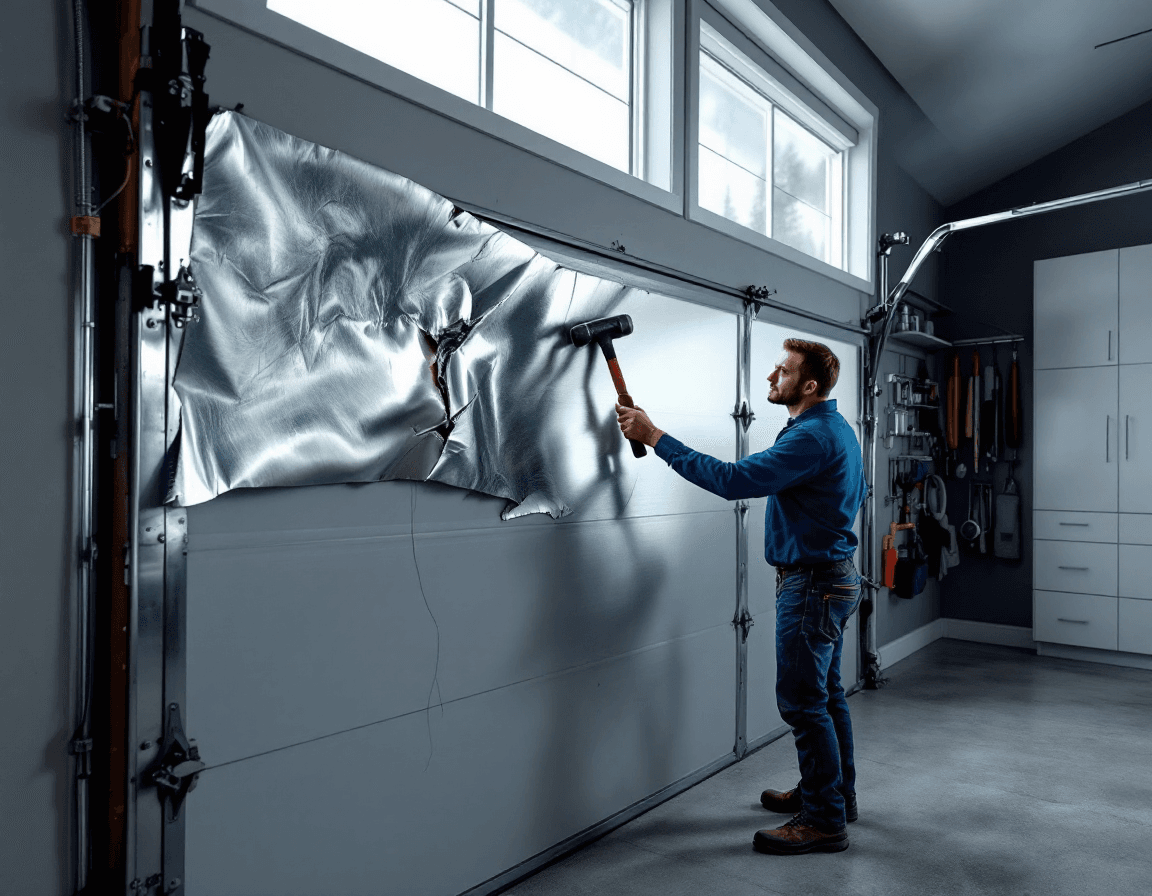
Garage door panel replacement in Beaux Arts Village, WA is often the most sensible fix when a single section of your door is damaged but the rest of the system still works. Beaux Arts Village is a small, quiet community on the east shore of Lake Washington, and many of the garages here sit close to the water, the tree line, and the long wet seasons that define Western Washington. A dent from a backing accident, a cracked bottom panel after a winter storm, or a rusted section near the floor can make an otherwise solid door look tired and feel unreliable. Replacing the damaged panel, rather than the whole door, is often faster, less expensive, and better for the door's longevity.
Homeowners in the 98004 and 98005 ZIP codes frequently ask whether a damaged panel really needs attention if the door still opens smoothly. The honest answer is that a compromised panel can affect more than appearance. Cracks and bends can change how a section sits in its track, stress the hinges and rollers next to it, and let water and drafts into the garage. This guide walks through how to read the damage, what causes it in our area, how to decide between repair and replacement, and what to expect when a licensed technician swaps out a section. Local conditions matter, so we have tried to keep the advice specific to the way doors actually age around Lake Washington.
Reading the Damage Before You Call Anyone
Most panel problems announce themselves in obvious ways, but some are easy to overlook until they spread. A shallow dent across the middle of a panel may look cosmetic, yet it can mean the steel has been stretched beyond its original shape, which weakens its ability to hold a rigid profile. A hairline crack along a seam or near a hinge point deserves closer attention, because flexing during each open and close cycle will widen it over time. Take a few minutes to run your hand along each section and look at it from a low angle in good light. Raking light from the side reveals creases that disappear when the sun is directly overhead.
Pay attention to whether the damage sits on one panel or repeats across several. A single dent with a clean edge usually points to an isolated impact, such as a bicycle, a delivery cart, or a car door swinging open too far. Multiple dents at the same height across the door often suggest something more systematic, such as a ladder or a stored item that shifts against the door, or wind pushing a loose object repeatedly. Note the exact height of each mark, since this helps a technician figure out whether the damage is from an accident or from something that needs to be addressed differently.
Keep a simple record before you schedule service. Photographs taken from the inside and outside of the garage, with a coin or tape measure for scale, make it much easier to describe the problem accurately. Include a note about when you first noticed the damage and whether it has changed. A panel that is slowly bowing outward is a different situation from one that was dented once and has held its shape since. Those details help the technician estimate the work and bring the right replacement section to your home.
Lake Air, Winter Storms, and Why Bottom Sections Suffer First
Living near Lake Washington means your garage door deals with a steady supply of moisture, and the lower panels take most of the abuse. Rain runs down the face of the door and collects along the bottom edge, where it can sit against the steel or wood for days during a wet stretch. Spray and wind off the lake carry fine moisture even on days that never seem to produce much rain. Over several seasons, that combination softens paint, lifts coatings, and invites corrosion at the seams where the bottom section meets the weatherstrip and the floor.
Winter storms add a physical element. Gusts off the water can rattle a door hard enough to crack a thin panel, especially if the door is older or the seals are brittle. Debris carried by wind, including branches from the cedars and maples common on properties in this part of King County, can strike the lower sections repeatedly. A bottom panel that takes a hard hit at the wrong angle may crack along a rib or crease that looks fine from the street but has lost its strength. These cracks often go unnoticed until water begins to wick into the insulation or the panel starts to rattle during operation.
If your garage is partially sheltered by trees or a fence, you may see uneven weathering from one side of the door to the other. The sunny side can fade and chalk while the shaded side stays dark and damp, which accelerates rust near the bottom. Inspect the lowest 18 inches of your door at least twice a year, ideally before the wet season begins and again in late spring. Early intervention on a bottom panel is almost always simpler and less costly than waiting until water damage reaches the springs or the door's frame.
Backing Accidents and the Single-Panel Problem
Backing accidents are one of the most common reasons a homeowner needs a single panel replaced. A vehicle that rolls back a few inches too far, a trailer hitch that catches the lower section, or a side mirror that brushes the door can leave a deep dent or a split seam in an instant. In a neighborhood where driveways are often generous but turning radii can be tight, these incidents happen more often than people expect. The good news is that when only one section is affected, replacement is usually a contained job rather than a full door project.
The key question after an impact is whether the surrounding panels and hardware were affected. Check the sections directly above and below the damaged panel, as well as the track on each side. A bent track or a misaligned roller can make a damaged panel look worse than it is, or can hide damage that appears only when the door moves. Sometimes the force of the impact pushes a panel out of its channel, and the panel can seem to be the only problem when the real issue is a slightly bent track that needs adjustment during the same visit.
Document the incident for your own records and, if relevant, for an insurance claim. Photographs of the vehicle or object involved, the date, and a short description of what happened are useful. Some homeowner policies cover accidental damage to garage doors, and a technician can provide a written estimate that itemizes the panel replacement, labor, and any alignment work. Whether or not you file a claim, prompt repair prevents the damaged section from weakening further during the next open and close cycle.
Rust, Rot, and the Soft Spots Hiding Behind Paint
Not every panel problem is visible from the outside. Steel panels with a chipped or worn finish can rust from the inside, where condensation collects between the skin and the insulation. Wood and composite doors can absorb moisture through a cut edge, a nail hole, or a seam that has opened over time, and the material may feel firm on the surface while going soft underneath. Pressing gently along the lower edge and the corners of each panel can reveal areas that give more than they should, which is a warning sign that the core is compromised.
Rust in steel panels often begins as a small bubble under the paint, usually near a seam, a hinge, or the bottom edge. Once the coating breaks, the metal corrodes faster in the damp air common here, and the rust can spread along the panel's ribs. Surface rust can sometimes be cleaned and treated, but when the metal has thinned or perforated, the section should be replaced rather than patched. A patch over a weak panel tends to fail again within a season or two, leaving you with a repair that looks acceptable but does not restore the door's structural integrity.
Rot in wood doors deserves particular caution. If you see discoloration, flaking, or a sponge-like feel near the base, the damage may extend deeper than the surface. Wood sections that have been exposed to repeated wetting are often better replaced than restored, especially if the rot has reached the edges where the panel fits into the frame. Replacing a single rotted section can be far more practical than refinishing an entire door, but only if the rest of the door is sound and the replacement can be matched to its profile and thickness.
Repair or Replace: A Practical Decision Line
Deciding between repair and replacement comes down to three questions: how much of the panel is affected, whether the damage is structural or cosmetic, and whether a matching section is available. A small cosmetic dent on a panel that otherwise holds its shape may be a candidate for careful reshaping or a finish repair, although many homeowners find that the result looks better with a new panel. A crack, a perforation, a rotted edge, or a panel that bows when pressed generally calls for replacement because the damage will continue to progress.
Consider the age of the door too. A relatively new door with a single damaged section usually makes a strong case for panel replacement, since the rest of the door is in good condition and the replacement will extend its life. On an older door, where several panels show wear, springs are aging, and tracks have seen better days, you may be better served by a broader evaluation. A technician can tell you whether the single panel is the only significant issue or whether it is part of a larger pattern of deterioration.
Here is a simple way to think through the decision:
- Replace the panel when cracks, holes, rot, or deep creases are present, or when the section bows or flexes when you press on it.
- Consider a repair when the damage is limited to light surface scratches, a shallow dent that has not affected the panel's shape, or a small area of paint loss that can be treated before rust forms.
- Plan a broader evaluation when more than one or two panels are damaged, when the door is noticeably out of balance, or when the springs and cables show signs of wear.
- Expect to schedule separate work when the damage is from a structural failure, such as a broken spring or a damaged track, since those components require their own safety checks.
Matching a Panel You Can No Longer Buy Off the Shelf
Matching a replacement panel is often the most frustrating part of the job. Garage door manufacturers update designs, change profiles, and discontinue lines, so the exact section you need may not be sold anymore. A good technician begins by identifying the door's manufacturer, model, color, panel width, and thickness. The stamp or label on the door, the original purchase paperwork, or the manufacturer's serial information can often answer these questions. Bringing photos of the door and a clear measurement of the panel height and width helps avoid ordering the wrong size.
When an exact match is unavailable, a technician may recommend a close equivalent that fits the existing track and hardware. Differences in panel depth or rib pattern can look noticeable from the curb, so it helps to discuss the options before work begins. In some cases, a section can be sourced from a surplus supplier or a salvage door, though these options require careful inspection for corrosion and fit. The goal is always to restore the door's function first and its appearance second, without compromising the safety of the springs and hardware that hold it in place.
Insulated doors add another layer of complexity. A replacement panel for an insulated door must match the core thickness and the way the insulation is retained, or the energy performance and the door's balance may change. Ask your technician whether the replacement section is insulated, how it attaches, and whether the seals along the edges will still meet the adjacent panels. Clean, precise fitting is what keeps a repaired door quiet, weather-resistant, and aligned.
Faded Finishes and the Mismatch Problem
Even when the replacement panel fits perfectly, color can be a challenge. Sun exposure on the south and west faces of a home, combined with decades of rain and salt-free but still humid lake air, can fade the original finish unevenly. A new panel that was painted or factory-finished at a different time may look noticeably brighter or darker beside its neighbors. This is especially noticeable on wood-grain finishes and on dark colors, which show weathering more than light ones.
Some homeowners choose to refinish the entire door so the new section blends in, while others prefer to keep the look of a single fresh panel. Both approaches are valid, and the right choice depends on how far the existing finish has weathered and how visible the door is from the street. Refinishing a steel door typically involves cleaning, treating any spots of rust, priming, and applying an exterior-grade topcoat designed for metal. Wood doors need sanding, sealing, and a finish appropriate for outdoor exposure. A technician can explain which route makes sense for your door and how long the results are likely to last.
It helps to discuss color expectations before ordering the panel. If you are hoping for an exact match to an aged finish, mention that up front so the technician can plan for blending or a full refinish. If you are comfortable with a visible difference, you may save time and cost by replacing only the damaged section. Either way, understanding the tradeoffs before work starts prevents surprises when the door is back in place.
What a Single-Section Replacement Usually Involves
A typical panel replacement follows a predictable sequence, though the details vary with door style and the condition of the surrounding hardware. The technician begins by inspecting the door, confirming the damage, and checking the springs, cables, rollers, and tracks for signs of stress. Because the door is under tension, the technician will secure it properly before removing any panel. The damaged section is detached from its hinges and rollers, the replacement is fitted, and the door is reassembled and tested through a full cycle of opening and closing.
Pricing for panel replacement generally falls between $250 and $800 per section, depending on the door. Several factors shape where a particular job lands within that range. The door's material and insulation, the panel's size and profile, the need to source a matching section, and the complexity of the hinge and roller arrangement all play a role. Labor needed to refinish or blend a panel, or to correct minor track alignment during the same visit, may also influence the final figure. A written estimate should explain these components so you know what you are paying for.
Expect the work to be a focused service rather than a full door overhaul. In many cases, a single-section replacement can be completed in one visit, provided the replacement panel is available or can be ordered quickly. When a special order is required, the technician may recommend a temporary solution to keep the garage secure while the new section arrives. Ask about timelines before scheduling so you can plan around vehicle use and access.
When the Door Looks Fine but a Panel Is Quietly Failing
Some of the most important panel problems are the ones that do not affect how the door operates. A panel can bow slightly, separate at a seam, or develop a crack along the inside face without making the door hard to lift or noisy in its tracks. Because the door still moves, homeowners often assume everything is fine. Over time, though, the weakened section can put extra load on its neighbors, stress the hinges, or allow water and drafts to find their way into the garage.
Watch for subtle signs that a panel is losing its integrity. Light coming through a seam where none appeared before, a new rattle when the door reaches the top of its travel, a gap at the bottom corner that wasn't there last year, or a faint drip stain on the floor after rain can all point to a section that needs attention. Inspect the door from the inside on a bright day, looking for daylight around panel edges and along the weatherstrip. Small changes in appearance often precede larger failures.
If the door works but you notice any of these issues, schedule an inspection rather than waiting for a breakdown. A technician can determine whether the panel needs replacement, whether a seal or hinge needs adjustment, or whether the problem is an early sign of a larger concern. Catching a failing section early keeps the job small, protects the rest of the door, and gives you control over timing and cost.
Working Safely: Why Springs and Cables Belong to a Licensed Professional
Garage doors are heavy, and the springs and cables that balance them store a great deal of energy. Panel replacement may seem like a straightforward project, but it often involves removing parts that are connected to a tensioned system. Attempting to detach a section while the door is under load, or disturbing a spring or cable, can cause serious injury. This is why we strongly recommend that homeowners leave all spring and cable work, and any panel job that requires disconnecting the door's balance system, to a licensed professional.
Licensed technicians are trained to secure the door before work begins, to identify the correct tension and components, and to test the door thoroughly afterward. They also carry the tools and knowledge needed to reassemble the system so it operates smoothly and safely. Our company is licensed, bonded, and insured, and our technicians approach every panel job with the same care they bring to spring and cable work. If you are unsure whether your repair crosses into that territory, ask before you begin.
Please avoid DIY attempts on spring or cable components even when you feel confident with tools. Stored tension can release unexpectedly, and the consequences are not limited to the garage. If you have already noticed a damaged panel and are wondering whether the rest of the door is safe to use, keep the door closed and call for an inspection rather than forcing it open or closed.
Scheduling Panel Replacement Across Beaux Arts Village and Nearby ZIPs
Our team serves Beaux Arts Village and the surrounding communities in the 98004 and 98005 ZIP codes, along with more than sixty cities across the greater Seattle and Western Washington region. Because Beaux Arts Village is a small and close-knit community on the Lake Washington shoreline, we pay attention to access, parking, and the particular layout of driveways and garages in the area. Letting us know about gates, narrow approaches, or limited turnaround space helps us arrive prepared with the right equipment and parts.
When you call, describe the damaged panel, the door's approximate age and brand if you know them, and any photos you have taken. This information lets us estimate the likely cost within the typical range of $250 to $800 per section and determine whether a matching panel can be sourced quickly. If the damage appears to involve more than one section or a structural component, we will explain the options clearly before any work begins. You will always receive a clear written estimate so you know what to expect.
We also recommend scheduling inspections before the heaviest part of the wet season, when lake moisture, wind, and storms are most likely to add stress to lower panels. A proactive visit can catch a cracked seam or a softening bottom section before it becomes a bigger repair.
Damaged panels rarely fix themselves, and waiting often turns a simple section swap into a larger project. If you are in Beaux Arts Village or nearby 98004 or 98005 and a dented, cracked, rusted, or mismatched panel has you concerned, call Seattle Garage Door Fix at (888) 799-3819. Our licensed technicians will inspect the damage, explain whether repair or replacement makes the most sense, and give you a clear, honest estimate for getting your door looking and working right again.