
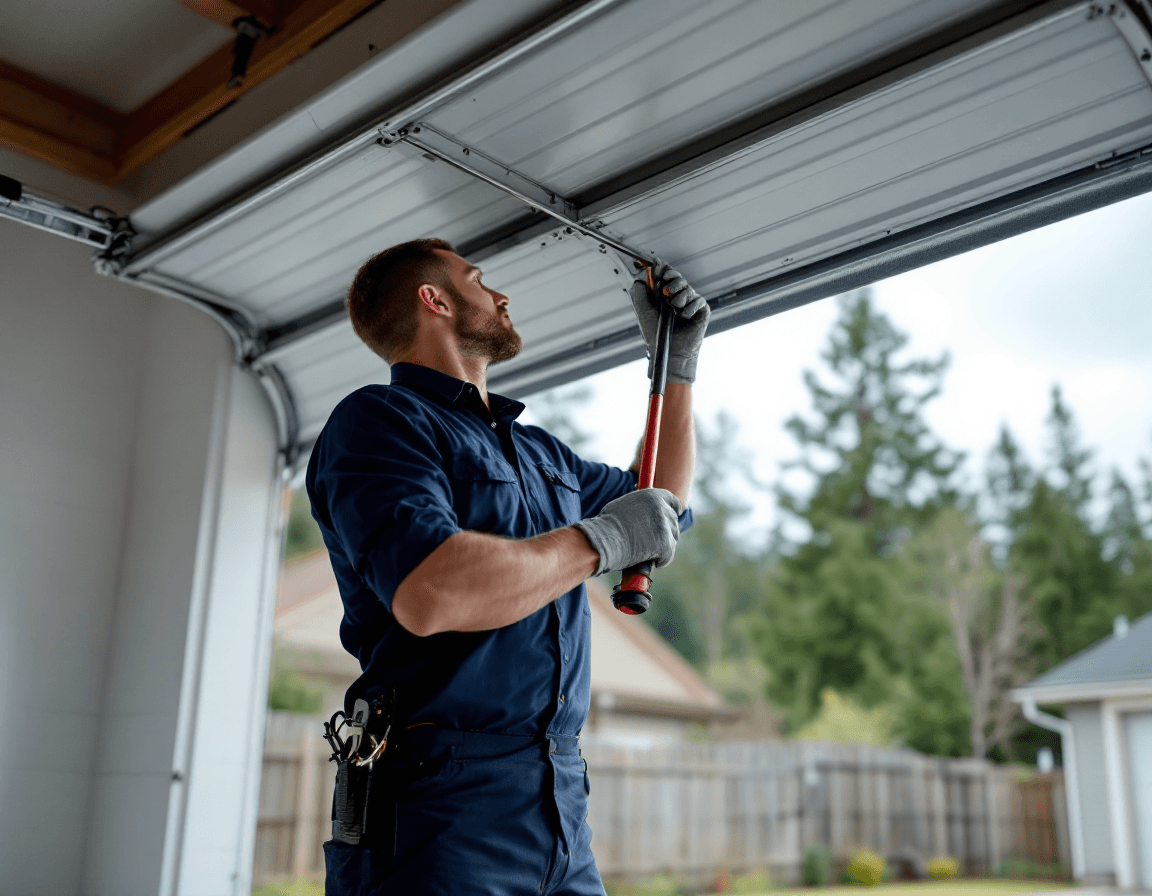
Garage Door Spring Replacement in Beaux Arts Village, WA is one of the most common repairs we handle on the lakeside streets of this small King County enclave, and it is also one of the most important to get right. The springs carry most of a garage door's weight, so when one fails, the door can become stuck, heavy, or dangerous almost overnight. Homes here often have older, well-built garages with heavier doors, tall tracks, and custom openers, which means the stress on the springs can be greater than what a standard builder-grade setup would produce.
Beaux Arts Village sits on the eastern shore of Lake Washington, and that location shapes how garage doors age. The air carries moisture off the water for much of the year, and winter brings long stretches of gray, damp weather punctuated by sharp cold snaps that can drop temperatures quickly. Metal that expands and contracts through those swings is exactly what wears a spring down over time. This guide explains what a failing spring looks like, how the repair works, what it costs, and how to stay safe while you wait for a licensed technician to arrive.
If you are reading this because your door just made a loud noise, will not budge, or hangs crooked on its tracks, you are in the right place. Seattle Garage Door Fix serves homes in the 98004 and 98005 ZIP codes and the surrounding Eastside communities, and we are happy to talk through your symptoms over the phone before anyone visits. Many spring problems can be diagnosed from a description alone, though a technician will always confirm the cause in person. The sections below walk through the details so you know what to expect.
Why Lakeside Garages Put Extra Strain on Door Springs
Homes near the shoreline of Lake Washington often have two-car garages built into sloped lots or set back from the street, and many of them were designed with a generous door height to accommodate larger vehicles, storage racks, or boat trailers. A taller or wider door is heavier, and that weight has to be counterbalanced by the springs above the opening. When a spring is sized for a lighter door, or when a heavier insulated panel replaced an original one, the spring spends years working harder than the manufacturer intended.
Moisture is the other factor. Humid air off the lake can settle into the galvanized and steel components of a spring system, and surface rust starts to form in the tightly wound coils. Rust does not usually break a spring on its own, but it adds friction and creates tiny stress points where the metal can fatigue. Over several wet winters, a spring that looked fine during a routine glance can lose its strength quickly.
Many properties in the area also have garages that double as workshops or storage areas, so doors open and close more often than a casual observer might expect. Frequent cycling accelerates wear, especially on older springs that were rated for fewer cycles. A door that goes up and down several times a day will reach the end of its spring life sooner than one used only for weekend trips. Understanding this pattern helps homeowners plan for replacement before a sudden failure.
Recognizing the Warning Signs Before a Spring Lets Go
A spring rarely fails without giving some signal first, although the signal is easy to misread. Homeowners often assume a noisy or sluggish door is just getting old, when in fact the spring is near the end of its life. Paying attention to small changes in sound, movement, and balance can prevent a midnight surprise. The following symptoms are the ones technicians see most often in this part of King County:
- A loud bang from inside the garage, sometimes compared to a gunshot, which usually means a spring has snapped.
- A door that will not lift at all, or that lifts only partway before stopping and needing a push.
- A visible gap or separation in the coils of a torsion spring mounted on the horizontal bar above the door.
- An opener that strains, hums, or clicks loudly while the door barely moves, which often indicates the springs can no longer share the load.
- Cables that look loose, slack, or frayed, particularly after a spring has broken and the door dropped unevenly.
- A door that closes too fast, slams shut, or closes crooked with one side lower than the other.
Any one of these symptoms deserves attention, and several together almost always point to a spring problem. Do not try to test the door by forcing it open or by hanging weight on the bottom panel. A door that is under spring tension, or one that has lost tension unevenly, can shift without warning. If you notice more than one symptom, call a technician before the next use.
Torsion and Extension Springs: Knowing What Your Door Uses
Most garage doors in Beaux Arts Village and across the Eastside use one of two spring designs. A torsion spring system mounts on a steel shaft across the top of the door opening, usually just above the track. When the door closes, these springs wind up and store energy, then release it to help lift the door. Torsion systems are generally quieter and smoother than extension designs, and they are common on heavier residential doors.
Extension springs run parallel to the horizontal tracks on each side of the door, typically in pairs or in a single long spring with a cable. They stretch when the door is lowered and pull back when the door is raised. Extension systems are often found on lighter doors or on older installations, and they usually include safety cables that run through the center of each spring. Those cables are designed to restrain the spring if it breaks, which is why they should never be removed or ignored.
Knowing which system you have matters for both the repair and the cost. A torsion spring replacement requires precise winding and careful calibration of the shaft, while an extension spring change involves releasing tension in a particular sequence and replacing the matched pair. Your technician will identify the system during the visit and explain whether a single spring or the full set should be replaced. In most cases, replacing both springs at the same time is the better choice, because the surviving spring is nearly as worn as the one that failed.
Winter Cold Snaps, Damp Air, and Spring Fatigue
The Pacific Northwest does not experience the extreme temperature swings of the interior West, but the cold snaps that do arrive in King County can be surprisingly hard on garage door springs. When the temperature drops quickly, the steel contracts and the metal becomes stiffer, which increases the load on a spring that is already weakened. Many homeowners notice that their door works fine in October and then groans or sticks on the first cold morning in January. That pattern often reveals a spring that was close to failing before the cold arrived.
Damp air adds a slower kind of damage. Water that collects in the coils and along the shaft oxidizes the steel and roughens the surface where the coils rub together. Over time, the spring loses its uniform tension, which can make the door sit unevenly or close with a jolt. Garages on the lake side of the community may stay damp longer than inland properties, so a periodic inspection of rust and coil condition is a good habit for anyone with an older door.
Fatigue is the underlying cause of most spring failures in the region. Each open and close cycle loads the metal a little, and eventually the steel reaches the point where it can no longer hold its rated tension. The springs may still look intact, but internal fatigue has already set in. This is why a spring that has lasted many years can still break without any obvious external damage, and why many technicians recommend replacement based on age and cycle count rather than waiting for a visible crack.
What Happens During a Professional Spring Replacement
A spring replacement is not a simple swap of one part for another. It begins with a full inspection of the door, the tracks, the cables, the drums, and the opener. The technician checks whether the door is still square in the opening, whether the hinges and rollers are working properly, and whether the cables are seated correctly on the drums. These checks matter because a new spring placed on a door with bad rollers or a damaged track will not perform as expected.
Once the inspection is complete, the technician secures the door and releases the old spring tension using properly rated winding bars and safety equipment. This step is the most hazardous part of the job, and it is exactly why spring work should never be attempted by an untrained homeowner. The old spring is removed, the replacement is sized to match the door weight and cycle rating, and the new spring is installed with the correct winding turns. Cables are checked for fraying and re-seated on the drums if needed.
After installation, the technician tests the door through several full open and close cycles. The door should rise smoothly, stay in place when left partly open, and close without slamming or drifting. The opener is checked for proper force and travel settings, and the safety reversal system is tested to confirm the door stops and reverses when it meets an obstacle. A clean, documented test run is the final sign that the repair is complete and the door is safe to use.
High-Cycle Springs and When They Make Sense
Standard residential springs are typically rated for a set number of cycles, often around ten thousand for many common designs, though exact ratings depend on the manufacturer and the spring specification. High-cycle springs are built with heavier wire or different alloys so they can handle a greater number of open and close cycles before wearing out. For a family that uses its garage door many times a day, high-cycle options can extend the life of the repair and reduce how often the springs need attention.
High-cycle springs are not automatically the right choice for every home. A household that uses its garage door only a few times a week may be well served by a standard spring rated for its usage. Homes with frequent deliveries, home-based businesses, multiple drivers, or regular workshop traffic often benefit from the upgrade. Your technician can estimate how many cycles your door sees in a typical week and recommend a spring rating that matches your daily routine.
Choosing a high-cycle spring also involves matching it to the door's exact weight and dimensions. An overly strong spring can make the door lift too quickly and strain the opener in reverse, while an underpowered spring leaves the door heavy and hard to operate. Precise sizing is the reason a professional assessment is worth the time, and it is one of the reasons we measure and weigh the door before recommending a specific spring option.
Balancing the Door So It Opens Smoothly Again
Balance is the quiet goal of every spring repair. A properly balanced door should feel light when lifted by hand, stay in place when stopped partway, and move evenly on both sides. An unbalanced door places extra load on one side, which can bend tracks, wear rollers, damage cables, and strain the opener. Many of the crooked or drifting doors we see in Beaux Arts Village are not failing springs at all but springs that were installed without proper balancing.
Balancing involves adjusting spring tension, checking cable length and seating, and confirming that the drums are turning together. The technician will lift the door by hand to its midpoint and release it. If the door rises or drops on its own, the spring tension needs fine adjustment. This process is repeated until the door holds its position on its own, which is the standard for a correct balance.
Homeowners can observe balance for themselves in a limited way without touching the springs. Disconnect the opener, lift the door about halfway by hand, and let go slowly. A balanced door should stay put. If it slides up or down, or if one side rises faster than the other, call for service rather than attempting an adjustment, since the springs remain under tension even when the door appears stationary.
Honest Pricing for Spring Replacement Around Beaux Arts
For most residential spring replacements, the typical cost falls in the range of $180 to $450. That range reflects the variety of door sizes, spring types, and work involved, and it is meant as a general guide rather than a fixed quote. The final price depends on whether you need one spring or a matched pair, whether the job requires high-cycle components, and whether cables, drums, or rollers also need attention.
Several factors push a quote toward the higher end of the range. A heavier or taller door, a custom wood or insulated steel panel, a damaged shaft that must be replaced, or a broken cable that requires new drum hardware will all add to the cost. Doors with multiple springs or unusual configurations take more time to balance. Expect a technician to explain these factors before any work begins, so you know exactly what is included.
Lower-end jobs usually involve a single standard extension spring on a light residential door with no additional parts needed. Even then, many technicians recommend replacing both springs in a pair, because the second spring has been under the same load and is often close to failure. Replacing both at once is generally more economical over time than returning for a second service visit a few months later.
Why Spring Work Belongs With Licensed, Insured Technicians
Garage door springs store enormous amounts of energy. A torsion spring under full tension can cause serious injury if it releases unexpectedly, and extension springs can whip violently when they fail. Attempting a spring replacement without the right tools, training, and safety equipment is one of the most common ways homeowners end up hurt. For that reason, we always recommend licensed, bonded, and insured professionals for any spring or cable work.
A licensed technician brings properly rated winding bars, safety cables, and the experience to recognize when a door has additional hidden problems. Insurance and bonding protect your home and property during the work, and they give you a clear point of accountability if anything goes wrong. These are not extras; they are the baseline standard for work that involves stored mechanical energy above a parked car.
If someone quotes a spring repair at an unusually low price with no inspection, no mention of safety equipment, and no testing, treat that as a warning sign. A legitimate service call will include an assessment, a clear explanation of the work, and a functional test before the technician leaves. Asking questions about how the work will be performed is a reasonable part of choosing a company for a repair this important.
Safe Checks You Can Do While Waiting for a Technician
While you wait for a technician, there are a few safe steps you can take to protect your household. Keep everyone clear of the door area, especially children and pets, because a door with a broken spring can drop suddenly. Avoid standing under the door or leaning on it, and do not attempt to lift it manually if it feels stuck or unusually heavy. Use the side door or the main entry instead until the repair is complete.
You can also do a visual check from a distance. Look at the torsion shaft above the door for any visible gaps in the coils, and look along the horizontal tracks for extension springs that appear stretched, separated, or hanging loose. Check whether the cables appear frayed or disconnected from their drums. Take photos or note what you see so you can describe the problem accurately when you call.
Finally, disconnect the opener by pulling the emergency release cord only if the door is closed and you understand that the door will then be operated manually. Even then, keep your hands away from the springs and the bottom panel. The safest option is to leave the door closed, use another entrance, and call a licensed technician to inspect and repair the springs.
Whether your door has gone silent after a loud bang, refuses to lift on a cold January morning, or closes crooked after a spring break, a licensed technician can restore it to safe, smooth operation. Call Seattle Garage Door Fix at (888) 799-3819 to schedule a spring replacement in Beaux Arts Village, and we will explain your options, the likely cost within our typical range, and what to expect on the day of service.