
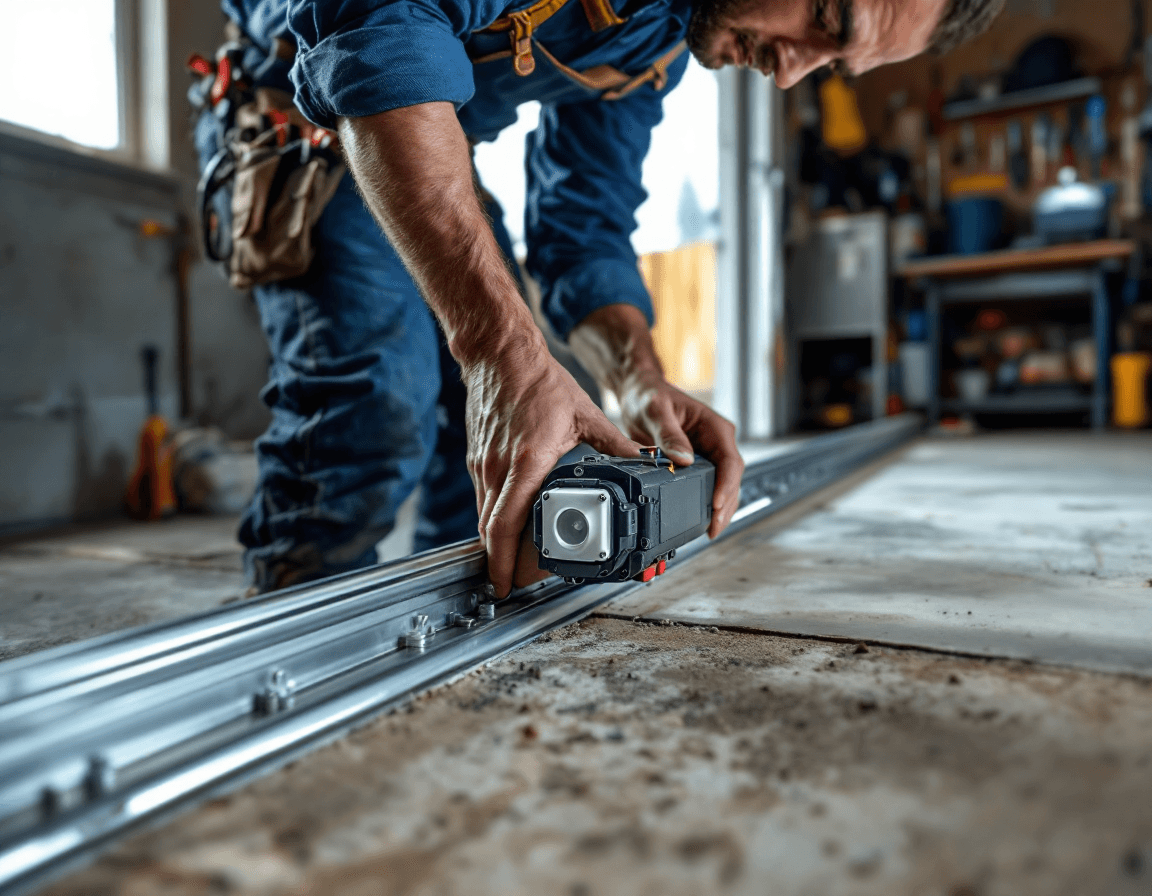
Garage door sensor repair in Medina, WA is one of the simplest fixes we handle, and one of the most frustrating to live with while it's broken. A door that stops halfway down, bounces back up for no obvious reason, or only closes when you hold the wall button can make an otherwise quiet home feel unpredictable. The good news is that the safety sensors near the floor are designed to fail in a way that protects people, so a reversing door is usually doing its job by refusing to close on something it doesn't trust. Most of the time, the fix is a matter of alignment, clean lenses, or a wire that has been pinched or damaged, not a major mechanical failure.
Medina sits along the western shore of Lake Washington, with large lots, mature trees, and homes that often include detached or deep garages with long driveways. Many of the garages we see here were built or updated to fit a lifestyle that includes boats, bikes, lawn equipment, and the occasional extra-wide vehicle. That combination matters because the sensors and their wiring are often installed by a contractor who was focused on the opener, not on how the rest of the household would use the door. When a sensor problem appears in a Medina garage, we start by asking how the door has been behaving, not just where the sensor is mounted.
This page explains how we diagnose and repair photo-eye sensors in Medina and the surrounding Overlake-area neighborhoods, what the most common causes look like, what a typical repair costs, and when it is time to call a licensed technician rather than trying to solve the problem yourself. Our pricing for most sensor repairs falls between $85 and $225, depending on whether the job involves realignment, a replacement pair, or wiring work. If you would rather have someone look at it today, you can reach us at (888) 799-3819.
What Those Two Little Eyes Are Actually Doing
Every modern garage door opener with safety reversal uses a pair of photo-eye sensors mounted on either side of the door opening, usually a few inches above the floor. One sensor sends an invisible infrared beam and the other receives it. As long as the beam is unbroken, the opener is allowed to close the door. If something crosses the beam, such as a child, a pet, a bicycle wheel, or a stray lawn cart, the receiver stops sending the "all clear" signal and the door reverses.
That simple arrangement has a few moving parts that can go wrong. The two units must face each other squarely, the lenses must be clean enough for the beam to get through, and the low-voltage wire running from the sensors back to the opener must deliver a steady signal. When one of those elements drifts, the opener interprets the situation as an obstruction and does exactly what it was built to do. That is why sensor problems often look like a mechanical failure from the outside even though the springs, cables, and rollers are working perfectly.
It also helps to know that the sensors are not the same as the pressure-sensitive safety reverse, which detects resistance on the door itself. Some older openers rely on that pressure feature alone, but any opener sold in the last couple of decades is generally required to have the photo-eye system. If your opener has a pair of small plastic housings near the bottom of the tracks, you are dealing with photo-eyes, and the troubleshooting steps below apply.
Why the Door Reverses Right Away or Refuses to Close
When a door reverses immediately after you press the button, the most common explanation is that the opener cannot see a clear beam at all. The sensor indicator may be dark, or one light may be blinking in a pattern that your opener's manual describes as a fault. In many cases the sensors are simply pointed slightly away from each other, perhaps because the bracket was bumped while someone was hanging a shelf, sweeping out the garage, or parking a vehicle with a tall roof rack that scraped the mounting point.
Start by looking at both sensors and comparing their indicator lights with the instructions printed on your opener or in its manual. Many systems show a steady light on the sending unit and a different steady light on the receiving unit when everything is aligned. If one light is off, check that the wire is firmly seated at both ends and that nothing is blocking the lens. If both lights are on but the door still reverses, the alignment is the more likely issue and it may need a careful adjustment with a helper holding a flashlight or watching the indicator while you nudge a bracket.
We often find that homeowners have already tried the easy fixes and are close to the answer without knowing it. A bracket that has loosened by a quarter turn can move the beam just enough to break the connection. A bent mounting arm can look straight and still point the sensor off-axis. These small changes are invisible to the eye but obvious to the opener, which is why a technician with a meter and a sense of the bracket geometry can often sort them out quickly.
When Sensors Blink, Go Dark, or Send Confusing Signals
A sensor light that is off or blinking is one of the most useful clues you will get, but it only helps if you know what the sequence means for your particular brand. Some openers blink when they detect a wiring fault, others when the beam is interrupted for longer than a set period, and a few will show a code that combines both. The safest first step is to find the model number on the opener and look up its diagnostic chart, since guessing from a single blink can send you chasing the wrong problem.
Power is the other piece to check. Sensors run on low voltage supplied through the opener, so a disconnected or corroded terminal can leave one unit without enough juice to show a steady light. In Medina garages, where humidity from the lake and the surrounding trees can linger through the cooler months, terminal screws sometimes loosen or develop a thin film of corrosion over time. Cleaning the contacts and tightening the connection often restores normal operation without replacing any hardware.
If the light is off on both units, the problem may be upstream, in the opener's control board or the transformer that feeds it. That is a different level of repair and should be handled by someone who can test the circuit safely. We will always tell you whether a sensor issue is truly a sensor issue before recommending parts, because replacing a working sensor pair is an expensive way to learn that the real fault was a loose wire.
Sun Glare and the Medina Light Problem
Sun glare is a surprisingly common reason that otherwise healthy sensors misbehave, and it is particularly relevant for garages with windows, open side doors, or driveways that face west or south. Infrared light from direct sunlight can overwhelm the receiving eye, making it think the beam is blocked or confusing the signal enough that the door reverses without warning. The effect is usually strongest in the late afternoon and early evening, when the sun sits low enough to shine straight into the garage opening.
Lake-facing properties add another wrinkle. Reflections off the water and bright light bouncing from pale driveways or light-colored siding can be enough to trigger a reversal on certain days, even though the sensors were working fine the week before. If the problem seems to come and go with the time of day or the season, glare is a likely suspect. The fix is often a combination of repositioning the sensor slightly, adding a small shield or hood where the manufacturer allows it, and making sure the lenses are not fogged or scratched in a way that scatters the light.
We do not recommend making any change that blocks the sensor's view of the floor or interferes with the beam path. The goal is to keep the sensors reliable without compromising safety, and a good technician will test the door through a full open-and-close cycle at different times of day before calling the job finished.
Alignment Drift from Wind, Vehicles, and Daily Use
Garages in this part of the Pacific Northwest tend to see a lot of mechanical stress from ordinary life. Wind pushing against a large door, a vehicle clipping a mounting bracket, a bike handlebar bumping a sensor while someone stores equipment, and temperature swings that cause metal and plastic to expand and contract all work against a precise alignment. Over months and years, these small events can shift a sensor just enough for the opener to notice.
Trees are part of the picture too. Many Medina properties have mature maples, evergreens, and dense shrubs close to the garage. Branches and roots can push on exterior walls, and in some cases, the vibration of a nearby driveway or patio can work the mounting hardware loose. Wood framing that swells during wet winters and shrinks during dry spells can also change the angle of a sensor bracket that was originally installed on a flat surface.
Realignment is usually straightforward once the cause has been identified, but it helps to keep the mounting hardware snug and to avoid leaning on the sensor housings when you pull the car in or out. If you notice a sensor pointing noticeably off-center, a quick check with a level or a straight edge can confirm whether the bracket has rotated. When the bracket itself is cracked or the mounting surface has deteriorated, replacement is more practical than repeated adjustment.
Damaged and Chewed Sensor Wiring
Low-voltage sensor wire is thin, and it is easy to overlook until it causes trouble. In a garage, the wire usually runs along the wall, up and across the header, or through a track bracket before reaching the opener. Along the way, it can be pinched by a door roller, nicked by a staple, pulled tight when the door is lifted, or chewed by rodents that find garages a comfortable place to nest during colder months. Signs of wiring damage include intermittent reversals, a sensor that works when the wire is bumped, and a light that flickers without any obvious cause.
Rodent damage deserves special attention. Garages on wooded lots can attract mice and squirrels, and they sometimes find low-voltage wire tempting to gnaw. The damage may be a small nick or a cut that is hard to see, and it may only cause a fault once the insulation has been compromised enough to short. If you find droppings, shredded insulation, or a section of wire that feels brittle, that is a strong sign that the run needs to be replaced rather than patched.
Repair typically involves replacing the damaged section with wire rated for the job and securing it so it cannot rub against sharp edges or moving hardware. We use proper connectors and keep the run protected, since a neat, supported wire is far less likely to fail again. If the wire has been damaged in several places, replacing the full run is often the more reliable and cost-effective option.
Sensor Replacement Versus Realignment: How We Decide
Not every sensor problem requires replacement, and an honest technician should be able to explain the difference clearly. Realignment is appropriate when the sensors are functional, the lenses are clean, the wiring is intact, and the only issue is that the beam is not reaching the receiver. Replacement becomes the better choice when a unit is cracked, has a cloudy or damaged lens, shows no light at all despite good power, or is incompatible with a newer opener.
Compatibility is worth mentioning because some owners in Medina have upgraded their openers over the years while keeping older sensor hardware, or they have added a second door and needed a matching pair. Mixing sensors from different systems can produce unreliable behavior even if both appear to work on their own. When we replace a pair, we confirm that the new sensors match the opener's requirements so the system reads them correctly.
Our typical range of $85 to $225 for most sensor work reflects this range of outcomes. A simple realignment and cleaning visit sits at the lower end, while a replacement pair with new wiring sits toward the upper end. We will explain which path makes sense before any parts are ordered, so you are not guessing about what you are paying for.
Safety Boundaries: What Homeowners Should and Should Not Attempt
Sensor work is one of the few garage door tasks that a homeowner can reasonably attempt, but only within clear limits. Cleaning lenses, checking indicator lights against the manual, confirming that a bracket is tight, and clearing debris from the track are all reasonable steps. Anything involving the door's springs, cables, drums, or track should be left to a licensed professional, because those components store large amounts of energy and can cause serious injury when handled without the right tools and training.
It is also wise to disconnect power to the opener before touching wiring, and to keep your hands clear of the door while testing. If you are working with a helper, agree on a simple signal so that nobody triggers the opener while someone is adjusting a bracket. When in doubt, pause and call. A reversing door is a safety feature doing its job, and it should not be bypassed or disabled to make a problem go away.
We always recommend licensed professional service for spring and cable work, and we will say so plainly if a sensor visit reveals a broader issue. That honesty protects both you and your household, and it keeps the repair focused on what truly needs attention.
What a Medina Sensor Visit Typically Involves
When you schedule a sensor repair with us, the visit usually begins with a conversation about what the door has been doing and when the problem started. We ask whether the reversal happens every time or only at certain hours, whether the door has been bumped or serviced recently, and whether any other changes have occurred in the garage. Those details often narrow the diagnosis before we touch a tool.
Next, we inspect both sensors, the wiring run, the mounting brackets, and the opener's indicator behavior. We test the door through several cycles, watching how the sensors respond and whether the reversal is consistent. If the problem is alignment, we adjust and retest. If it is wiring, we identify the damaged section and explain the options. If it is a failed sensor, we confirm compatibility before replacing it.
Before we leave, we walk through the results with you and point out any maintenance steps that will help the system stay reliable, such as keeping the lenses clean and checking the brackets each season. The aim is not just to get the door closing today but to give you a clear picture of the system so the next problem is easier to recognize.
Keeping Sensors Reliable Through Medina's Seasons
Pacific Northwest weather is gentle in some ways and demanding in others. Mild temperatures help rubber and plastic age more slowly than in harsher climates, but the long damp stretches of fall and winter bring moisture, mildew, and dust that can cling to sensor lenses and corrode connections. Spring brings pollen and leaf debris, and late summer can bring dry, dusty conditions that settle on surfaces. Each season offers a chance to catch small issues before they grow.
A simple seasonal routine works well for most households. Wipe both sensor lenses with a soft, dry cloth every few months, and check that the wire is still secured along its route. Look at the indicator lights during a normal open-and-close cycle, and note whether the door behaves the same way it did last season. If you notice a change, act on it early rather than waiting for the door to fail.
- Wipe the sensor lenses gently with a dry microfiber cloth every few months, and more often during pollen season or after heavy storms.
- Check that both brackets are tight and that neither sensor has rotated out of its original position.
- Look along the low-voltage wire for pinches, rubs, staples, or signs of nibbling, and secure any loose sections away from moving parts.
- Test the door's reversal by placing a flat object, such as a piece of wood, in the path of the closing door, and confirm it reverses as expected.
- Note any new behavior, such as a light that blinks at certain times of day, and mention it when you schedule service.
Those habits take only a few minutes and can prevent many of the calls that otherwise arrive on a rainy Saturday morning.
Choosing a Technician for Sensor Repair Near Overlake and Medina
Homeowners in Medina often have high expectations for the professionals who work on their property, and that standard is a good one for garage door service too. A reliable technician should be licensed, bonded, and insured, should explain the problem in plain language, and should give you a clear sense of options and costs before starting. They should also be willing to say when a problem is outside their scope or when a simpler fix will do the job.
Working across the Overlake area and the surrounding Eastside communities gives our team familiarity with the kinds of garages, openers, and driveway layouts common in this part of King County. We bring that experience to each visit without assuming that every door is the same, because a garage tucked beside a waterfront property can have very different exposure and wiring conditions than a home on a wooded lot a few streets inland.
If you are dealing with a door that will not close, reverses without warning, or only closes when you hold the button, you do not have to guess at the cause. A short visit can usually determine whether the fix is a simple alignment, a cleaned lens, a tightened connection, or a replacement sensor pair. When you are ready to talk it through, call (888) 799-3819 and we will help you decide the next step for your Medina garage.