
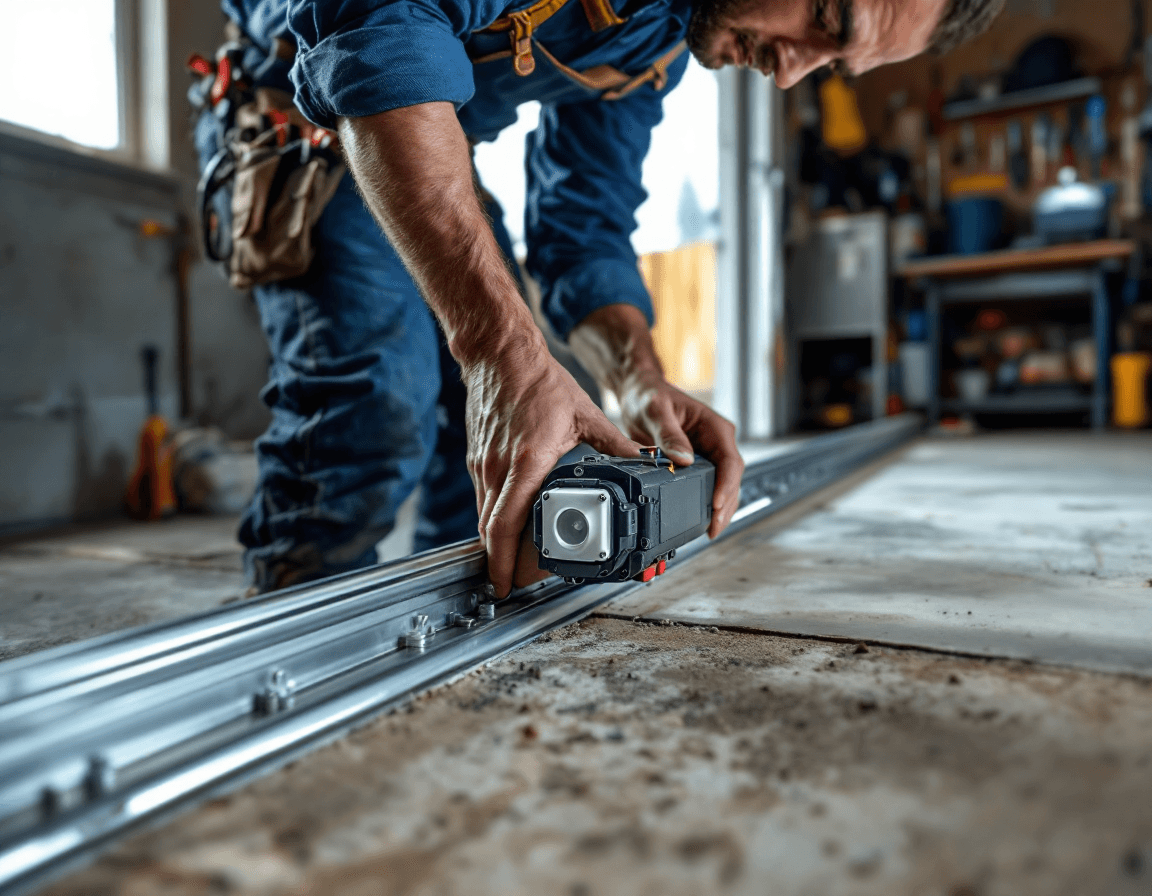
Garage door sensor repair in Lynnwood, WA usually comes down to one stubborn problem: the photo-eyes at the bottom of your door no longer agree that the path is clear. When that happens, the door will either refuse to close, reverse the moment it starts down, or close only while someone holds the wall button. Lynnwood's mix of older split-levels, newer townhomes near Alderwood, and attached garages along the busy arterials means we see a wide range of sensor setups, and most of the failures trace back to alignment, wiring, or light interference rather than a dead opener. This page explains what those sensors do, how to read the warning signs, and when a licensed technician should step in.
Lynnwood's weather adds its own pressure to these components. Our winters bring long stretches of drizzle, damp air, and temperature swings that move door panels and tracks just enough to nudge a sensor out of line, while the cold and wet can slowly work into wire insulation and connector housings. Summer brings the opposite problem, with low afternoon and evening sun that can wash out the sensor's infrared beam for a few minutes each day. Understanding those local patterns helps you tell a fixable adjustment from a part that has truly reached the end of its life.
If your door is misbehaving right now, you can work through the checks below to narrow down the cause. Some steps are safe for any homeowner, while others, especially anything involving the torsion springs, cables, or drum, belong to a licensed professional. Call Seattle Garage Door Fix at (888) 799-3819 if you would rather have a technician confirm the diagnosis and handle the repair the first time.
What the Photo-Eyes Actually Do in a Lynnwood Garage
Every modern residential door with an automatic opener has a pair of photo-eye sensors mounted near the floor, one on each side of the opening. The sender side emits an infrared beam, and the receiver side must see that beam continuously while the door is closing. If anything interrupts the beam, the opener reverses the door, which is a safety feature required on automatic residential systems so the door does not crush a child, pet, or car bumper. The system is simple in concept, but it relies on precise alignment and a clean, uninterrupted signal path.
The two sensors are wired back to the opener's logic board through a low-voltage cable, usually a two-conductor or four-conductor run that follows the wall and ceiling from the door to the motor unit. Because that wire passes through staples, behind trim, and along a moving-parts area in many garages, it is one of the more fragile parts of the system. Many homeowners assume the sensors themselves are the problem, when the actual fault is a pinched or cut wire or a loose terminal at the opener. A good technician checks the entire path before replacing anything expensive.
Most sensors sold for residential doors are designed to mount within roughly six inches of the floor, facing each other across the opening. Some older Lynnwood homes have been fitted with a replacement sensor pair from a different brand than the original opener, which can cause compatibility or voltage-matching issues. Knowing what your opener expects helps prevent a frustrating cycle of buying the wrong part, and it is one of the reasons we check the model of both the opener and the sensors before recommending a swap.
Reading the Indicator Lights Before You Call
Before you touch a screwdriver, look at the small indicator lights on each sensor. On most units, one light is steady to show power, while the receiver light (often a green or amber LED) turns solid when the beam is properly aligned and unobstructed. A light that is off, blinking, or flickering tells you something specific about the problem, and reading those signals accurately can save you a service call's worth of guesswork. Keep in mind that exact colors and behaviors vary by manufacturer, so consult your sensor's label or manual if you are unsure.
Use the following quick reference to interpret what you are seeing:
- A sender light that is completely off usually points to a power or wiring problem, such as a loose connection at the terminal block or a cut conductor.
- A receiver light that blinks steadily often means the beam is reaching the receiver but not strong enough to hold a solid connection, which commonly happens after a bump or when the lenses are dirty.
- A receiver light that stays off while the sender is lit indicates the beam is blocked or the sensors have drifted out of line.
- A light that blinks only when the door moves can point to a wire that flexes or chafes as the door travels, which is a classic sign of damage near the track.
Lights alone do not always tell the full story, so pay attention to when the problem appears. If the door works fine in the morning but fails in the late afternoon, glare is a likely suspect. If it fails only after a windstorm or a neighbor's tree trimming, physical movement is more likely. Writing down the time of day, the weather, and what the door was doing when it failed will help a technician work faster when they arrive.
Why Doors Reverse the Instant They Start Down
A door that reverses immediately after you press the button is often telling you the sensors see something in the path right away, or they never completed their handshake at all. The most frequent cause is a sensor that has been bumped by a broom, a recycling bin, a kid's bike, or the edge of a car door, leaving it pointed slightly above or below its partner. Even a small tilt can be enough to break the beam, because the beam is narrow and the receiver is designed to detect only a focused signal.
Another common culprit is debris. Cobwebs, dust, and the fine grit tracked in from driveways across Lynnwood can coat the lenses and reduce the signal strength until the receiver can no longer hold it. A quick wipe with a soft, dry cloth often restores function, which is why cleaning belongs at the very start of any troubleshooting. Avoid harsh solvents on the plastic housings, since they can cloud the lens over time and make the problem worse.
Sometimes the reversal is not caused by the sensors at all but by a mechanical issue that the opener interprets as an obstruction. A door that has become hard to move, perhaps from a worn roller, a bent track, or a spring that has lost tension, may stall or push back against the motor, triggering the same reversal logic. If cleaning and realigning the sensors do not solve the problem, have a licensed technician evaluate the entire door balance, because spring and cable work carries serious risk and should never be attempted by an untrained homeowner.
Sun Glare Along Lynnwood's Open Streets and Evening Light
Lynnwood has plenty of open sightlines, from wide residential cul-de-sacs to the broader commercial corridors near Highway 99 and the Alderwood area. Those open exposures mean that during late spring, summer, and early fall, the sun can sit low on the horizon and shine directly into the garage opening at certain hours. Infrared sensors can be sensitive to strong ambient light, and a low, direct beam of sunlight can wash out the receiver just long enough to cause the door to reverse. This is why some homeowners report that their door only misbehaves at a specific time of day.
Glare problems often show up on west-facing or south-facing garages, particularly where the driveway slopes or where the door opening faces a wide, pale concrete apron that reflects light back up at the sensors. You can test for glare by watching the sensor lights at the same time of day when the problem occurs. If the receiver light flickers only when sunlight hits the lens, a simple fix is to shade the sensors or adjust their angle slightly so the sun cannot reach the receiver lens directly. Shields, when used, should be mounted carefully so they do not block the infrared beam itself.
Glare is typically a seasonal issue, so it may seem to come and go. Many Lynnwood homeowners notice the problem during the long evenings of summer and then forget about it until the next year. If you document the time of day and the season when the door acts up, the pattern becomes clear, and a technician can recommend a repositioning or shading solution that addresses the root cause rather than simply replacing working parts.
Alignment Steps a Homeowner Can Check Safely
Basic sensor alignment is one of the few garage door tasks that a careful homeowner can handle without special tools, as long as the door is fully powered down and kept at a safe, stable position during the work. Start by disconnecting power to the opener at the wall outlet or breaker, and make sure the door is not in motion. Never reach into the door track or near the springs while troubleshooting, and keep your hands clear of any moving panel edges.
Once the area is safe, you can check the alignment and cleanliness of the sensors using a short, deliberate sequence:
- Wipe both lenses with a dry microfiber cloth and remove any cobwebs or dust from the bracket area.
- Confirm each sensor is mounted at roughly the same height from the floor, typically within about six inches, and that both face straight across the opening.
- Loosen the mounting bracket slightly and adjust the angle gently until the receiver light turns solid, then tighten the bracket without shifting the position.
- Restore power, run the door through a full close cycle, and watch the indicator lights to confirm they stay steady.
If the lights still will not stabilize after careful alignment, stop and call for help. Repeatedly forcing the sensors or bending the brackets can crack housings, and a damaged bracket often makes the problem worse. A technician can check voltage at the terminals, test the wire continuity, and determine whether the sensor pair itself needs replacement.
Chewed, Pinched, and Corroded Wiring in Damp Conditions
Sensor wiring is one of the most underrated sources of door failure in Western Washington. Garages in Lynnwood often host rodents, especially in the cooler months when mice and rats look for shelter, and they are known to chew insulation on low-voltage wiring that runs along the ceiling or down the wall. A chewed sensor wire can produce intermittent failures, where the door works for a few days and then suddenly refuses to close, which makes diagnosis frustrating if you are only looking at the sensors themselves.
Moisture is the second major factor. Damp air, condensation on cold surfaces, and occasional water tracked in on tires can work into terminal blocks and connector housings over time. Corrosion on the copper contacts raises resistance and can make a solid connection behave like a flaky one, especially when the door vibrates during travel. A technician will typically inspect the wire run for nicks, check the terminal screws for tightness, and look for green or white crust on exposed metal before deciding whether the wiring should be repaired or replaced.
Repairing damaged low-voltage sensor wire is usually straightforward, but the way it is done matters. Splices should be made in a sealed, accessible junction rather than buried behind drywall, and the wire should be secured so the door's motion cannot pull on it. Where a run has been stapled too tightly or pulled taut near the track, relocating the wire is often the real fix. Whenever a repair touches the opener's control circuit, a licensed technician should verify the final result before the door is returned to regular use.
Knowing When a Sensor Should Be Replaced Instead of Adjusted
Not every sensor problem can be solved by moving the bracket or cleaning the lens. Photo-eyes age, and the infrared emitter and receiver can lose sensitivity after years of heat, sunlight, and humidity. A sensor that flickers no matter how carefully it is aligned, or one with a cracked housing, a fogged lens that cannot be cleaned, or a damaged circuit board, is usually better replaced than repeatedly adjusted. Replacement is also the right path if the sensor pair is an incompatible brand that never worked well with the opener.
Replacing sensors is generally one of the more affordable garage door repairs, and it is much quicker when the technician has the correct matching pair on the truck. Because sensor pricing and availability vary by opener model, a good technician will confirm compatibility before ordering parts. Be wary of any service that quotes a replacement without first testing the existing wiring, since a new sensor will not fix a broken conductor and you could end up paying twice.
Replacement is also an opportunity to upgrade the mounting setup. Newer brackets can be easier to aim and less prone to being knocked out of line, and some installations benefit from relocating the sensors slightly away from direct sun exposure or high-traffic areas where a stray bin or bike might strike them. A technician who understands the local layout can recommend a mounting position that will hold up through Lynnwood's wet winters and bright summer evenings.
What a Typical Sensor Visit Covers and What It Costs
For most sensor repairs, the typical range is $85 to $225, depending on what the diagnosis reveals. A simple realignment and cleaning sits at the low end, while a full sensor replacement, a wire repair, or a combined fix involving both the sensors and the opener connection will land toward the higher end of that range. Every situation is different, so the final figure depends on the specific opener, the condition of the wiring, and whether any additional parts are required.
A thorough service call should include a visual check of both sensors, verification of the indicator lights, testing of the wire run and terminal connections, and a full open-and-close cycle to confirm the fix. The technician should also explain what they found and why they recommend a particular repair, rather than handing over a quote without context. If the root cause turns out to be a spring, cable, or track issue rather than a sensor problem, the technician should tell you that clearly, because spring and cable work requires its own assessment and is handled only by licensed professionals.
It is reasonable to ask what the visit covers before you schedule it, including whether the diagnosis is part of the quoted price and whether any parts are included. Clear answers up front help you avoid surprises and make it easier to compare options. Seattle Garage Door Fix is licensed, bonded, and insured, and we are happy to walk you through what we check and why before any work begins.
Serving Alderwood, City Center, and Surrounding Lynnwood ZIP Codes
Seattle Garage Door Fix provides sensor repair across Lynnwood, with service coverage that includes the 98036, 98037, and 98087 ZIP codes. Those areas stretch from the busy retail blocks near Alderwood to the quieter residential streets around Lynnwood City Center and the neighborhoods that border Scriber Creek and the Interurban Trail corridor. Each part of town has its own mix of housing styles, and that mix influences which sensor problems we see most often.
Near Alderwood, many garages sit beside commercial parking lots and busy access roads, where vehicles and delivery traffic occasionally clip the bottom of a door or nudge a sensor bracket. Around City Center and the older residential streets, detached garages and older tract homes often have wiring that has been modified over the years, which makes careful inspection especially important. Newer townhome developments may have compact garages with limited clearance, where a sensor is more likely to be bumped during everyday use.
Wherever you live in Lynnwood, our technicians start by asking about the door's behavior, checking the lights, and inspecting the sensors and wire run in your specific garage. Because local conditions differ from block to block, we pay close attention to sun angles, nearby traffic, and the way your garage is oriented. If you are unsure whether your address is in our coverage area, call (888) 799-3819 and we can confirm.
Keeping Sensors Reliable Through Lynnwood's Wet Winters and Bright Summers
Preventive care is the best way to avoid sudden sensor failures, and it does not take much time. Once or twice a year, wipe the sensor lenses, check that the brackets have not shifted, and look at the visible wire for signs of chewing, cracking, or loose staples. If you notice dust or cobwebs building up near the floor, clean them before they become a problem, since debris is one of the quieter causes of intermittent reversals.
Seasonal awareness helps too. In wet months, keep an eye on the terminal area at the opener and any junction boxes for signs of moisture, and consider sealing gaps where rodents may enter the garage. In summer, watch for glare at the times of day when your door has been acting up, and consider a simple shade or repositioning if the sun regularly hits the receiver lens. Small, consistent habits often prevent the larger repairs that come from neglected sensors.
Finally, avoid making repairs that go beyond your comfort level. Sensor alignment and cleaning are approachable tasks, but spring tension, cable condition, drum work, and track repairs carry real risk of injury and should be left to licensed professionals. If your door shows signs of mechanical trouble, such as uneven movement, grinding, sagging, or a loud bang when it operates, stop using it and schedule a professional inspection. Seattle Garage Door Fix can help you sort out whether the problem is a simple sensor fix or something that needs a broader look.
Garage door sensors are small components, but they carry an important safety job, and a door that reverses or refuses to close is a sign that something needs attention. If your Lynnwood garage door is failing to close, reversing right away, or closing only while you hold the wall button, do not wait for the problem to get worse. Call Seattle Garage Door Fix at (888) 799-3819 for a licensed, insured technician who can diagnose the issue, explain your options clearly, and get your door closing safely again.