
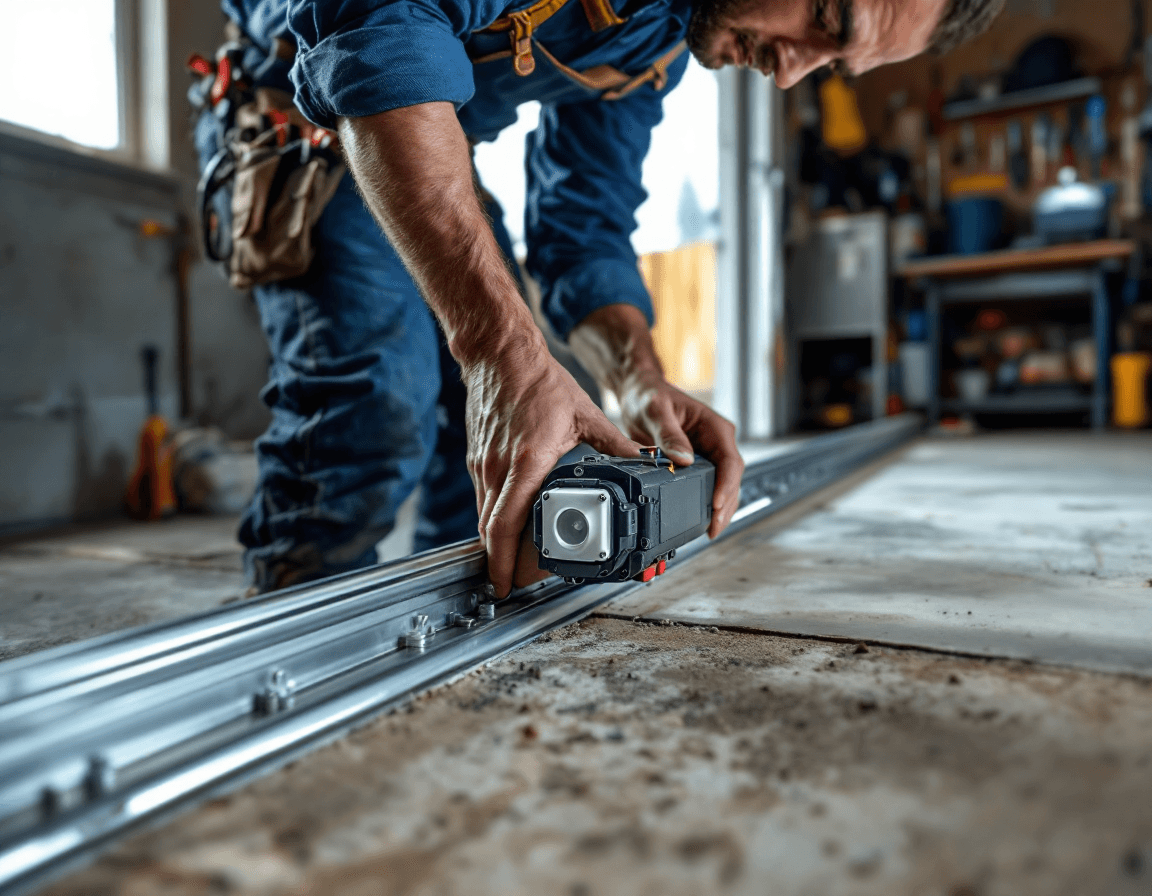
Garage door sensor repair in Newcastle, WA is one of the most common calls we get from homeowners in the 98056 and 98059 areas, and it is often the easiest fix in the whole system. A door that lowers, stops, and climbs back up is frustrating, but the cause is usually a pair of small safety eyes that have shifted, dimmed, or lost their connection. Those sensors sit low on each side of the opening, about six inches off the floor, and they exist for one reason: to stop the door if something is in the path. When they cannot confirm that the path is clear, the opener is designed to refuse to close, and that is exactly the behavior you are seeing. Understanding why that happens makes the repair much faster and far less stressful.
Newcastle homes come with their own set of conditions. Many sit on sloped lots off the Coal Creek corridor, with driveways that pitch toward the garage and garages that are built into the hillside. Wet winters, damp air rising from the creek drainages, and the moss that grows along shaded foundations all add up over time. Our technicians see sensors that have been working fine for years suddenly start misbehaving after a wet November, and the reason is almost always moisture, movement, or a wire that has been slowly stressed. This page walks through what causes those problems, how to tell them apart, what a careful repair involves, and what homeowners should expect to pay.
Before you start troubleshooting on your own, it helps to know what a professional will check and why. Some of the work is simple enough for a homeowner to try, and some of it, especially anything involving springs, cables, or the door's counterbalance, belongs to a licensed technician. We will be clear about that boundary throughout. If you call us at (888) 799-3819, a technician can usually tell you within a few minutes whether your symptoms point to a sensor issue or something else.
Why a Door That Reverses Without Warning Is Really a Safety Message
When a garage door closes and then goes right back up, most people assume the opener has failed. In reality, the opener is doing its job. The safety reversal system is designed to detect an obstruction in the door's path and respond instantly, and a sensor that is misaligned or receiving a weak signal looks identical to a child's toy sitting on the floor. The door has no way to know the difference, so it protects the person or object it thinks might be there. That is why sensor problems are treated seriously even when they feel like a minor annoyance.
Reversing is not the only symptom. Some doors close only when someone holds the wall button down, which is the opener's way of bypassing the safety beam so the door can still be operated manually. Others refuse to close from the remote or keypad but will move if the wall control is pressed firmly. Each of these behaviors points back to the same pair of sensors and the wiring that connects them to the opener's logic board. Treating the symptom by simply disconnecting the sensors is dangerous and should never be done, because it removes the protection that keeps the door from crushing a vehicle, a pet, or a person.
The good news is that the diagnosis is usually straightforward. A technician will look at the indicator lights on each sensor, check the alignment, inspect the wiring from the wall to the opener, and test the reversal force. Most cases are resolved in a single visit, and many are resolved with nothing more than a bracket adjustment and a cleaned lens. Taking the symptom seriously and calling for help early keeps a small repair from becoming a larger one.
How Newcastle's Damp Winters and Hillside Moisture Affect Sensors
The Pacific Northwest climate is hard on exposed electronics, and garage door sensors live in one of the most exposed spots in the house. They are mounted at floor level, where water splashes from wet tires, where runoff pools against the slab during heavy rain, and where dust, leaf debris, and mud collect along the base of the door track. In Newcastle, the long stretches of drizzle and the humid air that settles in the hills mean that condensation can build up inside the sensor housings and on the lenses. Over time, that moisture can corrode the terminal screws, weaken the connection to the wire, and fog the lens enough to interrupt the infrared beam.
Homes near the creek corridors and on lower-lying lots sometimes deal with additional seepage along the garage floor. When the slab is damp, the mounting brackets can rust, and a bracket that rusts can slowly shift out of position, which changes the angle of the sensor even though nobody has touched it. Our technicians often find that a sensor bracket has bent slightly because the screw has loosened in the wet wood or the metal has weakened from years of spray. It is a quiet failure that only shows up as an intermittent problem, which is why it can be so frustrating to diagnose from the driveway.
Seasonal changes matter too. Wood framing and concrete expand and contract with temperature and moisture, and that movement can nudge a sensor out of line over the course of a winter. Homeowners sometimes notice that the door works perfectly in August and begins reversing in January. That pattern is common and does not necessarily mean the sensor is failing. It usually means the sensor was already near the edge of its alignment window, and seasonal movement pushed it past that point.
Reading the Indicator Lights Before You Pick Up a Tool
Almost every modern sensor pair has small indicator lights on the housing, and those lights are the fastest way to understand what is happening. On most systems, one sensor, usually the sending unit, shows a steady light when power is present, and the receiving unit shows a steady light when it sees the beam. If the receiver light is off, blinking, or flickering, the sensors are not communicating the way they should. The exact meaning of each light varies by manufacturer, so the owner's manual or the label on the sensor is the authoritative guide, but the general pattern is consistent across most brands.
A steady light on both sensors usually means the connection is good, and the problem is somewhere else, perhaps with the door's travel limits or the opener's force settings. A blinking light often indicates a misalignment, because the receiver is getting a weak or intermittent signal. A completely dark sensor suggests a power problem or a broken wire. Taking a few minutes to note which lights are on, which are off, and whether they change when the door moves can save a technician significant time, and it gives you useful information to share when you call.
Keep in mind that a dark light does not always mean a dead sensor. Dust on the lens or a bit of spider silk across the opening can block enough of the beam to cause the receiver to drop out. Wipe both lenses gently with a soft dry cloth before you assume the hardware has failed. If the lights come back and the door closes normally, you have solved the problem for the moment, though a technician can still check the alignment to make sure it stays solved.
- Steady lights on both sensors with the door still reversing: check the travel limits and force settings, since the sensors may be fine.
- Blinking or flickering receiver light: the beam is weak or interrupted, so inspect alignment and clean both lenses.
- Dark sensor with no light at all: check the wiring at the terminals and confirm the opener is supplying power to the sensor line.
- Lights that change when the door moves: suspect a loose wire or a bracket that flexes under vibration.
Sun Glare on Western Exposures and the Evening Trip
One of the more surprising causes of sensor trouble in Newcastle is sunlight. Many garages face west or southwest, and during late spring, summer, and early fall, the low afternoon and evening sun can angle directly into the sensor lenses. Infrared sensors are designed to detect a specific beam, but strong ambient light, particularly the warm, low-angle light that comes through at sunset, can overwhelm the receiver and make it think the path is blocked. The result is a door that closes fine in the morning and then reverses every evening at the same time.
Homeowners often blame the opener when this happens, but the fix is usually a sensor adjustment rather than a new opener. A technician may shift the receiver slightly so it is less exposed to direct light, add a small shield or hood to block the glare, or adjust the sensor's position so the beam stays strong while ambient light is reduced. In some cases, the best solution is a sensor model with better light rejection, which can be a worthwhile upgrade if the original units are older. The goal is always to keep the sensors reliable without compromising the safety function they provide.
Because sun glare is so time-dependent, it can be hard to reproduce during a casual inspection. If your door reverses at a predictable time of day, write down the time and the season when it happens. That detail helps a technician plan a visit at the right hour to see the problem for themselves, and it often leads to a faster and more accurate fix. Describing the pattern clearly is one of the most useful things a homeowner can do before the appointment.
Realignment Done Right: Bracket, Lens, and Line of Sight
Realigning a sensor pair sounds simple, and in many cases it is, but doing it properly takes patience. The two units must face each other directly, with their lenses aimed at the same height and the same center point across the door opening. Even a small angle can cause the beam to miss the receiver when the door is moving or when the sensor warms up, which is why an alignment that looks correct for a few seconds can still fail under real conditions. A careful technician checks the alignment at several points during the door's travel and watches the indicator lights throughout.
The mounting bracket is often the root of the problem. Brackets can bend when the door is struck by a bicycle, a trash can, or a delivery cart, and they can also loosen as the mounting screws work their way out of the wood or drywall over time. Tightening a loose bracket may solve the issue on its own, but a bent bracket usually needs to be replaced, because it will keep drifting out of position no matter how carefully it is adjusted. We recommend checking brackets as part of any sensor service, since a solid mount is the foundation of a reliable alignment.
Lens cleanliness matters just as much as the bracket. A film of dust, road grime, or residue from cleaning products can scatter the infrared beam and reduce the signal the receiver sees. Cleaning the lenses with a soft cloth, and avoiding harsh chemicals that can cloud the plastic, is a simple habit that prevents many false reversals. After cleaning and aligning, a technician will test the door several times to confirm that it closes smoothly and reliably under normal conditions.
Chewed Wires, Pests, and the Problems Hidden Along the Garage Floor
Wiring damage is one of the most frustrating sensor issues because it can be hard to see. Sensor wires run along the wall or floor from the opener to each sensor, and in Newcastle they are often routed through areas where rodents, insects, and even curious pets can reach them. Mice and rats are a particular concern in the damp months, and they are drawn to the insulation on low-voltage wire. A small bite through the jacket can cause the signal to drop intermittently, and the symptom may come and go depending on how the wire is flexed or how damp the air is.
Physical damage from the garage itself is another common cause. Staples driven through the wire during a remodel, wires pinched under a shelf bracket, or cords caught in a door track can all break the conductor without leaving an obvious mark. Over time, the broken strands can make intermittent contact, which is why the door may work for days and then suddenly refuse to close. A technician will typically check the wire at its terminals, follow it along its route, and test for continuity to find the break.
Repairing damaged sensor wire is usually a straightforward job, but it must be done with the right gauge and insulation, and the connections must be sealed against moisture. Splicing wire without proper protection is one of the fastest ways to create a new problem in a damp garage. A professional repair includes sound connections, secure routing away from sharp edges and moving parts, and protection from pests where needed. Taking care of the wiring now prevents the same fault from returning after the next rainy season.
When a Sensor Needs Replacing Instead of Adjusting
Not every sensor problem can be solved by adjusting. Sensors have a service life, and when the internal electronics age, the beam can become unreliable even when the alignment is perfect. Signs that a replacement may be the better option include a receiver that never reaches a steady light, a sensor housing that is cracked or heavily corroded, lenses that cannot be cleaned to clear, or a unit that fails after the wiring has been verified. In these cases, paying for an adjustment visit alone would only delay the inevitable.
Replacement sensors are generally matched to the opener brand and the sensor type, so it is important to use compatible parts. A mismatched sensor may fail to communicate with the opener or may not respond to the same safety logic, and that defeats the purpose of the repair. Our technicians confirm the correct replacement before ordering, so the sensors you install are designed to work with your system. Replacing both units as a pair is often the most reliable approach, since an older partner can drift out of step with a new one.
It is also worth considering whether the opener itself is contributing to the problem. Logic boards can fail in ways that mimic sensor faults, and an opener that is more than a decade old may have other wear that affects its safety circuit. A technician can test the opener's response to the sensor inputs and determine whether the fault lies in the sensors, the wiring, or the control board. An accurate diagnosis keeps you from spending money on the wrong part.
Wiring Repairs That Hold Up Through Damp Seasons
Because Newcastle winters are long and wet, any wiring repair should be built to last through repeated cycles of moisture and temperature change. That means using connections rated for damp locations, keeping splices off the floor where water can pool, and avoiding tight bends that stress the conductor. A neat, well-supported run of wire is far less likely to fail than a hastily patched one, and a little extra care at the time of repair pays off for years.
Strain relief is an often-overlooked detail. When a wire is pulled tight between the sensor bracket and the wall, every bump of the door and every seasonal shift of the framing puts stress on the connection. A proper repair leaves enough slack to move without tension, secures the wire at intervals with appropriate clips, and avoids routing it across hinge points or where a bicycle or cart might catch it. These small details make the difference between a repair that lasts and one that starts failing again within a year.
Finally, a good repair includes a verification step. After the wiring is restored, the technician tests the sensor circuit under load, confirms the signal is steady across the door's full travel, and runs multiple open and close cycles to make sure the reversal system responds correctly. This testing matters because a loose or marginal connection may work during a quick check and fail later. Verifying the whole system before leaving the job is what turns a patch into a dependable repair.
What a Typical Sensor Repair Costs in Newcastle
For most garage door sensor repairs, including photo-eye alignment, sensor replacement, and wiring fixes, homeowners can expect to pay somewhere in the range of $85 to $225. Where a job falls in that range depends on what the technician finds. A simple realignment with a cleaned lens and tightened bracket is typically at the lower end, while a replacement sensor pair with new wiring to the opener is more likely to land toward the higher end. The final quote is always based on an on-site diagnosis, so the price you receive will reflect the actual condition of your system.
It helps to understand what drives the cost. Parts, if needed, are one factor, and the time required to route or repair wiring is another. Access can also play a role, particularly in garages where the sensors are difficult to reach or where the wiring runs through finished walls. We aim to explain the diagnosis clearly before any work begins, so you know what is being repaired and why, and you can decide how you want to proceed.
Some situations fall outside a sensor repair entirely. If the door is out of balance, the springs are broken, the cables are frayed, or the door is binding in its track, those problems require different work and different safety precautions. Spring and cable repairs must be performed by a licensed, trained professional, because the tension stored in these components can cause serious injury if mishandled. If we find that your door needs that kind of service, we will tell you plainly and recommend the appropriate next step rather than attempting work outside the scope of a sensor repair.
Keeping Your Sensors Reliable Between Service Visits
A little routine care goes a long way toward preventing sensor problems. Wipe both sensor lenses with a soft dry cloth every few months, especially during the fall and winter when road spray and dust are heavier. Check that the mounting brackets are snug and that the sensors still point straight across the opening. Keep the area around the sensors clear of boxes, bikes, and stored items that might be bumped or that could block the beam.
Pay attention to changes in the door's behavior. If it begins to take longer to close, if it reverses only at certain times of day, or if one indicator light starts to flicker, schedule a visit before the problem becomes a full failure. Early attention usually means a simpler and less expensive repair. It also reduces the chance that a marginal sensor will fail at an inconvenient moment, such as when you are trying to get out of the house in a hurry.
Finally, consider a periodic professional inspection, especially if your garage has a history of moisture, pests, or frequent bumps. A technician can check the sensors, brackets, wiring, and opener safety response in a single visit, and can identify small issues before they turn into service calls. Keeping your sensors aligned and your wiring sound is one of the simplest ways to protect your door's safety features for the long run.
If your garage door is closing only when you hold the wall button, reversing right away, or sitting with a dark or blinking sensor light, you do not have to wait for the problem to get worse. Our licensed and insured technicians serve Newcastle and the surrounding Seattle area, including 98056 and 98059, and we can usually diagnose the issue on the first visit. Call Seattle Garage Door Fix at (888) 799-3819 to schedule a sensor inspection and get a clear, honest quote before any work begins.