
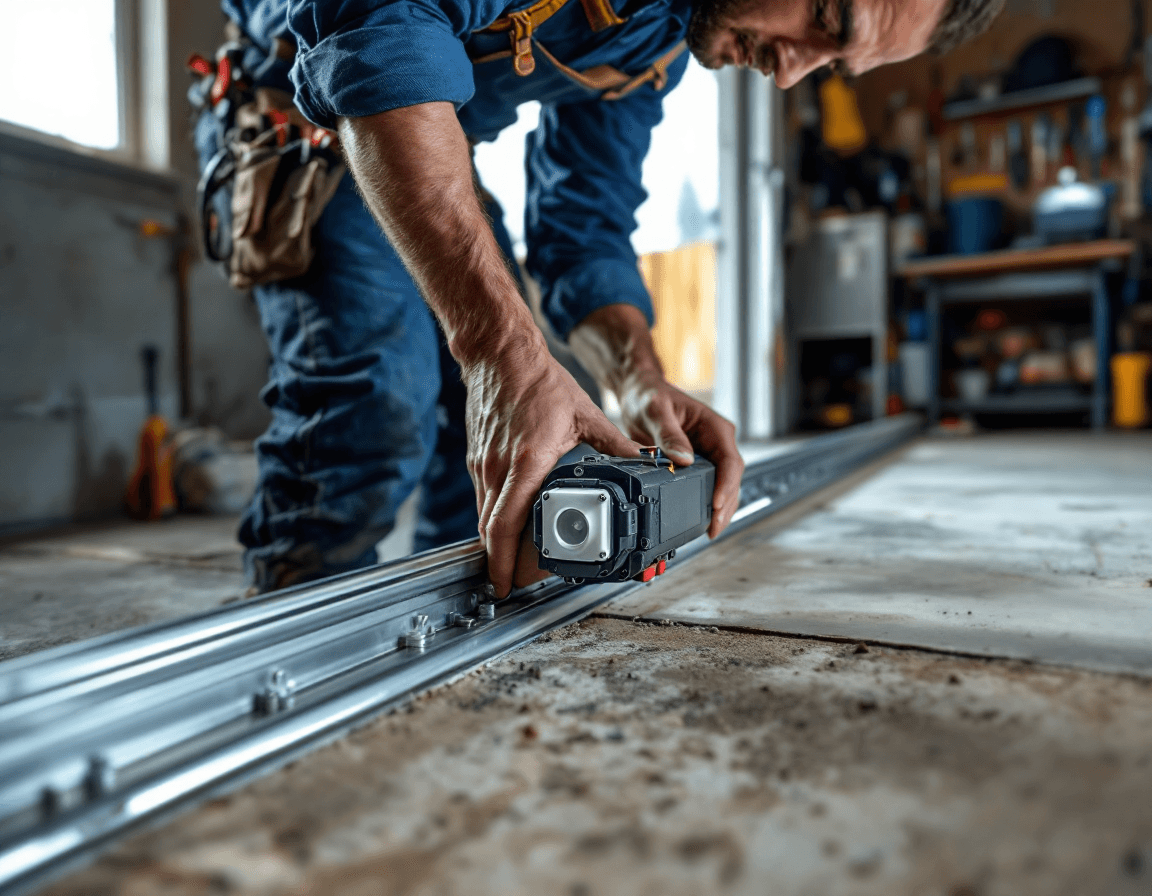
Garage door sensor repair in Pacific, WA is one of the most common calls we handle, and it is also one of the easiest problems to misdiagnose. When a door refuses to close, or starts climbing back up the moment it touches the floor, most homeowners assume the opener has failed. In reality, the two small photo-eye sensors mounted near the bottom of the track are usually the culprit. They are simple devices, but they depend on precise alignment, clean lenses, and intact wiring, and all three are exposed to the dust, moisture, and sunlight that come with life in the Puget Sound lowlands.
Pacific sits in the Green River valley area of King County, where the climate shapes garage doors more than many people expect. Winters bring long stretches of drizzle and damp air, while summers can bring low, bright sun that angles straight into an open garage bay during the morning and late afternoon. Both conditions affect the safety sensors that stop a closing door when something is in the path. This guide explains what those sensors do, why they fail, how to recognize the warning signs, and what a typical repair involves, so you can make a confident decision before you pick up the phone.
Our goal is practical: help you narrow down the cause, understand what is safe to check yourself, and know when a licensed technician should take over. Sensor work itself is often straightforward and affordable, with most repairs falling in the $85 to $225 range depending on whether the issue is alignment, a cleaning-and-adjustment visit, a full sensor replacement, or a wiring repair. Keep reading for the specifics.
How Photo-Eye Sensors Keep Your Door Safe
Every modern residential garage door opener in our service area is required to include a safety reversal system, and the photo-eye pair is the most common version. One sensor, the emitter, sends an invisible infrared beam across the door opening to the receiver on the opposite side. As long as that beam reaches the receiver, the opener's logic treats the path as clear and continues closing. If the beam is broken by a child, a pet, a bicycle, or a stack of boxes, the opener stops and reverses.
The sensors are usually mounted on brackets about four to six inches above the garage floor, one on each side of the door track. That height is deliberate, because the system is designed to detect obstacles at ground level where a child or animal could be standing. When people say a door "won't close," they are often describing a sensor that has lost its line of sight, not a motor or spring problem. Understanding this design helps you separate sensor faults from other issues before you start troubleshooting.
Because the system is so simple, small changes can have an outsized effect. A bracket that shifts by a quarter inch, a lens coated with grime, or a wire that has been nicked by a shovel can all interrupt the beam or the signal it carries. Technicians often find that the sensors themselves are working perfectly and only need realignment, which is why a careful inspection is worth doing before anything is replaced.
Reading the Indicator Lights Before You Touch Anything
Most photo-eye sensors have a small indicator light on one or both units. On many common models, a steady light on the emitter means it has power, and the receiver's light signals whether it is seeing the beam. The exact meaning varies by manufacturer and model, so check the label or the instructions printed on your opener's sensor housing. In general, a light that is off, blinking, or inconsistent points toward power, alignment, or wiring rather than a problem with the opener's main logic.
A quick visual check tells you a lot. If the emitter light is off, the sensor may not be receiving power, which often traces back to a loose connector at the opener or a broken wire somewhere along the run. If both lights are on but the door still reverses, the beam may be reaching the receiver while something else, such as strong sunlight or a misdirected reflection, is confusing the receiver. If only one light is blinking, the sensors may be out of alignment or one lens may be obstructed.
Keep notes as you observe. Write down whether the lights change when the door is closing, when it is open, or when you wave a hand through the opening. These details help a technician reproduce the problem quickly on the first visit, which often means a faster repair and a lower total bill. Pay attention to whether the behavior changes at certain times of day, because that can point toward sun glare rather than a mechanical fault.
- Steady light on the emitter and receiver with the door reversing: check alignment and lens cleanliness first.
- Light off on the emitter: check the connector at the opener and look for visible wire damage.
- Receiver light blinking or flickering: check for sun glare, debris, or a partially blocked lens.
- Door only reverses in the afternoon or morning: suspect sunlight hitting the receiver directly.
Alignment Problems After Bumps, Bikes, and Wind
Sensor misalignment is the single most common cause of sensor-related door trouble in our area. It rarely happens all at once. Instead, a bracket loosens a little each season from vibration, a bumped trash can shifts the sensor by a fraction of an inch, or a bicycle handlebar clips the housing during a tight turn in the garage. Over time the beam drifts off the receiver's lens, and the door begins to reverse for no obvious reason.
Wind and temperature cycles play a role too. Pacific's winters can bring gusty storms that rattle garage walls, and the daily swing between cold mornings and warmer afternoons can slowly flex mounting brackets and fasteners. A bracket that was perfectly square in September may sit slightly crooked by January. This is why sensor problems often seem to appear suddenly after a storm, even though the drift started weeks earlier.
Realignment is usually a fast fix when the sensors themselves are healthy. A technician will typically tighten the mounting hardware, adjust each unit so the beam is centered on the opposite lens, and confirm the indicator lights and the door's reversing behavior through several full cycles. Homeowners can sometimes make small adjustments with a level and a helper, but the work requires patience. Stop if a bracket is cracked or the housing is damaged, because those parts usually need replacement rather than another adjustment.
Sun Glare Along the Valley Floor
Sun glare is a surprisingly frequent cause of reversing doors in Pacific, especially for garages with a south- or west-facing opening or a driveway that receives direct light at certain hours. Infrared receivers can be overwhelmed by strong ambient light, and when the sun hits the receiver lens at a low angle, the signal can appear to drop out. The door may close perfectly at noon and reverse every evening when the light angle changes.
Seasonal shifts make this worse. In the lower sun angles of late autumn and winter, the beam path can be bathed in light for longer stretches of the day. Summer mornings can also bring hard glare when the sun rises over a neighboring roofline. Homeowners often assume the sensors have failed, when the real issue is simply that the receiver is looking into a bright source.
Solutions are usually simple. A technician may shift the receiver slightly so it faces away from the direct light path, add a small shield or hood designed for the sensor housing, or adjust the mounting height within the manufacturer's allowed range. Avoid covering the lens with tape or cardboard, which can block the beam entirely and create a new safety problem. If the glare pattern is clear and consistent, describe the timing when you call, because it helps the technician plan the correction on the first visit.
Chewed Wires, Staples, and Other Hidden Damage
Wiring damage is less common than alignment trouble, but it can be harder to spot. The thin low-voltage wires that run from the opener to each sensor are exposed along the wall and ceiling in many Pacific garages, where they can be pinched by staples, scraped by ladders, or chewed by rodents searching for insulation. A wire that is partly cut may still carry signal intermittently, producing a door that works one day and reverses the next.
Pests are a real concern in our area, particularly in garages that store firewood, pet food, or garden materials near the house. Mice and rats tend to find low-voltage wire insulation appealing, and damage can appear in places that are hard to inspect without moving stored items. Look along the path from each sensor to the opener, especially where the wire passes through holes in the wall, and check the connections at both ends for corrosion or looseness.
Repairs usually involve splicing in a new section of wire with proper connectors, or replacing the entire run if the damage is extensive. Do not attempt to repair a wire by simply twisting bare ends together and wrapping them with ordinary tape, because damp conditions can cause the connection to corrode and fail. A technician will use appropriate low-voltage connectors and insulation so the repair holds up through the wet season. Note that sensor wiring is low voltage, but any work involving the opener's power supply or the main circuit should be left to qualified professionals.
- Look for shredded or discolored insulation along the sensor wire run.
- Check where the wire passes through walls, ceilings, and door tracks for pinching.
- Confirm both ends are firmly seated at the sensor housing and the opener terminal.
- Watch for droppings, nests, or chewed packaging near the wire path.
When the Door Closes Only If You Hold the Wall Button
One of the most telling symptoms is a door that will close only while you hold the wall control button down. In most openers, this "constant pressure" or "hold-to-close" mode is what the system falls back to when it detects a sensor fault. The opener is designed to protect people, so when it cannot confirm the safety beam is clear, it refuses to run the door in automatic mode. Holding the button usually bypasses the automatic reversing logic, which is why the door completes its travel only under pressure.
This symptom should be taken seriously. Because the safety reversal is disabled in that state, the door can close on a person, pet, or object without the usual protection. Do not rely on hold-to-close operation as a permanent workaround, and keep people and objects clear of the doorway whenever the door is moving. Many homeowners notice this behavior only after a sensor has been out of service for some time, so if you see it, schedule a repair soon.
The cause is often one of the issues already described: a misaligned bracket, a dirty lens, sun glare, or a broken wire. Less commonly, the fault lies in the opener's control board or the sensor input itself. A technician can test the circuit, confirm which component is failing, and restore automatic closing. We recommend a full inspection rather than guessing, because a sensor replacement will not fix a problem that originates in the wiring or the opener logic.
Cost, Scope, and What a Typical Visit Covers
Most photo-eye sensor repairs fall in the range of roughly $85 to $225, depending on what the technician finds. A simple realignment and cleaning visit sits at the lower end, while a full sensor replacement or a wiring repair that requires running new low-voltage cable sits higher. Costs can also depend on the sensor model, how accessible the wiring is, and whether additional parts such as brackets or connectors are needed. Your technician should explain the scope and price before starting work.
A thorough service visit usually includes a power and signal test, inspection of both sensors and their brackets, lens cleaning, alignment verification, and a full set of door cycles to confirm reversing and closing behavior. The technician should also check the opener's safety settings and the travel limits to confirm the door responds correctly under load. If the fault is intermittent, expect the technician to observe the door across several operating conditions rather than declaring it fixed after a single test.
Ask questions if anything is unclear. A good technician will tell you which parts were replaced, which were adjusted, and what you can monitor between visits. Keep the invoice and any notes about when the problem started, because those details can help with future troubleshooting. If you have an older opener or an unusual sensor model, mention it upfront, since compatibility can affect both the repair approach and the final cost.
Keeping Sensors Reliable Through Wet Pacific Winters
Prevention is inexpensive and easy to fold into your regular routine. Once a season, wipe both sensor lenses with a soft, dry cloth to remove dust, spider webs, and the fine film that builds up in a garage that sees a lot of road grit tracked in on shoes and tires. Avoid harsh cleaners, which can cloud the lens over time. A quick visual check of the brackets will also catch loosening before it leads to a reversing door.
Moisture deserves special attention in our climate. Damp garages, condensation on cold walls, and occasional wind-driven rain can all affect connections over the course of a winter. Make sure the sensor housings are firmly mounted and that the wire connectors are not exposed to standing water or drips from the door hardware. If your garage is prone to dampness, consider asking your technician about weather-appropriate connectors and secure wire routing during your next visit.
Finally, keep the path clear. Stored bicycles, recycling bins, and garden tools should not sit within the beam path, both for safety and to reduce the chance of an accidental bump. Teach everyone in the household to watch the door's lights and to report unusual reversing right away. Early attention usually means a simpler, less expensive repair, and it keeps the system doing the job it was designed to do.
Why Some Sensor Jobs Belong Only to Licensed Technicians
Sensor alignment and cleaning are safe for most homeowners to observe and, in some cases, to attempt with care. However, garage door systems involve springs, cables, and high-tension components that can cause serious injury if handled incorrectly. Torsion springs store enormous energy, and cable drums can release that energy suddenly. These parts should never be adjusted, loosened, or replaced by anyone without the proper training and tools, regardless of how simple the sensor problem seems.
If your sensor troubleshooting reveals a damaged track, a bent panel, a cable that has slipped, or a spring that looks worn or broken, stop and call a licensed professional. Do not attempt to wind springs, disconnect cables, or pry the door off its track. Those tasks require specialized equipment and experience, and mistakes can lead to severe injury or a door that falls unexpectedly. A licensed, bonded, and insured technician can handle the full range of safety-related repairs in a controlled way.
Our technicians are licensed, bonded, and insured, and we recommend professional service for any spring, cable, or track work. For sensor issues, we will tell you honestly whether a simple adjustment will solve the problem or whether a broader inspection is warranted. Our approach is to fix the cause, not just the symptom, so you can trust that your door is closing safely.
Garage door sensors are small components with a big job, and a reversing or non-closing door in Pacific is usually a problem that can be solved quickly once the cause is identified. If your door refuses to close, reverses without warning, runs only when you hold the wall button, or shows an unusual sensor light, call Seattle Garage Door Fix at (888) 799-3819. We serve Pacific and communities across Western Washington, and we will help you get your door closing safely and reliably again.