
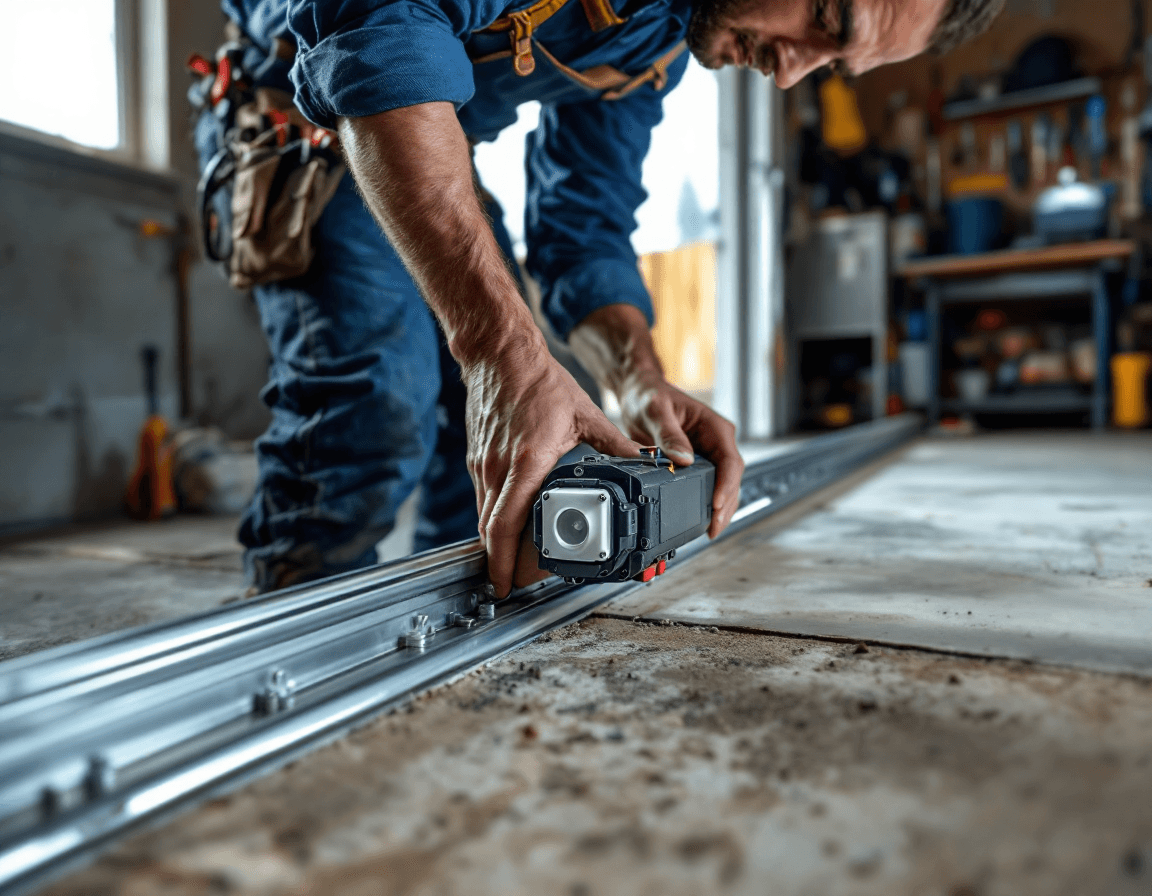
Garage door sensor repair in Auburn, WA is one of the most common service calls we handle, and it is also one of the most fixable. When a door that worked fine last week suddenly refuses to close, or closes only to climb back up as soon as it touches the floor, the cause is usually a pair of small photo-eyes at the bottom of the door tracks. Those sensors form an invisible beam across the opening, and if the beam is interrupted, interrupted in a way the opener doesn't expect, or never reaches its partner at all, the door is designed to reverse for safety. That behavior protects children, pets, and vehicles, which is exactly why it should never be bypassed.
Auburn homes present their own conditions for these sensors. Many houses sit in neighborhoods where the garage is attached to a driveway that slopes toward the street, where rain collects in the door track, and where the humid winter air settles into a closed garage for weeks at a time. Add the low, bright sun that angles across the valley in late afternoon, plus the vibration from years of daily use, and it's no surprise that sensor alignment drifts and wiring wears out. Our technicians see these patterns across the city, from the older ranches near Auburn Downtown to the newer builds up in Lakeland Hills and along the slopes of Lea Hill.
This page explains what usually causes sensor failures, how to read the signs your door is giving you, what a typical repair involves, and where homeowners in the 98001, 98002, and 98092 ZIP codes can start troubleshooting safely. It also covers when a sensor problem is really a sign of something else, such as worn springs or cable damage, which need a licensed professional rather than a weekend project. Read through the sections below, and if your door still won't behave, call us at (888) 799-3819.
Why Your Door Reverses the Moment It Starts Closing
A door that starts down and then immediately rises is the classic sensor complaint, and it almost always means the opener has lost the beam signal. The opener does not think in terms of "sensor broken" versus "sensor blocked." It only knows that the receiving eye is no longer seeing the transmitting eye's light, so it reverses as a safety precaution. Several things can cause that loss of signal, including a bent bracket, a lens coated with grime, debris sitting in the path of the beam, or a wire that has shifted and no longer delivers a steady signal. Because the sensors are low on the track, they catch dust, cobwebs, spider activity, and the occasional thrown bike pedal or leaf blower nozzle.
In Auburn, we often find a thin film of road grime and garden debris on the sensor lenses, especially on homes where the garage door sits close to a lawn or a gravel edge. Fall leaves that blow in from maple and alder trees can settle against the lens housings and cut the beam just enough to cause trouble. Sometimes the problem is simpler: a sensor got knocked by a stray broom, a garbage can, or the edge of a car door, and the sensors shifted a fraction of an inch. A shift that small can be invisible to the naked eye and still be enough to break the connection.
Before you assume the worst, look for a clear, unobstructed path between the two sensors. Check that nothing is lying on the floor or hanging on a hook in the path of the beam. If the door reverses right away, the sensor beam is almost certainly being interrupted rather than the opener being faulty. That distinction saves time, because it tells you the repair is most likely in the sensor area and not in the motor or logic board.
Reading the Sensor Lights Like a Technician
Most modern photo-eyes have a small indicator light on each unit, and those lights are your best early warning. On many common systems, the sending eye shows a steady light whenever it has power, while the receiving eye shows a steady light only when it is properly aligned and seeing the beam. When the receiver light is off, blinking, or flickering, the sensors are not communicating in the way the opener expects. The exact pattern varies by manufacturer, so the owner's manual or the label on the sensor housing is the place to confirm what each light means for your particular system.
A steady sending light paired with a dark or blinking receiving light usually points to alignment. When the lights are both dark, the problem is more often power or wiring, such as a loose connection at the opener terminal block or a break somewhere along the low-voltage run. Blinking lights that change pattern when you nudge a sensor often mean the beam is catching at the edge of the lens. Lights that come on briefly and then go out may indicate a wire that flexes with door movement and makes intermittent contact.
Pay attention to what happens when you run the door. If the sensor lights behave normally while the door is open but change the moment it begins to close, the trouble may be at the bottom of the door where the track bends or where a cable is pulling the wire. If the lights are wrong even with the door stationary, the trouble is likely electrical or alignment-related. Writing down what you observe, along with the time of day and the weather, helps a technician narrow the issue quickly.
Realignment Done Right: Brackets, Bumps, and Bracket Creep
Realignment is the most common sensor fix, and it is also the one homeowners most often attempt on their own. The goal is to have each photo-eye pointed straight at the other so the beam crosses the door opening at a consistent height. Most sensors mount on small brackets bolted to the garage wall or to the door track, about six inches above the floor on standard installations, and they use wing nuts or small screws that allow fine adjustment. A common mistake is to loosen the bracket and tilt the unit until one light turns on, without confirming that the beam is actually centered on the receiving lens.
Brackets drift over time. In a Pacific Northwest garage, the combination of humidity, temperature swings, and the gentle daily vibration of the door can loosen fasteners and bend thin metal brackets slightly out of square. We call this bracket creep, and it is responsible for more repeat calls than almost anything else on this topic. A bracket that looks straight can still hold a sensor a few degrees off, which is enough over a standard garage span to lose the beam.
When you realign, work slowly and tighten each adjustment before testing. Confirm both lights are steady, then close the door fully and open it again to make sure the beam holds through the entire travel. If a bracket is bent or cracked, replacing it is usually inexpensive and more reliable than repeatedly adjusting a damaged part. Technicians also check that the sensors are mounted on the same side of the opening, facing one another squarely, because a sensor installed slightly higher on one side can produce intermittent reversals that seem random.
Sun Glare Along the Valley Floor and Low Autumn Light
Sun glare is a real and frustrating cause of reversing doors, and it's especially relevant for homes that face west or sit on open lots where the low sun comes straight into the garage opening. Photo-eyes are designed to detect a specific infrared beam, but very bright, low-angle sunlight can overwhelm the receiving lens and make the sensor think the beam has been interrupted. The result is a door that closes perfectly at noon but reverses at four in the afternoon, or one that behaves differently in autumn than it does in midsummer, when the sun sits at a different angle.
Many Auburn homes experience this during the long shoulder seasons, when the sun is lower and brighter across the valley and when the sky is often clear between weather systems. A garage that faces the direction of the late-day sun may see glare directly into the sensor lens, particularly if the door is partially open and the receiver is angled toward the outside. The fix is often as simple as shielding the receiver with a small hood or repositioning it so that its lens is not pointed toward the sun during the hours when the problem appears.
Be careful not to solve glare by aiming the sensors at a sharper angle, since that can reduce the beam's reliability in other conditions. Sensor placement should be level and centered, with minor shading added only where needed. If glare is a repeating issue, a technician can evaluate whether a different mounting height or a shielded housing will work better for your specific orientation. Testing at the same time of day when the problem occurs is the most reliable way to confirm glare is the cause.
Chewed Wires, Rodents, and Moisture in Auburn Garages
Sensor wiring is thin, low-voltage cable that runs from the opener to the photo-eyes along the wall or the track, and it is surprisingly vulnerable. Rodents are a persistent problem in many garages, and mice and rats are known to chew on insulation for reasons that have little to do with the wire itself. Once the insulation is breached, moisture and corrosion can creep in, and the resulting intermittent signal can mimic a misaligned sensor. Garages that double as storage spaces, or that sit next to yards with wild habitat, are at higher risk.
The Pacific Northwest adds its own challenges. Winter humidity and condensation can collect at wire connections and terminal blocks, especially where a garage is not heated or ventilated well. Over time, corrosion on copper contacts can weaken the signal, and a connection that tests fine on a dry afternoon may fail on a wet, cold morning. We often see sensor wires that were fine when installed but have since been pinched behind a shelf, pulled by a door track bracket, or stressed by repeated bending at a wall staple.
A proper wiring repair starts with a visual inspection of the entire run, followed by testing of each conductor and each connection point. Damaged sections should be replaced with cable rated for the purpose rather than wrapped in tape and left in place. Terminal connections should be clean, tight, and protected from moisture, and any staples that compress the wire should be removed or relocated. Wiring work near the opener can involve line-voltage circuits, so if you are not comfortable working inside the opener cover, leave that part to a licensed technician.
When the Wall Button Is the Only Thing That Works
A door that closes only when you hold the wall button is a clear signal that the safety sensors are not satisfied, and the opener has been placed into a mode where it will move without the sensor check. Many openers allow this type of "override" closing so you can still get the door down while you troubleshoot. It is useful as a temporary measure, but it should never become a permanent habit, because the door is no longer protected by the safety system that normally stops it from crushing something in its path. Anyone who uses the override should be aware that the door will continue to move even if an obstacle is present.
If you find yourself relying on the wall button, treat the situation as urgent rather than as a minor annoyance. Keep children and pets clear of the opening while the door is moving, and avoid using the override to close a door that is sitting open with an object or vehicle nearby. Look for the typical causes first: a misaligned or dirty sensor, a broken bracket, a loose wire, or a sensor that has lost power. These are generally inexpensive to repair, and they restore the normal behavior of the opener.
Some homeowners try to disable the sensors entirely to avoid the problem. This is not a safe solution and can leave the door as a hazard for anyone walking through the opening. Sensors exist for good reason, and a properly working pair should always be restored rather than bypassed. A licensed technician can confirm that the sensors and the opener are operating as designed and can explain any remaining issues with the door balance or hardware.
Replacing Photo-Eyes: Compatibility and Mounting Height
Sometimes a sensor cannot be repaired and needs to be replaced. This is most common when the lens is cracked, the housing has warped from heat, the unit has failed electrically, or the sensors are older than the opener they connect to. Replacement is not a simple swap, because photo-eyes must match the opener's safety circuit and must be installed at the correct height and alignment. Using the wrong model can cause the door to behave unpredictably, and it can void warranties on some openers.
Compatibility depends on the opener brand, the model, and the type of sensor it expects. Many current systems use a standard low-voltage photo-eye arrangement, but there are differences in wiring method, indicator behavior, and mounting hardware. A technician will check the opener's label or manual, confirm the existing wiring configuration, and select a replacement that is designed to work with that system. In some cases the old sensors can be reused with new brackets and cable, which saves money without compromising safety.
Mounting height is equally important. Standard installations place the sensors close to the floor so the beam crosses the opening where a person or pet would be, and the height is usually specified by the manufacturer. Installing the sensors too high can leave a gap beneath the beam where a child or small animal could pass, and installing them too low can make them vulnerable to dirt and impact. Proper installation includes testing the reversal function after mounting to confirm the door stops and reverses when the beam is interrupted.
Wiring Repairs That Hold Up Through Wet Winters
Good wiring repair is about durability as much as continuity. In the Auburn area, a sensor run that looks fine in dry weather can fail after a wet winter if the connections are exposed or the insulation is compromised. Quality repairs use cable appropriate for the environment, secure fasteners that do not pinch the conductors, and protected connections that resist moisture. Routing the wire away from door tracks, pulleys, and moving parts reduces the chance of future damage.
Many failed repairs trace back to shortcuts. A splice wrapped in electrical tape and left exposed to garage humidity will corrode, and a wire stapled too tightly can break internally without showing outward damage. Extension wires that are the wrong gauge can introduce resistance that makes the sensors behave inconsistently. Technicians prefer solid, properly rated connections and will often replace an entire run rather than patch a section that has been compromised by age or animal activity.
Finally, consider the path of the wire relative to daily use. If the sensor cable crosses the area where you park or where a bike is stored, it can be stepped on, struck, or pulled. Securing the cable along the wall with clips designed for low-voltage wire, and leaving a small service loop near the opener, makes future inspection easier. A well-routed run is much less likely to cause another reversal emergency.
What a Sensor Repair Costs in Auburn ($85–$225)
Most sensor repairs fall in the range of $85 to $225, depending on the nature of the problem and the parts involved. A simple realignment with a replaced bracket typically sits at the lower end of that range, while sensor replacement, extended wiring, or a combination of repairs will usually fall toward the higher end. The final cost depends on what is found during the visit, which is why a technician's on-site diagnosis is the most accurate way to plan the work. We always explain what is needed before performing any repair.
Several factors influence price. The accessibility of the sensors, the age and brand of the opener, the length of wire that must be replaced, and whether the door needs additional adjustment all affect the scope of work. Doors that also need hardware attention, such as worn rollers or loose track brackets, may require more time, and those items should be discussed before work begins. Keep in mind that the sensor price range covers sensor-related repairs, not spring, cable, or major opener work.
Be cautious about any offer that promises a dramatically lower price without inspecting the door. Sensor problems can have multiple causes, and a quick fix that ignores the real issue often leads to repeat visits. A thorough diagnosis, clear communication, and a repair that addresses the root cause will protect both your budget and your safety. If you have questions about estimating or scheduling, our team can help you understand what to expect before a technician arrives.
Simple Checks You Can Do Before Calling a Pro
There are several safe checks any homeowner can perform before requesting service. These steps can sometimes resolve the problem on the spot and can also give a technician useful information if the issue persists. Always keep the door in view while testing, keep hands and objects clear of the track, and never place yourself under a closing door. If a check requires tools or access to the opener's wiring, stop and call a professional.
- Clean both sensor lenses with a soft, dry cloth to remove dust, cobwebs, and road film.
- Check that nothing is blocking the beam, including tools, bins, bikes, or hanging items.
- Confirm that the sensor brackets are tight and that neither sensor has been knocked out of its mounting.
- Look at the indicator lights on each sensor and note whether they are steady, blinking, or off.
- Inspect the visible sensor wire for chew marks, staples, kinks, or areas where it has been pinched.
- Test the door at a few different times of day to see whether sun glare appears to be the trigger.
If these checks do not resolve the problem, or if you notice any signs of damage to springs, cables, drums, or the door panel itself, stop using the door and call a licensed professional. Spring and cable work carries serious risk because the tension stored in these components can cause severe injury, and it should never be attempted without proper training and tools. Our licensed, bonded, and insured technicians can diagnose sensor issues, perform safe repairs, and check the full door system so that the fix holds.
Call Seattle Garage Door Fix at (888) 799-3819 to schedule sensor repair for your Auburn home, whether you are in Auburn Downtown, Lakeland Hills, Lea Hill, or anywhere in the 98001, 98002, or 98092 ZIP codes. Our team will identify the cause, explain your options, and get your door closing reliably again.