
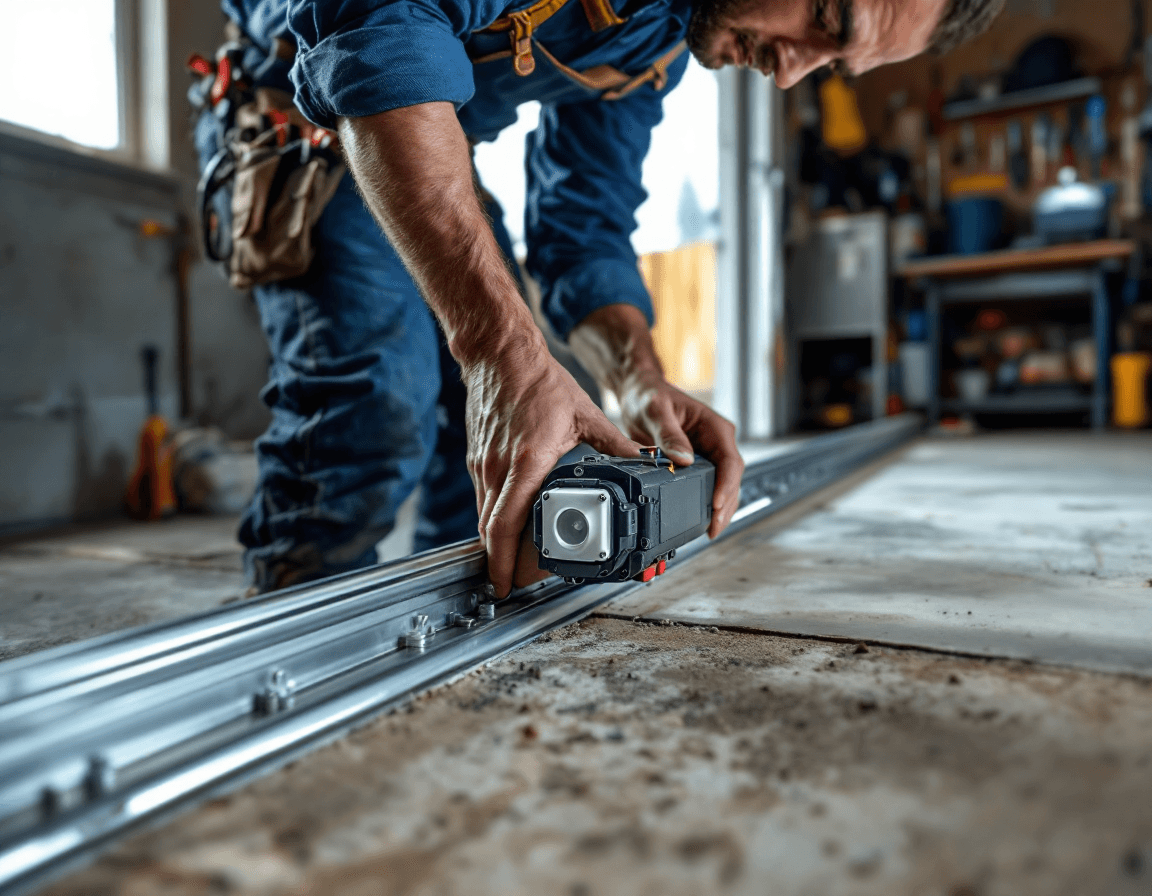
Garage door sensor repair in Kent, WA usually starts with a simple problem: the door comes down, then rises again as if it has changed its mind. Those photo-eye sensors are the safety system that tells the opener to stop and reverse when something is in the doorway, and when they fail or drift out of alignment, the door can act as though it sees an obstacle that isn't there. Our technicians at Seattle Garage Door Fix see this across Kent every week, from newer tract homes near Kent Station to older garages tucked into hillside lots. Most sensor problems are fixable in a single visit, and a good diagnosis often saves a homeowner from replacing parts that were never broken.
The Pacific Northwest adds its own wear to a system that was designed for dry climates. Kent's winter drizzle, humid spring mornings, and the damp air that settles in an attached garage all work against the small plastic housings, lenses, and copper wiring that make up a sensor pair. Dust, cobwebs, and road grime collect on the lenses and dull the infrared beam, and a bit of condensation or a cold snap can shift the bracket just enough to break the line between the two eyes. This page explains what those symptoms mean, what a technician checks first, and where a homeowner should stop and call in a licensed pro.
If your door won't close, reverses the moment it touches the floor, or closes only while you press and hold the wall button, you do not need to guess at the cause. Work through the sections below to narrow down whether the problem is alignment, wiring, glare, or a failing component. Repairs for most sensor issues fall in the range of $85 to $225, depending on the brand, the length of wire involved, and whether the sensors themselves need replacing. When you are ready for a technician to look at the system, call (888) 799-3819 and we will schedule a visit.
Why Kent Garage Doors Trip Their Own Sensors
Many Kent garages were built with a standard single-car or two-car layout, and the sensors were installed by whoever set up the opener years ago. Over time, the bracket that holds each photo-eye can loosen from vibration when the door cycles, especially on older tracks that have a bit of play in the hardware. A sensor that was aimed correctly at installation can end up pointing a few degrees off after a few thousand cycles. The result is a beam that no longer reaches the receiver, and the opener reads the broken beam as an obstruction.
Temperature swings also play a role. A garage that is warm during the day and cool at night expands and contracts the metal framing, and the sensor brackets are often attached to that same framing. Homeowners frequently notice the problem gets worse after a cold week or after the first stretch of rain, which makes sense when you consider that metal and plastic move at different rates. A technician will check whether the brackets are still firmly fastened and whether the sensors are seated square in their mounts before concluding that a part has failed.
Kent homes also see a lot of household activity around the garage door. Bikes, recycling bins, storage totes, and cars parked slightly too far forward can all sit in the path of the beam without anyone noticing. Even a small object near the floor can interrupt the signal, so a technician always clears the sensor path and checks the surrounding area before adjusting anything. A quick sweep with a flashlight along the bottom of the door reveals more than most people expect.
Reading the Sensor Lights Like a Technician
The small indicator lights on each sensor are the fastest clue to what is happening, but they only make sense once you know what your particular brand is trying to say. Many openers use one light on the sending eye and another on the receiving eye, and a steady glow usually means the pair is aligned and receiving power. A light that is off altogether points toward a power problem, a loose connection, or a damaged wire rather than a misaligned beam. Blinking lights often indicate that the receiver is seeing the transmitter but not reliably, which is a common sign of partial misalignment or dirty lenses.
Because lighting patterns differ between manufacturers, the most useful first step is to check the manual for the opener model or the label printed on the sensor housing. Some systems blink a specific number of times to signal a fault code, and that code will point directly toward the affected side of the circuit. Taking a quick photo of the lights and the door's position before you start adjusting things can also help a technician, especially if the problem comes and goes with the weather. Writing down whether the door reversed while closing, while opening, or only when touched gives a clearer picture of the fault.
Homeowners should avoid assuming that a dark light always means a dead sensor. Sometimes the wiring has been pinched by a door panel that flexes during travel, or a staple has pierced the insulation and created an intermittent short. A technician will check voltage at the sensor terminals and inspect the entire run back to the opener before recommending replacement. That process is what separates a $85 visit that fixes a loose terminal from a $225 repair that replaces both sensors and reroutes a damaged section of wire.
When the Door Only Closes If You Hold the Button
One of the most common calls we hear in Kent is some version of this: the door will only come down when someone presses and holds the wall control. Most openers are designed to close in a mode where the sensors are bypassed if the operator forces it, and that is a deliberate safety-related feature meant for testing or emergencies. When a door only closes while you hold the button, it means the opener is detecting a sensor fault and dropping into a limited mode, which is the system telling you that the safety circuit is not satisfied. That is a warning, not a convenience feature to live with.
This symptom usually traces back to one of three things: a misaligned beam, a damaged wire, or a failed receiver. Misalignment is the most frequent culprit, and it is often fixed by gently adjusting the brackets until the status lights hold steady. Wiring issues tend to show up after pets, shelving, or stored items have leaned against the cable, or after a rodent has chewed through the insulation. A failed receiver is less common but does happen, particularly on older units that have been exposed to repeated moisture.
It is important not to hold the button as a long-term workaround. Holding the control bypasses the protection that keeps a closing door from crushing a child, a pet, or a bicycle, and that protection is the reason the sensors exist. A technician can usually restore normal operation in one visit once the fault is located. Until then, keep people and pets clear of the door path and avoid letting the door close unattended.
Sun Glare, Low Autumn Light, and West-Facing Garages
Sunlight is a surprisingly strong source of interference for photo-eye sensors. The infrared receiver is designed to detect a specific modulated signal from its partner, but intense direct sun can wash out the receiver or create enough background light that it struggles to distinguish the beam. Garages with west-facing or south-facing doors are most affected, particularly in late afternoon when the sun sits low and shines straight into the receiver lens. Kent's long summer evenings and the lower angle of autumn light can bring this problem out for a few weeks each year, which is why some homeowners only notice it seasonally.
Glare problems have a distinctive pattern. The door may close fine in the morning but reverse in the late afternoon, or it may behave normally on overcast days and fail on bright, clear ones. A technician will test the system at different times of day when possible and look for signs that the receiver is being flooded. Sometimes a simple adjustment to the sensor angle, keeping the lenses parallel and slightly shielded from the direct sun, resolves the issue without any part replacement.
Where glare cannot be avoided, a shield or a slight change in mounting height may help. Some installers add a small hood or angle the receiver so the sun hits the back of the housing rather than the lens. We do not recommend homeowners cover or paint the lenses, because that can block the beam entirely and create a new problem. A licensed technician can recommend the right fix for your exact door orientation and sun exposure.
Chewed Wiring and Rodent Damage in Damp Garages
Wiring damage is one of the most frustrating sensor faults because it can look like a failed component when the real problem is a small break somewhere along the run. Mice and other rodents find garages attractive during the cooler, wetter months, and sensor cables that run along the wall or ceiling are an easy target. Chewed insulation can expose conductors, allow moisture to reach the copper, and create intermittent faults that come and go depending on humidity. Homeowners sometimes notice the sensors work in the morning and fail by evening, which is a classic sign of a wire that is shorting when it gets damp.
A technician will inspect the full length of the sensor cable from the sensor to the opener, looking for nicks, flattened sections, and places where the cable has been stapled too tightly. Staples are a common cause of trouble, because they can pierce the jacket and touch the conductor without any visible sign on the outside. Loose wire nuts, corroded terminals, and cables pulled out of their clips near the door track also show up frequently in older installations. Once the damaged section is identified, the fix is usually a clean splice, a protected run, or a replacement cable.
Prevention matters in a damp garage. Keep the floor clear of food and pet supplies, seal obvious gaps where rodents enter, and secure sensor wires in a way that keeps them away from the floor and off sharp edges. If you notice droppings, gnaw marks, or unexplained sensor failures during a wet spell, have the wiring checked before it becomes a bigger problem. A licensed technician can also check the opener's low-voltage circuit for signs of moisture or corrosion while the cover is off.
Realigning Photo-Eyes Without Making Things Worse
Adjusting sensor alignment sounds simple, and in many cases it is a quick fix that takes only a few minutes. The goal is to have the sending and receiving lenses face each other squarely, with the status lights holding steady. Homeowners sometimes try to correct the problem by bending brackets dramatically or by tightening the mounting screws in a way that strains the housing. Those approaches can crack plastic, misalign the sensors further, or create a new fault in the wire.
A careful alignment usually follows a predictable process. The technician loosens the mounting hardware just enough to move the sensor, makes small adjustments while watching the lights, and tightens everything once the signal is strong and steady. Lenses are cleaned with a soft cloth to remove cobwebs and grime, since dust alone can weaken the beam enough to trigger a reversal. The door is then tested several times in both directions to confirm the fix holds under normal operation.
- Clean both sensor lenses with a soft, dry cloth before making any adjustment.
- Check that the mounting brackets are tight and not cracked or bent.
- Make small, incremental movements and watch the indicator lights after each one.
- Confirm the sensors face each other squarely at the same height on both sides of the door.
- Test the door at least three times in each direction after the adjustment.
- Stop and call a technician if the lights still blink after careful alignment, because the problem may be wiring or a failed receiver.
Sensor Replacement Versus Repair: What Drives the Price
Replacement is not always necessary, and a good technician will try the least invasive fix first. A typical sensor repair in our service area falls between $85 and $225, and the final cost depends on several factors. Simple alignment and cleaning visits sit at the lower end of that range, while jobs that involve replacing a sensor pair, splicing a damaged wire run, or repairing a corroded terminal often land higher. The brand and model of the opener also matter, since some systems use proprietary sensors that cost more to source than generic units.
Several details influence the total. Longer wire runs require more material and labor, and routing a new cable neatly along the ceiling or wall takes time. Sensors mounted in hard-to-reach positions, such as tall doors or garages with overhead storage, can also add to the job. If the opener itself shows signs of a larger fault, such as a failing logic board, the technician will explain the options before any additional work begins.
Homeowners should ask for a clear explanation of what was tested, what was adjusted, and what was replaced. A reputable technician will show you the damaged part or the corrected alignment and explain why it failed. That transparency matters because sensor problems can mimic other issues, and it helps you decide whether to keep the current system or plan for a larger upgrade in the future.
Neighborhood Notes: East Hill, Kent Station, and Panther Lake Homes
Kent covers a wide range of housing styles, and the kind of garage you have often shapes the kind of sensor trouble you see. Homes on East Hill frequently sit on sloped lots where garages may be set at an angle to the street, and sloped driveways can put extra stress on tracks and brackets. Vehicles parked with the front wheels a bit forward can also interfere with the sensor beam, especially on narrower lots. Technicians working in these areas often check the path of the beam against the vehicle's typical resting position before deciding on an adjustment.
Near Kent Station, many homes were built in more recent phases, and some have garages with shared walls or limited clearance on either side of the door. Limited space can make it harder to reach the sensors without removing storage or moving bicycles, and cramped wiring routes sometimes show signs of wear where cables were pulled tight during installation. Newer openers in these homes are often equipped with diagnostic features that make troubleshooting faster, so the technician may use the opener's status information alongside a hands-on inspection.
Panther Lake area homes bring their own considerations. Garages in some of these neighborhoods may be older, with fewer updates to the original electrical and door hardware, and the combination of humidity and seasonal temperature changes can gradually loosen brackets over time. Homeowners who notice intermittent reversals in the damp months often find that a simple tightening and cleaning visit restores reliable operation. Regardless of where you live in Kent, the same basic principles apply: keep the lenses clean, protect the wiring, and address alignment problems before they become safety issues.
Safety Limits: What Homeowners Should Leave to Pros
Sensor work looks approachable, but there are clear limits to what a homeowner should attempt. Photo-eye sensors and their wiring operate on low voltage in most residential openers, which makes basic cleaning and visual checks safe, but the opener itself, the door springs, and the cable drums are a different matter entirely. Garage door springs store enormous mechanical energy, and a spring under tension can cause serious injury if it is adjusted, removed, or replaced without the proper tools and training. Any spring or cable work should be handled by a licensed, bonded, and insured professional.
Even within the sensor system, certain tasks are best left to a technician. Rewiring the opener's control board, replacing components inside the logic unit, or bypassing the safety reversal system can create a door that will not stop when it should. If you find yourself tempted to disconnect the sensors so the door will close, stop and call for help instead. Bypassing the sensors removes the protection that keeps people and pets from being struck by a moving door.
When in doubt, follow a simple rule: if a task requires removing the door from the track, touching the springs, or opening the opener's electronics, it belongs with a licensed professional. Homeowners can safely clean lenses, clear debris from the beam path, check that the lights are on, and keep the area around the door clear. Anything beyond that should be scheduled with a qualified technician, and the team at (888) 799-3819 can advise you on the safest next step for your particular system.
Keeping Sensors Reliable Through Kent's Wet Seasons
A little routine care goes a long way toward preventing sensor trouble. Wipe the sensor lenses every few months with a soft, dry cloth, and check that the brackets remain snug. Look at the wiring along the wall and ceiling for signs of sagging, staples, or chewing, and keep stored items away from the cable path. Pay attention to how the door behaves during the first cold snap of the year and after heavy rain, because those are the moments when small misalignments tend to show up first.
Humidity control in the garage can also help. Good ventilation, a dehumidifier in damp spaces, and regular removal of cardboard and other materials that hold moisture all reduce the conditions that lead to corrosion and rodent activity. Sealing gaps around the garage door and the entry door keeps out drafts and moisture, which in turn keeps the sensors and their wiring in better shape. These steps cost very little compared with the frustration of a door that reverses at the wrong moment.
Finally, schedule a professional inspection if the door has begun to act unpredictably, if the lights have been blinking for more than a day, or if the sensors have been replaced recently without a full system check. A technician can test the entire safety circuit, verify the reversal force, and confirm that the sensors and opener are working together as designed. Regular attention keeps your door dependable through Kent's wet winters and bright summers alike.
Garage door sensor repair in Kent is usually straightforward when the cause is caught early, and most homeowners can get their doors closing reliably again with a focused visit. If your door won't close, reverses on contact, or only moves while you hold the wall button, do not wait for the problem to get worse. Call Seattle Garage Door Fix at (888) 799-3819 to schedule a licensed technician who can align, repair, or replace your sensors and check the rest of the safety system while they are there.