
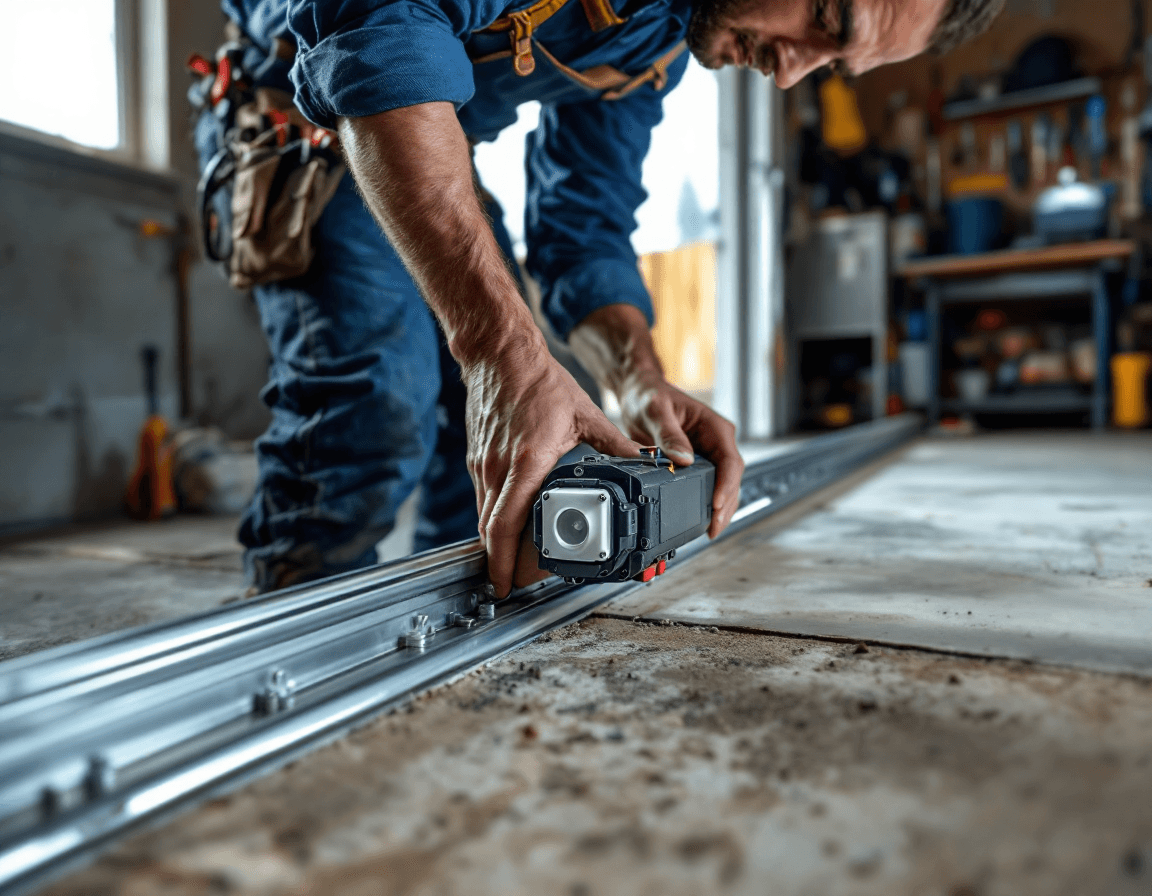
Garage door sensors are small, inexpensive parts, but when they fail, the whole door stops working the way it should. In Federal Way, a door that won't close or keeps bouncing back up is usually traced to a pair of photo-eye sensors that have drifted out of line, lost their wiring, or been fooled by light. Those sensors sit low on each side of the door track and send an invisible beam across the opening. If anything interrupts that beam while the door is moving down, the opener is designed to stop and reverse. That safety feature is valuable, but it can also become frustrating when the sensors are working on a problem that doesn't exist.
Our technicians at Seattle Garage Door Fix handle garage door sensor repair across Federal Way and the surrounding King County communities, including neighborhoods close to Twin Lakes, the Dash Point corridor, and the streets near Wild Waves. Most sensor repairs we complete fall in the $85 to $225 range, depending on whether the job is a simple realignment, a wiring repair, or a full sensor replacement. The sections below explain what the indicator lights are telling you, why Federal Way homes see sensor trouble that homeowners elsewhere may not, and what you can safely check yourself before calling for help. If you would rather have someone on site, you can reach us at (888) 799-3819.
What Makes Federal Way Garages Prone to Sensor Trouble
The Pacific Northwest climate is hard on anything mounted near the floor. Federal Way gets long stretches of damp weather, and the moisture that settles in an attached garage can work its way into sensor housings, corrode terminals, and loosen mounting brackets over time. Many homes here were built with garages that also serve as workshops, storage rooms, or overflow space, which means dust, cardboard, bicycle tires, and yard tools are regularly bumped against the sensors. A small nudge is enough to shift a sensor a few degrees, and a few degrees is enough to break the beam.
The area's mix of mature trees and open lots also matters. Leaves, pine needles, and fine debris from the surrounding landscaping collect along the bottom of the door and near the track, and in the wetter months that debris can cling to the lenses. Spider activity is common in covered garage spaces during the warmer part of the year, and webs strung across a sensor lens can look like an obstruction to the receiving unit. Cleaning those lenses is one of the simplest and most overlooked fixes available.
Finally, the layout of many Federal Way neighborhoods creates its own quirks. Some driveways slope toward the street, which changes how the door sits relative to the floor, and some garages have uneven slabs that gradually shift the sensor brackets as the house settles. Recognizing these local patterns helps explain why a door that worked perfectly for years can suddenly start reversing after a wet season or a minor earthquake tremor.
Reading the Indicator Lights Before You Touch a Screwdriver
Nearly every modern residential opener uses two small sensor units, one on each side of the door, and each unit has an indicator light. These lights are the fastest way to diagnose a sensor problem, and learning what they mean can save you a service call if the cause is minor. Keep in mind that exact light patterns vary by manufacturer, so consult your owner's manual for the specific meanings on your model. The general patterns below apply to most common systems.
- A steady light on both sensors usually means the beam is aligned and the system is ready to close normally.
- A light that is off on one or both sensors often points to a power or wiring problem rather than alignment.
- A light that blinks or flashes typically means the sensors are receiving a signal but the beam is not lined up correctly.
- One sensor steady and one blinking usually indicates that one unit has drifted out of alignment with the other.
If both lights are off, check whether the opener's light and motor respond to the wall button before assuming the sensors are at fault. A dead sensor pair can sometimes be confused with a dead opener, and that distinction changes the repair. Look at the wire run as well, since a loose connector at the opener terminal block can cut power to the sensors without any visible damage to the sensors themselves. If you cannot tell whether the lights are steady or blinking in bright conditions, shade the sensor with your hand and watch again.
Writing down what you observe before calling a technician is genuinely helpful. Note which side the blinking or dark light is on, whether the problem happens every time or only in the afternoon, and whether the door reverses immediately or partway through its travel. These details help narrow the cause quickly and can shorten the visit.
When the Door Reverses Right Away
A door that reverses the instant you press the button is one of the most common complaints we hear from Federal Way homeowners. In that situation, the opener is detecting an obstruction or a broken beam before the door has traveled any real distance, which often means the sensor beam is blocked at the very start of the cycle. Sometimes the cause is something as simple as a bag, a box, or a tricycle that has rolled into the path of the sensors without anyone noticing. Before anything else, walk the full width of the door opening and clear anything that sits near the floor on either side.
If the opening is clear and the door still reverses immediately, the sensors are likely misaligned or the lens on one unit has been coated with grime. Pressure from a loose bracket can also tilt the sensor just enough to lose its line of sight across the threshold. In older installations, the wiring may have worked its way loose at one of the bracket clips, causing the sensor to report a fault even when the beam is intact.
A door that reverses immediately should not be forced closed or repeatedly cycled as a test. Continuing to cycle the door while a fault is present can strain the opener and make it harder to diagnose the original problem. If the reversal happens only sometimes, or happens only after a rain, the moisture theory is worth investigating, and a technician can check for corrosion inside the terminals and at the wire splices.
Simple Alignment Checks You Can Safely Try
Realigning sensors is one of the few sensor tasks that many homeowners can handle safely themselves, provided they are careful and do not touch the spring system or the door's mechanical hardware. Start by locating the two sensors, which are usually mounted on brackets about four to six inches above the floor on the inside of each track. Check that each bracket is firmly attached and that the sensor body is not visibly bent or cracked. Wipe the lens of each sensor with a soft, dry cloth, because even a light film of dust can interfere with the infrared beam.
Next, look at the alignment itself. The two sensors should face each other across the opening, and their indicator lights should be visible from the same angle. Loosen the wing nut or screw that holds the sensor bracket, gently adjust the sensor until its light turns steady, and then tighten it back down without disturbing the angle. Work slowly and make small changes, because the window where the beam locks in can be narrow. If the light refuses to hold steady after several careful adjustments, stop and call a professional rather than forcing the bracket.
Finally, test the door at least three times after any adjustment. Confirm that it closes all the way, that it reverses cleanly when you place a board across the opening at floor level, and that it does not reverse when the path is clear. If the door passes all three tests, the repair is likely complete. If it does not, the wiring or the sensor unit itself may be failing, and that is a different level of repair.
Sun Glare and Afternoon Light Through Garage Doors
Sun glare is a particularly interesting problem in Federal Way because the light angle changes significantly between seasons. In the lower-sun months of fall and winter, afternoon light can slant under the garage door and strike the receiving sensor directly, flooding it with infrared energy that confuses the detector. The result is often a door that closes fine in the morning but reverses in the late afternoon, or one that behaves inconsistently during clear winter days after a stretch of overcast weather. Homeowners sometimes assume the sensors are failing when the real trigger is a seasonal beam of sunlight.
Garages that face west or southwest are the most likely to experience this, because the afternoon sun comes in low across the driveway and through any gap at the bottom of the door. A worn or uneven bottom seal makes the problem worse, since it lets more light reach the sensors. Shading the sensor lens with a small hood, or adjusting the sensor angle slightly so it sits out of the direct light path, can often resolve the issue without replacing any hardware. Some technicians also recommend checking the weatherstrip along the bottom and sides of the door, since sealing those gaps reduces both light and drafts.
If glare is the cause, the symptoms tend to be intermittent and linked to time of day. Test the door at different hours to confirm the pattern before making changes. A reliable diagnosis here can prevent unnecessary sensor replacements, which is one reason a technician's on-site assessment is worth the modest visit cost.
Chewed Wiring, Moisture, and Rodent Damage
Damaged sensor wiring is one of the more serious sensor problems we encounter, and it deserves careful attention. Rodents are a real concern in many Federal Way garages, especially homes near wooded lots, creeks, or open greenbelts, and mice and rats are known to chew through low-voltage wire insulation. Damage can be hard to spot because the wire may look intact from a distance while the conductors inside have been nicked or separated. A sensor that flickers, works only when the wire is bumped, or goes dark after a cold snap should raise suspicion of wiring damage.
Moisture compounds the problem. Wire that runs along a concrete wall or near a floor drain can wick water into its connections over time, causing green corrosion on terminals and intermittent faults that come and go with the weather. Splices made with twist-on connectors and no protective sealant are especially vulnerable in damp garages. When a technician opens a sensor bracket and finds greenish residue on the contacts, the repair usually involves replacing the affected wire run and making dry, sealed connections rather than simply tightening what is already there.
Because wiring repairs involve the opener's low-voltage circuit and sometimes the building's electrical supply, we recommend leaving them to a qualified technician. If you notice exposed copper, melted insulation, a burning smell, or any sign of scorching near the opener, switch off power to the opener at the breaker and avoid handling the wiring until a professional has inspected it.
The Hold-to-Close Problem and Its Hidden Meaning
A door that only closes when you hold the wall button is a clear signal that the opener has switched to a safety-restricted mode because it cannot confirm that the sensors are clear and working. Most openers are designed so that a constant-pressure close is the fallback when the sensor circuit is faulty, forcing the homeowner to watch the door and keep the button depressed. This mode protects people and property, but it also means the door is effectively operating without its normal sensor protection. Treat it as a warning rather than an inconvenience.
The most common causes are a misaligned sensor, a dead sensor pair, a broken wire, or a sensor that has been bumped during storage or cleaning. Sometimes the problem appears right after a neighbor's construction or a delivery truck brushes the garage, shifting the bracket without anyone realizing it. Checking the lights and the alignment, as described above, is the logical first step. If the lights are off, confirm that the sensors are receiving power before assuming the units are bad.
We advise against bypassing the sensors or disconnecting them to make the door close. Doing so removes a safety feature that protects children, pets, and vehicles from being trapped under a closing door. A proper repair restores the sensors to full function, and that is always the goal.
Choosing and Matching Replacement Sensors
When a sensor unit cannot be repaired or realigned, replacement becomes the practical option. Replacement sensors are not all interchangeable, and matching the correct model to your opener matters for reliable operation. Factors include the opener brand, the wiring type, whether the unit uses a two-wire or a different connection scheme, and the mounting hardware style. A technician will usually check the opener's model label and the existing sensor markings before ordering a part, which helps avoid the frustration of a sensor that fits physically but does not communicate correctly with the opener.
Mounting height and orientation are equally important. The sensors need to sit at a consistent height on opposite sides of the door so the beam crosses the threshold where a child or pet would be. If a previous installer mounted them unevenly, or if the floor has settled, a technician may need to remount the brackets rather than simply swapping the units. This is where a careful, measured installation makes a real difference in long-term reliability.
Replacement also gives an opportunity to upgrade the weatherproofing. Homes near the Sound and in damp garage conditions benefit from sealed connections and sensor housings designed for humidity. Asking your technician which options fit your opener is a sensible question, and a straightforward answer should explain both the benefits and any tradeoffs.
Typical Costs for Sensor Repair in Federal Way
For most sensor repairs in the Federal Way area, our pricing falls between $85 and $225. The lower end usually covers a straightforward realignment, cleaning, or a simple connector fix, while the higher end typically reflects a full sensor replacement, a wiring repair that requires running new low-voltage cable, or a bracket remount. The final figure depends on what the technician finds once the door and opener are inspected, and a clear explanation should be provided before any work begins.
It helps to understand what you are paying for. A sensor visit includes the diagnostic time needed to identify whether the problem is alignment, glare, wiring, or a failed unit. That diagnosis matters because replacing a sensor when the actual fault is a chewed wire, or realigning a sensor that is dead, wastes money and time. Asking the technician to walk you through the cause and the repair options is a reasonable expectation for any honest service visit.
We also encourage homeowners to compare the cost of a sensor repair against the cost of living with a door that will not close properly. A door that only closes on constant pressure is an open safety concern, and a repair in the $85 to $225 range is usually a modest investment compared with more involved problems that can develop if the issue is ignored.
Where Sensor Work Ends and Professional-Only Repairs Begin
Sensor repair is a good match for careful homeowners who want to understand their systems, but there is a clear boundary beyond which we strongly recommend a licensed professional. Torsion springs, extension springs, cables, drums, and the lifting hardware they support store enormous amounts of energy, and mishandling them can cause serious injury. Nothing in a sensor repair should involve tensioning, loosening, or removing springs or cables. If a sensor problem leads you toward those components, stop and call for help.
The same caution applies to the opener's main power supply and to any wiring that involves the building's electrical panel. Working on live circuits, replacing a breaker, or running new line-voltage wire should be left to a qualified electrician or a technician authorized to handle that scope. A sensor repair that stays within the low-voltage sensor circuit and the bracket hardware is manageable, but the moment a job crosses into springs or line power, the right move is to schedule a licensed visit.
Seattle Garage Door Fix is licensed, bonded, and insured, and our technicians are trained to recognize when a sensor issue is part of a larger problem that needs a different kind of repair. If you are unsure which category your problem falls into, call us before you start. A short conversation can save you from an unnecessary risk and help you get the door working safely again.
If your Federal Way garage door will not close, keeps reversing, or only moves when you hold the wall button, we are ready to help. Call Seattle Garage Door Fix at (888) 799-3819 to schedule a sensor inspection, and we will diagnose the cause, explain your options, and get your door closing safely.