
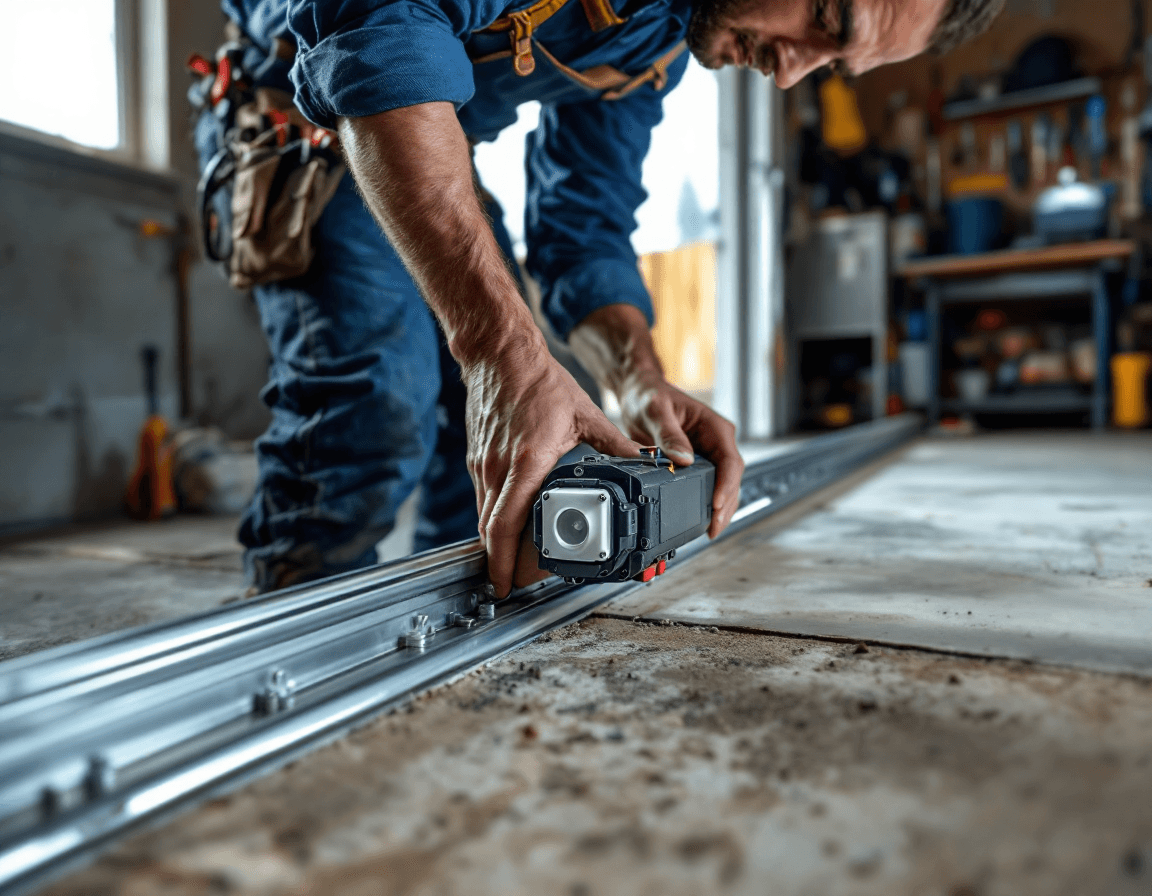
Garage Door Sensor Repair in Seattle, WA is one of the most common calls we take, and it usually starts with the same frustrating moment: you press the wall button, the door begins to descend, and then it stops and climbs back up as if it changed its mind. That reversal is not the opener's fault. It is a safety feature doing exactly what it was designed to do, which is to refuse to close when something may be in the path. In most cases the culprit is a pair of small photo-eye sensors mounted near the bottom of the door tracks, and the fix is often a matter of realignment, a cleaned lens, or a repaired wire rather than an expensive new opener.
Seattle's climate makes these sensors work harder than many homeowners expect. Our long, damp stretches from fall through spring bring condensation, road grime, and mildew into garages across Ballard, Fremont, Green Lake, and the older housing stock of Capitol Hill and Rainier Valley. Add the low, slanting sun that pours through garage openings for a few weeks each year, and you have a recipe for sensors that behave perfectly one afternoon and misbehave the next. This page walks through the symptoms we see most often, how our technicians think through them, what a typical repair costs, and what you can safely check yourself before picking up the phone.
Whether your garage is attached to a West Seattle bungalow, tucked behind a Magnolia home on a steep lot, or set off an alley in the 98103 or 98107 areas, the same principles apply. Sensors are simple devices, but the conditions around them in the Pacific Northwest are not simple at all. Understanding those conditions will help you describe the problem accurately, judge whether a quick adjustment will hold, and decide when it is time to bring in a licensed technician.
Why the Door Turns Around Mid-Travel
When a garage door starts to close and then reverses immediately, the opener is responding to a signal from the safety sensors. Those sensors form an invisible beam across the opening, with a transmitter on one side and a receiver on the other, typically mounted a few inches above the floor. If the receiver does not see a steady light from the transmitter, the control board assumes an obstruction and sends the door back up. The behavior feels dramatic, but it is the most reliable signal your system can give you about what it is seeing.
The reversal can have several sources, and none of them automatically means the sensors have failed. A sensor that has been knocked slightly out of line, a lens coated with dust or road film, a wire that has loosened at its terminal, or sunlight landing directly on the receiver can all trigger the same response. Because the symptom is identical in each case, a technician has to test the system rather than guess. Sometimes the answer is as simple as a fresh wipe of both lenses and a gentle nudge of the bracket.
Homeowners often wonder whether a reversing door means the opener itself is dying. In reality, the opener usually reports faithfully and the sensor circuit is the weak link. If the door also struggles to open, makes grinding noises, or stops at odd heights, the problem may extend beyond the sensors, and a broader inspection makes sense. For a door that reverses but otherwise runs smoothly, the sensors are the first place to look.
Decoding the Sensor Lights Before You Touch Anything
Most modern sensor pairs include small indicator lights, and learning what they mean can save you a service call or help you explain the problem clearly. On many systems, a steady light on both units means the beam is connected and aligned. A light that is off on one unit often points to a wiring fault or a power issue at that end, while a blinking light usually indicates that the receiver cannot see the transmitter well enough to hold a clean connection. Exact colors and blink patterns vary by manufacturer, so the printed label or the opener manual is always the best reference for your specific model.
Pay attention to which unit is showing the problem. If only the receiver is dark or blinking, the transmitter may be fine and the alignment or the receiver wiring is the likely cause. If both units are dark, the shared power source is more suspect, and you should look at the connection at the opener's safety terminals. A light that flickers when the door moves often signals a loose wire that shifts as the door vibrates, which is a classic issue in older installations where wires were stapled rather than secured properly.
Here are the observations that help a technician most when you call:
- Which sensor's light is off, steady, or blinking, and whether the pattern changes when the door moves
- Whether the door reverses instantly or only after it has traveled partway down
- Whether the problem began suddenly after a storm, a bump, or a recent project in the garage
- Whether the door closes normally when you hold the wall button down, which suggests the sensor path is the issue
Writing those details down before the visit can shorten the diagnosis considerably and keep the repair focused on the actual fault.
Alignment Problems After Bumps, Wind, and Everyday Traffic
Sensors are mounted on brackets that are often fastened with a single screw or wing nut, and they can drift out of line over time. A hand truck clipping the lower track, a bicycle leaning against the wall, a child's scooter, or a car backing in too close can all nudge a sensor just enough to break the beam. Wind is another quiet culprit, particularly in exposed hillside garages in Queen Anne, Magnolia, and parts of West Seattle, where strong gusts can rattle a door that is not fully secured. The sensor may appear perfectly fine until you notice it is pointing a few degrees away from its partner.
Realigning a sensor is usually straightforward when you know what to look for. The two units should face each other squarely, with their lenses at roughly the same height, and the mounting brackets should hold them firmly without bending. Many systems have a small indicator that becomes steady when the beam is properly aimed, and a technician will often adjust the angle slowly until that indicator stabilizes. It helps to avoid over-tightening the brackets, since cracked plastic housings are common on older sensor models and a cracked lens can be harder to fix than a misaligned one.
Alignment is not a one-time job if the mounting surface is shifting. Garage floors in older Seattle homes can settle, and track brackets can loosen gradually. If you realign the sensors and the problem returns within a few weeks, the mounting hardware or the floor surface deserves a closer look. A technician can check whether the bracket is stable, whether the sensor is sitting on a flexible wall material, and whether vibration from the opener is loosening the fastener over time.
Sun Glare on Western Exposures and Low Winter Light
Sun glare is one of the most overlooked causes of sensor trouble in the Seattle area, and it catches many homeowners by surprise. A garage that faces west or southwest, which is common on many Ballard, Fremont, and Queen Anne lots, can receive direct low-angle sunlight through the opening in late afternoon. The sun is often at a shallow angle in fall and winter, which means the light can travel straight along the floor and into the receiver lens. When that happens, the receiver can misread the beam and trigger a reversal, sometimes only at certain times of day.
The pattern of glare trouble is distinctive. A door that reverses reliably in the morning but fails in the late afternoon, or one that works on cloudy days but acts up on clear evenings, is a strong hint that sunlight is involved. Some sensor models handle glare better than others, and a technician can often reduce the problem by adjusting the angle slightly, shielding the receiver with a small cover, or repositioning the unit. In some cases, the best solution is to replace an older sensor pair with a model designed to reject ambient light more effectively.
Do not try to solve glare by blocking the sensor beam or taping over the lens. Any modification that interferes with the safety beam can prevent the door from detecting an obstacle, which defeats the purpose of the system and creates a real risk to people, pets, and vehicles. A licensed technician can recommend a safe approach that keeps the sensors fully functional while reducing the effect of sunlight on the receiver.
Wet Seasons, Corroded Terminals, and Damaged Wiring
Western Washington's wet months are hard on electrical connections, and sensor wiring is more exposed than many homeowners realize. The wire that runs from the sensors to the opener often follows the wall or the track, where it can be pinched, scraped, or stapled too tightly. Moisture that works its way into terminal connections can lead to corrosion, which slowly increases resistance until the sensor circuit becomes unreliable. The result can be intermittent reversals that seem to come and go with the weather, which is especially frustrating because the door may work perfectly during a dry spell.
Rodents are another local reality, particularly in garages that border yards, wooded lots, or older neighborhoods with crawl spaces and attic access. Mice and squirrels sometimes chew low-voltage wire, and the damage may be hidden inside a wall cavity or along a conduit run. Damaged insulation can also cause a short that interrupts the signal, and the sensor will appear to fail even though the units themselves are fine. A careful inspection of the entire wire path is the only reliable way to find these faults.
Repairs usually involve cutting out the damaged section, splicing in fresh wire with proper connectors, and securing the run so it cannot shift or get pinched again. Quality repairs use wire rated for the application and avoid exposing connections to standing water. Because sensor wiring is low voltage, the work is generally less hazardous than working near the opener's line-voltage components, but it still requires attention to detail. If a previous repair used tape-only splices or loose twist connections, redoing those joints is often one of the most valuable fixes you can make.
When the Door Closes Only If You Hold the Button
A door that closes only when you hold down the wall button is a related but distinct symptom. Most openers operate in a "constant pressure" mode when the safety sensors are not detected, which means the door will move only while the button is held. This mode is designed to let you close a door that has a faulty sensor, but it should not be a long-term arrangement. Holding the button is a workaround, not a repair, and it removes the automatic protection that the sensors normally provide.
This symptom usually points to a sensor fault that is preventing the opener from recognizing a valid safety circuit. It may be caused by a dead or disconnected sensor, a broken wire at the opener terminal, a blown fuse on some models, or a sensor that has been wired incorrectly during a previous repair or installation. Some homeowners discover the problem after a storm or a power outage, when a connection that was marginal finally gives out. A technician can test the circuit, confirm continuity, and determine whether the problem is in the sensors, the wiring, or the opener control board.
If you find yourself holding the button to close the door, it is worth scheduling a repair soon. Keeping the door in this state leaves the garage open to the risk of an unprotected closing motion, and the longer the problem continues, the more likely it is that the underlying fault will worsen. Prompt attention is the safest and least expensive path.
Sensor Replacement or Repair: How Technicians Decide
Not every sensor problem ends with a realignment. Lenses can crack, internal circuits can fail, and older sensor pairs may no longer match the opener's safety requirements. A technician weighs several factors before recommending replacement, including the age and condition of the units, whether the housings are intact, whether the lenses are clear, and whether the wiring leading to them is sound. A sensor that works only intermittently after cleaning and realignment is often a candidate for replacement, since intermittent faults tend to return.
Compatibility matters as well. Sensor pairs are designed to work with specific opener systems, and mixing parts from different manufacturers can lead to unreliable operation. When replacing sensors, a technician will typically confirm that the new pair is compatible with your opener and that it is installed with the correct wiring configuration. Using a mismatched or generic replacement without checking can produce the same symptoms you were trying to fix.
Cost also plays a role in the decision. Repairing a loose or misaligned sensor is usually the least expensive option, while replacing a full pair may cost more depending on the model and the amount of wiring work involved. A good technician will explain both options clearly, describe what is likely to hold up over time, and let you choose the approach that fits your budget and your home's needs. The goal is a reliable system, not the most expensive one.
What a Typical Sensor Visit Costs in the Seattle Area
For most sensor repairs, our pricing falls in the range of $85 to $225, depending on the nature of the fault and the work required. A straightforward realignment, lens cleaning, or minor bracket adjustment typically sits at the lower end of that range. Replacing a sensor pair, repairing damaged wiring, or correcting a more involved wiring fault usually falls higher, particularly when access is difficult or when the repair requires additional parts. Your technician will confirm the expected scope before beginning work so there are no surprises.
Several factors influence the final figure. Garages with long wire runs, multiple damaged sections, or sensors mounted in hard-to-reach locations take more time to service. Homes with older wiring or unusual track configurations may need extra care to restore a dependable connection. If the sensors are not the only issue and the technician finds a problem with the opener, the visit may expand into a separate diagnosis, which will be discussed with you before any additional work proceeds.
Ask for a clear explanation of what was found, what was repaired, and what, if anything, should be monitored. A reputable technician will be happy to walk you through the findings and answer questions about how to keep the system performing well through the wet season.
Neighborhood Notes Across Seattle and King County
Seattle's neighborhoods vary considerably in housing style, lot shape, and garage orientation, and those differences shape the sensor problems we see. In Ballard and Fremont, many garages are accessed from alleys and sit close to property lines, where tight clearances can make it easy to bump a sensor while maneuvering a vehicle. Queen Anne and Magnolia homes often sit on slopes, and garages built into hillsides may experience drainage issues and moisture that accelerate corrosion. Capitol Hill and Green Lake include a mix of older detached garages and newer attached designs, each with its own wiring history.
West Seattle and the Rainier Valley have their own patterns. Older homes in these areas sometimes have garages that were converted or expanded over the years, which can leave sensor wiring routed through unexpected paths. Homes near wooded or greenbelt areas may see more rodent activity, which increases the chance of chewed wire. Across the city, we regularly serve ZIP codes including 98101, 98103, 98105, 98107, 98109, 98115, 98116, 98117, 98118, 98122, 98125, 98133, 98136, 98144, and 98199, along with many surrounding King County communities.
Local conditions also differ by exposure. A garage facing west in a sunny pocket of Ballard may have a glare problem that a shaded garage in Green Lake never encounters. That is why a useful sensor visit looks at the specific site rather than applying a generic fix. Describing your neighborhood and the orientation of your garage can help a technician anticipate the likely causes before arriving.
Simple Checks You Can Safely Do Before Calling
There are several safe checks a homeowner can perform before scheduling a visit, and they often reveal the problem quickly. Start by wiping both sensor lenses with a soft, dry cloth to remove dust, cobwebs, and road film. Then stand in the garage and look at the sensors from the side, checking whether they appear level and facing each other. Make sure nothing is blocking the path, including stored items, bins, or a pet's bowl near the floor.
Next, test the door's behavior with the wall button and watch the indicator lights. If you can do so safely, close the door while observing whether the reversal happens instantly or only after the door has traveled partway. Note any changes in light patterns and whether the problem appears at certain times of day. These observations will help a technician narrow down the cause and may save time during the visit.
Here are the checks that are appropriate for homeowners and the ones that should always be left to a licensed professional:
- Safe for homeowners: cleaning sensor lenses, clearing debris from the sensor path, observing indicator lights, and noting when the reversal occurs
- Safe for homeowners: gently checking that bracket fasteners are snug without overtightening or cracking the housings
- Leave to a licensed professional: any work on springs, cables, drums, or torsion components, which store significant force and can cause serious injury
- Leave to a licensed professional: opening the opener housing, working on line-voltage wiring, or modifying the safety circuit in any way
Never bypass, disconnect, or tape over the safety sensors to make the door close. That shortcut removes an important protection and can lead to serious injury.
Keeping Sensors Dependable Through Seattle's Seasons
A few routine habits can extend the life of your sensors and reduce the number of unexpected reversals. Clean the lenses every few months, especially in the fall when leaves, dust, and damp debris accumulate near the floor. Check the wiring periodically for loose staples, pinched sections, or signs of chewing, and make sure the cable is not dangling where it can catch on tools or vehicles. In homes with known rodent activity, consider inspecting the wire run more often and addressing any gaps where pests might enter.
It also helps to keep the area around the sensors clear. Avoid storing items close to the floor where they can knock sensors out of line, and consider a sturdy bracket or guard if your garage sees heavy traffic from bikes, strollers, or equipment. During the sunniest weeks of late spring and early fall, watch for glare-related reversals and let your technician know if the pattern appears, since a small adjustment may prevent recurring problems.
Finally, schedule a professional inspection when you notice any change in how the door responds. Early attention to a flickering light or an occasional reversal is far less costly than waiting for the door to stop closing altogether. A licensed technician can check alignment, wiring, and compatibility, and can confirm whether the system is operating as the manufacturer intended.
Sensor problems can be frustrating, but most are fixable with careful diagnosis and the right repair. If your garage door keeps reversing, will not close without holding the button, or shows a blinking or dark sensor light, call Seattle Garage Door Fix at (888) 799-3819 for a licensed, bonded, and insured technician who can get your door closing safely again.