
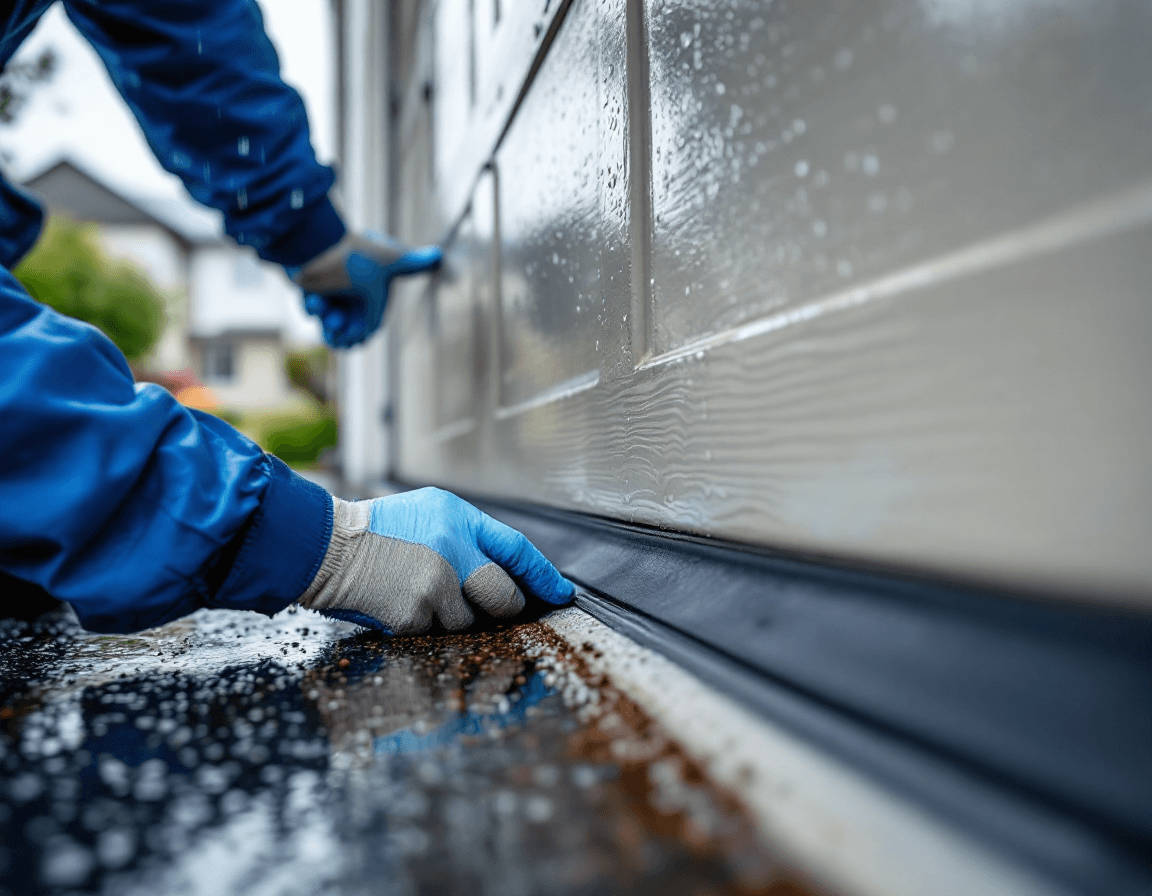
Garage door weather seal replacement in Clyde Hill, WA is one of the most affordable fixes a homeowner can make, and it often delivers the biggest comfort gain for the money. Clyde Hill sits on a rise above the Lake Washington corridor, with mature evergreens, long wet seasons, and a mix of older and newer homes. Those conditions push rain, cold air, leaves, and small critters toward the bottom edge of the garage door, where the seal is supposed to stop them. When that rubber or vinyl stops doing its job, the gap shows up in your garage, your utility bills, and sometimes your stored boxes.
Most people don't think about the seals on their garage door until they notice a damp spot on the concrete after a multi-day rain, or a chill when they walk through the door into the kitchen. The good news is that a seal is a simple component, and it usually shows its wear long before anything mechanical fails. A short inspection can tell you whether a seal needs a quick replacement or whether a larger adjustment is the better path. This guide walks through what to look for, how the Pacific Northwest climate affects these parts, and how to decide what your Clyde Hill door needs.
Why the Gap Under Your Door Matters More Here
Western Washington winters bring long stretches of drizzle, heavy overcast, and periodic storms that drive rain sideways across the hillside. Clyde Hill homes are often set on lots that slope toward the street, so water moving across a driveway or down a grade will find the lowest point at the garage threshold. A bottom seal that has compressed, cracked, or pulled away lets that water slide right under the door. Even a gap the width of a pencil can route a surprising amount of moisture into the garage over a single wet weekend.
Cold air behaves the same way. Pacific Northwest winter temperatures are usually mild compared with much of the country, but they stay damp and chilly for weeks at a time. A leaky garage door lets that damp air move freely into an attached space, and the effect can carry into the rest of the house through shared walls and the door to the laundry or mudroom. Homeowners often describe a garage that feels like a wind tunnel on gusty days, even when the outside air isn't especially cold.
The fix is usually inexpensive compared with other home-envelope repairs. A new bottom seal, perimeter strip, or threshold seal costs far less than replacing a panel, and it can be installed without touching the door's springs or cables. That makes weather sealing a sensible early project for any Clyde Hill homeowner who wants better comfort before the next rainy season arrives.
Reading the Signs: What Light and Moisture Tell You
The simplest test is to close the garage door and stand inside with the lights off during the daytime. Look along the bottom edge and then along both sides and the top. If you can see daylight through any part of the seal, the door is letting in air and likely water. Gaps are often most visible at the corners and at the spots where the door meets an uneven slab.
Next, look at the seal itself. A healthy bottom seal is flexible, sits firmly against the concrete, and returns to shape when you press it with a finger. A failing seal might look flattened, cracked along its length, curled upward at the ends, or missing a section entirely. Brittle rubber snaps rather than bends, and that is usually a sign the material has aged past the point of effective sealing.
Finally, check the floor after rain. A thin water line, a streak of grit, or a fan of fallen leaves pushed in from the edge all point to a seal that has lost contact. Dry spots are reassuring, but a single wet event is worth noting, because the first signs of trouble often appear during a particularly heavy storm.
Bottom Seals, Perimeter Strips, and Thresholds
Garage door sealing is not a single part. Most doors use a combination of components, and each one has a different job. Knowing which one is failing helps you ask for the right repair and avoid paying for work you do not need.
- Bottom seal: The rubber or vinyl strip attached to the bottom panel of the door. It contacts the floor and handles most water and draft control at the threshold.
- Perimeter weatherstripping: The flexible strips along the sides and top of the door frame that close gaps when the door is down. These are often foam, vinyl, or rubber fitted into a channel.
- Threshold seal: The component on the garage floor, usually a rubber or composite piece bonded or fastened to the concrete, that the bottom seal presses against. Thresholds can crack or pull up over time.
On many Clyde Hill doors, the bottom seal is the first to fail, while the perimeter strips may still be in good shape. In other cases, a worn perimeter strip allows drafts on the sides even when the bottom looks fine. A complete inspection checks all three so the final repair covers every leak path without unnecessary replacement.
How Our Weather Wears Down Rubber and Vinyl
Rubber and vinyl seals age through a combination of sun, moisture, temperature swings, and mechanical wear. Western Washington has fewer days of intense direct sun than many regions, but UV still breaks down exposed material over time, especially on south- and west-facing garages that catch afternoon light. Repeated freezing and thawing, although less common here than in higher elevations, can also stiffen and crack seals that were never designed for constant damp.
Mechanical wear is just as important. Every time the door opens and closes, the bottom seal drags across the threshold. Grit tracked in on shoes and tires works like sandpaper, and loose debris can catch under the seal and tear it. Over several years, that abrasion thins the seal and leaves it unable to recover its shape.
Moss and mildew are another local factor. Shaded garages on wooded lots can develop a film on thresholds and lower panels, and that growth softens some materials while hardening others. A quick cleaning every season, followed by a check of the seal's flexibility, helps you spot trouble before it turns into a leak.
Drafts, Furnace Runtime, and Heat You Can't See
Cold drafts from a garage door do more than make the space uncomfortable. When air leaks through an attached garage, the house has to work harder to hold its temperature, especially if the garage connects to living space or if ductwork runs through it. Many Clyde Hill homes have heating equipment, water heaters, or laundry areas in or near the garage, so any air leakage can influence how often those systems run.
Homeowners often notice the impact most in shoulder seasons, when the heat is on but the weather is not severe. A drafty garage door can make a room near the entry feel cold even when the thermostat says otherwise. Sealing the door closes one of the most direct pathways for that conditioned air to escape.
It's worth being realistic here. A new seal will not transform a home's energy profile on its own, and your results will depend on insulation, window quality, and how often the garage is used. What a seal does reliably is remove a known source of uncontrolled air movement, which is often a practical first step before larger efficiency projects.
Pests on the Hillside
Clyde Hill's mature trees, shrubs, and garden beds create good habitat for insects and small animals, and a gap under the garage door is an open invitation. Earwigs, spiders, ants, slugs, and sowbugs regularly slip under doors that have lost their seal, especially after rain when they move in search of dry shelter. Mice and other rodents are more persistent and can squeeze through openings that look too small to matter.
Leaves, pine needles, and fine dust also travel under a poor seal. Over time, that debris builds up along the threshold and inside the door tracks, adding to wear on rollers and hinges. A tight bottom seal keeps the garage cleaner and reduces the amount of material that reaches the interior walls and stored items.
Pest control and sealing work best together. Sealing the door removes the easiest entry point, but you should also trim vegetation that touches the garage, keep stored firewood away from the wall, and check other gaps such as utility penetrations and the seal around any side door. If you notice droppings, nests, or chewed materials near the door, address those issues promptly.
Water Intrusion and Sloped Driveways
Water is the most obvious reason to replace a seal, and it is also the most damaging. Water entering a garage can soak cardboard, warp wooden shelving, rust metal tools, and stain concrete. It can also run toward the house if the garage floor slopes that way, which is a concern for finished rooms and utility areas.
Many Clyde Hill driveways pitch toward the street or toward a drainage swale, and that slope can concentrate runoff during heavy storms. If you see water pooling in front of the door, check whether the seal is leaking before assuming the problem is the driveway itself. In many cases, a new bottom seal plus a threshold seal stops the flow, and the driveway drainage works as designed.
If the water problem persists after sealing, look for other causes such as cracked concrete, a missing trench drain, or gutter overflow that spills onto the apron. A professional can help you separate door-related leakage from site drainage problems so you invest in the right fix.
Measuring Your Door and Preparing for Service
Before calling for a replacement, it helps to gather a few measurements and details. Seals come in different profiles and lengths, and the correct match depends on your door's panel style, track type, and the width of the opening. Bringing this information to the appointment speeds up the process and reduces the chance of a mismatch.
- Door width: Measure the outside width of the door panel, since bottom seals are sized to the panel length.
- Door height and panel count: Note how many sections the door has, because perimeter strips are often cut to each side and the top.
- Current seal type: Check whether the bottom seal is clipped on, screwed on, or set into a channel, and whether it is rubber, vinyl, or foam.
- Threshold condition: Look for cracks, uneven spots, or sections that have lifted from the concrete.
- Any visible gaps: Photograph the sides and top with the lights off and the door closed, so you can show the technician exactly where light is entering.
Keep the garage clear of stored items around the door so the technician can access the bottom panel and the side tracks. If you have an automatic opener, note whether it has been running noticeably slower or louder, since that can signal other maintenance needs that should be inspected at the same visit.
What Replacement Involves and What It Costs
A typical weather seal replacement is a short, focused job. The technician inspects the door, removes the old seal or strip, cleans the mounting surface, and installs the new component to match the door's profile. For threshold work, the old piece is removed and the concrete is prepared before the new seal is set and secured. Once installed, the door is tested through several full cycles to confirm the seal makes even contact across the width.
Pricing for this work generally falls in the range of $95 to $250, depending on the type of seal and the size of the door. Simpler bottom seals on standard single-car doors usually sit at the lower end, while larger doors, multi-piece perimeter kits, or threshold replacements can move toward the higher end. Ask for a clear quote that lists each component before work begins, so you know exactly what is included.
Replacement is often the most cost-effective option, but it's not the only one. If a seal is intact and only slightly out of alignment, a technician may be able to adjust the door's bottom panel or tighten the mounting hardware instead. An honest inspection should explain which approach makes sense for your door, rather than defaulting to the most expensive part.
Safety First: Leave Spring and Cable Work to Licensed Pros
Weather sealing is a good candidate for a confident homeowner who enjoys simple projects, but there is an important boundary. Anything involving torsion springs, extension springs, cables, drums, or the door's counterbalance system carries serious risk. These components store large amounts of energy, and mishandling them can cause severe injury or property damage. That is why spring and cable work should always be left to a licensed, bonded, and insured professional.
Seal replacement itself does not require touching those systems, but the inspection often reveals related issues. If the door sags, binds, or sits unevenly when closed, the seal may not be the root cause, and the springs or track alignment may need attention. Stop before adjusting anything under tension, and have a qualified technician evaluate the system.
Keep children and pets away from the door during any service visit, and never stand under a door that is being lifted or lowered with a suspected problem. Safety comes before speed, and a careful, professional approach protects both your home and the people who live in it.
Keeping Seals Healthy Through a Clyde Hill Year
A new seal lasts longer when it gets a little attention. Sweep the threshold regularly to keep grit and leaves from grinding against the rubber. Rinse the bottom seal with mild soap and water a few times a year, and avoid harsh solvents that can dry out vinyl or rubber. Clearing moss and organic buildup from the threshold keeps the contact surface clean and helps the seal stay flexible.
Check the seal each fall, before the heaviest rains arrive. Close the door with the lights off and look for daylight, then press the seal with a finger to see whether it still springs back. Fixing a small problem in October is far easier than dealing with a flooded corner in January. Note any changes in the seal's shape, color, or flexibility, and schedule service when the material starts to look tired.
Finally, keep an eye on the whole door system. A balanced door, clean tracks, and properly tensioned hardware all reduce wear on the seal by preventing uneven movement across the threshold. A yearly inspection by a qualified technician can catch seal wear, track problems, and safety issues in one visit, giving you a clear picture of what the door needs for the year ahead.
Ready to stop the drafts, water, and pests at your garage door? Call Seattle Garage Door Fix at (888) 799-3819 to schedule a licensed technician for a weather seal inspection in Clyde Hill, WA. We will check the bottom seal, perimeter strips, and threshold, explain your options, and give you a clear quote before any work begins.