
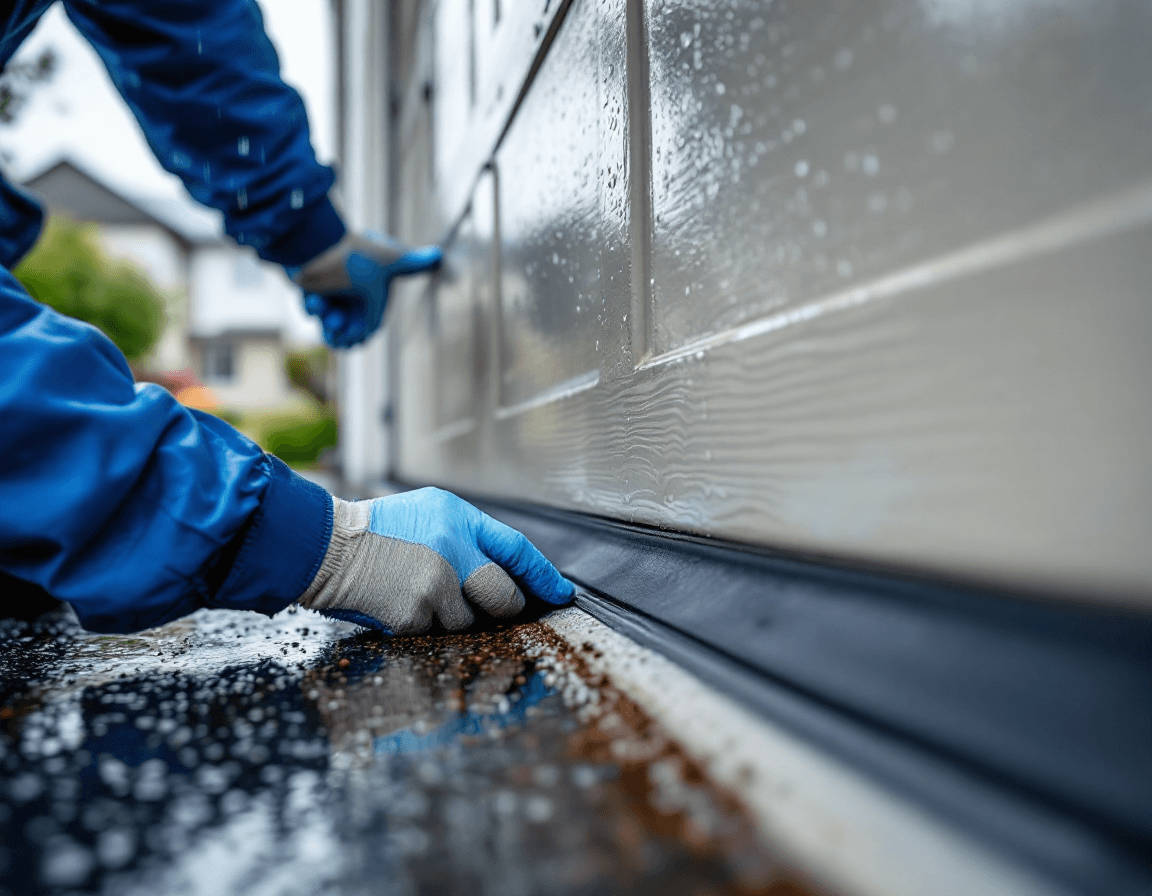
Garage Door Weather Seal Replacement in Port Orchard, WA is one of the most affordable repairs a homeowner can make, and it often delivers an immediate difference in comfort, cleanliness, and moisture control. If you have noticed daylight under the closed door, a puddle that appears after a windy storm, or a cold draft that rolls across the floor on a January morning, the seal along the bottom edge or the strips around the frame have probably worn past the point of doing their job. Port Orchard sits on the Kitsap Peninsula with Sinclair Inlet to the east and forested hills climbing west, so garages here take a steady beating from damp air, wind-driven rain, and the salty breeze that drifts in off the water. Our technicians see these conditions every week across Kitsap County, and the fix is usually simpler than people expect.
Many homeowners in ZIP codes 98366 and 98367 assume a leaking garage door means a larger problem with the door panels, the tracks, or the opener. In reality, the rubber, vinyl, or foam components that keep weather out are consumables designed to be replaced on a regular schedule. A seal that has hardened, cracked, or pulled loose from its channel no longer blocks water or air, even if the door itself is still mechanically sound. Replacing it restores that barrier without touching the springs, cables, or other high-tension parts that require specialized training. This page explains how to recognize a failing seal, what kinds of replacements exist, what local conditions tend to accelerate wear, and when it makes sense to call a licensed professional instead of working on it yourself.
Whether you live near the busy blocks of downtown, in the established neighborhoods of Manchester, or up the slope in the McCormick Woods community, the principles stay the same. Water wants the lowest path, air wants any opening it can find, and pests look for the warmest, darkest gap they can squeeze through. Once you understand where those openings form on your specific door, the repair becomes a clear, manageable project. The sections below walk through the signs, the seal types, the costs, and the practical decisions that help you get the right result the first time.
Reading the Light Under Your Door Like a Technician
The quickest diagnostic you can perform takes about two minutes and requires nothing more than a flashlight and a helper. Close the garage door completely, switch off the interior lights, and shine a bright flashlight from the outside along the bottom edge while someone watches from inside. Any visible glow between the door and the concrete points to a gap that will also let water, cold air, and insects through. Repeat the check along both sides and across the top, since perimeter strips can fail even when the bottom seal still looks intact.
Port Orchard driveways and garage floors often slope slightly toward the street or toward a floor drain, so a gap that seems small in one corner may be wider at the opposite end. Check the door in several spots, especially near the center where the panels flex slightly under repeated use. A door that has been installed on a slightly uneven slab will show the largest gap where the floor dips, and that is often where water finds its way in first. Make a quick note of where the light appears so you can judge whether one section needs attention or the entire length should be replaced.
Use this short checklist to decide whether a seal replacement is likely the right fix:
- Daylight or flashlight glow visible along the bottom or sides when the door is closed
- Water pooling or leaving a tide line just inside the door after rain
- A draft you can feel with your hand held near the bottom edge on a windy day
- Leaves, pine needles, spiders, or small rodents appearing inside the garage
- Rubber that looks cracked, flattened, chalky, or split along its length
- Vinyl or foam strips that have pulled out of their retaining track or sit crooked
If several of these signs appear together, the seal has likely reached the end of its service life. A single symptom, such as a damp spot after one unusually intense storm, may point to a drainage or threshold issue rather than a worn seal alone, and that is worth confirming before you buy parts.
How Wind-Driven Winter Rain Finds the Weak Points
Kitsap County winters bring long stretches of steady rain, and the most damaging weather often arrives with a strong southerly or southwesterly wind that pushes water sideways under the door. A seal that handles gentle drizzle can fail quickly when wind forces water against the bottom edge at an angle. This is why a garage that stays dry for most of the year may suddenly show a damp strip along the floor after a single blustery weekend in November or February. The problem is not always the volume of water but the pressure behind it.
Because Port Orchard homes often sit on lots with mature trees and sloping ground, runoff can gather at the base of the garage and rise against the threshold during heavy storms. A bottom seal that has lost its flexibility cannot press firmly against the concrete when the door shifts slightly with temperature changes, so water slips through the moment the pressure increases. Technicians often find that the seal is still present but has taken a permanent set, meaning it no longer springs back to meet the floor. Replacing the seal with one rated for a firm, consistent contact restores the barrier.
Moisture that gets inside does more than leave a stain on the concrete. Repeated dampness can encourage mildew on cardboard boxes, stored lawn equipment, and fabric items, and it can rust the bottoms of metal tool chests and the lower edges of steel door panels. If you store bicycles, paint cans, or anything that spends the winter on the floor, a few damp weeks can translate into real replacement costs. Addressing the seal early keeps those losses from accumulating through the wet season.
Choosing Between Bottom Seals, Perimeter Strips, and Thresholds
Garage door weatherproofing involves three related but distinct components, and understanding the difference helps you order the right parts and avoid paying for work you do not need. The bottom seal is the rubber or vinyl strip attached to the lowest panel of the door. It is the component that contacts the floor and blocks the largest opening, which is why it wears fastest. Most bottom seals slide into a channel along the bottom edge and are held by clips or screws, and many can be replaced without removing the door from its tracks.
Perimeter weatherstripping runs up both sides and across the top of the door frame. Instead of sitting on the floor, these strips press against the jamb and header when the door closes, sealing the gaps that let wind whistle through and let light and insects enter at eye level. Perimeter strips are often made of vinyl or foam-backed material, and they are commonly replaced in sections. A worn perimeter strip usually shows up as a gap you can see from inside the garage when the door is shut, or as dust lines that appear along the edges of the frame.
The threshold is the fixed piece on the garage floor where the door meets the slab. On some homes, especially those with older concrete or uneven floors, a threshold seal or a small aluminum or vinyl threshold strip is installed to close the remaining opening. Thresholds are not always needed, but they can make a dramatic difference when the floor has a slight lip or when water flows toward the door. If the bottom seal is in good shape and light still appears in the same spot, the threshold may be the real source of the leak.
Pests, Leaves, and the Small Creatures That Sneak In
Port Orchard's wooded surroundings mean that garages are constantly exposed to organic debris and the animals that travel with it. Fallen leaves, fir needles, and blown dust accumulate along the threshold during windy months, and they often pile up exactly where a gap exists. Once a gap is large enough for a leaf to slide underneath, it is usually large enough for spiders, earwigs, centipedes, and occasionally mice to follow. A new seal removes the opening and stops this traffic before it begins.
Pest control is a common reason homeowners call about garage seals, and the symptoms are easy to spot. Look for small piles of debris inside the door, webs in the corners near the bottom panel, or droppings along the back wall of the garage where food or pet supplies are stored. If you have a pet door, a feeding station, or a stack of firewood near the garage, the pressure to keep the space sealed increases. Resealing the perimeter is one of the most cost-effective steps you can take, though it is not a substitute for addressing an active infestation with appropriate treatment.
Keep in mind that a seal stops openings but does not remove what is already inside. After replacing a bottom seal, sweep out accumulated debris, check stored items for nesting material, and make sure firewood is stacked away from the wall. Those small habits help the new seal perform as intended and reduce the chance that pests find a new route into your home through the shared wall between the garage and living space.
Cold Drafts, Energy Bills, and a Garage That Never Quite Warms
Garages are often the least insulated part of a house, and the door is typically the largest single opening in the building envelope. In a Pacific Northwest winter, a door with a failing bottom seal can funnel cold, damp air straight into the garage and, if the interior door is not well sealed, into the rooms beyond. Homeowners often notice the problem first as a chill near the laundry area or as a utility room that never feels as warm as the rest of the house. The energy cost of that leakage builds quietly over the heating season.
Replacing worn weatherstripping will not turn an uninsulated garage into a heated workshop, but it removes one of the most obvious sources of heat loss without requiring major construction. Many homeowners find the change most noticeable in the first cold snap after the work is done, when the floor near the door no longer feels like a cold draft and the garage stays more comfortable to work in. If your garage is attached to the house, sealing the door also reduces the chance that cold air and moisture migrate toward the living space through the shared wall.
Energy savings vary widely depending on the size of the gap, the home's heating system, and how often the garage door is opened, so it is not possible to promise a specific percentage. What we can say with confidence is that a door that no longer leaks air is easier to heat, and a garage that stays drier is less likely to develop the moisture problems that cost far more to fix later. Think of the seal replacement as a modest investment that improves comfort and protects the rest of your home.
Matching Seal Profile, Material, and Door Size
Not every garage door takes the same seal, and ordering the wrong profile is one of the most common reasons DIY attempts fail. Bottom seals are typically designed for specific channel shapes, and the channel depth, width, and retaining method all matter. Some doors use a T-shaped rubber insert that slides into a groove, while others use a flat vinyl strip held by clips or screws. Measuring the existing seal's width and checking how it is retained will save time and frustration.
Material choice also influences performance in our climate. Standard rubber remains flexible in cold weather and resists the constant moisture of the Pacific Northwest, which makes it a dependable option for many homes. Vinyl is common on lower-cost replacements and works well for perimeter strips, though it can stiffen in deep cold and may crack if it is forced into a tight channel. Some installers recommend firmer compounds for doors that experience strong wind exposure, since the seal needs to hold its position while resisting pressure.
Door size affects both the length of seal you need and the number of sections involved. A standard two-car door requires a longer bottom seal than a single-car door, and perimeter strips must be measured along both jambs and the header. Many installers prefer to measure the actual door width at the bottom rather than relying on the nominal size, because older garages can be slightly out of square. Before buying, confirm the total linear footage, the channel dimensions, and whether your door uses a single continuous seal or a sectional design.
Here is a practical pre-purchase checklist that helps prevent returns and extra trips:
- Measure the full width of the bottom panel and note the channel depth and width
- Photograph the existing seal and its retaining clips or screws
- Count the number of perimeter strip segments on each side and the header
- Decide whether a threshold seal is also needed based on the floor condition
- Confirm the door manufacturer and model if the original parts are no longer sold
Port Orchard Neighborhoods and the Details That Vary Street to Street
Downtown Port Orchard includes a mix of older homes, converted commercial buildings, and newer infill, and garages in this area can vary considerably in age and construction. Older detached garages near the historic blocks may have uneven slabs, weathered wood framing, and doors that have been modified over the years. In these situations, a new bottom seal may need to be trimmed, shimmed, or paired with a threshold seal to close irregular gaps. A careful measurement at the time of service matters more than the age of the door alone.
Manchester, with its shoreline setting and mix of residential properties, tends to experience heavier exposure to salt air and moisture. Garages that sit closer to the water or beneath tall trees may see more debris and more persistent dampness, which can speed up deterioration of rubber and vinyl. Homeowners in these areas often benefit from checking seals at the start of the rainy season and again in late spring, once winter storms have subsided and any hidden damage has become visible.
McCormick Woods is known for its residential character and tree-lined streets, and many garages here have been built with attached or semi-attached layouts. Because the garage may share a wall with living space, drafts and moisture entering through the door can affect indoor comfort more directly. Sealing the door is often one of the first steps homeowners take when they want to improve the feel of a home without a larger renovation. Regardless of the neighborhood, the goal is the same: a door that closes firmly and keeps the outdoors where it belongs.
What Seal Replacement Typically Costs in Port Orchard
Garage door weather seal replacement typically falls in the range of $95 to $250, with the final price depending on the type of seal, the size of the door, and how much labor is needed to remove and install the new components. A simple bottom seal on a standard single-car door may fall toward the lower end, while a full set of perimeter strips, a threshold seal, and additional adjustments on a larger door will generally fall higher. Access, condition of the existing channel, and whether the door needs minor alignment all influence the total.
When you request an estimate, ask what is included. A quote should specify the seal type, the length or number of sections being replaced, whether old material is removed and disposed of, and whether any adjustments to the door are part of the service. Be cautious of estimates that do not explain how the seal will be retained or what happens if the channel is damaged during removal. Clear, itemized information helps you compare options fairly and avoid surprises.
Price is only part of the value equation. A seal that is installed correctly will last longer, perform more consistently, and avoid the secondary damage that follows water intrusion. Replacing a seal before it fails completely can also prevent the need for more extensive repairs to floors, stored items, or interior finishes. Think of the cost as protection against a much larger expense that could develop slowly out of sight.
When to Install It Yourself and When to Call a Licensed Technician
Replacing a bottom seal or a run of perimeter weatherstripping is a task many handy homeowners can complete with basic tools, provided the door is in good mechanical condition and the work stays within the seal itself. The job generally involves sliding out the old strip, cleaning the channel, cutting the new seal to length, and securing it according to the manufacturer's directions. Taking clear photos before you begin, working on a dry day, and keeping the door fully supported are simple habits that improve results.
There is, however, a firm line that every homeowner should respect. Garage doors are heavy, under high spring tension, and controlled by cables and drums that can cause serious injury if mishandled. Any work involving the springs, cables, drums, rollers, or track alignment should be handled by a licensed, bonded, and insured professional. If the door is off track, sagging, binding, or making unusual noises, do not attempt to force it. Those symptoms require trained hands and the right equipment.
Our technicians can complete weather seal replacement quickly and can also evaluate whether the door is square, the track is aligned, and the opener is functioning properly. A combined visit often catches small issues before they become larger repairs. If you are unsure whether your situation is a seal-only job, call (888) 799-3819 and describe what you see. A short conversation can save time and help you choose the safest path.
Keeping Seals Working Through Every Pacific Northwest Season
A weather seal lasts longer when it is checked regularly and kept clean. Once or twice a year, wipe the bottom seal and perimeter strips with a mild soap solution, remove grit that can abrade the surface, and look for early signs of cracking or flattening. Avoid petroleum-based products on rubber, since they can cause some compounds to swell or degrade. A gentle silicone-based lubricant is often recommended for channels, but confirm with the seal manufacturer before applying anything new.
Seasonal habits make a noticeable difference in Port Orchard. Before the wet season begins, sweep the floor near the door, clear leaves from the threshold area, and check that gutters and downspouts are directing water away from the garage foundation. In late spring, after the heaviest storms have passed, look again for light, debris, and damp spots. Small adjustments made at these times can prevent a minor gap from turning into a recurring leak.
Here are simple seasonal steps to include in your home maintenance routine:
- Early autumn: inspect bottom and perimeter seals, clear debris, and confirm drainage away from the door
- Midwinter: check for drafts with a flashlight and watch for damp spots after heavy wind-driven rain
- Late spring: look for cracking or hardening, clean the seals, and note any areas needing replacement
- Anytime: keep stored items off the floor near the door and avoid stacking firewood against the garage wall
Taking these steps helps a new seal perform as designed and gives you early warning if the door begins to need attention. If you notice a gap that will not close, a leak that returns after every storm, or a seal that continues to pull free, a professional inspection is a practical next step. Our team serves homeowners throughout Port Orchard and the surrounding Kitsap communities, and we are happy to explain your options in plain language.
If your garage door is letting in water, cold air, leaves, or pests, a worn seal is often the culprit and the repair can be completed without replacing the entire door. Call Seattle Garage Door Fix at (888) 799-3819 to schedule an inspection or ask about bottom seal, perimeter weatherstripping, and threshold seal replacement in Port Orchard, WA. Our licensed, bonded, and insured technicians will measure your door, recommend the right seal for your conditions, and explain the price before any work begins.