
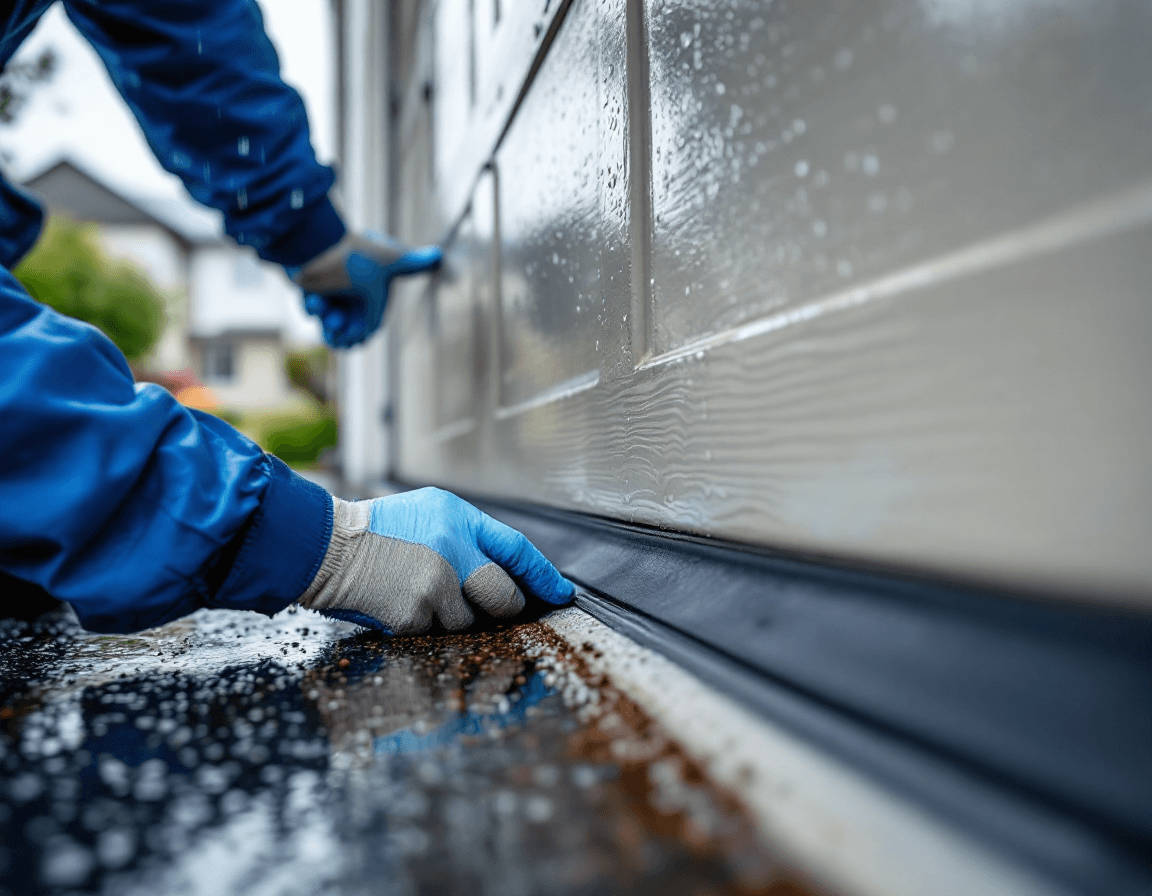
Garage door weather seal replacement in Poulsbo, WA is one of the most affordable fixes a homeowner can make, and it often delivers the biggest comfort gain for the least money. Poulsbo sits on the shore of Liberty Bay on the Kitsap Peninsula, and the damp, salty, wind-driven weather that rolls in off the Sound finds every gap at the base of a garage door. A bottom seal that was fine three winters ago can crack, flatten, or pull loose, and then rain, cold air, and critters start coming in under the door. Many local homeowners don't notice until they see a damp line on the concrete or feel a chill when they walk past the door on the way to the car.
This page explains how seals work, how to recognize the signs that yours needs attention, and what a replacement typically involves. Pricing for seal replacement generally runs from $95 to $250, depending on the seal type you choose and the width of your door. The final number depends on what is worn, how the door is built, and whether the work is limited to the bottom seal or includes the side and top weatherstripping. We'll cover the practical details so you can make a good decision before anyone starts pulling old vinyl off your door.
If you'd rather have a technician look at your door in person, call (888) 799-3819 and describe what you're seeing. We can usually tell you over the phone whether a seal swap is likely to solve the problem or whether something else is going on.
Why Poulsbo Garages Take a Beating From the Weather
Poulsbo's climate is mild by national standards, but it is persistently wet. Winter brings long stretches of drizzle and steady rain, and the humidity off Liberty Bay means surfaces rarely dry out completely between storms. Garage doors in this area also face salt-laden air in some neighborhoods, which speeds up the breakdown of rubber and vinyl. Sun exposure in the summer months can dry out seal material even when the garage sits in shade for much of the day.
Because the region rarely gets long hard freezes, many homeowners assume their seals are safe through the cold season. In practice, the repeated cycle of wet nights, brief cold snaps, and warm afternoons is hard on flexible materials. Seals stiffen, lose their memory, and eventually crack along the fold line where they meet the door. The problem tends to build slowly, which is why it can go unnoticed until water is already pooling near the entry.
Wind is another factor that gets overlooked. Gusts off the water can push rain horizontally against the lower panel of a door, and that pressure forces moisture into any gap that a worn seal no longer blocks. A seal that looked adequate on a calm day may be overwhelmed during a blustery south-wind storm. Understanding this local pattern helps explain why a door that seems fine most of the year can still leak during the worst weather.
Reading the Gap: How to Spot a Failing Bottom Seal From Inside
The most reliable place to check a bottom seal is from the inside of the garage on a bright day. Close the door, turn off the overhead light, and look for daylight showing along the bottom edge. Even a thin line of light means outside air, moisture, and pests have a path into the space. Some homeowners do this check with a flashlight held outside the door at night, which works just as well.
A cracked, brittle, or missing bottom seal often looks different from a gap caused by an uneven floor. Look closely at the rubber or vinyl itself. If it has hairline cracks, chunks missing, or a flattened profile that no longer springs back, the seal has reached the end of its life. If the seal is intact but still lets light through, the door may be out of adjustment or the floor may have settled, and a new seal alone may not close the gap.
Use the checklist below as a quick self-assessment before calling for service.
- Daylight visible under the closed door at any point along the width
- Visible cracks, splits, or dry patches on the bottom seal
- A seal that has pulled away from the panel or hangs loose at one end
- Damp spots, water stains, or salt residue on the floor just inside the door
- Droppings, tracks, or small nests near the threshold after dark
- A noticeable draft at the door on windy days, even with the door fully closed
If you find two or more of these signs, a replacement is probably overdue. Take a few photos with your phone so you can show a technician exactly where the problem is. Clear photos help a tech plan the right seal and the right amount of time before you even schedule the visit.
Perimeter Weatherstripping and the Side-Jamb Problem
The bottom seal gets most of the attention, but the perimeter weatherstripping along the sides and top of the door matters just as much. On many Poulsbo homes, the vinyl or foam strip mounted to the door jamb compresses each time the door closes. Over years of opening and closing, that compression takes a set, the strip flattens, and light begins to show along the edges. Rain driven by wind can then slip past the top corners and run down the inside of the frame.
Perimeter weatherstripping is usually inexpensive to replace and goes quickly when the jamb is accessible. A technician removes the old strip, cleans the channel of grit and old adhesive, and installs a new length that matches the profile of your door. Care is needed at the corners, where the strip must meet cleanly so there is no gap for water to enter. If your door has an older aluminum frame, the fit may need a little more attention to keep the seal snug without binding the door.
Homeowners sometimes ask whether they can simply glue a foam strip along the jamb themselves. Adhesive-backed foam can work as a short-term patch, but it rarely holds up under daily compression and wet conditions. A proper replacement uses a profile designed to seat into the track or the jamb channel, which keeps it in place when the door moves. Doing the job correctly the first time usually saves money compared with repeated patching.
Threshold Seals on Uneven Driveways and Slab Edges
Threshold seals address a different problem: the strip of ground or floor where the door meets the slab. Many garages in the Poulsbo area were poured on older or sloped foundations, and the concrete at the entry can dip, heave, or crack over time. When the floor is not perfectly level, a bottom seal can compress on one side and leave a gap on the other. A threshold seal or a replacement bottom seal with a different profile can bridge that uneven spot.
Some garages also have a raised or angled threshold that water flows toward during a heavy rain. If the slope drains toward the door instead of away from it, water will find the lowest path under the seal no matter how new the rubber is. In those cases, the seal is doing its job but the grade is working against it. A technician can recommend whether the threshold needs a different seal or whether drainage near the entry should be addressed separately.
It is also worth checking the concrete itself. Hairline cracks near the door track or a crumbling edge can let water in even when the seal is perfect. Small repairs to the slab are outside the scope of a typical seal job, but a good technician will point them out so you know the full picture. Addressing the seal and the threshold together usually gives the most reliable result.
Choosing Between Vinyl, Rubber, and Brush Seals
Several seal types are common on residential doors, and each suits a different situation. Rubber bottom seals are durable and handle temperature swings well, which makes them a solid choice for garages that see both wet winters and warm summers. Vinyl seals are less expensive and work well on flat, well-supported floors, though they can stiffen in cold weather if they are low quality. Brush seals or hybrid brush-and-rubber strips are useful where the floor has minor unevenness, since the bristles follow the contour of the concrete.
For perimeter weatherstripping, foam tubing, vinyl bulb, and tension-fit flexible strips are the most common options. Foam compresses easily and suits older doors with generous gaps, but it can break down faster when exposed to constant moisture. Bulb-style vinyl holds its shape longer and is a good match for a door that closes firmly. A technician can usually tell which profile fits your track or jamb by looking at it, and the right choice makes a noticeable difference in how long the seal lasts.
Match the seal to your door's actual conditions rather than choosing the cheapest option on a shelf. A seal that is too stiff can prevent the door from closing fully and may strain the opener. A seal that is too soft will flatten within a season or two. Ask the technician to explain why a particular profile was selected for your door, and look for a clear answer that refers to your floor, your frame, and your exposure.
What Affects the Price Between $95 and $250
Seal replacement pricing generally falls between $95 and $250, and where your job lands in that range depends on a few practical factors. The first is the type and quality of the seal. A basic vinyl bottom seal costs less than a heavier-duty rubber profile or a hybrid brush seal designed for uneven concrete. The second is door width, since a wider door needs more material and more time to install evenly.
Scope also changes the price. Replacing only the bottom seal is the least expensive option. Adding perimeter weatherstripping along the sides and top increases the total length and labor, though the work can often be done in the same visit. If the threshold needs a dedicated seal, or if the old material has to be removed from a stubborn channel, the time required grows. Doors with older hardware or tight tracks sometimes need extra adjustment to avoid rubbing once the new seal is in place.
Here is a simple way to think about the range before you call:
- Bottom seal only on a standard single-car door usually sits near the lower end of the range
- Bottom seal plus perimeter weatherstripping on a double-car door usually sits in the middle
- Specialty threshold or brush seals on an uneven slab usually fall toward the upper end
- Older doors that need minor alignment as part of the job may add to the total
These are general guidelines, not a fixed quote. The final price depends on what the technician finds when they inspect your specific door. Always ask for the price in writing before work begins so there are no surprises at the end of the visit.
Pests, Leaves, and the Small Openings Nobody Notices
A gap under a garage door is an open invitation to more than rain. Poulsbo's wooded lots, greenbelts, and waterfront edges mean that rodents, insects, spiders, and slugs are a normal part of local life, and a poorly sealed garage gives them an easy route inside. Mice are especially good at squeezing through openings that look too small to matter. Once they're inside, they can chew wiring, damage stored items, and leave droppings near the entry.
Leaves, pine needles, and wind-blown debris also collect at the threshold, particularly in the autumn months. A damp pile of organic material against the seal holds moisture, which can accelerate rot in wood trim and encourage mold on the inside of the door. Some homeowners notice this only after they find a cluster of dead leaves stuck along the track during a spring cleaning. A tight bottom seal keeps most of this debris outside and makes the garage easier to maintain.
Sealing the door is only one piece of pest control. Keep vegetation trimmed back from the garage walls, store firewood and recycling away from the entry, and check the corners where the garage meets the foundation. If you see signs of activity after a seal replacement, a pest professional can identify the entry point more precisely. The seal reduces the opportunities, and a few simple habits help keep them closed.
Drafts, Heating Costs, and Living Above or Beside the Garage
Many Poulsbo homes have a living space above the garage or a utility room directly beside it. In these layouts, a leaky garage door can make the adjacent rooms feel colder and can contribute to higher heating bills. Cold air pours in along the floor and spreads into the rest of the house through the shared wall, and the furnace works harder to keep up. Homeowners often blame the windows or the insulation before they realize the door is the source.
A new bottom seal and perimeter strip reduce that drafty flow noticeably. The improvement is most obvious on windy days, when the pressure difference between the outside and the garage is greatest. If you have a heat pump or a forced-air system with ducts in the garage, sealing the door also helps keep conditioned air from leaking out into the cold space. Measuring the change is hard without a meter, but many homeowners say the first cold snap after the work is the moment they feel the difference.
It is worth pairing the seal replacement with a quick check of the garage-to-house door. That door, along with its weatherstripping and sweep, is another common source of drafts. Look for daylight around its frame and feel for air movement with a lit incense stick or a thin strip of tissue. Addressing both doors together gives you a more complete improvement in comfort than fixing either one alone.
A Homeowner's Quick Check Before Calling for Service
Before you book a visit, spend a few minutes collecting the information a technician will want. Note the width of the door, whether it is a single or double unit, and the approximate age of the opener. Take a clear photo of the bottom seal from inside and outside, and another of the side jamb near the top corner. These details help the technician bring the right materials on the first trip.
It also helps to describe the symptoms specifically. Tell the technician whether water enters only during wind-driven rain, whether you see daylight along one side or the whole width, and whether pests or debris are the main concern. If the floor near the door is damp after storms, mention that as well. A few sentences of description often reveal whether the seal is the main issue or whether drainage, alignment, or the threshold also needs attention.
Finally, check whether the door is opening and closing smoothly. A door that binds, makes grinding noises, or stops partway can indicate a track or spring issue that should be inspected by a licensed professional. Garage door springs and cables store significant tension, and any work on them should be left to trained technicians with the right tools. A seal replacement is a safe, straightforward task, but the surrounding hardware needs a qualified hand.
When a Seal Swap Is Not the Whole Answer
Sometimes replacing the seal fixes the draft but does not solve the water problem completely. If water still reaches the floor after a new seal is installed, the cause may be the slope of the driveway, a clogged drain near the entry, or gutters that dump runoff right at the door. In those cases, the seal is working correctly but the water is arriving faster than the threshold can handle. Identifying the source prevents repeated replacements.
A door that is out of square or hanging unevenly can also keep a new seal from sealing properly. If one side of the door sits lower than the other, the seal will compress unevenly and leave a gap at the high spot. Adjustment of the rollers, track, or hinges may be needed before the seal can perform as intended. This kind of alignment work should be done by a licensed technician, especially if it involves the spring system.
Structural issues in the slab or the surrounding wall are less common but worth noting. Cracks that run through the floor near the door, or water staining that extends up the wall, deserve a closer look. A technician can tell you whether the problem is limited to the seal or whether a broader repair is warranted. Honest answers at this stage save time, money, and frustration later.
Scheduling Service Around Liberty Bay Weather
The best time for seal work in Poulsbo is generally during a dry spell, when the concrete is clean and the door surfaces are free of moisture. Adhesives and some vinyl profiles bond more reliably when the surfaces are dry and the temperature is moderate. The mild months between late spring and early autumn often offer the most comfortable conditions for installation, though a skilled technician can work through many of the drier days that come during the rainy season.
If you're noticing water already, don't wait for perfect weather to call. Early service prevents water from reaching stored items, wood trim, or the drywall at the base of the garage wall. A quick inspection during a rainy period can also show you exactly where water is entering, which makes the repair more accurate. Scheduling ahead, especially before the heavy winter storms, keeps you ahead of the damage rather than reacting to it.
Plan for a short visit in most cases, since a standard seal replacement is usually completed in a single appointment. If the door needs adjustment or a threshold repair in addition to the seal, allow extra time. A technician will explain what to expect when you call, and will give you a clear price range before starting work. Keeping the door in good condition year-round is the most dependable way to stay comfortable and dry through every Poulsbo season.
Ready for a closer look at your garage door? Call Seattle Garage Door Fix at (888) 799-3819 to schedule a licensed technician to inspect your bottom seal, perimeter weatherstripping, and threshold. We'll walk you through the options, explain the price for your door, and help you stop the drafts, water, and pests before the next storm rolls in.