
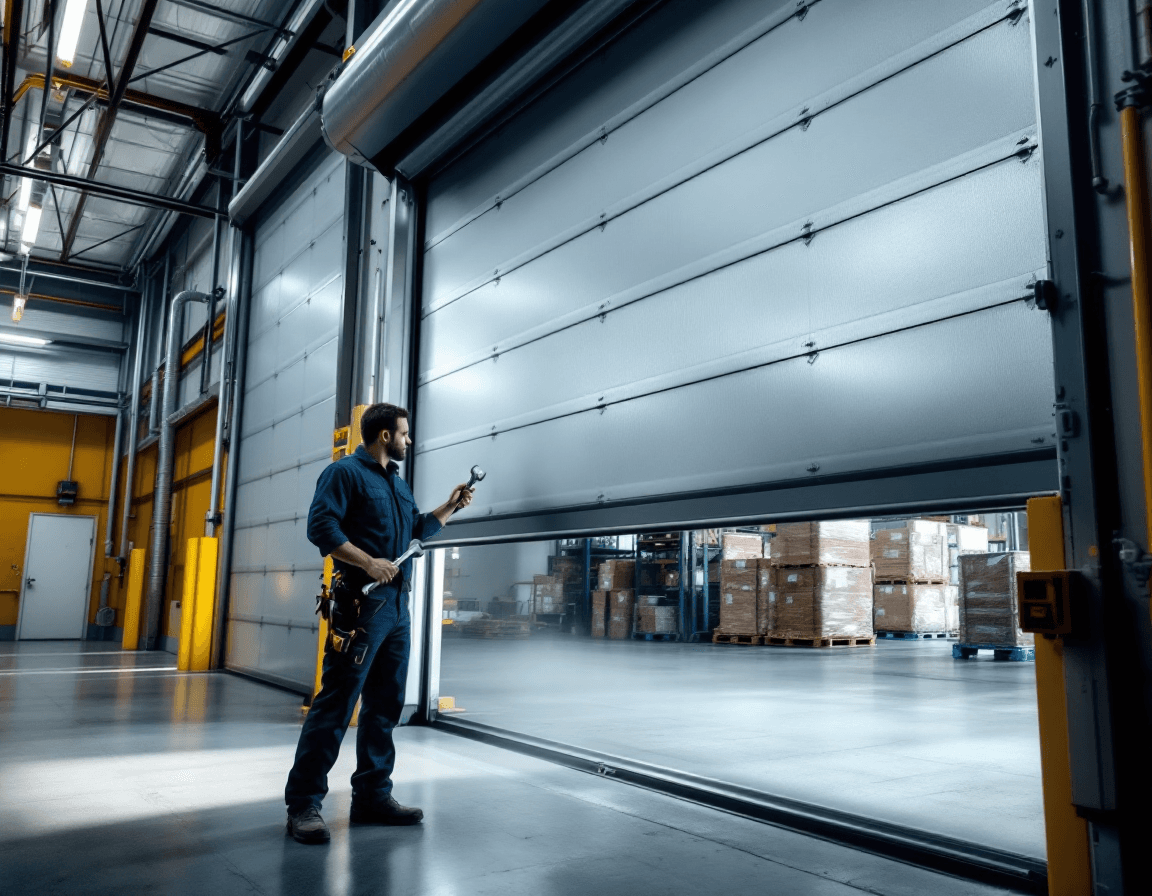
Commercial overhead door repair in Black Diamond, WA calls for a different approach than residential service. A warehouse, contractor yard, or loading dock depends on its doors to keep trucks moving and crews working, so a door that stops or sticks is a business problem before it is a mechanical one. Seattle Garage Door Fix works with commercial property owners, facility managers, and tenants across the greater Seattle and Western Washington area, including Black Diamond in King County. This page explains what we see most often in local commercial doors, how we diagnose problems, and how to keep a fleet of doors running through a wet Pacific Northwest year.
Black Diamond sits in a part of King County where rural roads, small industrial lots, and growing residential neighborhoods meet. Businesses here often run a mix of older roll-up doors and newer sectional doors, sometimes in the same complex. Trucks, trailers, and delivery vehicles arrive on schedules that do not wait for a door to be repaired at a convenient time. Our goal is to get a qualified technician on site quickly, identify the root cause, and give you a clear quote so you can decide how to proceed.
If your door is down right now, call (888) 799-3819. We will ask about the door type, what it is doing or not doing, and whether anyone has tried to operate it manually. That information helps us decide what to bring and how urgent the call is. The rest of this page covers the most common commercial door problems we handle, so you can understand what is happening and what to expect.
Why a Stalled Dock Door Costs More Than the Repair Bill
A single loading-dock door that will not close can ripple through an entire operation. Outbound loads wait, inbound shipments back up in the lot, and drivers start looking for another facility to use. Even a door that still opens but moves slowly can cut the number of trucks a crew can process in a shift. When owners compare a repair invoice to these costs, the invoice is often the smallest number on the page.
This is why we treat commercial calls as time-sensitive from the first conversation. A technician who arrives with the right parts, a clear diagnostic plan, and an honest estimate can often restore function the same day. In some cases a temporary fix keeps the door usable while a permanent part is ordered. We would rather tell you plainly what can be done today and what needs a scheduled follow-up than promise a timeline we cannot keep.
Downtime also has a hidden safety dimension. Crews sometimes try to force a stuck door or lift it by hand, which can lead to injuries or further damage to tracks, curtains, and operators. Shutting down the affected opening, marking it clearly, and calling for service is almost always the better choice. We can help you set up that temporary plan while the repair is underway.
Reading the Warning Signs Before a Door Goes Down
Most commercial door failures do not happen without warning. A door that used to close in a few seconds may start taking longer, or it may begin to hesitate at a certain point in its travel. Unusual noises such as grinding, popping, or a metallic scrape can point to worn rollers, loose brackets, or track misalignment. Paying attention to these changes gives you time to schedule service on your terms rather than during a peak shipping day.
Operators and controls also give clues. A door that reverses unexpectedly, stops halfway, or needs several button presses before it responds may have a sensor problem, a control board issue, or a limit setting that has drifted. Photo eyes that are dirty, misaligned, or exposed to direct glare from low winter sun can cause intermittent faults that are frustrating to chase. Many of these issues are simple once a technician has the door in front of them, but they are hard to diagnose from a distance.
Here are signs we recommend reporting promptly:
- The door pauses, reverses, or stops at the same point in its travel more than once
- You hear grinding, scraping, or knocking that is new or getting louder
- The door sits crooked, leans, or shows gaps at the bottom or sides when closed
- The operator runs but the door moves slowly or does not respond to the wall control
- Panels, hinges, or track sections show fresh bends, cracks, or paint transfer
Keeping a simple log of when these symptoms appear, including temperature, time of day, and which door was affected, helps our technicians narrow the cause quickly. A note such as "reverses only on cold mornings" is far more useful than "acting up."
Rolling Steel Doors That Jam or Run Off Track
Rolling steel doors are common on older commercial buildings and on many storage and service bays in Black Diamond and the surrounding area. These doors are built from interlocking steel slats that coil into a head-mounted barrel. When they work well, they are tough and secure. When something goes wrong, the failure is often dramatic because a jam can bind the entire curtain.
The most frequent cause of an off-track rolling door is a bent or displaced guide. Forklift contact, a truck mirror, or a shifted slab can push the guide out of alignment, and the curtain then walks sideways until it binds. Debris in the track, particularly grit tracked in from gravel lots and seasonal leaf litter, can also prevent the slats from seating properly. Corrosion at the bottom bar or in the guides is another contributor, especially in buildings where the door sees daily wet and salty road spray during the winter months.
Repairing a rolling steel door typically involves careful work on the guides, the curtain, and the drive or spring assembly, depending on the cause. Our technicians check whether the curtain is damaged, whether the guides can be realigned, and whether any slats need to be replaced. We do not attempt to rewind or adjust tension on a rolling steel barrel without the right tools and training, because those components store a large amount of energy. If the jam involves the spring system, we will say so clearly and recommend a licensed technician complete that portion of the work.
Commercial Operators, Limit Settings, and Photo Eyes
Commercial operators are the motors and controls that move heavy doors on a schedule that light residential units cannot match. A failed operator can leave a dock closed even when the door itself is structurally sound. Operator problems often show up as a motor that hums but does not lift, a door that stalls under load, or a control panel that goes dark. Our first step is always to determine whether the power supply, control circuit, or mechanical drive is responsible.
Limit settings are a frequent source of frustration. Over time, the travel limits that tell the operator where the door should stop can drift, particularly after a seasonal temperature swing or after a section has been replaced. When limits are off, a door may stop short of fully open or try to push past closed and trigger a fault. Adjusting limits is a precise task, and we verify the setting by running the door through several complete cycles before we leave.
Photo eyes and edge sensors protect people and equipment, and they also cause a surprising number of service calls. Dust, spider webs, rain spatter, and misalignment after a bump can all trick the system into thinking an obstacle is present. Winter fog and low-angle light can have similar effects. We clean and align the sensors, check their wiring, and confirm they respond correctly before we consider the job finished. We never recommend bypassing safety sensors to keep a door moving, because that trades a short-term convenience for a serious hazard.
Forklift Strikes and Replacing Damaged Sections
Forklifts and pallet jacks are part of daily life in most Black Diamond industrial and contractor facilities, and they are one of the most common causes of damage to commercial doors. A glancing blow can bend a track or crack a panel, while a harder strike can split a section or knock an operator out of alignment. Many owners are tempted to wait and see whether a dented panel still functions, but damaged sections often put extra stress on hinges, rollers, and springs.
Sectional doors are designed so that individual panels can be replaced without replacing the entire door, and this is often the most cost-effective path after an impact. We inspect the panels on either side of the damage, because a strike that bends one section can also weaken its neighbors. If the track has been pushed out of plumb, we realign it before installing new sections, since a new panel will not seat correctly on a distorted track. Matching the replacement panel's profile, insulation, and window configuration is important for both function and appearance.
After any forklift incident, we suggest documenting the damage with photos and noting the date and approximate time. That record can help with internal reporting, insurance conversations, and planning the repair. It also helps our technicians understand what happened and check for hidden damage in the operator, cables, or spring system. Quick action after a strike is one of the best ways to prevent a minor dent from becoming a major shutdown.
Spring and Cable Work Belongs to Licensed Technicians
Torsion springs, extension springs, and lift cables carry substantial tension and can cause serious injury if they fail or are handled incorrectly. Commercial doors often use heavier springs than residential units, which makes this even more important. Winding or unwinding a torsion spring without the proper bars, measurements, and training is one of the most dangerous tasks in the garage door trade. For this reason, we always recommend a licensed professional for spring and cable work, and we do not encourage property staff to attempt it.
When we inspect a door that has a spring or cable problem, we explain what we see, what the repair involves, and what safety precautions apply. Broken springs, frayed cables, and misaligned drums are typically replaced as a complete assembly, with the door secured and the system checked after installation. We also look at the balance of the door, because an unbalanced door can stress the operator and shorten its life. If the spring system is older, we may recommend a planned replacement rather than waiting for a failure.
If your team hears a loud bang from a spring, sees a cable hanging loose, or notices the door dropping suddenly, keep people clear of the opening and call for service. Do not attempt to lift the door by hand or disconnect the operator to force it. A controlled shutdown and a scheduled repair are far safer than an improvised fix.
How Pacific Northwest Weather Shapes Commercial Door Wear
The Pacific Northwest climate is kind to plants and difficult on steel and electronics. Black Diamond winters bring extended wet periods, frequent condensation, and occasional hard freezes that can stiffen seals and slow motors. Damp air encourages rust on hinges, tracks, and fasteners, particularly where galvanizing has been scratched or where water collects at the bottom of a door. Moss and fine debris can accumulate in tracks, and that buildup can cause binding that appears suddenly after a stretch of rain.
Temperature swings also affect how doors move. Steel expands and contracts, so a door that closes smoothly in the afternoon may bind in the early morning if its tracks and seals were adjusted under different conditions. Weatherstripping that has hardened or split will not seal properly, which lets water and cold air into the building and can freeze moving parts. In winter, ice buildup at the threshold can stop a door from closing completely, which is why we check bottom seals and perimeter gaps during every seasonal service visit.
Summer brings its own challenges. Long daylight hours and occasional heat can warm steel panels enough to affect lubrication and expand tracks slightly. Dust from gravel lots and dry-season debris can collect in sensor housings and roller channels. A simple seasonal inspection in spring and fall gives our technicians a chance to clean, lubricate with the correct products, and catch small problems before they grow.
Lake Sawyer and Ten Trails Corridor Service Planning
Businesses and properties near Lake Sawyer and the Ten Trails area have their own scheduling patterns. Traffic on local roads can change throughout the day, and deliveries may cluster around certain hours depending on the tenant mix and nearby development. When we plan a commercial service call in this part of King County, we consider access, parking for service vehicles, and the time windows that cause the least disruption to your operation. Clear communication about gate codes, after-hours access, and key holders helps us arrive ready to work.
Many properties in the wider Black Diamond and Maple Valley area include a combination of doors that serve different purposes, such as a main overhead door for vehicles, a side pedestrian door, and a smaller service bay. Planning repairs across all of them during one visit can reduce total downtime and make it easier to coordinate with your staff. We ask about the full set of openings when we schedule, so a single appointment can cover related issues where appropriate.
If your site is seasonal or has periodic peaks, let us know during scheduling. We can plan inspections for slower periods and keep emergency response available for busy stretches. Having a relationship with a service provider before a breakdown makes it much easier to get a timely response when something goes wrong.
Custom Commercial Quotes and Fast Turnaround Without Guesswork
Commercial door work varies widely, so we provide custom quotes rather than flat rates. A quote reflects the door type, the scope of the problem, the parts required, and whether the job can be completed in one visit or needs a follow-up. We aim to give you a clear written estimate that separates diagnostic time, labor, parts, and any recommended upgrades. This transparency helps property managers and business owners make informed decisions, especially when multiple doors are involved.
Fast turnaround is a priority, but speed should never come at the expense of a sound repair. When we arrive, our technicians confirm the diagnosis before ordering parts, because replacing the wrong component wastes time and money. If a part must be sourced, we will tell you the expected lead time and whether a temporary measure can keep the door in limited service. In many cases we can complete the repair on the first visit once the problem is clearly identified.
When you call, have the following information ready to help us prepare an accurate quote:
- The door type, approximate size, and manufacturer if you know it, or a photo of the nameplate
- The symptoms, when they started, and whether the door was involved in any impact
- Whether the door is fully down, partially operating, or operating with restrictions
- Access details, including site hours, gate codes, and a contact person on site
- Any previous service records or maintenance logs you have on file
With this information, we can often give you a realistic timeline and a plan before a technician leaves the shop.
Preventive Maintenance Contracts for Black Diamond Operators
Preventive maintenance is one of the most effective ways to protect a commercial door fleet from unplanned shutdowns. A scheduled maintenance agreement gives your facility regular inspections, adjustments, lubrication, and early identification of wear. Instead of reacting to failures, you can plan repairs around your operating calendar. For businesses that depend on dock access, this shift from emergency response to scheduled care can be significant.
A typical preventive maintenance visit for commercial doors includes a thorough review of the components most likely to cause trouble. Our technicians look at the areas listed below and document their findings so you can track changes over time. The exact scope depends on the door types and usage levels at your site, and we tailor the agreement to your equipment rather than applying a one-size plan.
- Balance, tension, and visible condition of springs, cables, and drums, with licensed technicians handling any spring replacement
- Track alignment, roller condition, hinge tightness, and fastener torque
- Operator function, limit settings, reversing behavior, and control panel diagnostics
- Photo eye and edge sensor cleaning, alignment, and function testing
- Bottom seals, weatherstripping, and perimeter gaps, with attention to winter moisture and ice risk
- Lubrication with appropriate products for steel, bearings, and chain or screw drives
Maintenance agreements also give your team a single point of contact for questions. When a door behaves oddly between visits, you can call and describe what you are seeing, and we can decide whether it needs immediate attention or can wait for the next scheduled inspection. Over time, the service history we build together helps identify doors that need upgrades and helps you budget for replacements before they become emergencies.
Next Steps for Your Black Diamond Loading Dock
Whether a door is down right now or you are planning ahead for the coming year, the right next step is a conversation about your specific equipment and operation. Commercial doors in Black Diamond face a combination of heavy use, forklift traffic, and Pacific Northwest weather, and each site has its own pattern of wear. A knowledgeable technician can look at the door, listen to what your team has observed, and recommend a practical path forward.
For urgent repairs, we dispatch qualified technicians to commercial sites with a focus on restoring safe operation as quickly as possible. For planned work, we provide custom quotes and can help you schedule repairs around peak periods. For ongoing reliability, a preventive maintenance contract brings regular inspection and documentation to your entire door fleet. Call Seattle Garage Door Fix at (888) 799-3819 to describe your situation, and we will help you decide the right next step for your Black Diamond property.