
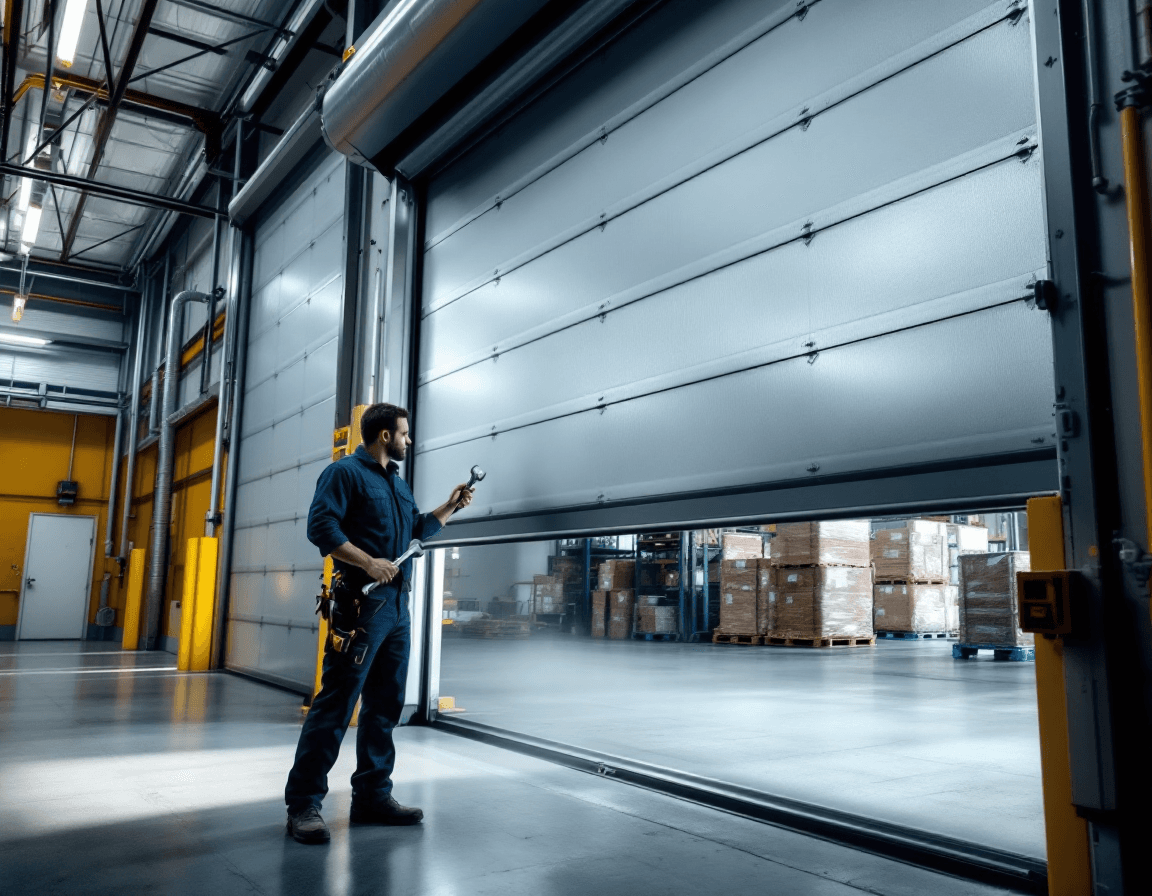
Commercial overhead door repair in Maple Valley, WA is a different job from fixing a residential garage door. A warehouse, contractor yard, or loading dock can lose money every hour its door stays closed, and the door itself is often much larger, heavier, and more heavily used than anything on a house. Seattle Garage Door Fix handles sectional overhead doors, rolling steel doors, commercial operators, and preventive maintenance for businesses across Maple Valley and the surrounding King County communities. We know that when a door fails at a business, the first question is usually how quickly it can be running again, and the second is how to keep it from failing the same way next month.
This page explains the most common problems we see on commercial doors in the Maple Valley area, how our technicians approach them, and what a business owner or facility manager can expect from the repair process. We cover everything from a dead dock door that won't respond to its wall button, to a rolling steel door that has come off its track, to a slow door that holds up trucks and forklifts during peak hours. We also describe how we price commercial work, which is based on a site-specific quote rather than a flat rate, and how a preventive maintenance agreement can reduce the number of emergency calls your operation has to make.
Every commercial job is different, so the details below are meant to help you understand your situation before a technician arrives, not to replace an on-site assessment. If you can describe what the door is doing, when it started, and what it is connected to, you will speed up the diagnosis considerably. Read on for the local context that shapes how commercial doors perform in this part of the Puget Sound region, and call us at (888) 799-3819 whenever a door is affecting your operation.
When a Loading Dock Door Goes Dark on a Weekday Morning
Most commercial door emergencies start in the same way: a dock door that worked the day before refuses to open, or it opens partway and stops with a loud clunk. Sometimes the wall control shows no response at all, and sometimes the door begins to move and then reverses for no apparent reason. A technician's first task is to separate a power or control problem from a mechanical one, because the fix for each is very different and the wrong guess wastes valuable time. Many dock doors in the Maple Valley area sit on circuits shared with refrigeration, compressors, or lighting, so a tripped breaker or a failed contactor can look like a door problem.
Once power is confirmed, we check the operator's safety circuits, including the photo eyes, edge sensors, and limit settings. Commercial operators are designed to stop or reverse when something interrupts the path of the door, so a dirty or misaligned photo eye can cause a door to refuse to close even when nothing is physically in the way. A dock seal that has pulled loose, a dislodged bottom weather seal, or a piece of debris lodged in the track can trigger the same behavior. We clear these conditions, verify the sensors, and test the full cycle before we consider the door back in service.
When a door is completely down and your operation cannot wait, we prioritize getting it moving safely, even if a permanent fix requires parts. Temporary measures, such as restoring manual operation for a short period, must be done with care, and we will tell you exactly what is safe to use and what should stay locked out until repairs are complete. A door that is stuck in an open or partially open position is a serious hazard for anyone walking beneath it, so we always secure it before leaving the site.
How Wet Winters and Lake-Country Humidity Work on Steel
Western Washington's climate is one of the main reasons commercial doors in Maple Valley need regular attention. Long stretches of gray, damp weather through fall and winter mean steel doors spend months in moisture, and that moisture finds its way into hinges, roller bearings, and the seams between panels. The area around Lake Wilderness and the surrounding wetlands tends to hold humidity, and buildings close to the Cedar River watershed can see condensation collect on cold metal overnight, then evaporate and leave residue behind. Over time that cycle invites corrosion on galvanized surfaces that look fine from a distance.
Surface rust is usually the first sign, appearing as orange bloom along track joints, around fasteners, and at the bottom edge of the door where water sits. Left alone, it works into the metal, weakens the mounting points, and can cause bearings to seize. We look for rust at the track, the roller stems, the hinge knuckles, and the bottom retainer, and we treat the early stages with cleaning, a rust-inhibiting primer where appropriate, and lubricants formulated for exterior commercial hardware. Lubrication choice matters here, because many general-purpose greases attract dirt and wash out in wet conditions, which turns the track into a sludge trap.
Cold snaps add another layer. When temperatures drop below freezing, moisture trapped in tracks can stiffen rollers and push the door off its guide path, and in some cases ice can bind a rolling curtain. Doors that open onto unheated bays or exterior staging areas feel this more than those in climate-controlled spaces. Seasonal inspections before the wettest months are one of the most effective ways to reduce these problems, and they give us a chance to check weatherstripping, drainage at the threshold, and the condition of any exposed springs or cable drums.
Rolling Steel Doors That Bind, Jam, or Ride Off Track
Rolling steel doors are common on warehouses, auto service bays, storage facilities, and retail frontages in the Maple Valley corridor because they save interior space and stand up to frequent use. Their design is simple in concept but unforgiving in practice. A rolling curtain made of interlocking slats runs up into a coiled barrel above the opening, and it relies on guide tracks on each side to keep the slats aligned. When a slat bends, a guide wears down, or a bottom bar hits an obstruction, the curtain can jump the track or bind halfway through its travel.
Our first step with a jammed rolling door is to determine whether the problem is in the curtain, the guides, the barrel, or the operator. We check each side of the track for gaps, bent flanges, debris, and signs that the curtain has been pulled out of alignment. A forklift or pallet jack that clips the lower bar can bend several slats at once, and a single distorted slat can make the whole door drag. We straighten or replace damaged slats where it is practical, and we reset the curtain so it runs square through its full range.
Rolling doors also depend on balanced tension in the barrel, and that tension is stored in a spring system that carries substantial energy. Because the spring is under load, adjustment and replacement must be left to licensed professionals with the right equipment and training. Our technicians treat any sign of spring fatigue, such as a barrel that lifts the door unevenly or a curtain that slams down, as a reason to schedule a controlled repair rather than attempting a quick fix.
Sectional Panels, Forklift Strikes, and Replacing Damaged Sections
Sectional overhead doors used in warehouses and distribution spaces are built from insulated or non-insulated panels joined by hinges, and they travel up on vertical tracks before turning horizontally along the ceiling. This design gives excellent clearance and a clean opening, but it also means that a single panel can be the weak point for the whole door. Forklift impact is the most common cause of panel damage we encounter in commercial settings, and it often happens during a busy shift when a driver misjudges the clearance at a dock or backs into a door that is still moving.
When a panel is damaged, the decision is rarely as simple as swapping one piece. We assess whether the bent panel can be straightened safely, whether the hinges and roller assemblies connected to it have been compromised, and whether the track has been pushed out of alignment. Sometimes a single strike will also crack a roller bracket, bend a track section, or stress a spring line, and those hidden effects can cause new problems after the panel is replaced. A complete inspection of the affected bay protects against a second failure a few weeks later.
Matching replacement panels is another local consideration. Many commercial doors in the area have been in service for years, and manufacturers update profiles, insulation values, and hardware over time. We check the door's model information, panel thickness, section height, and hinge type before ordering parts, and we will tell you when a partial replacement is possible and when a full section set makes more sense. Clear documentation of what was damaged, with photos taken before and after repairs, also helps with insurance claims when a loss is covered.
Commercial Operators: Diagnosing Motors, Controls, and Safety Sensors
Commercial operators are the motors and control systems that open and close large doors on a fixed schedule or on demand. They range from simple chain hoists on smaller doors to high-cycle, heavy-duty drives on busy distribution buildings, and they often integrate with access control, dock lights, and building management systems. When an operator fails, the symptoms can be dramatic, such as a door that refuses to move, or subtle, such as a door that slows down over several weeks. Both deserve attention, because a failing operator that is still moving the door can overheat, strip gears, or leave the door stranded at the worst possible time.
We diagnose operators by working through the system in order: power supply, control inputs, safety circuits, limit switches, motor condition, and drive components. Limit settings are especially important, because a door that stops too high or too low can cause a range of problems from inefficient cycles to damage at the header or floor. Safety devices must also be verified. Commercial operators are required to incorporate safety features that stop or reverse the door when something is in the path, and our technicians test those features carefully after every repair. A door that does not reverse properly on an obstruction is a serious liability, and we will not return it to service until that function is confirmed.
Operator wear is often gradual, so we pay attention to changes over time. Longer cycle times, unusual noises from the gearbox, warmer-than-normal housings, and intermittent faults can all signal that a component is approaching failure. Replacing a worn part on a scheduled basis is usually far less disruptive than waiting for it to fail during a shipping window, and it is one of the strongest arguments for a preventive maintenance arrangement.
Speed, Cycle Times, and Matching a Door to Your Throughput
Many commercial customers do not call us because a door has stopped working. They call because it has become slow enough to limit their operation. A dock door that takes forty or fifty seconds to fully open can hold up a trailer turnaround, and a bay door that lags behind forklift traffic can create bottlenecks at shift changes. Cycle speed is not a single number, and it depends on the door's size, the operator's drive, the counterbalance system, and the condition of the track and rollers. A door that was once fast can slow down simply because its components have accumulated wear and friction.
We begin with a timed test of the door's full cycle in both directions, noting any hesitation, stutter, or uneven movement. Friction in the track, misaligned rollers, weak springs, and a tired motor can each add seconds to the cycle. We also check whether the operator's speed settings are appropriate for your use, since some drives can be adjusted for faster travel within safe limits. In some cases, upgrading the operator or adding high-speed components makes sense, but that decision should be based on how the door is used, not on the assumption that faster is always better.
Matching the door to your throughput is a conversation as much as a technical task. A business that cycles a dock door several hundred times a day has different needs from a facility that opens a bay door a few times per shift. We will discuss how often the door is used, what kind of traffic passes through it, whether there are safety or insulation requirements, and what kind of downtime window you can accommodate. Those answers help us recommend repairs that restore reliable speed without overbuilding a system you do not need.
Quoting a Commercial Job Without Surprises
Commercial work is priced by custom quote, not by a standard menu, because no two buildings have the same door count, track configuration, operator, or access constraints. A quote for a single dock door on a small contractor yard may involve little more than an operator inspection and a track adjustment, while a multi-door warehouse repair can include panel replacement, spring work, controls, and after-hours scheduling. We believe the best quotes are specific enough that you know what is included, what is not, and what might change once we open the equipment.
Our quoting process starts with information from you. A site address, the number and type of doors, the make and model if you know it, photos or video of the problem, and a description of how the door is used will let us prepare a more accurate estimate. When possible, we schedule an on-site visit so the technician can verify the condition of the door, the operator, and the surrounding structure. Some issues, such as hidden corrosion or damaged bracket welds, are not visible until the door is partly disassembled, so we will be clear about where contingencies apply.
Speed matters as much as price for most businesses. We aim to turn quotes around quickly so that repairs can be approved and scheduled while the door is still out of service, and we will suggest interim steps when a full repair requires parts that are not on hand. If we identify additional work during the job, we will explain what we found and why it matters before proceeding beyond the approved scope. That approach keeps you informed and in control of your budget and your downtime.
Preventive Maintenance Agreements for Maple Valley Businesses
A preventive maintenance agreement is a scheduled plan for inspecting, adjusting, and servicing your commercial doors on a regular basis. For many businesses in Maple Valley, it is the most practical way to avoid the expensive, disruptive emergency call that happens when a door fails during a peak week. Maintenance visits give a technician time to look at components before they fail, to replace worn parts on a planned schedule, and to keep a written record of each door's condition over time. That record is valuable when you need to plan budgets, justify capital upgrades, or demonstrate due diligence to an insurer or landlord.
A typical agreement can be tailored to the number of doors you operate and how heavily they are used. High-cycle dock doors may warrant more frequent visits than a single bay door in a lightly used storage building. Visits often include checking the balance and tension of the door, inspecting springs and cables for wear, lubricating moving parts with products suited to the Pacific Northwest environment, testing safety sensors and reversing functions, and verifying that the operator's limits and controls are set correctly. Any findings are reported to you with recommendations and estimated costs, so you can decide how to proceed.
We also structure maintenance around your operating hours. Many facilities prefer visits during slow periods or after close of business, and we work with your schedule to minimize disruption. Ask about how we handle access, lockout procedures, and communication during service visits, since clear coordination is part of keeping your operation safe and productive.
Serving Four Corners, Lake Wilderness, and the Surrounding Corridor
Maple Valley's commercial geography shapes how we schedule and staff our work. Businesses near the Four Corners area, where the main roads converge and traffic can build quickly during commute hours, often need repairs timed to avoid peak delivery windows. Facilities along the Highway 169 corridor, and those tucked into the industrial and service spaces that run toward Kent-Kangley Road, tend to have heavy truck traffic and frequent door use, which makes preventive attention especially valuable. Our technicians are familiar with the approach routes and access patterns that affect how quickly we can reach a site.
Lake Wilderness and the surrounding residential and park areas bring their own considerations. Some commercial properties in the Lake Wilderness vicinity sit near wetlands, drainage features, and seasonal runoff, so moisture and debris can collect at threshold seals and bottom retainers more quickly than in drier locations. We pay attention to drainage around door openings and recommend seal and threshold adjustments when water is getting in. Properties closer to the Cedar River and the trail network may also see more airborne dust and seasonal leaf debris, which can clog tracks if not cleared periodically.
We also serve businesses throughout the wider region, including nearby communities across King County, and we understand that many Maple Valley operators depend on suppliers, contractors, and customers who travel through the area. Whether your building sits in the heart of town or on the edge of the surrounding hills, we plan service to reach you efficiently. When you call, tell us the nearest cross streets or landmarks, since that helps our dispatch team estimate arrival time and bring the right parts.
Safety on Industrial Doors: What Crews Should Never Attempt Alone
Commercial doors store and release large amounts of energy in their springs, cables, and drive systems, and they move heavy masses through spaces where people are working. Injuries on industrial doors are usually preventable, but they happen when untrained staff try to free a jammed door, adjust a spring, or bypass a safety device to keep operations running. Your team should understand which tasks are safe for facility staff and which must always be handled by a licensed professional. Clear written rules and a lockout routine go a long way toward protecting people on the floor.
Torsion springs, extension springs, and cable systems under tension are the most dangerous components on any overhead door, residential or commercial, and they should never be adjusted, removed, or replaced by anyone without the training and equipment to do the job safely. Commercial doors can carry heavier springs and larger loads than residential doors, which raises the stakes. If a spring breaks, a cable frays, or a drum slips, the door can drop or release stored energy with force. Our team treats these components as licensed-only work and will not improvise on them.
Here are practical safety steps your staff can follow while waiting for a technician:
- Do not walk or drive under a door that is stuck partway open or moving unpredictably.
- Disconnect power at the disconnect or breaker before anyone approaches the operator or door hardware, and tag the circuit so no one restores it accidentally.
- Keep forklifts, pallet jacks, and carts clear of the door path, and mark the clearance area on the floor.
- Never bypass or tape over photo eyes, edge sensors, or other safety devices to keep a door running.
- Do not attempt to lift, pry, or manually force a door that is binding or off track.
- Report any sudden drop, loud snap, or grinding noise immediately, and secure the area until a technician arrives.
Staff training should also cover how to recognize early warning signs, such as a door that reverses on its own, a visible gap in the track, or a noticeable change in the sound of the operator. Reporting these signs early gives us the chance to address small problems before they become emergency failures.
Protecting Your Operation Before the Next Breakdown
The most cost-effective commercial door strategy combines fast response with steady prevention. Emergency repairs will always be part of owning industrial equipment, but many of the failures we see could have been spotted weeks earlier during a routine inspection. A door that is slow, noisy, or drifting out of square is telling you something, and listening to that signal is far less expensive than replacing a damaged panel, rebuilding a bent track, or losing a full day of shipments. Keeping a simple log of when doors were serviced, what was replaced, and any unusual behavior you noticed can help both your team and our technicians.
Consider reviewing your doors at least once a season, paying particular attention before the wet months of late fall and winter and again before the busiest part of your year. Look for rust on tracks and hardware, gaps at the bottom seal, debris in the channels, and any change in how the door sounds or moves. If something seems off, call us for an assessment rather than waiting for the door to decide for you. A short conversation now can prevent a much longer shutdown later.
Whether you need an urgent repair, a custom quote for a multi-door project, or a preventive maintenance plan that keeps your loading docks and bays running smoothly, Seattle Garage Door Fix is ready to help businesses across Maple Valley. Call (888) 799-3819 to describe your doors, schedule a site visit, or ask about a maintenance agreement tailored to your operation.