
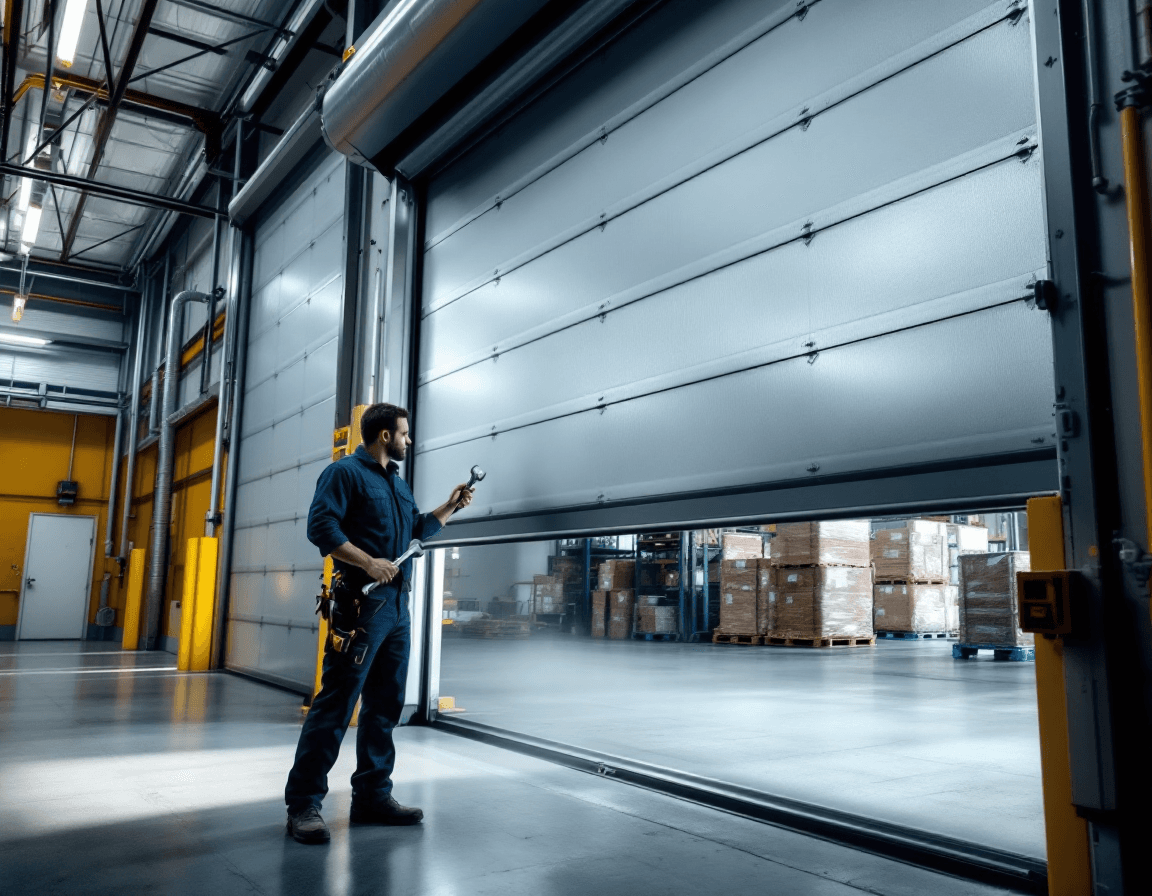
Commercial Overhead Door Repair in Renton, WA is a service that most businesses only think about when a loading door stops moving with a truck waiting outside. Renton sits at a busy crossroads of warehouses, light manufacturing, distribution yards, and service companies along the Cedar River and the I-405 and SR-167 corridors, so a stalled dock door can cost a shift's worth of freight in a single morning. We work on sectional overhead doors, rolling steel doors, commercial operators, and the controls that tie them together, and we understand that your priority is getting the opening back in service with as little disruption as possible.
Our technicians arrive equipped for industrial work, not just residential garages. Commercial doors are larger, heavier, and tied into safety systems that protect your staff and equipment, so the diagnosis has to be thorough before anything is adjusted. Whether your facility is in a business park near The Landing, a warehouse off the Fairwood side of town, or a small shop on the slopes of Talbot Hill, the goal is the same: find the real cause, explain the options plainly, and get your door moving again. This page walks through the common problems we see in Renton, how we approach them, and how a preventive maintenance agreement can keep surprises off your calendar.
Every repair is quoted for the specific door, operator, and site conditions rather than a flat template price. Commercial jobs vary widely in door size, spring system, track condition, and access, so we give custom estimates once we have looked at the equipment. Clear communication matters as much as fast work, and you should know what is broken, what it will take to fix, and what can wait before we start. Call (888) 799-3819 and describe what the door is doing, and we will help you decide how quickly a technician needs to be on site.
Reading the Warning Signs Before a Dock Door Quits
Commercial doors rarely fail all at once. They usually send signals for days or weeks, such as a slower cycle, a grinding sound on the lift, or a panel that seems to sit crooked when it closes. Catching these early is the cheapest way to avoid an emergency call during a peak shipping week. Many facility managers simply get used to the noise until the day the door refuses to rise.
The signs worth tracking tend to fall into a few categories. Mechanical symptoms include uneven lifting, a bang at the top or bottom of travel, or a door that stops partway and reverses on its own. Electrical symptoms include a control button that responds slowly, a keypad that needs multiple presses, or a motor that hums without moving the door. Structural symptoms include gaps at the bottom seal, bent track sections, or hinges that have started to pull away from the panels.
- Slower open or close times compared with last season
- Uneven movement, with one side lifting ahead of the other
- Grinding, popping, or squealing from the drive or rollers
- Visible rust dust, stiff rollers, or gaps forming at the track
- Operator buttons or sensors that respond inconsistently
- Light that leaks through the bottom seal after a closing cycle
If you notice more than one of these, schedule an inspection before the door fails. A technician can often tighten a loose bracket, lubricate rollers, or adjust a limit switch in a single visit, which is far less disruptive than an unplanned shutdown.
Sectional Doors Versus Rolling Steel: Choosing the Right Repair Path
Most Renton warehouses and distribution docks run one of two main door styles, and they behave very differently when something goes wrong. Sectional overhead doors are made of horizontal panels that travel on tracks and stack overhead when open, which makes them popular for loading docks where a large clear opening matters. Rolling steel doors, by contrast, are made of interlocking slats that coil into a small barrel above the opening, which saves interior space and suits storefronts, bays, and high-security entries.
Repair decisions depend heavily on the style. A sectional door problem often comes down to track alignment, roller condition, hinge wear, or the spring system that counterbalances the weight of the panels. A rolling steel problem usually involves the curtain itself, the guides that keep it aligned, or the barrel and brake assembly that controls its descent. The two systems share operators and controls, but their failure modes call for different tools and different safety precautions.
When we arrive, we first identify the door type, the manufacturer if it is still legible, and the approximate age of the components. Older doors may use parts that are no longer stocked, which can change whether a repair or a partial replacement makes more sense. We will always explain the tradeoffs, including how each path affects downtime, long-term reliability, and cost, so you can decide with the full picture in front of you.
Moisture, Mildew, and Rust in the Puget Lowlands
Western Washington weather shapes how commercial doors age in Renton. Long stretches of gray, damp weather, frequent drizzle, and cool temperatures mean steel components rarely dry out completely between storms. Moisture trapped inside tracks, along hinges, and under bottom seals encourages surface rust, and that rust can seize rollers, stiffen bearings, and slowly corrode the guides that a rolling steel curtain depends on. Mildew can also appear on rubber weatherstripping in shaded loading bays, which weakens the seal and lets in drafts and pests.
Salt and road grime add to the problem for facilities near busy arterials. Vehicles tracking in winter debris and washdown water can accumulate along the threshold, especially where the floor slopes toward the door. Over time, that residue works into the lower panels and the operator mechanism. A simple seasonal wipe-down and inspection can catch a lot of this before it becomes a repair bill.
Our technicians pay close attention to drainage and corrosion when they service Renton facilities. We look at whether the threshold collects standing water, whether the bottom seal has hardened or split, and whether track brackets show early rust bloom. Where appropriate, we recommend coatings, improved seals, or drainage adjustments. These small steps help a door keep running smoothly through the wet months that define our climate.
Forklift Strikes and Damaged Panels: Replace or Repair?
Impact damage is one of the most common reasons a commercial door needs urgent attention. A forklift clipping the lower panel, a pallet jack catching the bottom bar, or a truck mirror striking a section can bend steel, crack glazing, or knock a section out of its track. In a busy Renton distribution yard, these incidents happen more often than anyone would like, and they usually happen during the hours when the dock is working hardest.
The first question after an impact is whether the door is still safe to operate. A panel that has pulled off its track, a bent section that binds, or a spring that has shifted can all store energy in ways that create serious risk. Our rule is simple: if the door is out of track or the spring system appears disturbed, keep the door closed or locked out and do not attempt to force it. Staff should not stand beneath a damaged door, and no one should attempt to repair torsion springs or cable systems without proper training and equipment.
Once the door is secured, we assess whether a single section can be replaced or whether the damage is widespread. Sectional doors are designed so that individual panels can often be swapped, which keeps costs and downtime lower than a full door replacement. Rolling steel curtains are more complicated, since a damaged slat may affect the entire coil and guide alignment. We will tell you which option makes sense, and we will give you a written estimate before parts are ordered.
Commercial Operators, Controllers, and Safety Edges
A commercial operator is the motor, drive, and controller that moves a large door on command, and it is often the component that gets blamed first when a door stops. In practice, an operator failure may be caused by a blown fuse, a worn contactor, a failed limit switch, a damaged safety edge, or a photo eye that is misaligned or blocked. Diagnosing the true cause requires testing each link in the chain rather than simply replacing the motor.
Safety devices deserve special attention in commercial settings. Photo eyes, pressure-sensitive edges, and monitored entrapment protection exist to stop a door before it crushes a person, a forklift, or a load. When any of these devices is bypassed, disconnected, or left out of adjustment, the door becomes a serious hazard. We never recommend disabling safety sensors to keep a door running, and we will explain exactly which components must be restored before the door is returned to service.
Many Renton facilities also use access control systems, radio remotes, or building automation links. These integrations are convenient, but they add points of failure. We check signal strength, wiring integrity, programming settings, and power supply stability, especially in older buildings where wiring has been modified over several decades. If your operator is intermittently unresponsive, the problem may be in the control layer rather than the motor.
Getting a Rolling Steel Curtain Back on Track Safely
A rolling steel door that has jumped its guides, bound partway up, or slipped off track presents a demanding repair. The curtain is under tension from its barrel and brake system, and forcing it back into place can bend slats, damage guides, or cause the curtain to drop unexpectedly. For this reason, we treat every off-track rolling door as a controlled recovery job, not a quick fix to be finished in a hurry.
Our approach begins with making the opening safe. We secure the area, confirm the brake is engaged, and inspect whether any part of the curtain is under unusual load. Then we check the guides for debris, bent sections, or wear marks that show where the curtain left its path. Often the root cause is a worn bottom bar, a misaligned guide, or a slat that has been pushed sideways by an impact, and fixing that root cause is what prevents the problem from repeating.
Rolling steel doors in Renton warehouses and shop fronts often see heavy daily cycling, so they benefit from periodic guide cleaning, lubrication where the manufacturer allows it, and inspection of the brake and barrel. We document what we find and recommend any necessary parts before a full repair, so the door comes back with its alignment restored rather than temporarily patched.
Throughput Problems: When the Door Works but Costs You Time
Not every commercial door call involves a dead door. Sometimes the door opens and closes but takes so long that it becomes a bottleneck, especially in facilities that run multiple trucks through a dock every hour. A slow operator, a sticky track, or an oversized counterbalance can quietly reduce throughput until the lost minutes add up to real money. Operators often adapt to the delay without realizing how much time it is costing them.
Throughput diagnosis involves measuring the full cycle, from the moment a command is given to the moment the opening is fully clear. We look at motor speed settings, drive chain or belt condition, track friction, spring balance, and the position of limit switches. In some cases, a modest adjustment restores the original cycle speed, and in others, an upgraded operator or a different panel configuration may be the more practical solution.
We also consider how your operation actually uses the door. A dock door that cycles twenty times a day has different needs than a rarely used service entrance, and the right speed, safety settings, and maintenance interval depend on that use. We will talk through your traffic patterns and recommend changes that improve flow without compromising safety.
Quotes, Turnaround, and Keeping Your Dock Open
Commercial work is priced individually because every facility is different. A quote depends on door size and type, the condition of springs and tracks, the operator and controls involved, access limitations at the site, and whether the work can be completed during business hours or must wait for an off-shift window. We do not guess at pricing over the phone for complex jobs, but we do work to give you a fast, clear estimate so you can make decisions quickly.
Turnaround is a major priority when a dock is down. For urgent calls, we focus first on restoring safe operation, which may mean a temporary fix, a locked-out door with an alternate entry plan, or a phased repair that gets you back to work while parts are sourced. We understand that a stopped dock affects drivers, staff, and customers, so we try to coordinate with your team about timing, access, and the least disruptive path forward.
Once the immediate problem is resolved, we will provide a written summary of the work performed, any parts replaced, and any recommendations that should be scheduled later. That record helps with warranty questions, internal reporting, and future planning. It also gives your facility manager a clear picture of the door's condition, which is valuable when budgeting for capital improvements.
Preventive Maintenance Agreements for Renton Facilities
A preventive maintenance agreement is the most practical way to reduce emergency calls on commercial doors. Instead of waiting for a failure, a scheduled program checks the critical components on a regular cycle, lubricates moving parts, tests safety devices, adjusts alignment, and flags wear before it becomes a breakdown. For facilities that rely on daily dock activity, this kind of planning protects both productivity and safety.
A typical maintenance visit may include inspecting tracks, hinges, rollers, and bottom seals; testing operator limits and reversing behavior; verifying photo eyes and safety edges; checking fasteners and brackets; and reviewing any signs of corrosion or impact damage. We adapt the scope to your equipment and usage, because a high-cycle distribution dock needs more frequent attention than a low-traffic storage bay. Every visit ends with notes on what was done and what needs attention next.
We also encourage facility managers to keep simple operating habits between visits. Report unusual sounds promptly, keep the threshold clear of debris, avoid running a door with a known fault, and never allow untrained personnel to attempt spring or cable adjustments. These habits, combined with scheduled service, help your doors last longer and reduce the chance of an unplanned shutdown during a critical shipping window.
Serving Renton Neighborhoods from The Landing to Talbot Hill
Renton is a city of distinct districts, and the type of building and door you have often reflects where it sits. Facilities near The Landing tend to be commercial and retail-adjacent, where storefront and service bay doors see steady public traffic. Properties in the Highlands area and along the hillside commercial pockets may include older buildings with mixed-use access, where door clearances and wiring can be less standard. Fairwood and the southeast business corridors often host warehousing and light industrial operations with heavy truck traffic. Talbot Hill brings its own mix of commercial and service properties, where space constraints can make door swings and operator placement more involved.
Our technicians serve businesses across Renton and the surrounding King County communities, including properties within ZIP codes 98055, 98056, 98057, 98058, and 98059. Access, parking, and loading patterns differ from one site to another, so we plan each visit around the realities of your location. Whether you need a same-day inspection for a stalled dock or a scheduled maintenance program across several buildings, we aim to coordinate efficiently and communicate clearly.
If your facility is in Renton and a commercial door is slowing your operation or has stopped entirely, we are ready to help. Call (888) 799-3819 to describe the door, the symptoms, and your timing, and we will tell you what to expect next. Our team is licensed, bonded, and insured, and we will provide a custom quote so you can get your dock moving again with confidence.