
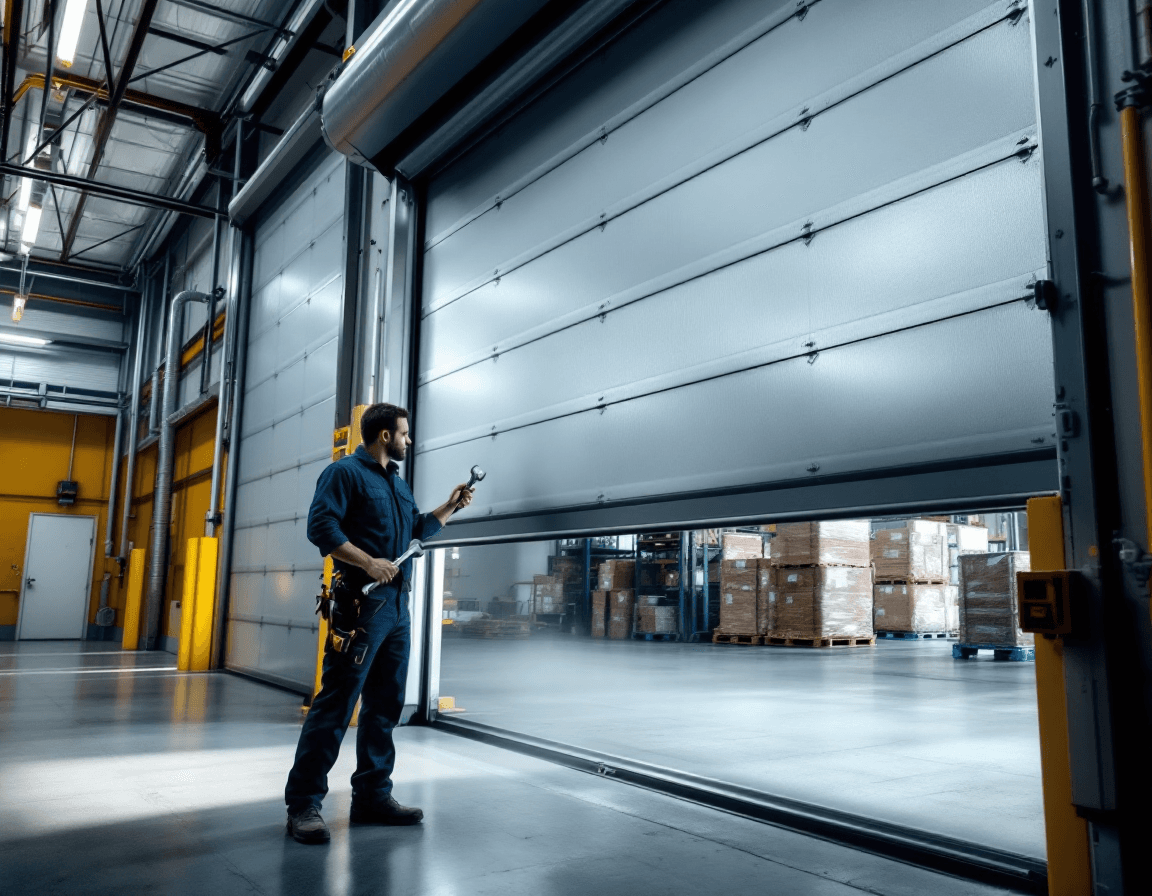
Commercial overhead door repair in Newcastle, WA keeps local businesses moving, and it needs to happen quickly when a door stops working. Whether you run a small warehouse off Coal Creek Parkway, a service bay near Newcastle Way, or a light-industrial unit tucked into the hills toward Cougar Mountain, a sectional or rolling steel door that refuses to open can stall deliveries, pile up trucks, and leave staff standing around. Seattle Garage Door Fix works with business owners, property managers, and facility teams across Newcastle and the surrounding 98056 and 98059 areas to diagnose the problem, quote the work clearly, and get the door back in service with as little disruption as possible.
Commercial doors are not simply bigger residential doors. They are heavier, they cycle far more often, and they are expected to run all day under conditions that would wear out a home garage door in a few seasons. A loading-dock door might open and close dozens of times during a single shift, while a rolling steel door at a shop entrance may be the only barrier between your inventory and the street. Because so much depends on these openings, our approach begins with understanding how your building actually uses its doors before we talk about parts or labor. The sections below explain what we see most often, what you can check safely on your own, and when it is time to call a licensed technician.
How Newcastle's Weather and Terrain Shape Commercial Door Wear
Newcastle sits in a part of King County where the seasons are defined by long, damp winters and a lot of gray days between October and April. Steady drizzle, morning fog that lingers in the valleys, and frequent rain keep the air humid for months at a time. Moisture is the quiet enemy of commercial steel. It finds its way into hinge knuckles, roller bearings, and the seams where rolling steel slats interlock, and it sits there long enough to start corrosion before anyone notices a problem.
The area's tree cover adds its own challenges. Conifer needles, maple seeds, and wet leaves collect in the tracks of overhead doors that sit near landscaped parking areas or wooded edges, especially on properties that border the hillsides and creek corridors around China Creek. Debris packed into a vertical track can cause a sectional door to bind on one side, and once one roller starts to drag, the strain transfers to the operator and the opposite track. We regularly find that what looked like a motor failure was really a track clogged with grit and organic material that had been building up for a season or two.
Temperature swings matter too. A cold snap in January can make steel contract and make old lubricant thicken, while a warm afternoon can cause the same door to move differently an hour later. If your facility has a door that seems to stick only on frosty mornings or only after a heavy rain, that pattern is useful information. Tell your technician when the problem shows up, because timing often points directly toward the cause.
Diagnosing a Dock Door That Won't Move
When a warehouse or loading-dock door goes down, the first question is whether the problem is electrical, mechanical, or a safety-circuit issue. Many commercial operators are designed to stop the moment they sense an obstruction, a misaligned sensor, or an unexpected change in load. A door that stops halfway may be doing exactly what it was built to do, even though it feels like a failure to the people waiting on the other side of it. Before anyone calls for service, it helps to note what the door did, what sounds it made, and whether the control station, remote, or keypad responded at all.
Some quick observations can save time when you call us. Write down whether the door made a clicking noise without moving, whether it reversed direction on its own, or whether it simply refused to respond. Check that nothing is resting on the threshold or caught in the lower seal, and confirm that people have not been using a manual release to force the door while the operator is still engaged. Never attempt to repair springs, cables, or drums yourself, and avoid climbing on sections or pulling on a door that is partly open.
- Note exactly how the door failed: stopped mid-travel, refused to start, reversed, or moved unevenly.
- Record whether the control station, wall button, remote, or keypad gave any response or indicator light.
- Check for visible debris, pallets, or cargo that could be sitting in the path of the door.
- Look for obvious bends, gaps, or damaged sections along the lower edge or the track.
- Tell the technician whether the problem appeared suddenly or has been getting worse over several weeks.
With that information, our technicians can narrow the cause quickly. We check safety edges and photo-eyes for alignment, inspect limit settings, test the operator's power supply, and examine rollers, hinges, and track sections for wear. When the cause is a failed spring or a damaged cable, we explain the repair plainly and provide a quote before any high-tension work begins.
Rolling Steel Doors That Jam, Pop Off Track, or Bind
Rolling steel doors are common at Newcastle-area shops, service bays, and storage facilities because they save space and hold up well to repeated use. They are built from interlocking slats that travel up into a tight coil above the opening, which means every component works under constant tension and flexing. When a rolling steel door jams or jumps off its guide track, the cause is often a bent guide, a worn bottom bracket, or a slat that has been pushed out of line. Sometimes an impact from a truck mirror or a pallet jack is the trigger, and sometimes the problem has been developing slowly as the track loosens.
A door that pops out of its guides should be stopped and secured before anyone tries to force it back. Rolling steel doors can drop unexpectedly once tension changes, so keeping people clear of the opening and the coil area is essential. Our technicians typically inspect the guide channels, check whether the curtain has been stretched or twisted, and look at the barrel and brackets to see whether the door is still balanced. In many cases, realigning guides and replacing a few worn components restores smooth travel without replacing the entire door.
Binding can also come from corrosion. Coastal-style moisture is not the issue here, but the damp Northwest climate still encourages rust on exposed steel, especially at slat joints and bottom bars. We recommend cleaning the guides, removing built-up grit, and applying a lubricant that is suited to steel-on-steel contact, while avoiding products that attract dirt. Regular attention in the wet months can prevent a sticky door from turning into a jammed door during a busy week.
Commercial Operators That Fail or Lose Throughput
The operator is the workhorse of any commercial door, and when it starts underperforming, the effects spread across your whole operation. A door that once cycled in a few seconds may begin to crawl, hesitate, or stop partway through its travel. Drivers notice, forklift operators lose minutes at every trip, and dispatchers start planning around the bottleneck. Slow operation is frequently a sign of a worn motor, a failing capacitor, misadjusted limits, or a drive component that is working harder than it should because something else in the system has changed.
Throughput problems are not always dramatic. A door might still close and open, yet take noticeably longer than it did last year. We look at the drive, check the chain or belt tension, inspect the limit switches, and measure how the door is loaded when it moves. If the door was previously counterbalanced correctly but now feels heavy, the springs may have lost tension, and the operator is compensating by drawing more current. Catching that early protects the motor and avoids an unplanned shutdown during peak hours.
We also help facilities decide between repairing and upgrading. If the operator is outdated, parts are difficult to source, or the door has been repaired several times in a short period, replacing the operator may be the more cost-effective option. We present both paths with honest trade-offs, including expected downtime, required electrical work, and how the new unit would integrate with your existing controls and access system. Every commercial quote is custom, so the recommendation reflects your building rather than a generic template.
Forklift Strikes and Damaged Sectional Panels
Forklift traffic is one of the most common reasons Newcastle-area commercial doors need attention. Even a careful operator can clip the lower panel while maneuvering a pallet through a dock opening, and a single impact can bend a section, crack a panel joint, or knock a roller out of its track. Sectional doors are designed to flex slightly under load, but once a section is deformed, the weight is no longer distributed evenly, and the door can begin to lean, bind, or bounce during travel.
When a section has been damaged, the safest response is to keep the door in a closed or stable position and call for inspection before using it heavily. Continued operation can spread the damage to neighboring sections, stress hinges, and place uneven force on springs and cables. In many cases, we can replace an individual panel rather than the full door, provided the color, insulation type, and profile can be matched. Our technicians measure the panel, check the hinge and roller hardware, and confirm the track is still true before recommending a fix.
Preventing repeat strikes is often as valuable as the repair itself. Bollards, dock bumpers, painted guide markers, and clear floor signage can reduce impacts significantly. We sometimes suggest modest changes such as raising a guard rail or adjusting the approach angle for trucks, because a small layout adjustment can save a facility from repeated panel replacement over the years.
Preventive Maintenance Contracts Built Around Your Schedule
A preventive maintenance contract is one of the most practical ways for a business to avoid emergency downtime. Instead of waiting for a door to fail on a Monday morning, the facility schedules recurring inspections and adjustments during quieter hours. The goal is to catch worn rollers, loose fasteners, sagging weather seals, aging spring systems, and early operator problems before they turn into service calls that interrupt shipments.
A well-built maintenance plan usually includes a documented inspection of every door, a check of safety reversing devices and photo-eyes, lubrication of moving parts appropriate to the door type, and a review of the operator's settings and current draw. We also note any cosmetic or structural concerns so you can plan budget for them in advance. Facilities that keep this kind of record often find it easier to justify equipment decisions and to show insurers or property owners that doors are being cared for properly.
- Scheduled inspections at intervals agreed on with your operations team, often timed for slower shifts or weekends.
- Safety system testing for edges, sensors, and reversing controls, with written results.
- Lubrication and adjustment of rollers, hinges, tracks, and drive components.
- Priority response terms for breakdowns, so urgent calls move to the front of the queue.
- A simple service log that tracks repairs, parts replaced, and recommendations for the next visit.
Contracts can be tailored to the number of doors, their age, and how heavily they are used. A distribution space running a dozen dock doors will have different needs from a single shop with one rolling steel entrance. We structure agreements to match your actual exposure instead of selling a one-size-fits-all package.
What a Custom Commercial Quote Usually Includes
Commercial work is priced by scope, not by a flat residential menu. Every facility has different door sizes, operator types, access requirements, and downtime constraints, so we prepare a custom quote after reviewing the door, its history, and your operating hours. A good quote explains what is being repaired or replaced, why it is necessary, what parts are involved, how long the work should take, and whether any follow-up items are likely. We aim to keep quotes fast so you can make decisions while the problem is still manageable.
Turnaround is a major part of commercial service. When a dock door is down, the cost is often measured in missed shipments and idle labor rather than the repair bill itself. For that reason, our technicians try to arrive prepared with the most likely parts and tools, and we discuss temporary measures when a full repair cannot be completed in one visit. Sometimes the best first step is restoring safe, limited operation while the permanent parts are ordered.
We also believe you should know what is included before work begins. Ask about labor, parts, testing, cleanup, and any warranty terms covering the repair. If a quote requires a second visit or depends on a part that must be sourced, we will say so plainly. Transparent scoping keeps projects on track and avoids surprises when the invoice arrives.
Safety Rules for Springs, Cables, and High-Tension Components
Commercial doors store enormous amounts of energy in their springs and cables. A torsion spring under a heavy sectional door can hold more force than most people expect, and a snapped cable or released spring can cause serious injury in seconds. This is why spring and cable work must be handled only by licensed, trained professionals with the proper tools and procedures. Attempting these repairs with improvised equipment is one of the most dangerous mistakes a facility can make.
Facility managers should treat any visible spring damage, frayed cable, or unexpectedly loose door as a safety hazard. Keep people away from the opening, lock out the operator if you can do so safely, and do not try to lift or balance the door manually. Even when the door appears to be sitting still, residual tension may remain in the system. Our technicians are trained to release and replace these components in a controlled way, and they document the work so you have a clear record of what was done.
Electrical and control work also deserves respect. Operators, safety edges, and sensors are often wired into building systems, and faults can create unexpected movement. Our service team follows lockout and testing practices designed to protect both your staff and our technicians, and we verify that safety features function correctly before returning the door to service.
Keeping Downtime Short and Operations Moving
The best commercial repair is the one that keeps your operation moving while it happens. For Newcastle businesses, that often means scheduling visits around truck arrival windows, shift changes, or slower afternoons, and communicating clearly about what the door can and cannot safely do during the repair. Some facilities need a door restored to limited use immediately, while others can take a full shutdown for a few hours on a planned day. We work with your team to decide which approach makes sense.
Clear communication before, during, and after the visit makes a big difference. Let us know who on site has authority to approve work, where the door controls are located, and whether there are access restrictions or safety rules our technicians should follow. Mark affected doors with signage so drivers and staff know not to use them, and keep the surrounding area clear so our team can work efficiently. A little preparation often cuts repair time significantly.
Once the door is running again, we review what happened and recommend next steps. That might mean a simple adjustment, a planned replacement, or enrollment in a maintenance program to prevent the same issue from recurring. Our goal is to leave your facility safer, faster, and more predictable than when we arrived.
Your loading dock or rolling steel door should not dictate your entire schedule. If your Newcastle, WA facility has a commercial overhead door that is down, slow, jammed, or damaged, call Seattle Garage Door Fix at (888) 799-3819 for a fast custom quote. Our licensed, bonded, and insured technicians will assess the problem, explain your options clearly, and work with you to get your operation moving again.