
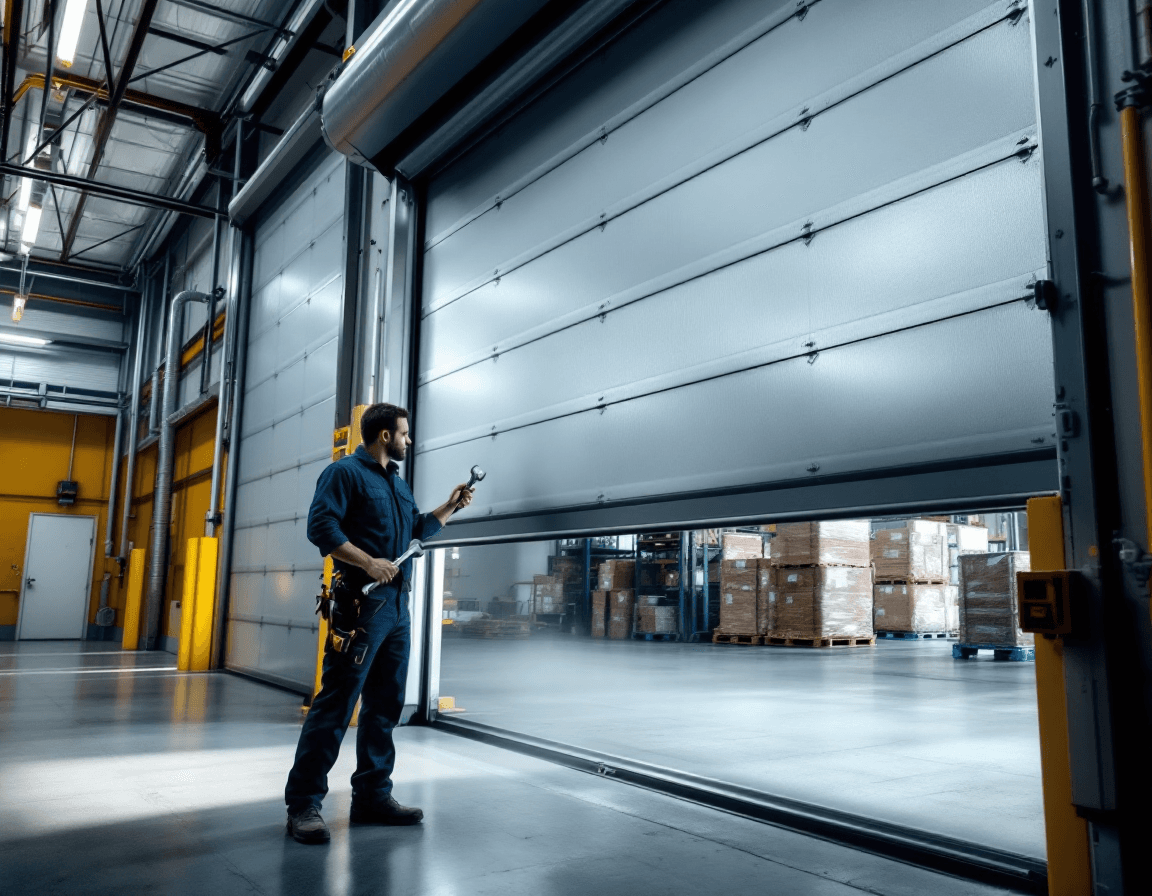
Commercial overhead door repair in Mercer Island, WA is a different job from fixing a residential garage door. A warehouse, dock, or service bay door carries more weight, cycles far more often, and sits at the center of a business that loses money every hour it stays shut. Mercer Island businesses, from the shops and offices around Mercer Island Town Center to light industrial and service operations tucked along the island's quieter corridors, usually need a technician who understands both the mechanics and the schedule. Our crews work on sectional overhead doors, rolling steel doors, commercial operators, and preventive maintenance for properties in ZIP code 98040 and across the wider Seattle area.
Island properties face their own conditions. Damp air rolling in off Lake Washington, long gray stretches in the Pacific Northwest winter, and the occasional cold snap all put stress on metal, springs, and electrical controls. A door that works fine in July can start binding or drifting by November, and a dock that handled the morning rush last year may now struggle with the same volume. Understanding those patterns helps you catch small problems before they become shutdowns.
This page explains the situations we see most often, how we evaluate them, what affects the cost and timeline, and how a preventive maintenance agreement can keep your doors moving. If your door is down right now, call us at (888) 799-3819. If you are planning ahead, read on so you know what to ask for.
When a Loading Dock Door Stops Mid-Shift
A loading-dock door that refuses to rise or lower is usually the most urgent call we take. Trucks back up, staff stand around, and product sits on the dock while everyone waits. The first thing we check is whether the problem is electrical, mechanical, or a safety interlock doing its job. Sometimes a photo-eye is blocked by debris or misaligned after a bump, and the door will simply refuse to close. Other times a control board has failed after a power fluctuation, which is more common than people expect during windstorm season.
Mechanical failures require a different approach. If the door moves a few inches and stops, we look at the track, the rollers, the hinges between panels, and the counterbalance system. A roller that has worn flat or a hinge bolt that has backed out can lock an entire section against the track. We never assume the cause is obvious from the outside, because a door that looks fine may have a spring or cable issue that makes further operation dangerous.
Every dock door call begins with making the door safe and, where possible, returning it to service for the immediate workday. Temporary measures sometimes keep a business operating while parts are ordered, but we only recommend them when they are safe. Our team will tell you plainly what can be done today and what needs a fuller repair, so you can plan staffing and deliveries with real information.
Rolling Steel Doors That Jump the Track or Jam
Rolling steel doors are common in storefronts, service bays, and storage rooms across the island. They are compact, durable, and efficient for spaces that cannot spare room for a sectional door's track radius. Their weakness is the curtain and guide system. When a slat catches, a guide shifts, or someone pushes a pallet into the bottom of the curtain, the door can jump off its tracks or bind halfway up.
We inspect the guides for wear, alignment, and debris, and we check the curtain for kinked or damaged slats. A bent slat can often be replaced individually, which is far cheaper than replacing the whole curtain. The barrel, bottom bar, and brake assembly also deserve attention, because a door that drops suddenly or creeps downward after being raised has a brake or spring problem that should be addressed right away.
Rolling steel doors carry a lot of tension in their barrel springs, and they can release that energy dangerously if handled incorrectly. We treat every spring and barrel job as a licensed-technician task. Do not attempt to free a jammed curtain by hanging weight from it, prying at the barrel, or cutting the spring. If the door is jammed, keep people clear of it and call us.
Commercial Operators That Fail or Cycle Erratically
The operator, or motor and controller, is the heart of a commercial door. When it fails, the door may not respond at all, may run only in one direction, or may stop and reverse without reason. Commercial operators are built for heavier duty cycles than residential openers, but they still wear out, and their control systems are sensitive to power quality, moisture, and wiring damage.
We start with the basics: confirming power at the operator, checking breakers and disconnects, and examining the control station and any wall switches or remote-access units. Next we test the limit settings. A door that stops short or overshoots its limits will often strain the operator, and incorrect limits can also trigger the safety reverse unnecessarily. Erratic cycling frequently traces back to a worn limit switch, a damaged safety edge, or a loose wire in a junction box that has been affected by vibration.
Many operator problems can be solved without replacing the unit, but when a motor or control board is past repair, we will say so and provide a quote for a replacement that matches your door's size, weight, and duty cycle. Replacing an operator without verifying the door's balance can shorten the new unit's life, so we check the springs and hardware at the same time.
When the Door Works but Throughput Suffers
Not every complaint is a breakdown. Sometimes the door opens and closes, but it is simply too slow for the way your business runs. A distribution team that moves forty trucks a day cannot tolerate a door that takes half a minute to cycle, and a busy service bay may need faster response than the existing operator provides. Throughput complaints often arrive after a business expands, adds a second shift, or changes its delivery pattern.
We evaluate speed in terms of your actual workflow. That means timing the door under real conditions, noting where delays happen, and asking how often the door cycles on a typical day. Sometimes a faster operator, a different door speed setting, or a high-speed rolling door design solves the problem. In other cases the real delay comes from a sticky track, a poorly lubricated roller, or an operator that is working harder than it should because the springs are out of balance.
Speed upgrades involve trade-offs. Faster doors can increase impact forces, and safety devices must still work correctly. We will explain the options, including what each one costs, how it affects safety, and whether it fits your building's electrical service. A good recommendation is one that serves your operation without creating new hazards.
Forklift Strikes and Damaged Door Sections
Forklifts and pallet jacks are hard on commercial doors. A glancing hit can crack a panel, bend a track, dent a bottom seal, or throw a section out of alignment. On sectional doors, a single damaged panel can affect the whole assembly, because panels are connected through hinges and rollers. Even a dent that looks cosmetic can change how the door tracks, and a bent track can bind rollers in a way that eventually damages the springs.
After an impact, we recommend a complete inspection rather than a quick cosmetic fix. We check the panels for cracks, the hinges for elongated holes, the tracks for alignment, and the springs for signs of overload. Sometimes the best choice is to replace a single section, which is often more economical than replacing the whole door. Other times the damage is widespread, and a full door replacement makes more sense. We give you both options with clear reasoning so you can compare costs and downtime.
Prevention matters here. Bollards, painted guard rails, clear lane markings, and driver training reduce the chance of a costly strike. We are happy to walk through your loading area and point out places where a simple barrier would protect the door, especially near the threshold and on the side of the door where forklifts turn.
Dealing With Moisture, Lake Air, and Winter Wear
The Pacific Northwest climate is kind to plants and tough on steel. Mercer Island properties sit with damp air for much of the year, and condensation can settle on metal surfaces, especially in buildings with limited ventilation or large temperature swings between the warehouse and the outdoors. Over time, moisture can lead to surface rust on tracks, hinges, and fasteners, and it can degrade lubricants that keep rollers turning freely.
Winter brings its own issues. Cold metal contracts, lubricants thicken, and doors that moved smoothly in summer may start to stick. Wet leaves, grit, and road salt tracked in from parking areas can build up in the bottom track and interfere with the seal and the rollers. Electrical components also suffer when condensation enters junction boxes or control enclosures, which is why we check weatherproofing and seals during seasonal visits.
Our approach is practical. We clean and inspect tracks, replace worn weatherstripping, lubricate hinges and rollers with appropriate products, check the bottom seal for gaps, and look for corrosion that needs treatment before it spreads. When the building itself is contributing to the problem, such as poor drainage at the threshold or a leaking roof edge above the door, we will point that out so the root cause can be handled by the right trade.
Safety Rules for Torsion Springs and Cable Systems
Commercial doors are counterbalanced by torsion springs or extension springs, and these components store a tremendous amount of energy. A broken spring can release that energy suddenly, and the force is capable of causing serious injury. Cables that fray or snap under load can also whip or drop a door unexpectedly. These are not do-it-yourself tasks, and they are not tasks where a rushed repair is acceptable.
Our technicians are licensed, bonded, and insured, and they follow established procedures for relieving spring tension, replacing components, and rebalancing the door before it returns to service. We will never ask you to attempt a spring or cable repair yourself, and we recommend that any property manager or facility lead follow the same rule with internal staff. If a spring is broken or a cable is frayed, the door should stay closed and be locked out until a licensed professional arrives.
Lockout and tagout procedures are worth establishing before an emergency. Label the controls, keep the door's power disconnect accessible, and make sure your team knows not to operate a door that is visibly damaged. These simple steps keep people safe while you wait for service and make the technician's job faster when they arrive.
What a Custom Commercial Quote Typically Includes
Commercial door pricing depends on many factors, which is why we provide custom quotes rather than flat rates. A small repair on a single rolling steel door is a very different job from replacing a multi-section dock door with a new operator and safety edges. We price each project after reviewing the door type, size, age, duty cycle, safety devices, and the access constraints of your building.
A typical quote explains what we found, what we recommend, and why. It separates immediate safety repairs from upgrades that improve performance or extend life, so you can prioritize spending. Quotes also note the parts involved, whether they are in stock or need to be ordered, and the estimated timeline. When turnaround time matters, we tell you up front whether a repair can happen the same day or whether a temporary solution will be needed while parts arrive.
We understand that a quote is only useful if it is clear. If you want to compare options, such as repairing an older sectional door versus replacing it, we will lay out both paths with the expected trade-offs. You will know what you are paying for, and you will not be surprised by a change in scope halfway through the job.
- Inspection of door sections, hinges, rollers, tracks, and bottom seal
- Spring and cable evaluation, including balance testing by a licensed technician
- Operator diagnosis, limit adjustment, and safety reverse testing
- Parts sourcing options, with notes on availability and lead time
- Written explanation of immediate safety work versus recommended upgrades
Preventive Maintenance Agreements for Busy Operations
A preventive maintenance agreement is one of the most effective ways to avoid unplanned downtime. Instead of waiting for a door to fail during a delivery window, you schedule regular inspections and service that catch wear early. For a business with multiple doors, or a single dock door that cannot afford to be out of service, a planned agreement can make budgeting more predictable and reduce emergency call-outs.
A typical preventive program includes lubrication of moving parts, inspection of springs, cables, and rollers, checks of safety sensors and edges, adjustment of limits, tightening of hardware, and testing of the operator and controls. We document each visit so you have a record of what was serviced and what needs attention next. Seasonal visits can be timed to address the conditions that matter most on the island, such as moisture control before the wet season and wear checks before the busiest shipping periods.
Agreements can be tailored to your operation. Some facilities want quarterly visits, while others prefer semi-annual inspections combined with priority response for breakdowns. We will recommend a schedule based on how often your doors cycle, how heavily they are used, and what happens to your business if a door goes down.
- Scheduled inspections tailored to door type and cycle count
- Priority scheduling for breakdown calls during covered service periods
- Written service records for facility management and insurance review
- Seasonal checks timed around moisture, temperature swings, and peak volume
Planning Around Downtime in Town Center and Nearby Businesses
Mercer Island's business community has a practical rhythm. Retail and service tenants near Mercer Island Town Center depend on predictable deliveries and clean, safe access, while operations that cross the lake to serve clients in East Seattle or First Hill need reliable vehicle access on tight schedules. When a door fails, the ripple effects reach beyond the building itself, from late deliveries to rescheduled crews and frustrated customers.
We plan repairs with that reality in mind. When possible, we coordinate arrival times around low-traffic windows, communicate with building managers about access and parking, and keep work zones clear so other tenants and delivery drivers can move safely. If a repair requires the door to stay closed for longer than expected, we will tell you early so you can notify customers, reroute deliveries, or arrange temporary access.
Downtime planning also means having a plan before something breaks. Keep your door's model number, serial plate information, and any prior service records accessible. Note which doors are critical to operations and which can wait. A short conversation about priorities now can save hours of confusion during an emergency.
How to Reach Us About Your Mercer Island Commercial Door
When a commercial door fails, the first call should go to someone who can assess the problem clearly and tell you what happens next. Give us the basics: the door type, the building address or nearby landmark, what the door is doing or not doing, whether anyone has been injured or whether the door is visibly damaged, and what your operating hours look like. That information helps us prepare the right crew and parts before we arrive.
For planned work, tell us what you are hoping to achieve. Maybe you need a faster cycle time, a damaged section replaced, or a maintenance agreement that keeps your dock running through the wet months. We will walk through your options, explain the reasoning behind each recommendation, and provide a custom quote that fits your schedule and budget.
Mercer Island businesses deserve a door company that respects both the machinery and the calendar. If your overhead or rolling steel door is down, jammed, slow, or damaged, call Seattle Garage Door Fix at (888) 799-3819 for fast, licensed commercial service in ZIP code 98040 and the surrounding area.